Project brief from a busy Stellenbosch workshop
The client was a small hobby studio in Stellenbosch, Western Cape, run by one maker and a part-time helper who work on timber fittings, small fixtures and occasional repair pieces. Their main issue was not a single broken tool, but the slow build-up of dull edges, burnt cuts and wandering holes across a mixed set of drill bits and router bits.
The brief was straightforward: keep the cutting tools sharp, avoid unnecessary tool replacement and create a repeatable collection process that would work even when the studio was only active on certain days. They needed something practical for a small operation, not a high-volume industrial cycle. Because the studio is outside a major industrial area, courier collection made more sense than driving tools in themselves, especially for lighter batches.
- Client type: small maker studio
- Town: Stellenbosch
- Primary tools: drill bits and router bits
- Collection method: courier pickup from the workshop address
- Priority: low downtime and consistent edge quality
Constraints that shaped the service plan
The main constraint was irregular usage. The studio did not send tools every week, so the system had to work in batches. Some items came in after light hobby use, while others had been pushed too hard and showed burn marks, chipped edges or poor cutting angle. That meant each batch needed inspection before the actual sharpening began.
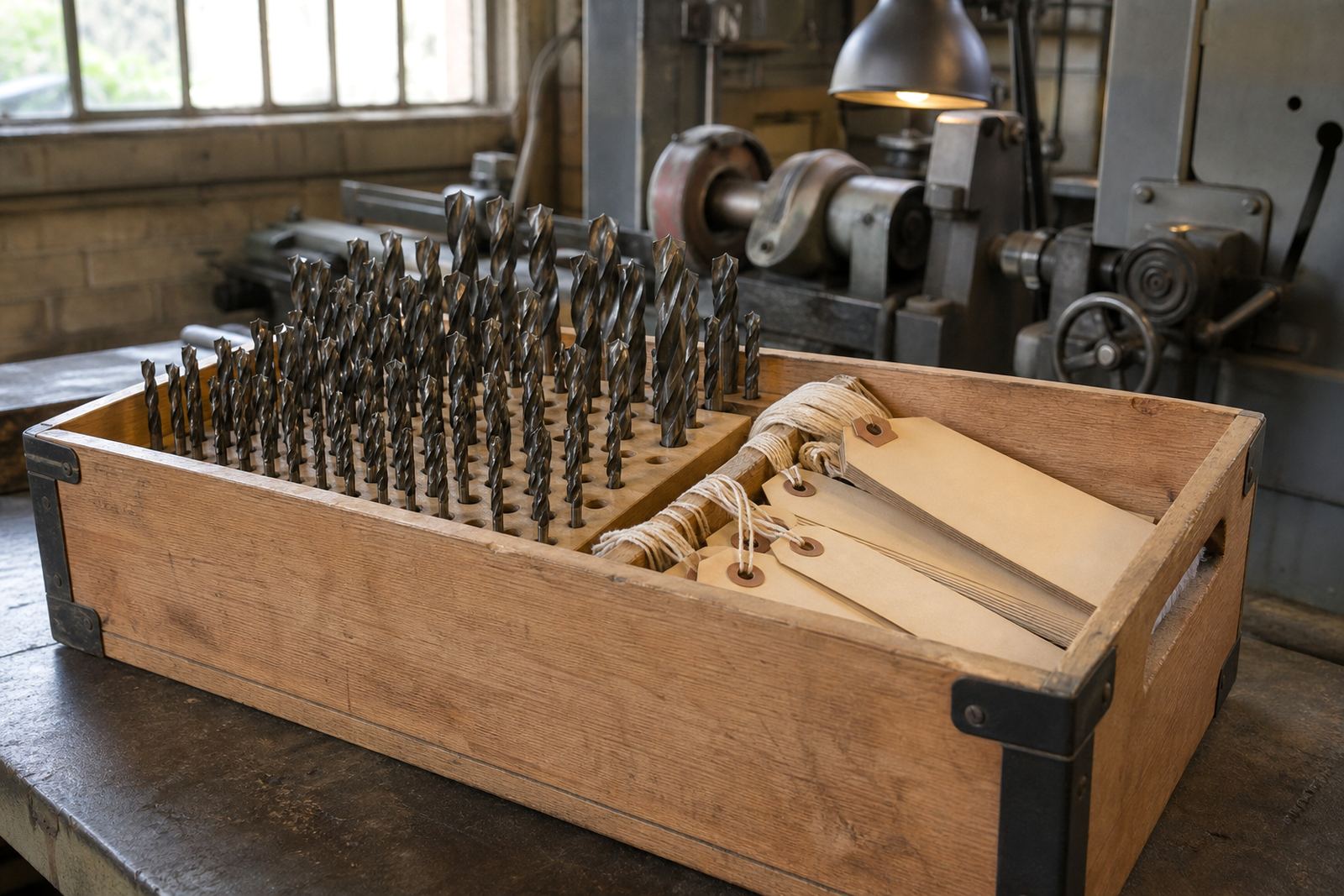
Another practical issue was storage and traceability. Small bits can get mixed up quickly, and when several sizes arrive together it is easy for a client to lose track of what was sent in. We handled that with batch tool tagging and a simple return order that matched the receiving list. This helped avoid confusion, especially when the same drill diameter appeared in more than one length or style.
Load-shedding was also a factor. The workshop itself had no interest in planning around power interruptions, so the client wanted a service flow that did not depend on running machines at awkward times. We scheduled collection and return around the courier cycle, and the studio could keep working without holding onto worn tools for too long.
- No in-house sharpening equipment needed at the studio
- Batch processing suited mixed tool quantities
- Clear tagging reduced mix-ups on return
- Collection timing worked around normal workshop hours
What we supplied and carried out
CutTool Sharpening handled the full upkeep cycle for the studio’s bits and drills. Each batch was checked for edge wear, burning, blunt flutes, chipped cutting edges and signs of poor balance. Where needed we carried out drill sharpening, router bit sharpening and tooth face grinding, with top grinding and angle resetting on items that had drifted out of spec.
Some tools only needed a light touch, while others needed diameter correction, burn mark removal or chipped edge recovery before they could be sent back into service. For pieces with repeated use we also checked balance and cutting consistency. The aim was not to make every tool look new, but to restore clean cutting behaviour and predictable results on timber and board materials.
- Sharpening for drills and router bits
- Top grinding and tooth face grinding where required
- Diameter correction on worn items
- Burn mark removal for overheated edges
- Balance checking before return
- Batch tool tagging for organised handover
Courier collection and turnaround in weeks
The rollout took 3 weeks from first enquiry to settled routine. Week one was the intake and sorting stage, where the studio sent its first mixed batch and we confirmed the preferred collection window. Week two covered sharpening, regrinding and return testing. By week three, the client had a regular rhythm for booking courier collection and sending tools in before they became a problem.
Because the studio was in Stellenbosch and the workshop base is in Pinetown, the courier process had to be dependable rather than complicated. We kept the handover simple, with collection booked through the enquiry form on the contact page and batch items returned in order. That meant the client could keep track of each set without having to stop work and sort through loose tools.
The process also worked well for tools coming from other service areas such as Durban, Pietermaritzburg, Johannesburg, Pretoria and Cape Town, since the same booking method can be used across South Africa. For smaller studios like this one, the key benefit is that the service stays consistent whether the batch is five items or fifty.
Results noticed after the first return batch
The first clear result was cleaner cuts. Drill bits started biting properly again instead of skating on the surface, and the router bits produced less burning on repeated passes. The studio also reported less time spent forcing tired tools through material, which matters when the job is a one-off piece and there is no spare set waiting on the shelf.
Another result was better planning. Once the team knew which bits were holding edge and which ones needed regular regrinding, they could rotate stock and send in the right batch before a deadline. That reduced waste and kept the workshop moving during busy periods. It also helped the client avoid unnecessary replacement costs, which is important for a small maker outfit that watches material spend carefully.
For us, the job showed that even a modest hobby studio benefits from a proper maintenance cycle. It is easy to ignore one dull bit, then suddenly three tools are underperforming at once. With batch tracking and courier collection in place, the upkeep became part of the studio routine rather than a last-minute fix.
What we would do again for a similar studio
If we were setting up the same arrangement again, we would use the same courier-first approach and start with a small trial batch. That gives the client a quick look at turnaround, labelling and return condition before they commit to a larger tool group. It also helps identify whether most of the wear is from heat, poor feed speed or general age.
We would also recommend adding a simple starter pack for small studios that maintain their own tools between collections. That can include basic handling notes, a storage method for used bits, and a schedule for when to send items in. For workshops in coastal or humid areas, dry storage matters because rust and surface tarnish can shorten tool life if bits are left in open trays too long.
In short, the same model works well for hobby spaces that need practical support without losing workshop time. A clear collection routine, proper tagging and consistent regrinding make a real difference when every sharp edge counts.
Key facts
| Client type | Small maker studio |
|---|---|
| Town | Stellenbosch, Western Cape |
| Project duration | 3 weeks |
| Main services used | Drill sharpening, router bit sharpening, regrinding |
| Collection method | Courier collection booked through the contact form |
| Key benefit | Less downtime and more consistent cutting performance |