
A Howick workshop making better finishes on small runs
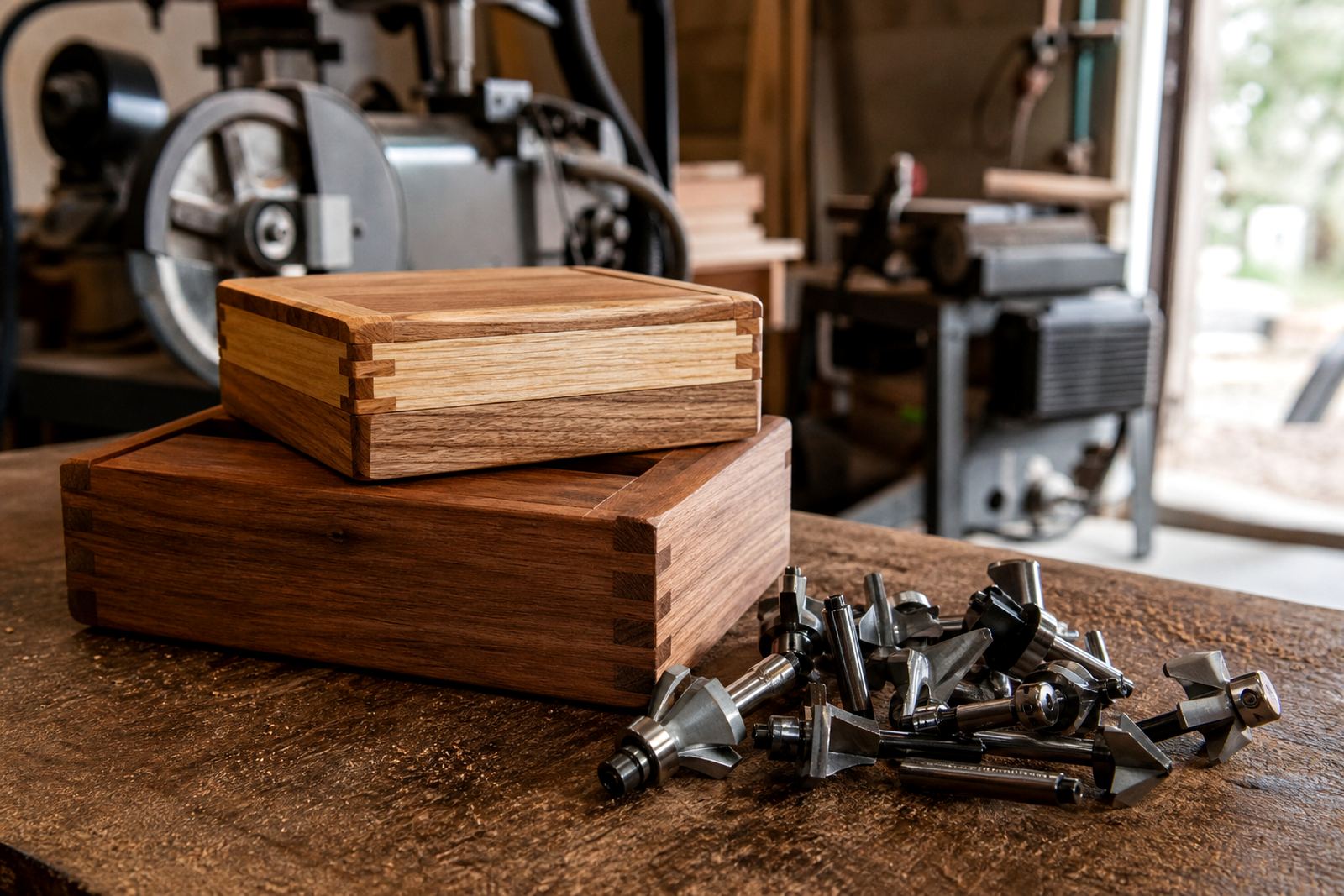
The client was a hobby maker in Howick working from a compact home workshop, mainly on shelving, cabinet parts and small decorative items. The problem was simple but costly in time: router bits were leaving chatter marks, burning the timber on longer passes, and tearing fibres on routed edges. For a small workshop, that means extra sanding, more waste and a finish that looks uneven before the piece even gets assembled.
The brief was to restore the cutting edges on a mixed set of router bits and bring them back into a working condition suitable for clean timber finishing. The owner also wanted guidance on when a bit could be sharpened again and when it should be retired. Because the workshop runs after hours and on weekends, the turnaround had to fit around limited production time.
- Client type: home workshop hobby maker
- Town: Howick, KwaZulu-Natal
- Tools involved: router bits used for profiling, edging and trimming
- Main fault: burn marks, tear-out and rough surface finish
What was slowing the work down
The workshop was dealing with a few common issues. First, the bits had lost their cutting sharpness from repeated use on hardwoods and laminated board. Second, a couple of edges had small chips that affected the cut path. Third, the cutting angles had drifted enough that feed pressure had to be reduced, which slowed the work and made the finish less consistent.
There was also a practical storage issue. The bits were kept in mixed boxes, so the owner could not quickly tell which cutters had been serviced and which still needed attention. That led to repeat use of worn tools and a few more scorched edges than necessary. For a home setup, that kind of mix-up can waste an entire evening.
- Burn marks on longer cuts, especially in denser timber
- Edge tear-out on shallow passes and end grain
- Uneven profile from chip wear on the cutting face
- No clear system for serviced versus unserviced bits
Our sharpening and regrinding process
We collected the bits through courier from Howick and brought them into the Pinetown workshop for inspection. Each cutter was checked for edge wear, chip damage, diameter consistency and balance. Where the bit still had enough material, we carried out sharpening and regrinding to restore the cutting edge and correct the geometry. Where needed, we also did angle resetting and balance checking so the cutter would run properly in the router.
For this job we worked on a small batch of commonly used router bits rather than a full workshop inventory. That kept the turnaround tight and let the owner get back to making without waiting on every tool in the box. The service covered cleaning, inspection, sharpening, diameter correction where required, and batch tool tagging so the returned bits could be tracked easily.
- Courier collection booked from Howick to Pinetown
- Inspection for chips, heat marks and uneven wear
- Sharpening and regrinding of usable bits
- Angle resetting and balance checking where needed
- Batch tool tagging for returned tools
Timeline and turnaround for the job
The project was completed over 2 weeks from collection to return. The first few days were used for inspection and sorting, followed by the actual sharpening and regrinding work. The final stage was checking the cutting edges, packaging the bits safely, and arranging return courier delivery back to Howick. Because the client was working from home, timing the collection and return around workshop hours mattered just as much as the technical work.
The owner wanted minimal downtime, so we split the batch into tools that needed light sharpening and tools that needed more correction. That helped us keep the job moving without holding up the whole order. It also meant the bits most likely to affect finish quality were the first ones back in use. Small detail, but it makes a difference when you are trying to keep a weekend project on track.
- Week 1: collection, inspection and sorting
- Week 1 to 2: sharpening, regrinding and correction work
- Week 2: final checks, tagging and return delivery
What changed after the bits were sharpened
Once the router bits were back in service, the owner reported cleaner cuts, less sanding and a better edge on finished pieces. The most noticeable change was the reduction in burn marks on longer passes. There was also less tear-out on routed profiles, which gave the timber a neater finish straight off the machine.
For a hobby workshop, the result is not only about appearance. Sharper tools also reduce the pressure needed on the router, so the work feels more controlled and the bits are less likely to overheat. That helps with consistency from one project to the next and gives the maker more confidence when working on visible parts of a piece.
- Cleaner finish on profiles and edges
- Less sanding needed after routing
- Reduced burning on hardwood cuts
- More consistent results across small batches
What we would do again on a similar Howick project
If this job came in again, we would keep the same process: assess the bits first, group them by condition, then sharpen only the cutters that still have enough material left for safe regrinding. We would also recommend batch tool tagging from the start, especially for home workshops that mix several cutter profiles in one storage box. It saves time and avoids confusion when the tools come back.
We would also suggest a regular check after heavy use on hardwood or laminated board, rather than waiting until the finish has already dropped off. In practical terms, that means looking for the first signs of burning, louder cutting noise, or more pressure needed to push the work. Catching it early keeps the tool life longer and the finish quality steadier.
- Best practice: inspect before the edge fails completely
- Use clear tagging for serviced cutters
- Book a regular sharpening cycle for frequently used bits
Who this project suits and how to book
This kind of service suits hobby makers, small joiners and home workshops in Howick and surrounding towns who need a better finish from their existing tools. It also suits anyone who would rather service a good cutter than replace it too early. We handle courier collections across South Africa, including Durban, Pietermaritzburg, Johannesburg, Pretoria and Cape Town, with local support through Pinetown, Westville and Hillcrest.
Clients reach us through the enquiry form on the contact page. From there we can confirm the tools, arrange collection, and advise on the likely turnaround before the job starts. If the cutter is still serviceable, sharpening and regrinding is usually the most practical next step.
- Good fit for home workshops and small production runs
- Useful when finish quality has started to slip
- Courier collection available nationwide
Key facts
| Project type | Router bit sharpening and regrinding for a home workshop |
|---|---|
| Town | Howick, KwaZulu-Natal |
| Turnaround | 2 weeks from collection to return |
| Service scope | Sharpening, regrinding, angle resetting, balance checking, batch tagging |
| Collection method | Courier collection and return |
| Result | Cleaner finish, less burning, less sanding |