Project brief from a busy Phoenix fit-out crew
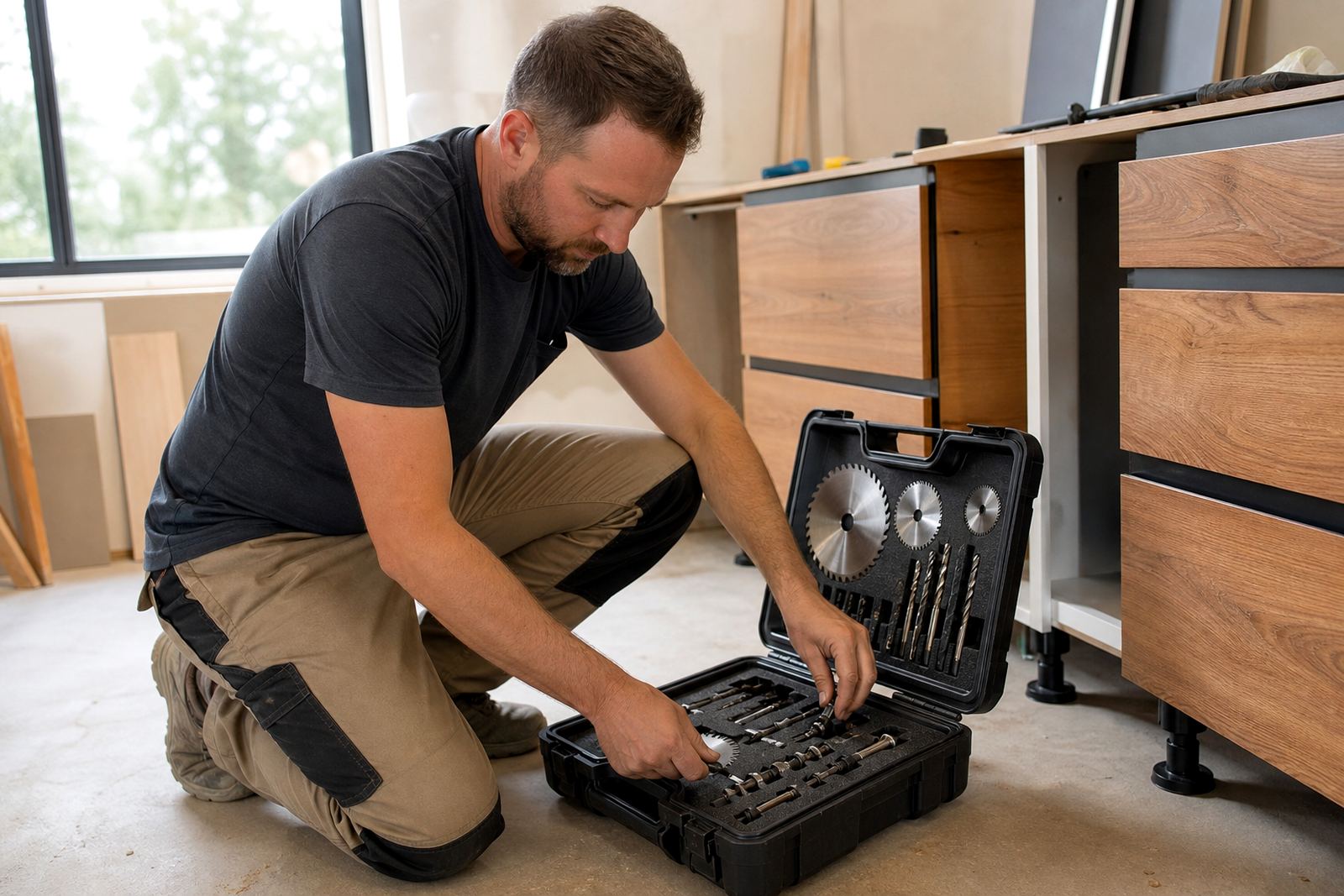
The job came from a shopfitting team in Phoenix, Durban, working on counters, wall units and display panels for a retail installation. Their laminated boards were showing ragged top edges and small chip-outs on the face veneer, especially on longer runs where the cutting load increased. The brief was simple enough, but exacting: restore the scoring blades and panel cutters so the crew could keep production moving and get neater edges straight off the machine.
They were also dealing with inconsistent cut quality after a few hard weeks on site. The problem was not one single fault. Some cutters had dull faces, some had minor edge damage, and a few had lost the original cutting angle. For shopfitting work, that shows up quickly in visible joins, edge banding and time spent cleaning up panels by hand.
- Client type: shopfitting and joinery team
- Town: Phoenix, Durban, KwaZulu-Natal
- Materials: laminated board, face veneer panels and shopfitting sheet material
- Tools: scoring blades and panel cutters
The constraints that mattered on this job
Shopfitting work has its own pressures. The crew needed the cutters back fast, because board cutting was tied to a fitted installation schedule. They also wanted the edges to stay consistent across repeated batches, not just on the first few sheets. On this type of work a small change in tooth form or balance can mean extra sanding, poor joint lines and wasted board.
Transport was another factor. The tools had to be collected and returned without damage, and the team needed a clear handover record so each blade was tracked through the workshop. With humidity along the coast and dust from regular use, the blades also needed proper cleaning before grinding, otherwise resin and fine debris can affect the finish.
- Tight turnaround to suit an active install programme
- Consistent edge quality across repeated board cuts
- Safe handling during collection and return
- Tracking by batch so no blade went missing
What we supplied and how we handled the regrind
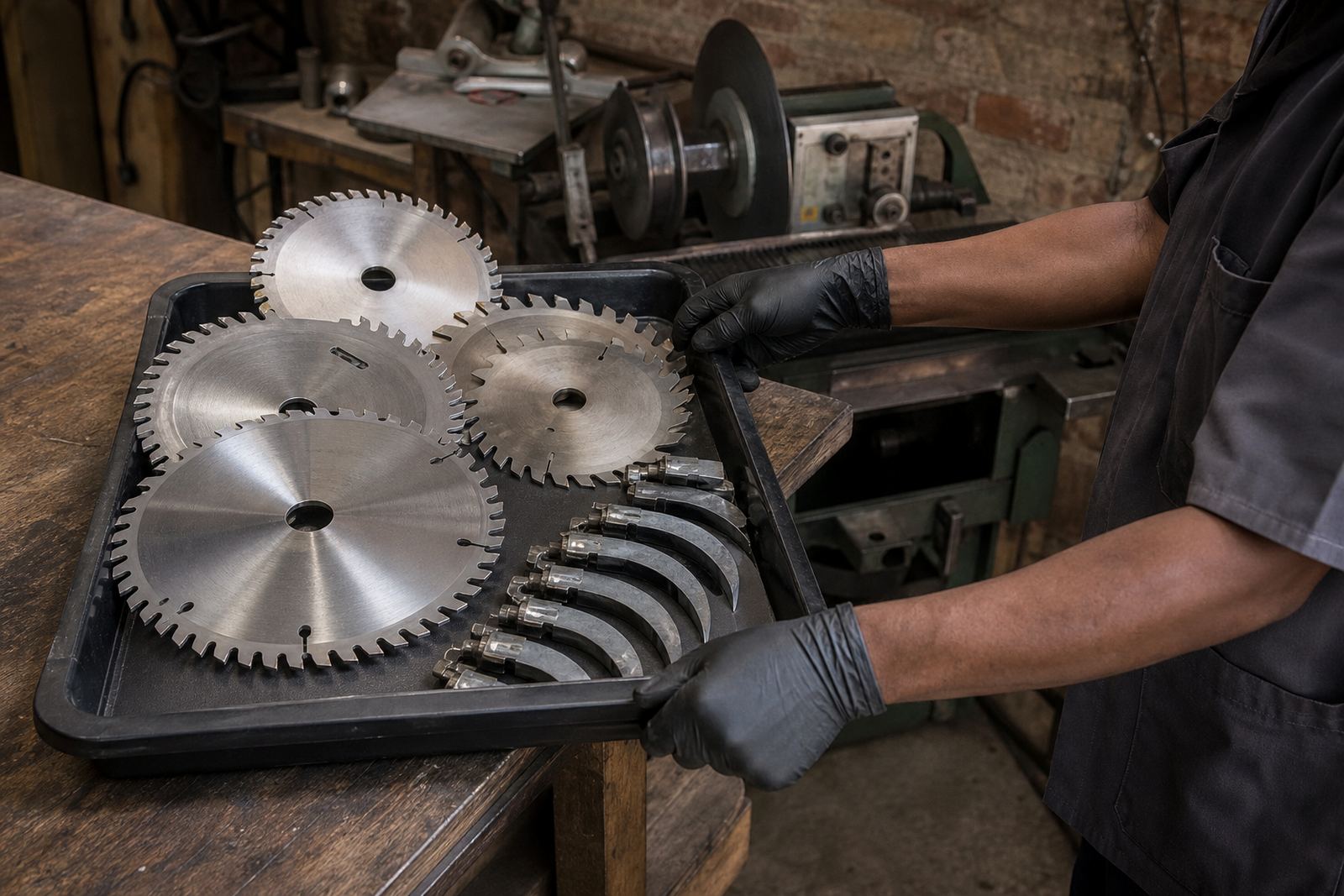
We collected the blades by courier from Phoenix and brought them into our Pinetown workshop for inspection, measuring and sorting. Each blade was checked for wear, chip marks, heat damage and any sign of uneven tooth geometry. The scoring blades were restored first, because they set the quality of the cut line on laminated board. After that we worked through the panel cutters, rebuilding the cutting faces and setting the tooth profile back to a usable standard.
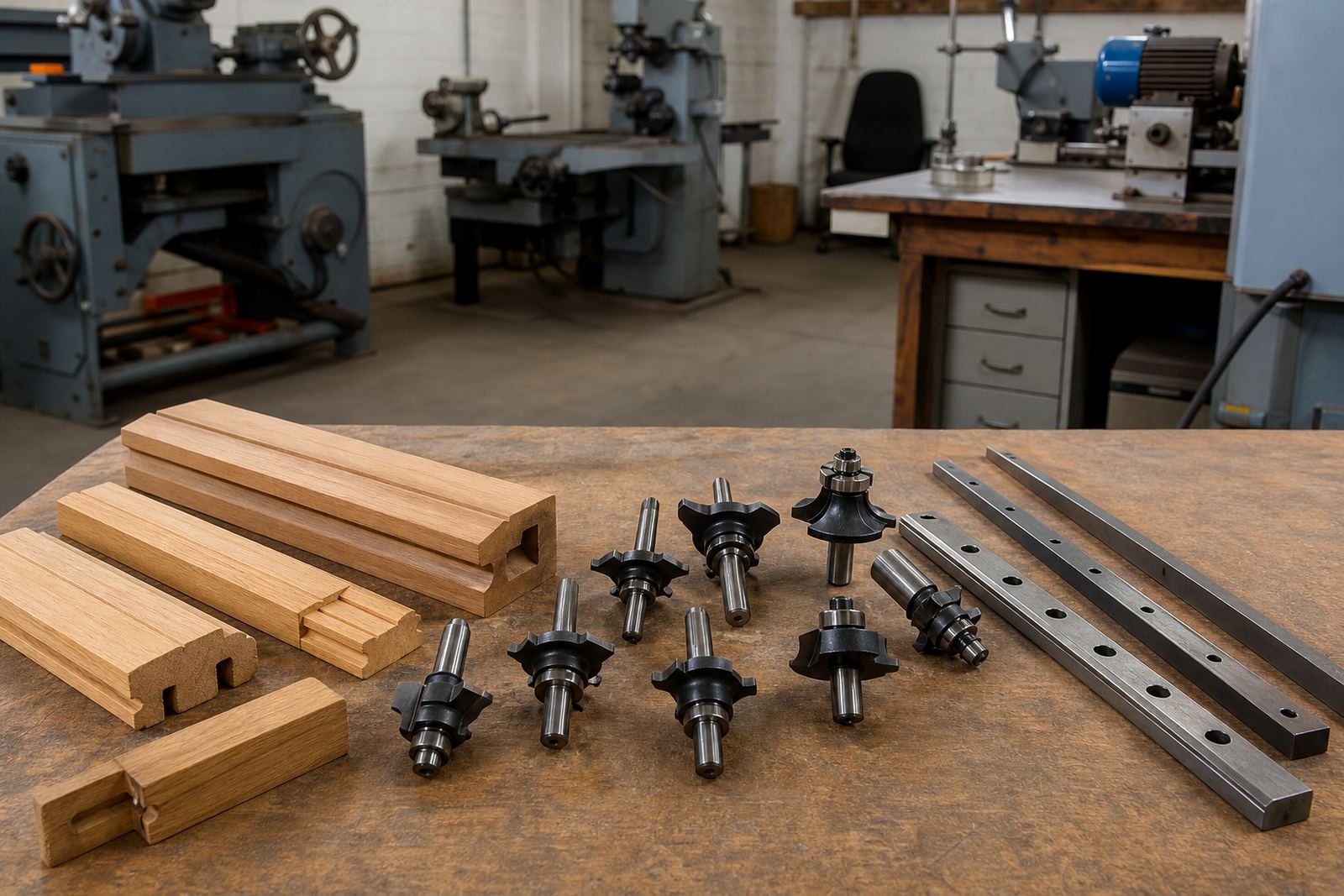
The work included tooth face grinding, top grinding, angle resetting and balance checking. Where a blade had light chipped edges we carried out edge recovery rather than removing more material than needed. For tools with a visible burn mark pattern we removed the damaged surface and checked the cutting line again. In one or two cases the diameter was corrected slightly so the blade could stay within the machine's operating range, which matters on fine scoring applications.
- Scoring blades cleaned, measured and reconditioned
- Panel cutters reground for laminated board work
- Burn marks removed where the cutting surface had overheated
- Balance checked before dispatch back to site
- Batch tool tagging used for traceability
Timeline, turnaround and communication
The full job ran over 2 weeks from collection to return, with the first assessment done as soon as the cutters arrived at the workshop. Day 1 to 3 covered sorting and fault checking. The main grinding and correction work followed during the first week, then the second week was used for final checks, packing and courier return. That timing worked well for the client because it matched a pause in one of their cutting sequences, so they did not have to stop the whole workshop.
We kept the communication practical. The operations team knew which blades were salvageable, which ones needed more corrective work and which ones could be turned around immediately. There was no guesswork. That matters when a crew has a fit-out deadline and needs to plan machine time, material ordering and labour. A good regrind saves time only if it lands back in the right hands on the right day.
- Week 1: intake, cleaning, inspection and grinding
- Week 2: correction, balance checks and courier return
- Total turnaround: 2 weeks
Results on laminated board and finishing work
Once the blades were back in use, the difference showed up in the cut line. The laminated board edges came off cleaner, with less tear-out and fewer chipped corners on long cuts. The crew reported less hand finishing on the visible faces, and the scoring line stayed more even across repeated sheets. That gave the workshop better control on cabinet parts, shelving panels and front faces that had to look right straight away.
The restored cutters also made the machine run more predictably. Less vibration means less wandering on the cut and less stress on the operator. The team could keep a steadier feed rate, which is important when the same board type is being cut in batches. For a shopfitting shop, that is not just neatness, it is labour saved and less board wasted.
- Cleaner laminated board edges with less chipping
- Less manual sanding and cleanup after cutting
- More consistent scoring on repeated board runs
- Improved operator control and smoother feeding
What we would repeat on the next Phoenix fit-out job
If we were doing the same job again, we would keep the same process but we would ask for the blades a little earlier in the cutting cycle. That gives more room for correction before wear becomes too deep. We would also recommend batch tagging from the start of the project, especially when several panel cutters and scoring blades are being used across different machines. It saves time on reassembly and helps the workshop keep the right tool on the right saw.
For similar Phoenix or Durban shopfitting work, we would also suggest a regular sharpening cycle rather than waiting for visible chip-out. In coastal conditions, resin build-up and moisture can make tools age faster than expected. A short maintenance schedule is usually better than a full recovery job after the fact, and it keeps the cut quality steady from one order to the next.
- Book sharpening before wear becomes severe
- Keep separate tags for scoring and main cutting blades
- Plan courier collection around production gaps
- Use regular regrind intervals for laminated board work
Key facts
| Project location | Phoenix, Durban, KwaZulu-Natal |
|---|---|
| Service type | Tool sharpening and regrinding |
| Tools serviced | Scoring blades and panel cutters |
| Turnaround | 2 weeks |
| Collection method | Courier collection and return |
| Key operations | Tooth face grinding, top grinding, angle resetting, balance checking |