Client brief from Kloof and the working setup
The client was a small cabinet installation team working mainly in Kloof, with job sites also running through Hillcrest and Westville. Their tools had to do a lot of work in a short time, often on-site, often in dusty conditions, and they needed a practical sharpening plan that would keep the kit moving from one house to the next.
The brief was straightforward: sharpen compact saw blades, drills and router bits, sort the mixed pile into usable sets, and return everything ready for the next round of fitting and trimming. The installer did not want loose tools coming back in a box with no order, because that wastes time when a crew is loading out before traffic builds up on the M13.
- Client type: cabinet installer and fit-out team
- Area: Kloof, with work across nearby residential sites
- Tools handled: saw blades, drills and router bits
- Collection method: courier booking from the workshop side
What made the job tricky on site and in transit
The main constraint was space. This was not a large factory with racks of spare tooling, it was a compact working kit that had to fit into a vehicle and be ready for same-day or next-day use. The tools were also showing the usual wear from repeat cuts in board material, trims and fittings. A few blades had light burn marks, some drill points had gone blunt, and a set of router bits needed edge recovery after small chips on the cutting face.
Because the team was moving between homes, the sharpening had to be consistent, not just sharp in a general sense. A cabinet installer can feel the difference immediately if a blade starts to wander or a router bit leaves a rough edge. In humid KZN conditions, tools can also pick up surface rust if they are returned damp, so the repack had to allow for clean storage between jobs.
- Compact kit, no spare set to fall back on
- Mixed wear patterns, from blunt edges to chipped tips
- Need for clear sorting so the crew could grab the right tool quickly
- Return packing had to reduce knock damage during courier movement
Sharpening and regrinding carried out at the workshop
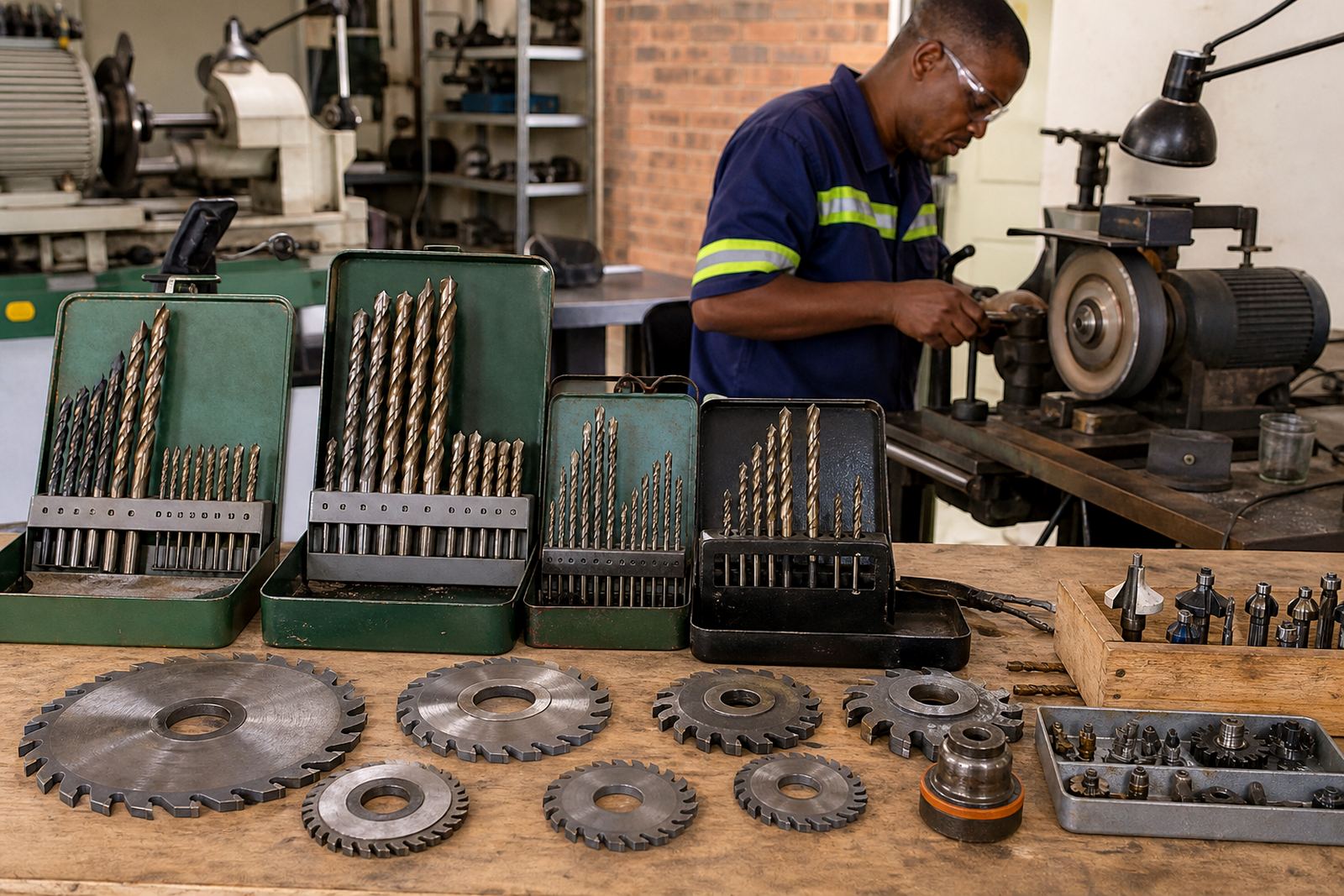
Once the tools arrived at our Pinetown workshop, we separated them by type and condition. Saw blades were checked for tooth condition, balance and any burn marking. Drill bits were assessed for point geometry and length consistency. Router bits were inspected for edge wear, top face damage and chips that needed careful recovery rather than a basic touch-up.
We completed the sharpening and regrinding in stages so each set could be handled correctly. Where needed, we carried out tooth face grinding, top grinding, diameter correction and angle resetting. Burn marks were removed where the cutting face was heat-stained, and damaged edges were recovered only where the material still had enough life left in it. The goal was to get the tools back to clean cutting performance, not just make them look tidy.
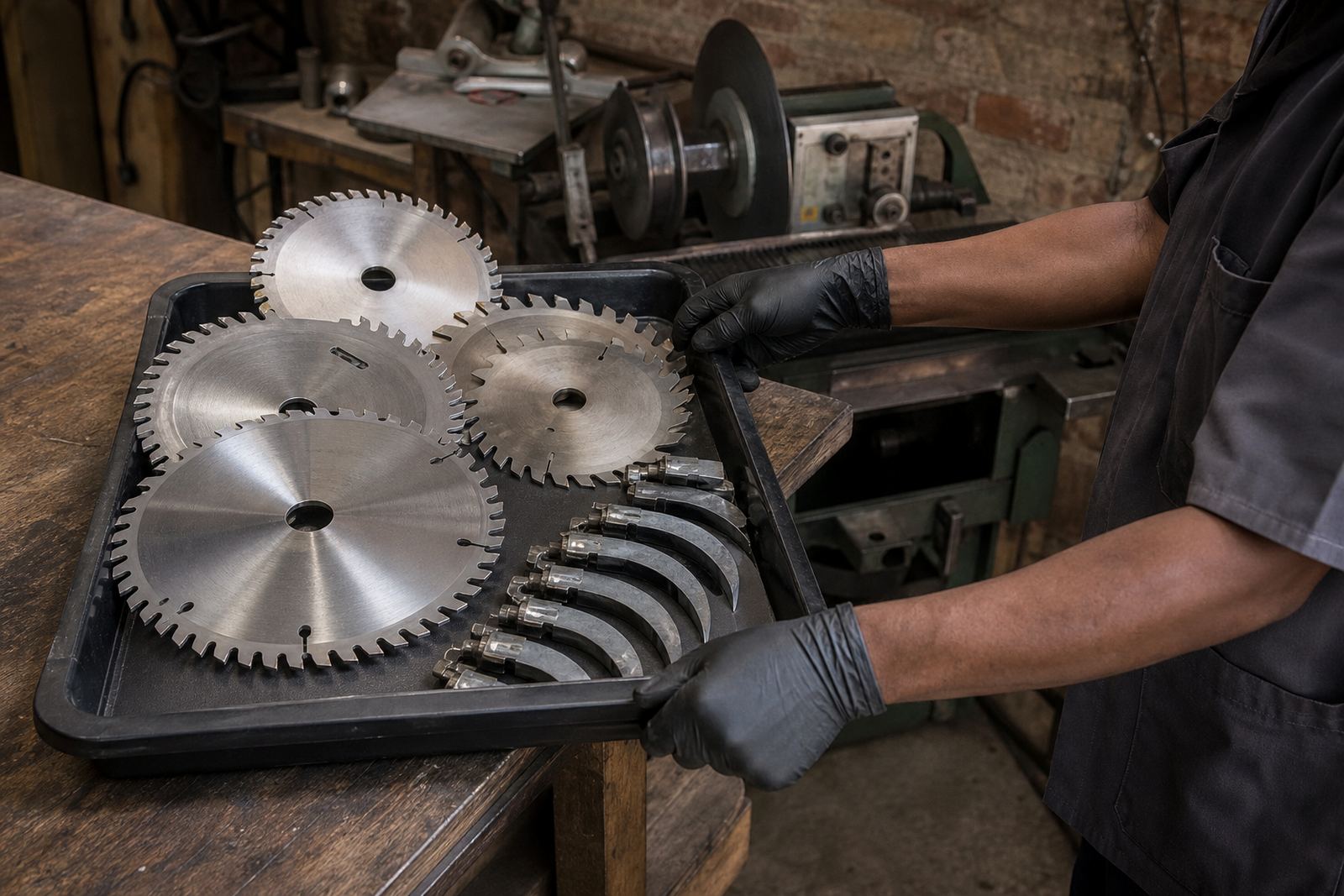
We also checked each set for balance and labelled the batches before packing. That made it easier for the client to know which tools were ready for first use and which ones were best kept as backup for the next site visit.
- Tooth face grinding on worn saw blades
- Top grinding and angle reset where the cut had drifted
- Burn mark removal on heat-affected edges
- Chipped edge recovery on selected router bits
- Batch tool tagging for easy site sorting
Courier collection, repacking and the turnaround plan
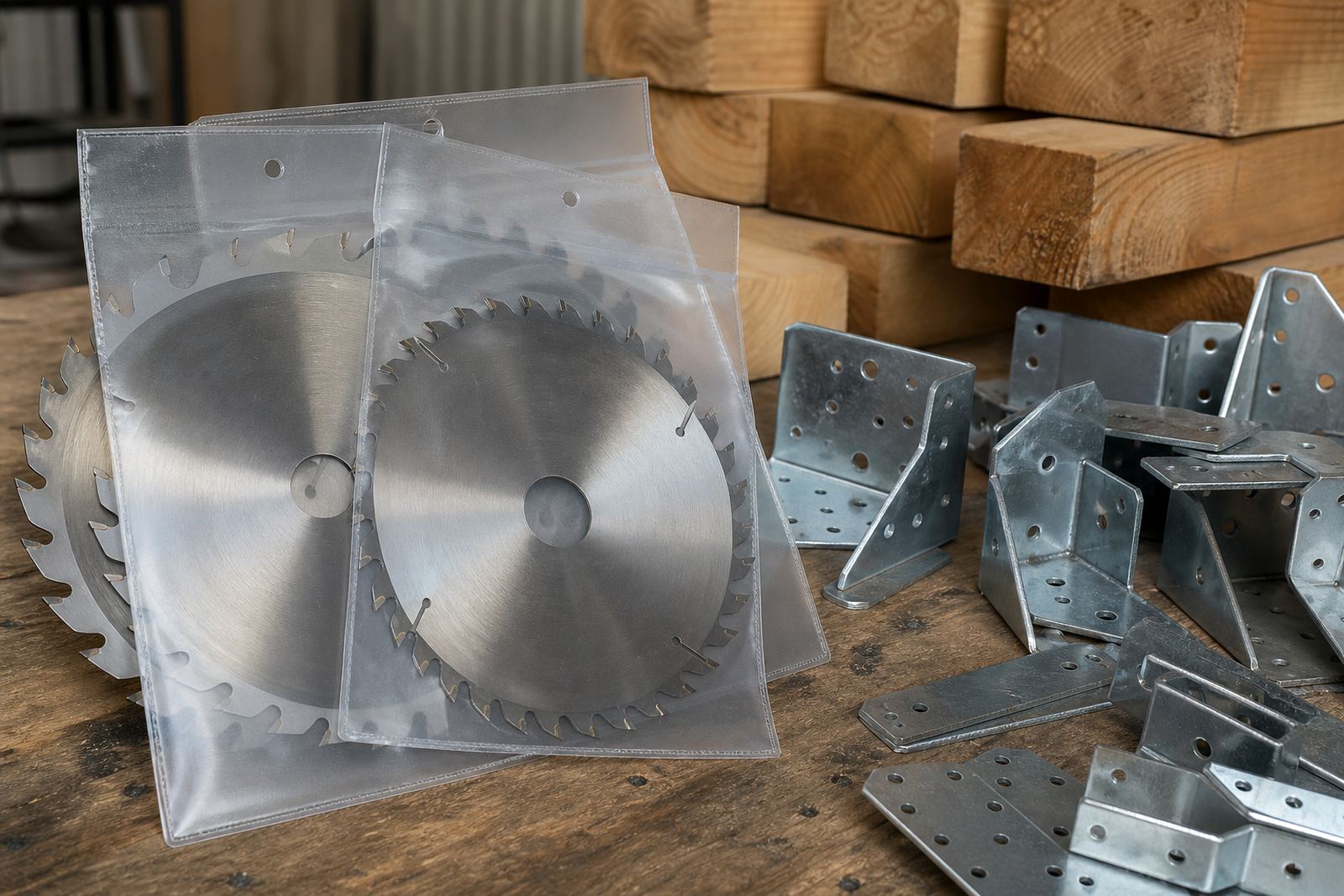
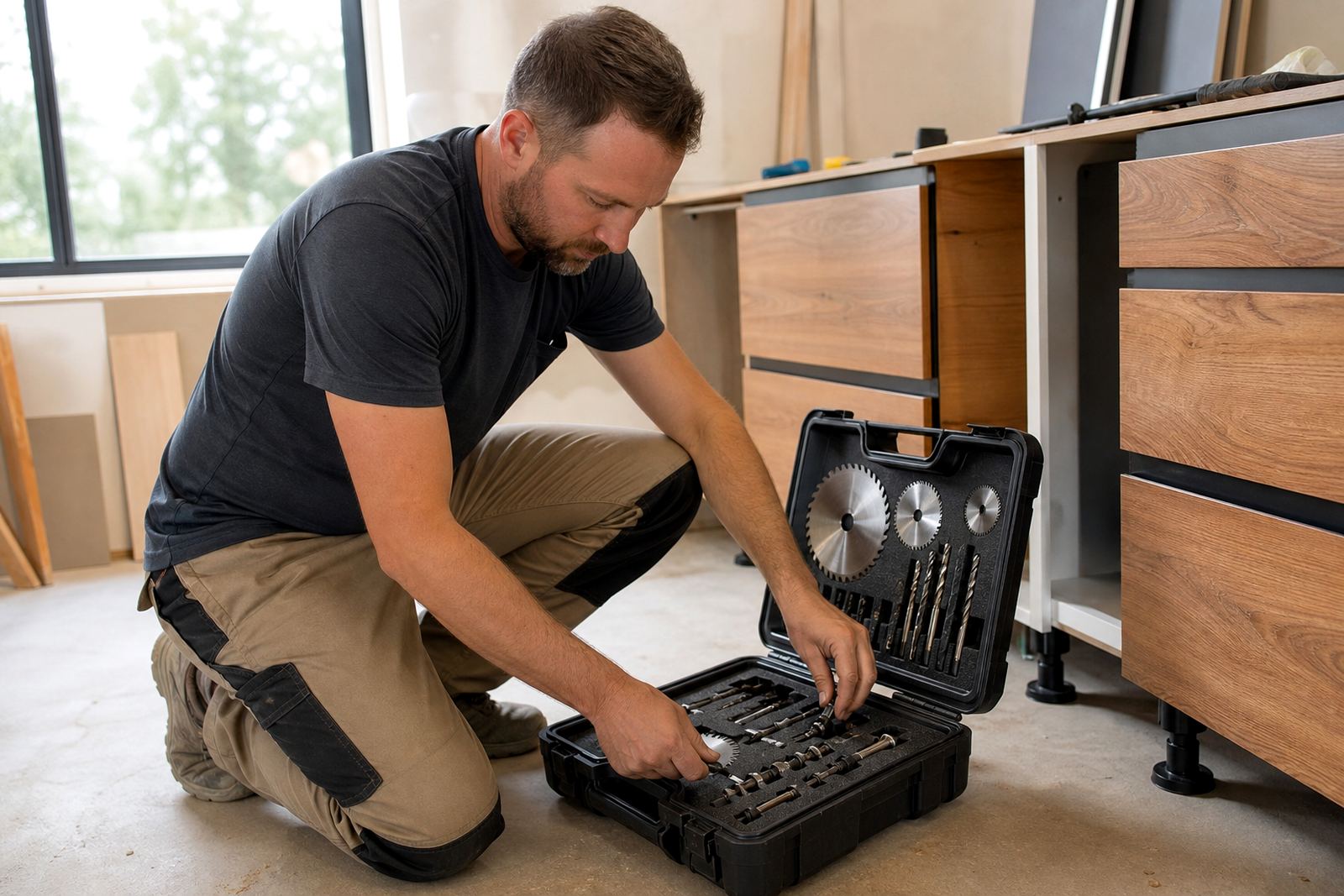
For a working team in Kloof, the collection and return process matters almost as much as the sharpening itself. We arranged courier collection from the client side, then repacked the finished tools into grouped batches so the installer could open the package and get straight to work. That reduced the risk of mixing up cutters, drills and blades on the first morning back on site.
The turnaround ran over 2 weeks from collection to return, which suited the client’s job sequence. They could carry on with prep work, hardware ordering and site visits while the tools were in the workshop. When the sharpened sets came back, they were ready for immediate use and the installer did not have to burn time doing trial cuts before each appointment.
- Courier collection booked from Pinetown
- Tools returned in grouped batches
- 2 week turnaround to match the fit-out schedule
- No need for the client to travel in with loose tools
Results on the next round of installations
The clearest result was smoother cutting on the next set of jobs. The saws tracked better through board material, the drills bit more cleanly, and the router bits produced neater edges with less tear-out. That saved time on trimming and reduced the amount of rework needed on-site, which is important when a cabinet installer is working around painted walls, finished floors and tight fittings.
There was also a practical savings angle. Instead of replacing tools early, the client got more life out of the existing kit. For a small installer, that matters. It keeps spend under control and avoids the stop-start problem that comes with waiting for new cutting tools to arrive. The team could move from one home site to the next with more confidence, and the tools were easier to identify because the batches were tagged and packed properly.
The client also mentioned that the cleaner return packing helped their crew handle tools more carefully on the van side. That sounds small, but it makes a difference when jobs are happening across Kloof, Durban and the Upper Highway area in the same week.
What we would repeat for a similar cabinet installer
For a similar job, we would use the same approach again: inspect first, group by condition, sharpen in batches, and tag everything before return. That sequence works well for installers who carry a compact kit and cannot afford delays on site. It also helps when the tools are being used in mixed conditions, from indoor cabinet fitting to quick trim work in warm, dusty homes.
We would also keep the collection window flexible enough to fit the client’s week, especially where site access is tight or the crew is moving between homes in different parts of Durban. A good sharpening service should reduce pressure, not add admin. That is the way we handle most installer work, whether the kit includes saw blades, drill bits or router bits.
- Inspect before sharpening, not after
- Separate mixed tools into clear groups
- Tag and pack for easy field use
- Build the turnaround around the client’s site schedule
Key facts
| Project location | Kloof, KwaZulu-Natal |
|---|---|
| Client type | Cabinet installer working across home sites |
| Tools serviced | Saw blades, drills, router bits |
| Core work | Sharpening, regrinding, burn mark removal, balance checking |
| Turnaround | 2 weeks |
| Logistics | Courier collection and grouped return packing |