Project brief from a Pietermaritzburg training workshop
The client was a technical training workshop in Pietermaritzburg, KwaZulu-Natal, where learners use hand tools and machine cutting tools on a regular basis. Their brief was simple: restore cutting performance, reduce breakage, and give the staff a practical way to manage tool condition during the term.
They also wanted the work done without disrupting classes. That meant a batch approach, clear labelling, and a return plan that could be followed by the workshop supervisor. As with most school environments, the timing had to work around the timetable and storage space was limited so every item needed to come back sorted.
Tools sent in and the constraints on site
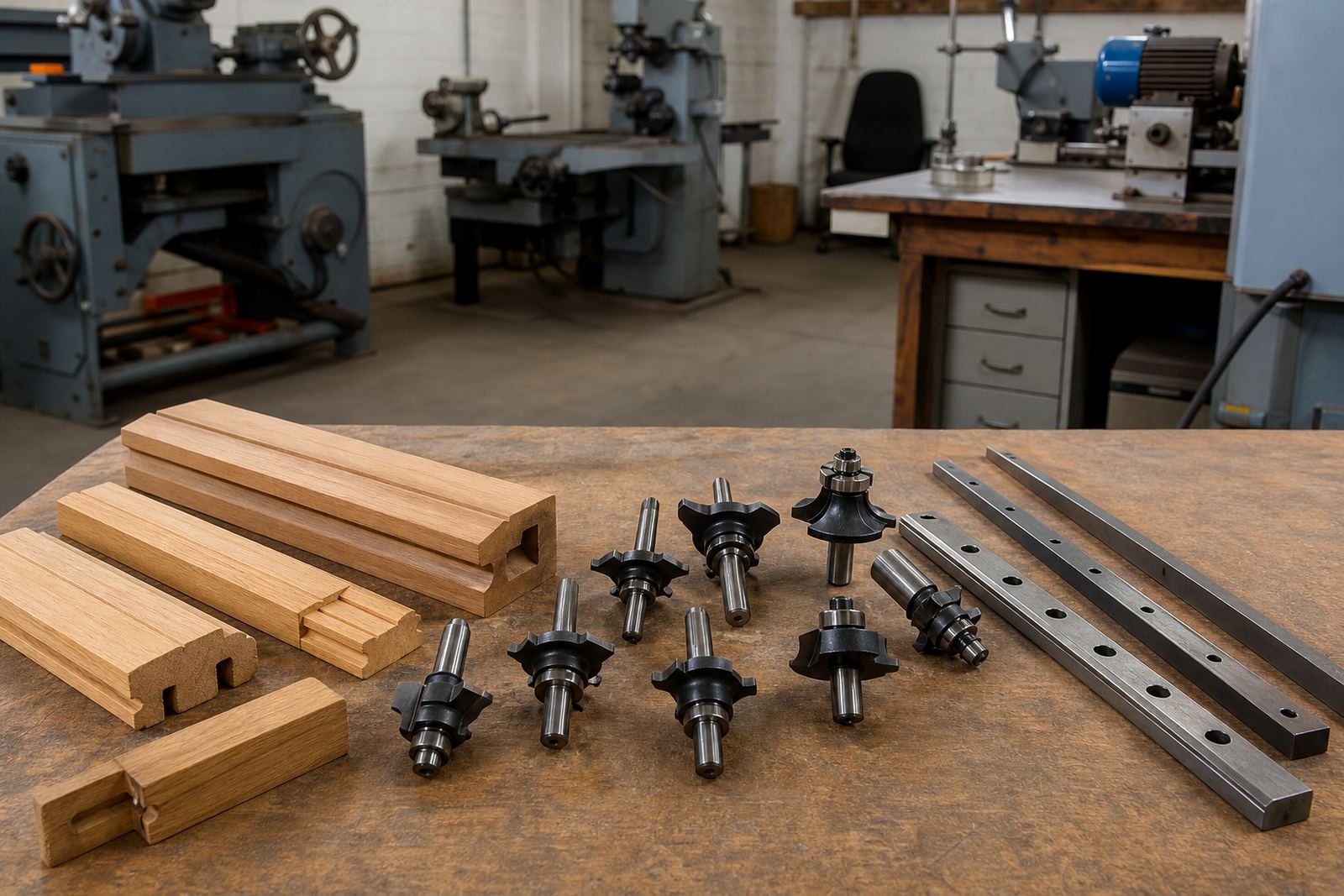
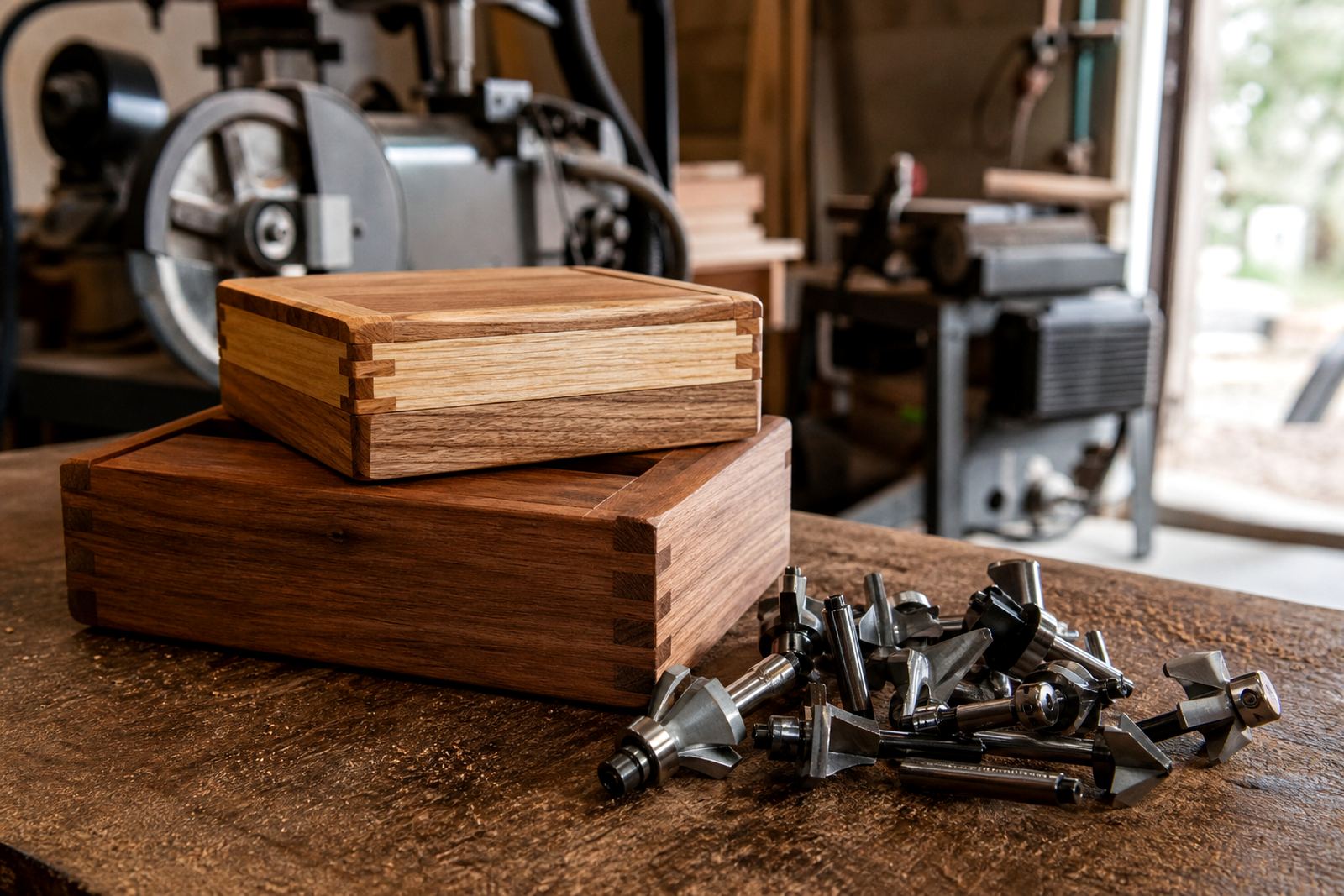
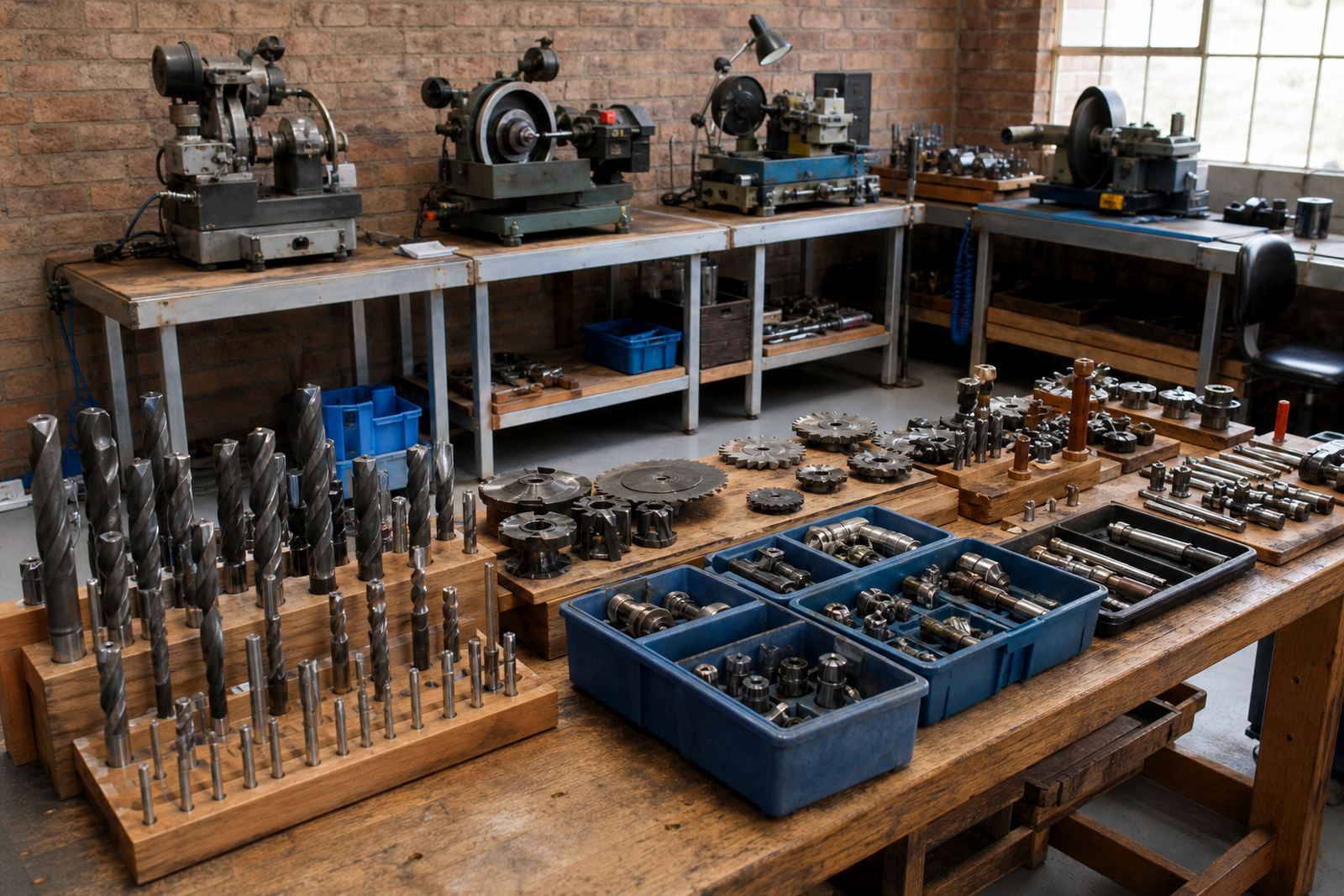
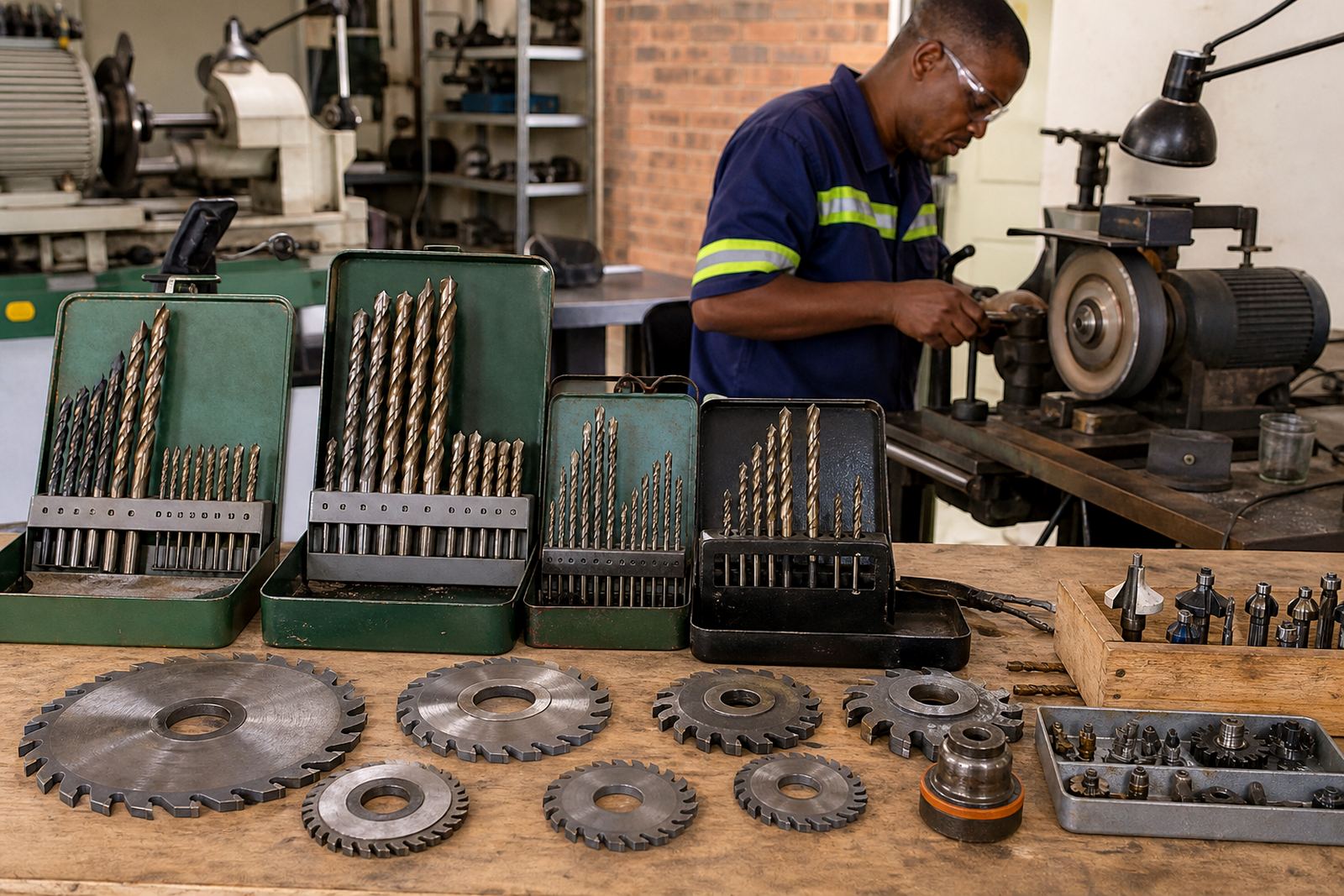
The batch included saw blades, drill bits, and router bits used for classroom demonstrations and supervised practical work. Some items had blunt teeth, burn marks, and a few chipped cutting edges from repeated use on hardwood and mild steel offcuts. The workshop also wanted the tools checked for balance and diameter consistency before they went back into circulation.
- Item types: saw blades, drills, router bits
- Condition issues: dull edges, burn marks, chipped teeth, uneven wear
- Workplace limits: school timetable, tight storage, no room for loose return piles
- Local handling need: quick collection and tidy batch tracking
Because this was a training space, the tools needed to be safe for learners and predictable for staff. We kept the process practical, with no overcomplicated sorting at their end and a clear sequence from collection to return.
What we supplied and how the regrind was done
We carried out saw blade sharpening, drill sharpening, and router bit sharpening with regrinding work matched to the material each tool was used on. That included tooth face grinding, top grinding, angle resetting, burn mark removal, chipped edge recovery, balance checking, and diameter correction where needed.
Every batch was tagged before and after work so the workshop could identify each tool set quickly. We also separated items that needed light correction from those that required more detailed regrinding. In one or two cases the edge geometry had drifted enough that a basic sharpen would not have held, so we reset the cutting angle first and then finished the edge cleanly.
- Sharpening approach matched to the tool type and wear pattern
- Batch tool tagging used for easy issue and return control
- Balance checked on saw items before dispatch back to site
- Damaged cutting edges recovered where metal loss still allowed safe reuse
Timing, courier collection, and return to class use
The project ran over 2 weeks from first contact to return delivery. Courier collection was arranged from Pietermaritzburg, with the workshop able to hand over the batch in one go rather than sending items separately. That reduced admin for the client and helped keep the classroom schedule moving.
Once the sharpened tools were ready, we returned them in grouped sets so the staff could allocate them by lesson or workstation. The supervisor was also given a short care outline covering cleaning, storage, and when to pull a tool out of use for resharpening. In a school setting, that sort of practical guidance saves a lot of repeat damage.
Care guidance for staff and learner handling
Alongside the sharpening work, we supplied starter maintenance guidance for the team responsible for the workshop store. The aim was not to create extra admin, but to give them a simple routine they could keep up with during a busy term. We covered safe cleaning, dry storage, visual edge checks, and basic signs of heat damage.
- Wipe tools down after use to limit rust and resin build-up
- Keep saw blades and router bits dry, especially in humid months
- Separate dull tools from ready-use stock straight away
- Use batch tags or labels so mixed sets do not get lost
- Book collection before the damage becomes too severe
For schools near the coast or in KwaZulu-Natal humidity, storage matters as much as sharpening. A tool that comes back clean but sits in a damp cupboard will lose condition far quicker than expected, so we gave the client a storage routine they could actually follow.
Results in the workshop after the return
After the tools were returned, the workshop reported cleaner cuts, less burn on timber stock, and better feed consistency on supervised jobs. The staff could also keep track of which items were serviceable and which ones needed to stay aside for later attention. That reduced the stop-start pattern that often happens when classroom tools are left blunt for too long.
The biggest gain was consistency. With sharpened blades and corrected cutting edges, learners could focus on technique rather than fighting the tool. For a school workshop, that improves safety and makes the lesson easier to run. It also means the tools last longer, which matters when budgets are tight.
What we would do again for a school workshop
We would use the same batch tagging and collection approach again, especially for a site that has to manage tools around class times. It keeps the process orderly and gives the staff a clear paper trail, even if the physical items are being moved between rooms or stored after hours.
We would also repeat the short care briefing. In our view, sharpening is only half the job. If the team knows how to clean, store, and inspect the tools properly, the next service interval is easier to manage and the cutting performance lasts longer. That is the practical value for a training workshop in Pietermaritzburg.
Key facts
| Project type | School technical workshop tool sharpening and care guidance |
|---|---|
| Town | Pietermaritzburg, KwaZulu-Natal |
| Timeline | 2 weeks from collection to return |
| Tools serviced | Saw blades, drills, router bits |
| Service scope | Sharpening, regrinding, batch tagging, courier collection |
| Key corrections | Tooth face grinding, top grinding, balance checking, burn mark removal, diameter correction |