Joinery work in Hillcrest, with tight deadlines and mixed timber
The client was a busy joinery team in Hillcrest supplying doors, frames, trims and fitted timber components to local builders and homeowners. Their workshop was running a mix of circular saw blades, drill bits and router bits all week, and the problem was not a lack of machines, it was downtime from dull edges and inconsistent cutting. When a batch of blades blunts at the same time the whole line slows down, and that quickly affects fitting dates.
The brief was simple: keep the cutting tools in better condition, reduce stoppages and make the sharpening cycle predictable. They also wanted a system that would work around load shedding, courier collections and the pace of a small KZN joinery shop that cannot leave work waiting for long. The team needed one point of contact, clear job tagging and a return process that did not create confusion on the floor.
What they asked us to solve before the next production run
The main issues were chipped teeth on saw blades, burn marks on timber, and drill bits that wandered when starting holes in harder stock. Router bits were also leaving rough edges on grooves and rebates, which meant extra sanding and rework. The joinery team had already tried stretching tool life between runs, but that usually gave poor cuts and more waste. In short, the tools were getting used hard, and the workshop needed a better maintenance rhythm.
- Reduce blade stoppages on door and frame production
- Restore cutting accuracy on worn saws and bits
- Set up a repeatable collection and return routine
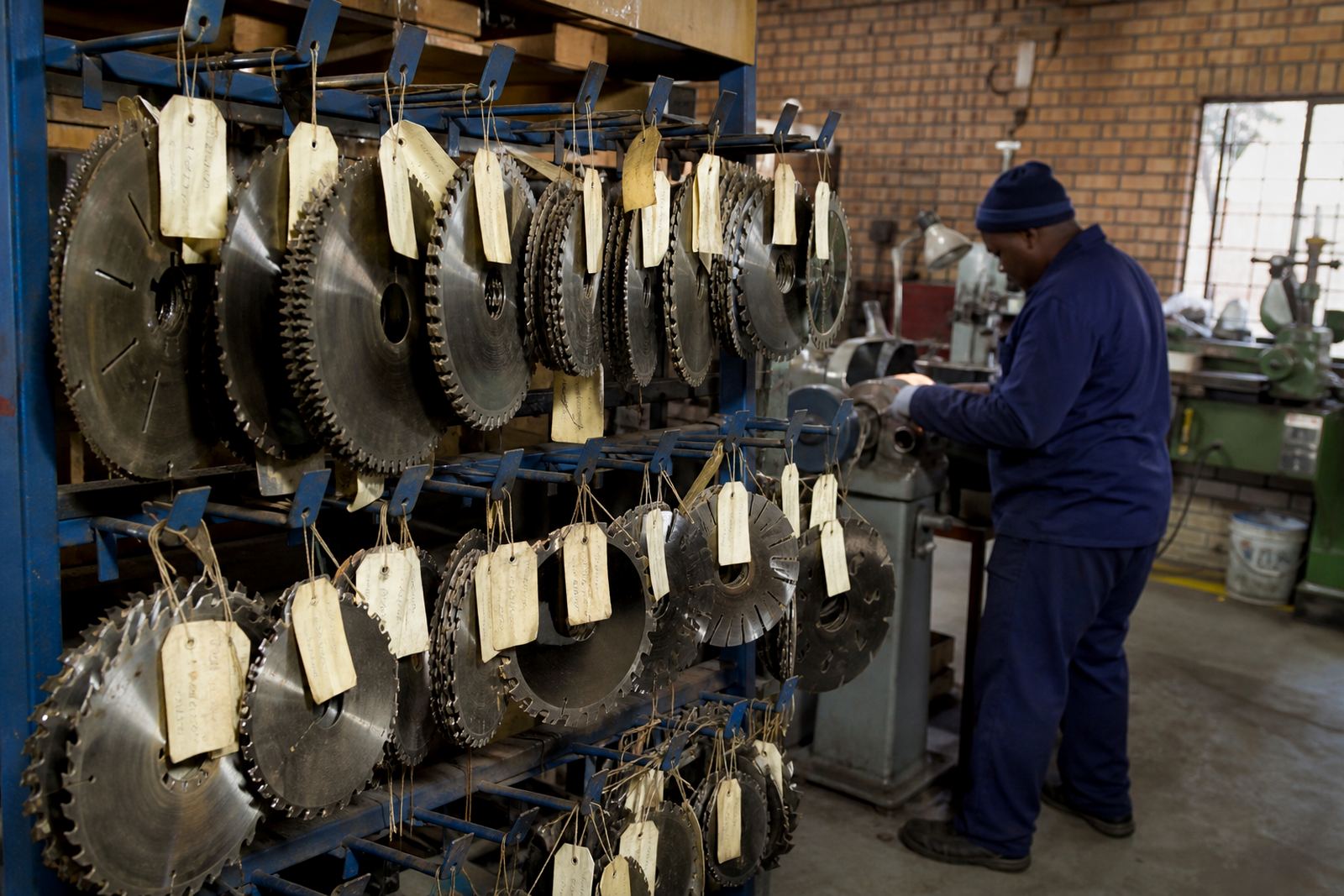
- Tag tools by job so mixed batches stayed organised
We also checked whether any tools needed diameter correction or angle resetting, because once a blade drifts off spec it can start affecting cut quality across a full batch. That matters even more when there are several operators on the floor and work is being split between ripping, trimming and finishing.
Sharpening and regrinding carried out for the workshop
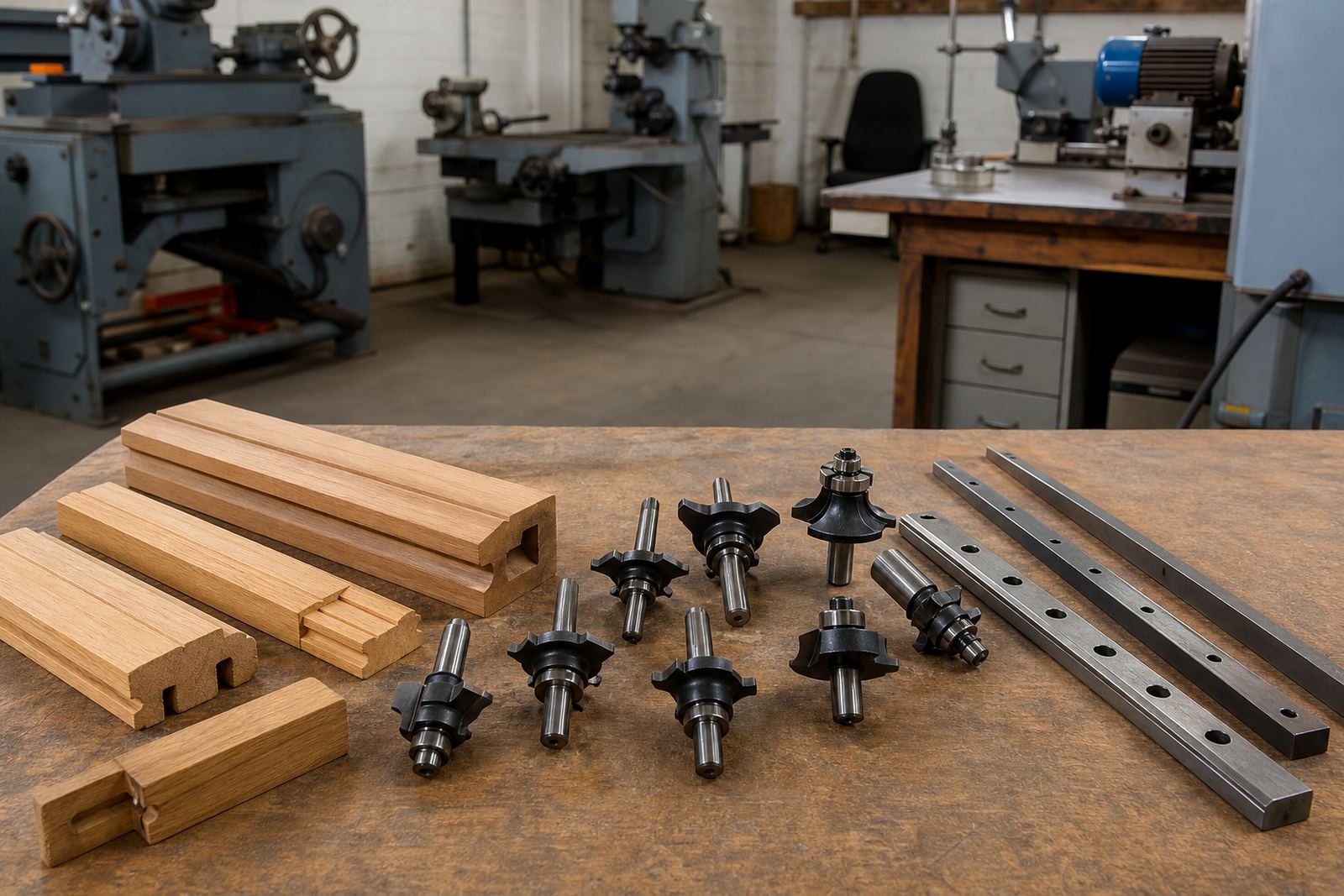
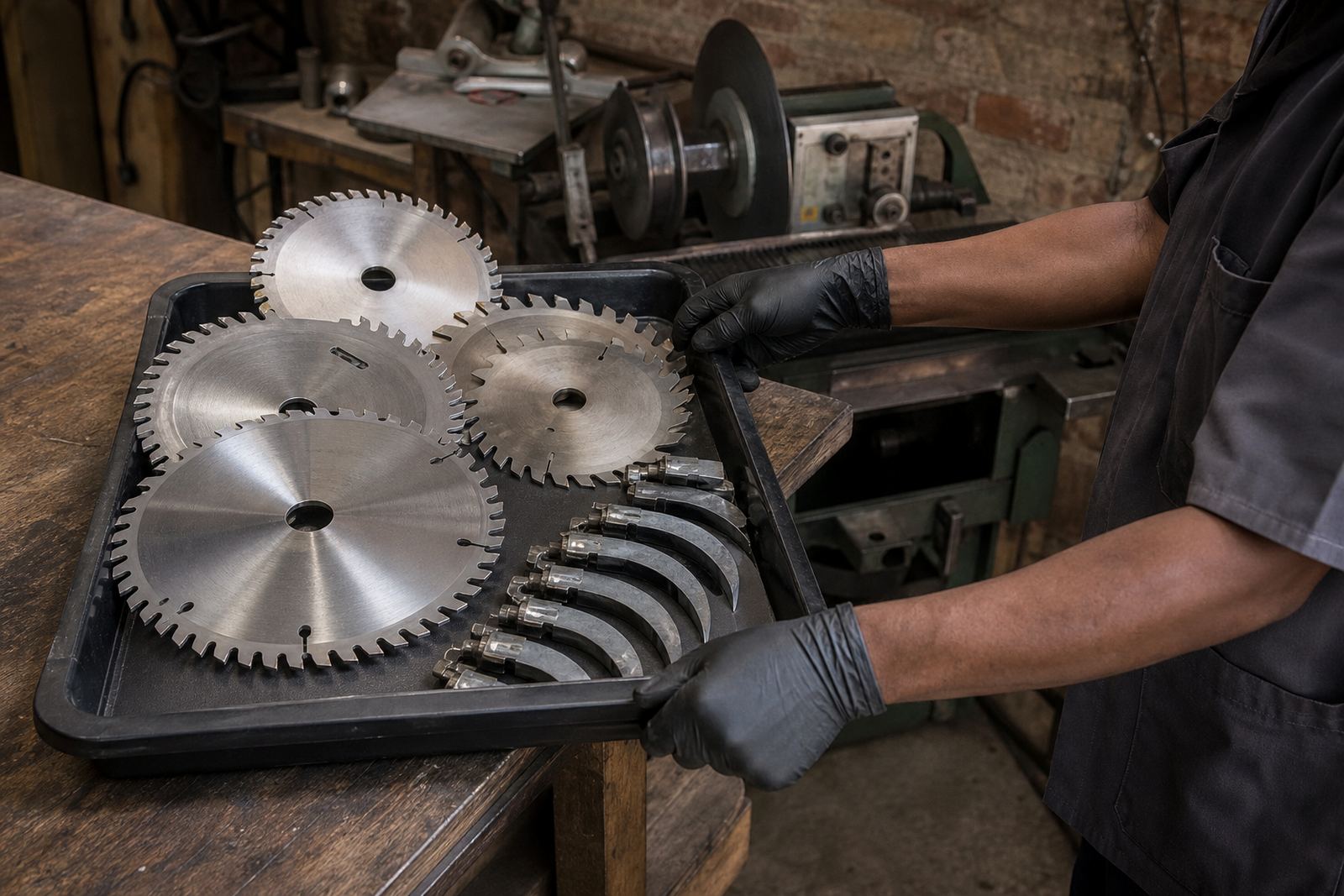
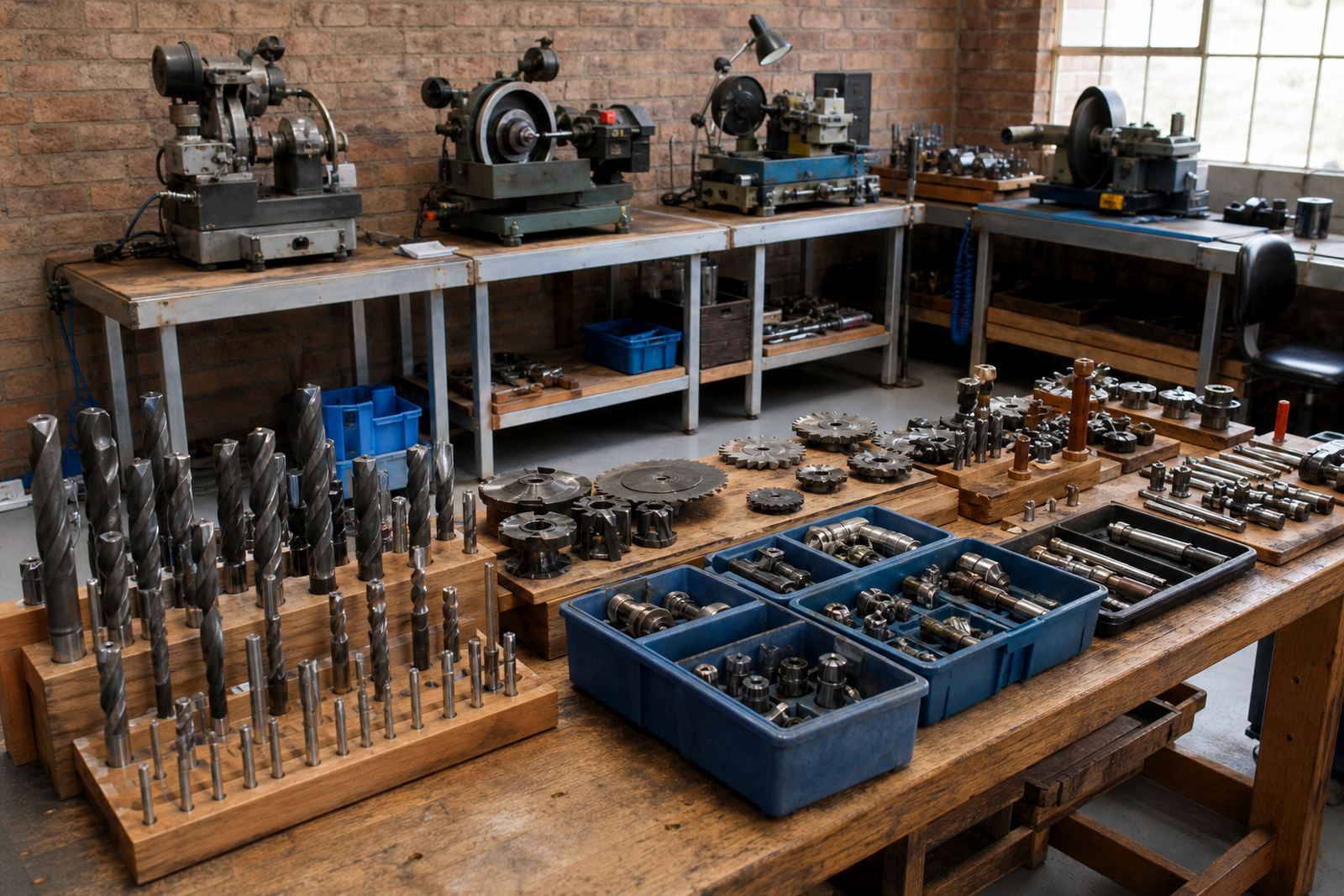
We collected the tools by courier from Hillcrest and brought them into our Pinetown base for inspection, sorting and work allocation. Each item was logged, checked for burn marks, chipped edges and balance issues, then matched to the correct sharpening process. For saw blades we carried out tooth face grinding, top grinding and burn mark removal where needed. Drill bits were sharpened for cleaner starts and longer tool life, while router bits were reconditioned to improve edge quality on profiles and rebates.
The batch included standard workshop sizes used in joinery, with blades needing careful attention on tooth geometry and balance. Where a blade had taken a knock, we used chipped edge recovery and angle resetting rather than pushing it back into service too early. That saved the client from repeated snags on the saw line and kept the finish more consistent from the first cut to the last. We also separated tools for immediate return from those better held back for a second pass, which is a practical step when the week is already full.
- Saw blade sharpening and regrinding
- Drill sharpening for clean entry and less wandering
- Router bit sharpening for profile accuracy
- Balance checking on selected blades
- Batch tool tagging for easy workshop tracking
Timing, courier flow and working around power cuts
The project ran over 2 weeks from first collection to final return. Week one covered intake, tagging and the first sharpening cycle. Week two covered the remaining batch, final checks and courier return to Hillcrest. Because the client was working through normal production pressures and occasional load shedding, we planned the return in a way that let them slot sharpened tools straight back into service without confusion.
Courier collection was important here. The team did not want to lose half a day driving tools around Durban and the Upper Highway area, so our collections coordinator arranged the pickup and return in line with their production timing. That made the process simpler for the shop foreman, and it also meant the workshop could keep the current run moving while the sharpened tools were being processed. No special storage was needed at the client side, just clear separation of what was in use and what was out for service.
What changed after the first rotation cycle
Once the sharpened blades and bits were back on the machines, the joinery team saw fewer stoppages and less time spent forcing dull cutters through timber. Cut quality improved on doors and frames, with cleaner edges and less burn on harder sections. The biggest gain was consistency. Instead of waiting for a tool to fail, they had a rotation that let them swap in a serviced blade before the cut quality slipped. That saved time and reduced waste, which is what most workshops want but dont always have a system for.
- Fewer stoppages during the week
- Cleaner cuts on doors, frames and trim work
- Less burn marking on timber faces
- Lower rework and sanding time
- Better control over tool availability
The client also found the batch tagging useful because different operators could see what had been returned, what was still out, and what needed to stay back for the next collection. For a joinery shop handling mixed jobs, that kind of order matters as much as the actual sharpening.
What we would repeat for another Hillcrest joinery team
If we were setting this up again for a similar workshop in Hillcrest, Westville or Pinetown, we would keep the same approach: inspect first, tag everything, sharpen in batches, then return tools on a fixed rotation. That is the part that keeps production steady. We would also ask the client to separate saws, drills and router bits from the start, because mixed batches take longer to sort and can delay the return. A simple intake process saves a lot of back and forth later.
For workshops working near the coast, humidity can also affect storage and tool condition, so we would suggest keeping sharpened items dry and sealed until the next run. If the shop is dealing with frequent municipal interruptions or load shedding, it helps to schedule sharpening before a busy production window rather than after. The aim is not just sharp tools, it is a working routine that fits the pace of the joinery floor.
Training support for the team on site
Alongside the regrinding work, we spoke with the team about practical tool care between collections. That included how to spot early signs of dulling, when to stop using a blade that is starting to burn timber, and how to keep batches separate for courier collection. We also discussed starter kit items for maintenance, especially for smaller teams that want a simple system without overcomplicating the workshop.
Training is often the missing piece. A good sharpening cycle can only do so much if tools are pushed past their service point. Once the Hillcrest team had a clearer process, they could plan better around busy days, keep their saws and bits in better shape, and avoid the scramble that usually happens when every tool is dull at once. That is the kind of practical difference that shows up in the work, not just on paper.
Key facts
| Project location | Hillcrest, KwaZulu-Natal |
|---|---|
| Client type | Joinery team making doors and frames |
| Service period | 2 weeks |
| Main tools serviced | Saw blades, drill bits, router bits |
| Collection method | Courier collection and return |
| Work carried out | Sharpening, regrinding, tagging, balance checks |