Queensburgh fitting work that needed cleaner edges
The client was a small door fitting and installation team working in Queensburgh, with jobs that moved between homes, flats and light commercial sites. Their main issue was that older cutting tools were leaving rough hinge pockets, wandering screw starts and burn marks on circular saw cuts, which meant extra sanding and time on site.
The brief was simple: get the hand tools and saws back into proper working condition before the next round of installs. They needed tools that would hold a clean line on hardwood and laminated door stock, while still being practical for day to day use in the field. Load-shedding was also a factor, so the workshop plan had to account for processing batches without delay.
- Client type: door fitting and installation contractor
- Area: Queensburgh, Durban South
- Problem tools: countersinks, hinge bits and circular saw blades
- Main fault signs: tear-out, chatter, burn marks and slow cutting
What came in for reconditioning
The tools arrived as mixed workshop stock, some used on timber doors, others on frame work and site trimming. We checked cutting condition, balance and edge wear before deciding what could be sharpened, what needed regrinding and what needed geometry corrected. A few pieces had chipped edges and heat discolouration, so they were treated in stages instead of rushed through together.
For this job, the key was to keep the cutting faces even and remove only what was needed. That mattered on the circular saws because too much material removal can shorten blade life and throw off the cut. On the countersinks and hinge bits, the focus was on cleaner entry, correct point shape and a smoother finish in softer timber and laminated board alike.
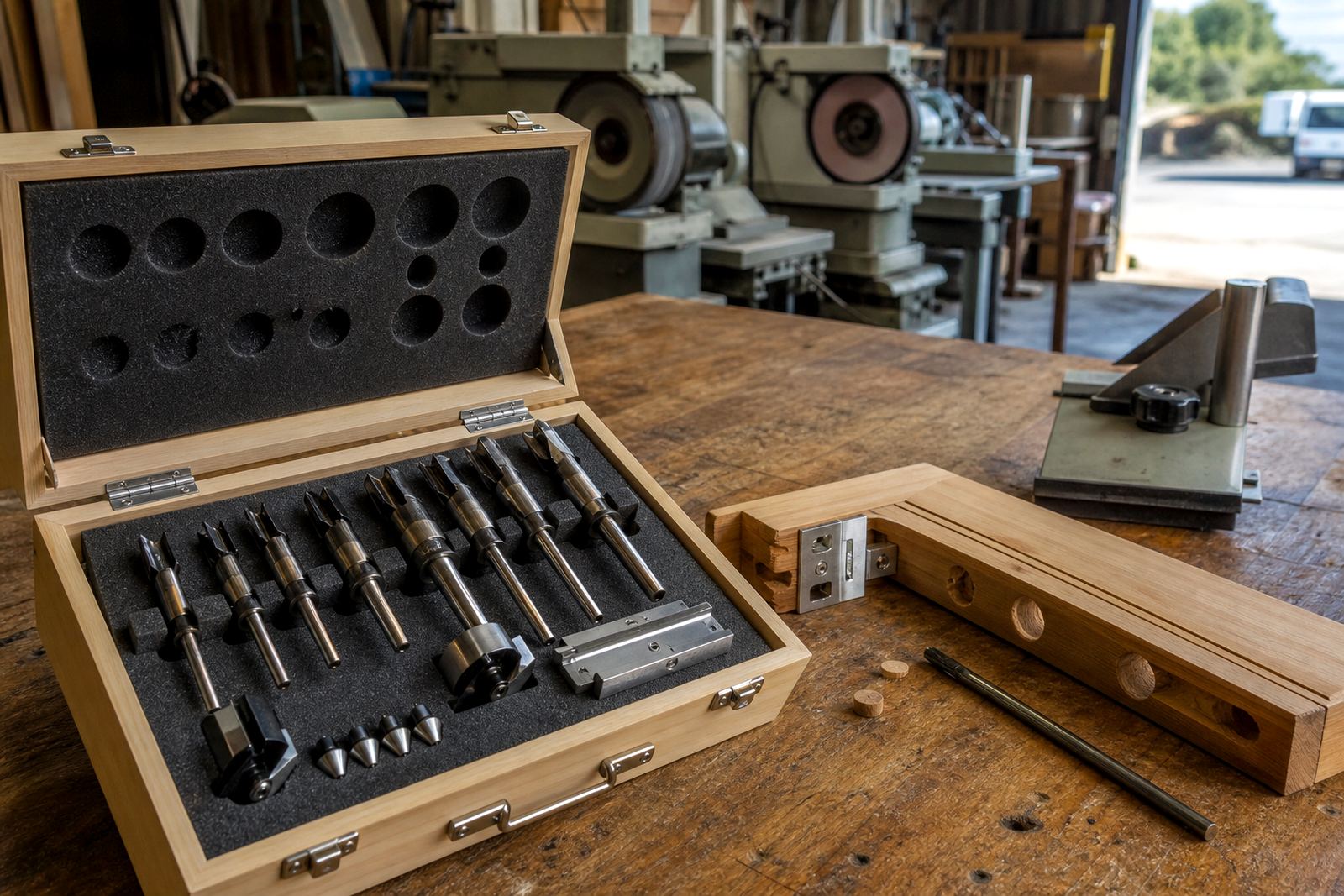
- Countersinks: reconditioned for cleaner pilot starts
- Hinge bits: reground for neater recesses
- Circular saws: sharpened and checked for burn reduction
- Inspection: balance checking and edge review before dispatch
Workshop process and timing over two weeks
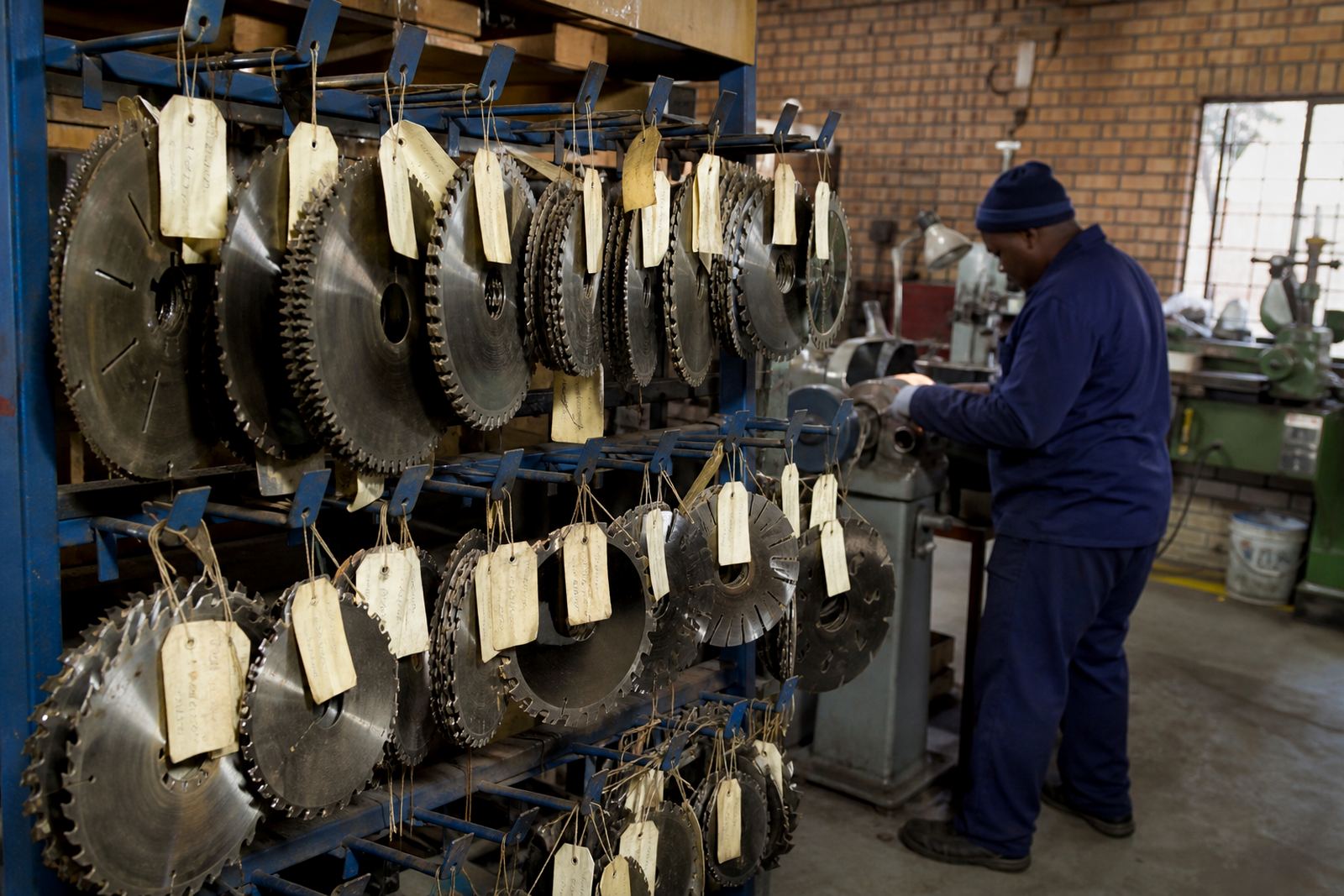
We completed the work over a two week turnaround, with collection and return arranged through our courier process. The first stage was intake tagging so each item could be tracked correctly through the sharpening bay and regrinding section. After that, the tools were cleaned, checked and grouped by condition, which made the finish more consistent across the batch.
The sharpening stages were matched to the tool type. Saw blades were sharpened for cleaner kerf performance, while the hinge bits and countersinks were reprofiled for more controlled cutting. Where needed, we adjusted angle settings and corrected worn faces so the tools would bite properly again. The team could then unpack them in order and put them straight back into work, no sorting confusion at all.
- Week 1: inspection, tagging and fault assessment
- Week 1 to 2: sharpening, regrinding and correction work
- End of week 2: final checks and courier return
Cleaner install results on site
Once the tools were back in service, the client reported cleaner hinge pockets and more even circular saw cuts on doors and trims. The countersinks seated screws better and reduced surface damage around the fixings, which helped the installers leave a tidier finish before paint and final snagging. It also cut down on the small rework jobs that usually slow a fitting crew down.
There was less burn on the timber, fewer edge chips and a better feel on the cut. That matters in Queensburgh where many jobs are done inside occupied homes, so speed and a neat finish both count. For the crew, the biggest win was consistency, because every tool in the kit started behaving the same way again.
- Cleaner hinge recesses with less breakout
- Reduced burn marks on saw cuts
- Improved screw seating from reconditioned countersinks
- Less time lost to touch-up work
Why the batch approach suited the job
This kind of work suits a batch service because door fitters usually need several tools back together, not one item at a time. By handling the saw blades, countersinks and hinge bits in one run, we could keep the cutting angles aligned and avoid mix-ups. It also made collection simpler for the client, who did not need to send tools in piecemeal between jobs.
The local setup helped too. Queensburgh sits close enough to Durban for practical courier movement, and the client could send stock in from site without losing a full day. For workshops working through wet weather and humid coastal conditions, having tools checked and returned ready for use is a proper advantage.
- One batch, multiple tool types
- Lower chance of mixed-up stock
- Better continuity for active fitting jobs
- Suitable for coastal humidity and regular site use
What we would do again for similar fitting crews
If we repeated this project, we would use the same process: intake tagging, fault grading, controlled sharpening and a final balance check before release. That sequence gives fitter crews the best chance of getting a reliable finish without wasting time on site adjustments. For a Queensburgh team working under tight schedules, that practical order matters.
We would also keep courier booking in the plan from the start, especially where jobs are spread across Durban, Westville and Hillcrest. When a crew is moving between homes and commercial sites, tool downtime can stall the whole day. A properly reconditioned kit keeps the pace steady and helps the installer focus on the fit, not the fix after the fact.
- Repeat the same tagging and inspection steps
- Group tools by condition before sharpening
- Schedule courier collection before the next job run
- Keep spare tools marked and sorted for rotation
Key facts
| Project | Queensburgh Door Fitter |
|---|---|
| Client area | Queensburgh, KwaZulu-Natal |
| Service scope | Saw blade sharpening, drill sharpening, router bit sharpening and regrinding |
| Tools treated | Countersinks, hinge bits and circular saws |
| Turnaround | 2 weeks |
| Result | Cleaner cuts, less burn and neater installation work |