
Burn marks usually start with heat, not just a blunt blade
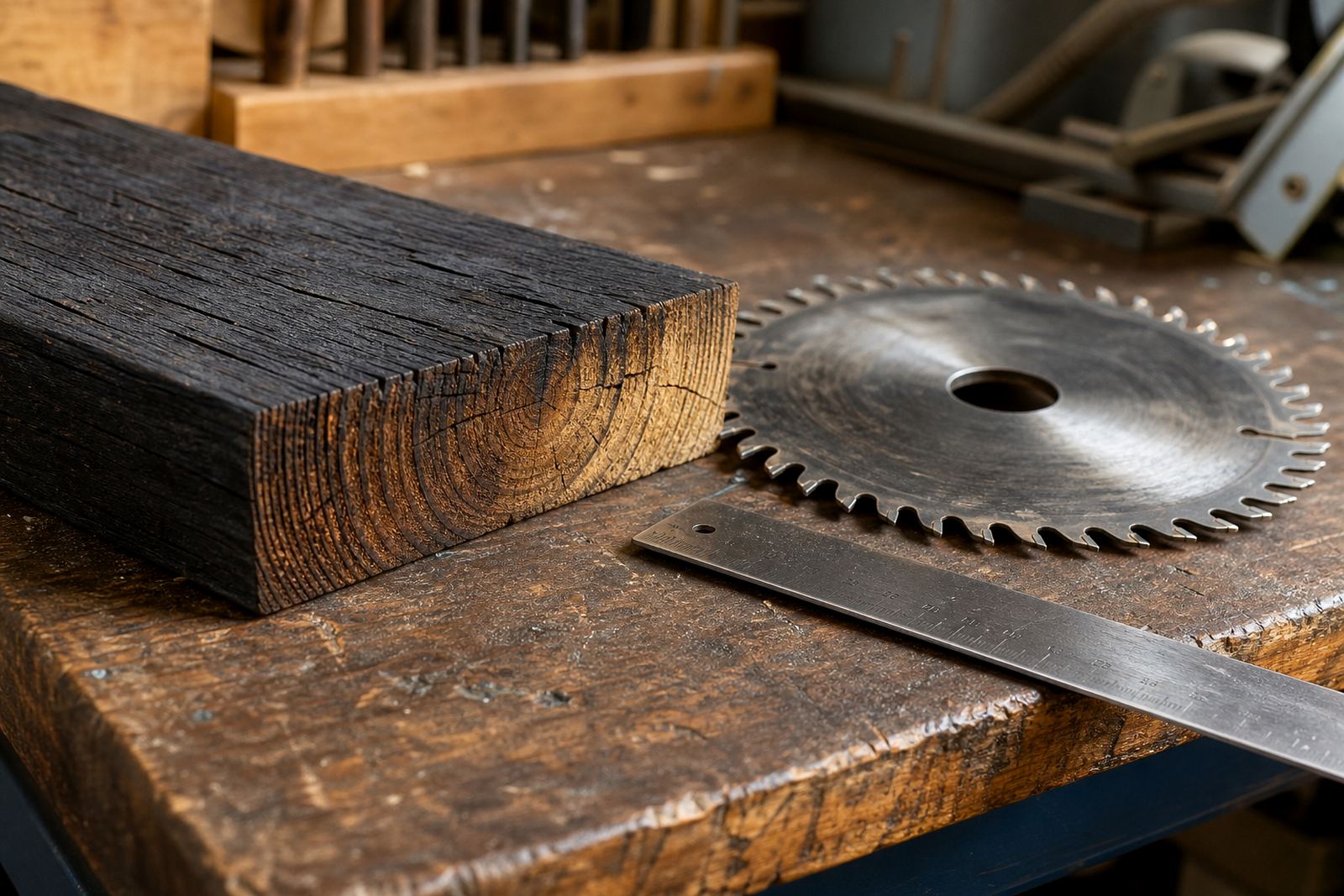
When a circular saw starts leaving dark marks on timber, it is making too much heat at the cut line. That heat can come from a dull tooth, pitch build-up, the wrong tooth geometry, or a saw that is being pushed through the material too slowly. Soft pine, hardwood, MDF and laminated board all show the problem differently, but the cause is often the same, the blade is rubbing more than it is cutting.
In a busy workshop in Pinetown or on a site in Durban, burn marks can be blamed on the blade too quickly. Sometimes the real issue is far simpler. The fence may be out by a fraction, the machine speed may be wrong for the material, or the operator may be feeding the work at a pace that lets the teeth dwell too long in the cut.
What to check first before you strip the saw apart
Start with the easiest checks. A clean, sharp blade in the wrong setup will still burn timber. A dirty blade in the right setup will also burn timber. Work through the basics first and you will often find the fault in minutes.
- Check for resin, glue and pitch on the teeth and gullets.
- Look for blunt tips, chipped teeth or rounded cutting edges.
- Confirm the blade is fitted the correct way round and tight on the arbor.
- Inspect the fence, riving knife and table for alignment.
- Match the blade type to the material, especially laminated board or hardwood.
- Check whether the motor is struggling, slowing down or cutting unevenly.
If the blade has been used on dirty timber or boards with glue lines, the build-up can act like insulation. That keeps heat at the cutting edge and the burn marks become more noticeable with every cut. A quick clean can help, but if the teeth are already worn, sharpening is still needed.
Feed rate and pressure can cause more burning than a dull edge
Many operators think a slower feed is safer, but on a saw that can be the opposite. If the feed is too slow, the teeth stay in the cut too long and rub instead of slice. That rubbing creates heat, and the heat shows up as burn marks on the edges of the timber. Too much pressure can do the same thing if it causes the blade to flex or the motor to labour.
The best feed rate is steady and consistent. The saw should cut without forcing, and the sound should stay even. If the pitch changes, the blade may be pinching, the timber may be moving, or the cut line may not be straight. On smaller workshops in Hillcrest and Westville, this often happens when offcuts are used to support the work and the board shifts during the cut.
Blade condition signs that point to a regrind or correction
Some burn marks are a warning that the blade is past simple cleaning and needs proper sharpening or correction. If the cutting edge is no longer square, the blade can scrape one side of the kerf and heat builds up fast. If one section is cutting harder than the rest, the tool may be out of balance or the tooth set may be uneven.
- Uneven burn marks across the full cut.
- Dark marks near the exit side of the board.
- More effort needed to push material through the saw.
- Rough cutting and extra vibration.
- Chatter marks, wandering cuts or noisy operation.
For circular saw blades, a proper service may include tooth face grinding, top grinding, diameter correction, angle resetting and balance checking. That is especially useful where the saw has been used heavily on site work, cabinet work or repeated batch cutting, because the wear patterns can be mixed and not obvious to the eye.
Material choice matters more than many people think
Not every burn mark comes from the saw itself. Dense hardwood, melamine faced board, wet timber and laminated products all place different demands on the blade. A general purpose blade can handle a bit of everything, but if the tooth form is not suited to the material, heat rises quickly. In coastal areas like Durban and Cape Town, damp air can also change how timber behaves during cutting, especially if it has not been stored properly.
Site conditions matter too. In high heat, dusty sheds or places with load-shedding interruptions, machines may be started and stopped more often than normal. That can change the cut quality and expose problems that were hidden when the blade was still fresh. For batch work, it helps to tag tools clearly so the same blade is not moved between materials without a check.
A Pinetown workshop example that many tradespeople will recognise
A joinery shop near Pinetown called in with repeated burn marks on kitchen cabinet parts. The operator had already changed feed speed and checked the machine, but the problem kept returning. When the blade came in for inspection, the edge was uneven and a few teeth had small chips from earlier contact with hidden grit in reclaimed timber. The blade was also carrying pitch on the gullets, so the heat was building faster than normal.
After cleaning, regrinding and a proper angle reset, the saw cut cleanly again. The difference was not dramatic in appearance, but it showed in the cut line and in the amount of sanding needed afterwards. That kind of job is common in workshops from Pietermaritzburg to Johannesburg, where blades are used hard and then expected to keep going without a check.
How to keep burn marks from coming back
Once the blade is sharp again, a few habits can keep the problem away. Keep saw blades clean, store them where the teeth will not get knocked, and avoid forcing the saw through dense material. If the blade starts to sing differently or the timber smells scorched during a cut, stop and check it before the edge is damaged further.
- Clean the blade regularly, especially after cutting resinous or glued material.
- Rotate blades out of service before they become badly worn.
- Use the correct blade for the job, not just the one already on hand.
- Check alignment after moving a machine or changing the fence setting.
- Book courier collection if the blade needs sharpening and you are not near Pinetown.
For hobbyists and professionals alike, the first step is the same: do not ignore the burn marks. They are telling you something about the cut, the tool or the setup. If you get that right early, you save timber, reduce sanding and protect the saw from more serious wear.