Why Moisture Changes The Way A Tool Cuts
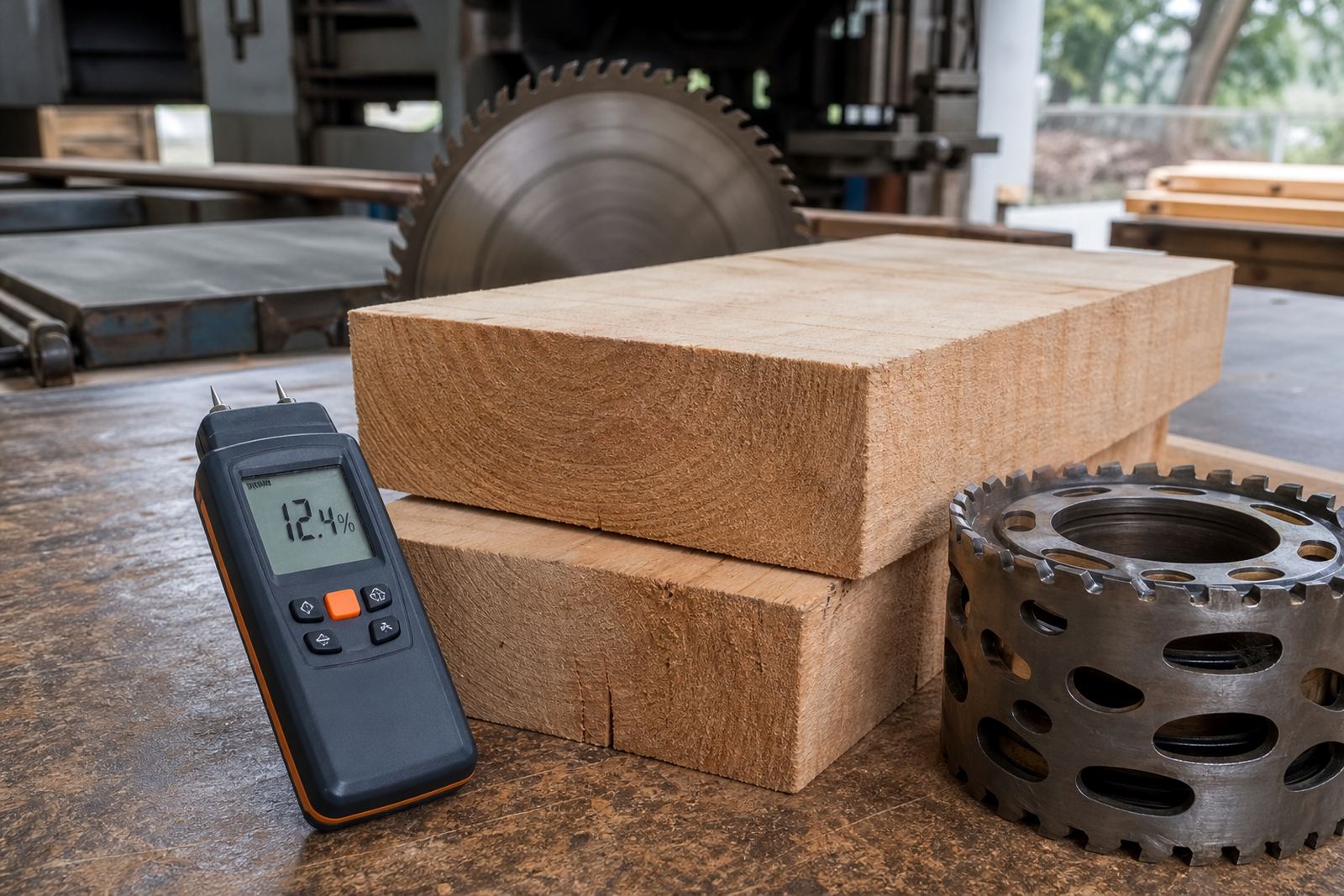
Timber is not a fixed material. A board that looks dry on Monday can move, swell or soften by Wednesday if it has picked up moisture from coastal air, storage on a concrete floor, or a quick change in weather. That shift affects the cut face, chip flow and the pressure placed on the cutting edge.
When moisture levels rise, the fibres tend to behave differently under the tooth or bit. Instead of breaking cleanly, the material can drag against the edge and leave a fuzzy finish. On saws this often shows up as burn marks or a wavy line. On router bits, the cut can look clean at first then begin to chatter or leave a rough side wall after only a short run.
In Pinetown and Durban, where humidity can stay high for long periods, this comes up often in joinery shops and small factory floors. A tool that was cutting well on dry pine in winter may need a different setup by summer, and yes the edge can wear quicker than expected.
What Wet Timber Does To Saws, Drills And Router Bits
Different tools show moisture problems in different ways. Circular saw blades may start to polish the cut rather than slice it, which raises heat. Drill bits can wander a touch more at entry if the surface is soft or uneven. Router bits may leave tear-out near knots or softer grain because the material compresses before it releases.
Common signs to watch for include:
- Burning on the cut edge even when the machine feed looks normal
- More saw dust and less clean chip evacuation
- Early dulling on one side of the tooth set
- Vibration or a change in sound during the cut
- Chipping near the exit point on brittle or mixed timber
If your team notices one of these signs, do not assume the tool is the only problem. Moisture, feed rate and blade condition often work together. A dull edge in dry timber may still cut, but in damp stock it can fail much sooner and start costing time on every batch.
Set Up The Workshop For Variable Timber
A workshop does not need fancy kit to handle moisture changes well. It needs routines. Start by storing timber off the floor, away from open doors and direct rain splash. In coastal areas, stack boards with spacers so air can move through the pack. If timber comes in from a courier collection, let it sit in the workshop long enough to settle before cutting.
Tool setup matters too. Check blade condition, tooth face grind and top grind before the shift starts. If the cut is burning, do not only increase pressure. Review feed speed, fence alignment and extraction first. A clean chip path matters, especially when the material is damp and tends to clog faster.
- Keep timber raised on bearers or pallets
- Separate wet stock from dry stock
- Check blade tension and alignment before long runs
- Use a slower, even feed when the grain is moving differently
- Record which batches show burn marks or edge wear early
That record helps later. If the same supplier, season or storage method keeps causing the same fault, you can adjust before tools are sent back for another grind.
How Edge Wear Patterns Tell A Bigger Story
Edge wear is often the best clue to what the timber is doing. A tool that dulls evenly usually points to normal use. A tool that wears on one side, or shows chips near the tip, may be meeting hidden moisture pockets, knots or contamination. Sap, dirt and adhesive residue can all change how the cutting edge behaves.
At our Pinetown base, we often see saw blades from Durban, Westville and Hillcrest where the front few teeth are more tired than the rest. That can happen when stock is only partly dry, or when the operator is pushing to get through a run before lunch and the machine starts heating up. The result is a cut that looks acceptable for a while, then turns rough fast.
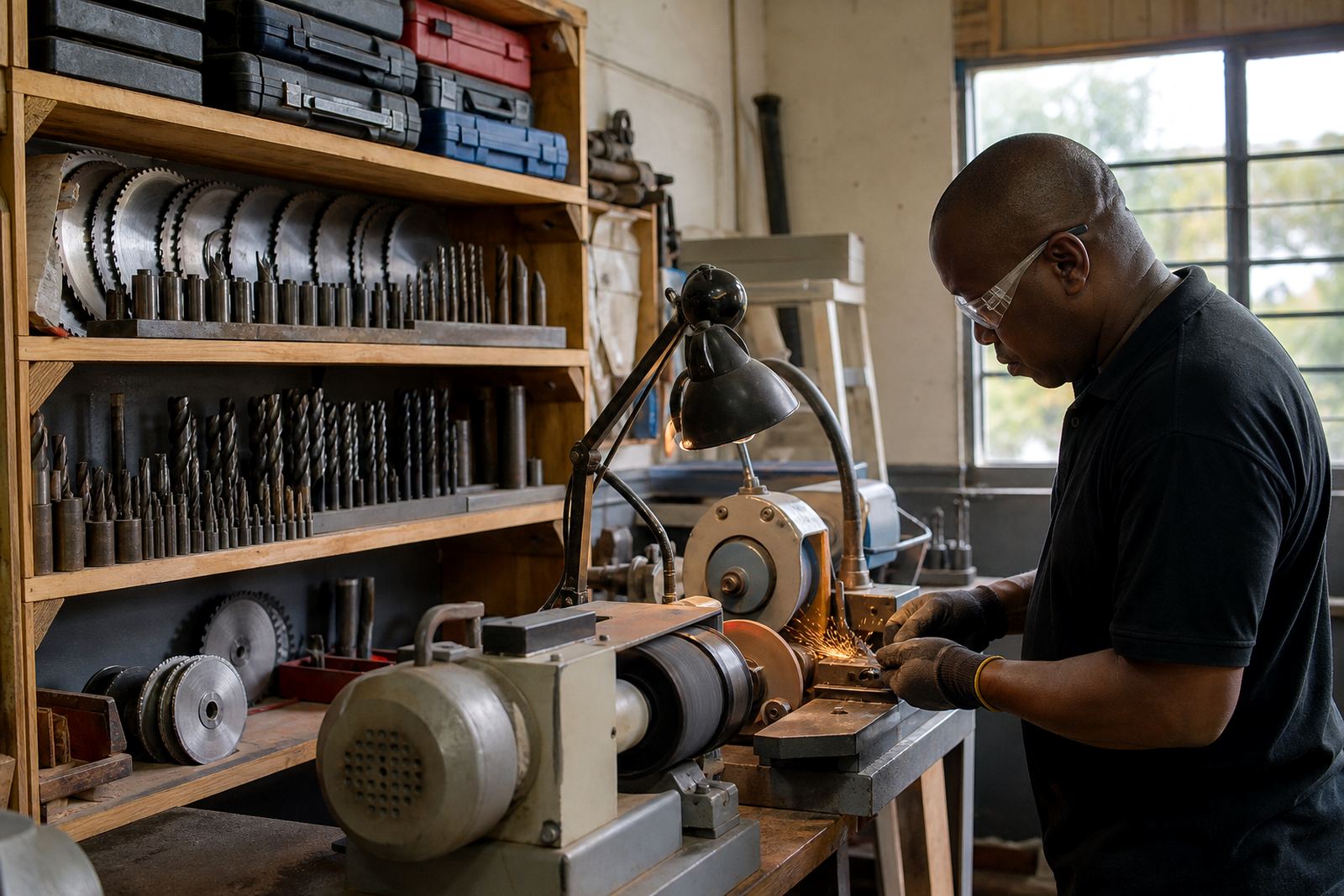
When we regrind tools, we look at tooth condition, balance, chip load marks and whether the edge has been overheated. If the blade has run hot for too long, correction work may be needed before the next sharpen. That saves a lot of trouble later, and it is worth checking before the next batch goes out the door.
Local Conditions In KwaZulu-Natal Change The Picture
KwaZulu-Natal brings its own set of conditions. Coastal humidity, inland heat, and quick weather shifts can all affect timber before it reaches the saw. A workshop in Pietermaritzburg may see different moisture behaviour from one in Cape Town or Pretoria, even when the same species is being used. The timber may not look very different, but the cut tells the story.
For a practical example, a small cabinet shop in Pinetown might receive mixed stock for shelving and frames. One bundle is stored under cover, another sits near the roller door overnight. The next morning, the same saw blade gives two different results. The drier pack cuts cleanly, while the damp pack leaves burn marks and a slightly ragged finish. That is not unusual, and it is why tool condition and timber condition must be checked together.
For regular users, a simple routine works best: inspect the stock, note the storage conditions, and track when the blade last had sharpening or regrinding. If the tool is used on variable timber every week, shorter service intervals may be needed.
- Keep a log of timber source and storage conditions
- Match the tool setup to the material, not only the machine
- Send tools for sharpening before burn marks become a pattern
- Use courier collection when workshop time is tight
When To Send Tools For Sharpening Or Regrinding
If your saws, drills or router bits are showing heat marks, rough finish or slower cutting, it is time to have them checked. Waiting until the tool fails completely usually means more scrap, more operator strain and a longer clean-up afterwards. In many cases, a proper sharpen and regrind restores the edge before damage spreads to the rest of the tool.
For businesses in Durban, Johannesburg, Pretoria, Cape Town and surrounding areas, courier collection keeps the process practical. Batch tool tagging also helps keep mixed jobs in order, especially when several operators send tools at once. Training is useful too, because once the team understands how moisture affects cut quality, they can catch problems sooner at the machine.
Moisture cannot always be controlled, but its effect on cut quality can be managed. Good storage, careful setup and timely sharpening keep the work moving and the finish more predictable.