Why school tools wear faster than workshop tools
School workshops are hard on cutting tools because they are used in bursts, often by learners who are still learning feed speed, clamping and correct pressure. A saw blade that would last well in one operator’s hands can start burning timber in a week when it is used by 20 learners on pine, board and off-cuts.
Dust build-up, blunt teeth and chipped edges show up fast when the same set of tools is passed from class to class. In coastal towns like Durban and Pinetown, humidity adds another problem: light surface rust can appear over a weekend if tools are stored wet or wiped poorly.
A simple daily routine before the bell rings
The best maintenance is the small routine that happens before lessons start and again after the final period. It does not need a full storeroom setup, just a clean bench, a wipe cloth, a brush and a clear place to put each item back.
- Check blades and bits for chips, scorch marks and loose fittings
- Brush off dust from teeth, flutes and guards
- Wipe metal surfaces dry after use, especially in humid weather
- Sort damaged tools into a marked tray so they do not return to class
- Record tools that need sharpening, regrinding or inspection
That last step matters because a tool that looks only slightly dull can still strain a motor and leave poor finish on the material.
What teachers should watch for during lessons
Teachers and workshop supervisors do not need to inspect every tooth, but they should look for the signs that something is off. A blade that starts burning, a drill that squeals or a router bit that leaves rough edges is usually asking for attention. If learners push harder to get a cut done, the tool may already be blunt.
It also helps to separate tools by job. A set used for softwood should not be mixed with tools that have already hit hardwood, adhesive board or metal off-cuts. A small notebook or tag system makes this easier and reduces arguments about which group damaged what.
- Burn marks on timber usually mean the edge is dull or the tooth face needs grinding
- Vibration can point to imbalance, uneven wear or a damaged tooth pattern
- Snatching on entry often means the angle needs resetting
- Excess dust instead of clean chips usually means the cut is no longer efficient
How to store cutting tools between practical sessions
Storage is often the weak point in school workshops. Tools get put down on benches, stacked in plastic tubs or left in damp corners after a busy afternoon. By Monday morning, that is when rust, knocks and bent tips show up.
A better system is simple: dry tools, separate by type and keep each set in a labelled tray or box. Saws should not rub against each other, and router bits need sleeves or compartments so the carbide edges do not chip. If the school is near the coast, a sealed cabinet with a moisture absorber can help, though it still needs regular checking.
For larger school programmes, batch tool tagging makes life easier. Each blade, drill or bit can be marked and tracked so the same item does not keep disappearing into a mixed pile.
When to send tools out for sharpening or regrinding
Not every tool needs replacement. In many cases, sharpening and regrinding bring it back into use at a fraction of the cost of buying new stock. That matters for schools working with limited budgets, especially when several classes share the same equipment over the term.
As a general guide, send tools out when the cut becomes rough, the motor works harder than normal, or the tool has visible edge damage. Chipped teeth, burn marks, off-centre drilling and uneven cutting are all signs that the tool needs proper machine work, not a quick hand touch-up.
- Saw blade sharpening for cleaner cuts and less tear-out
- Drill sharpening for better bite and straighter starts
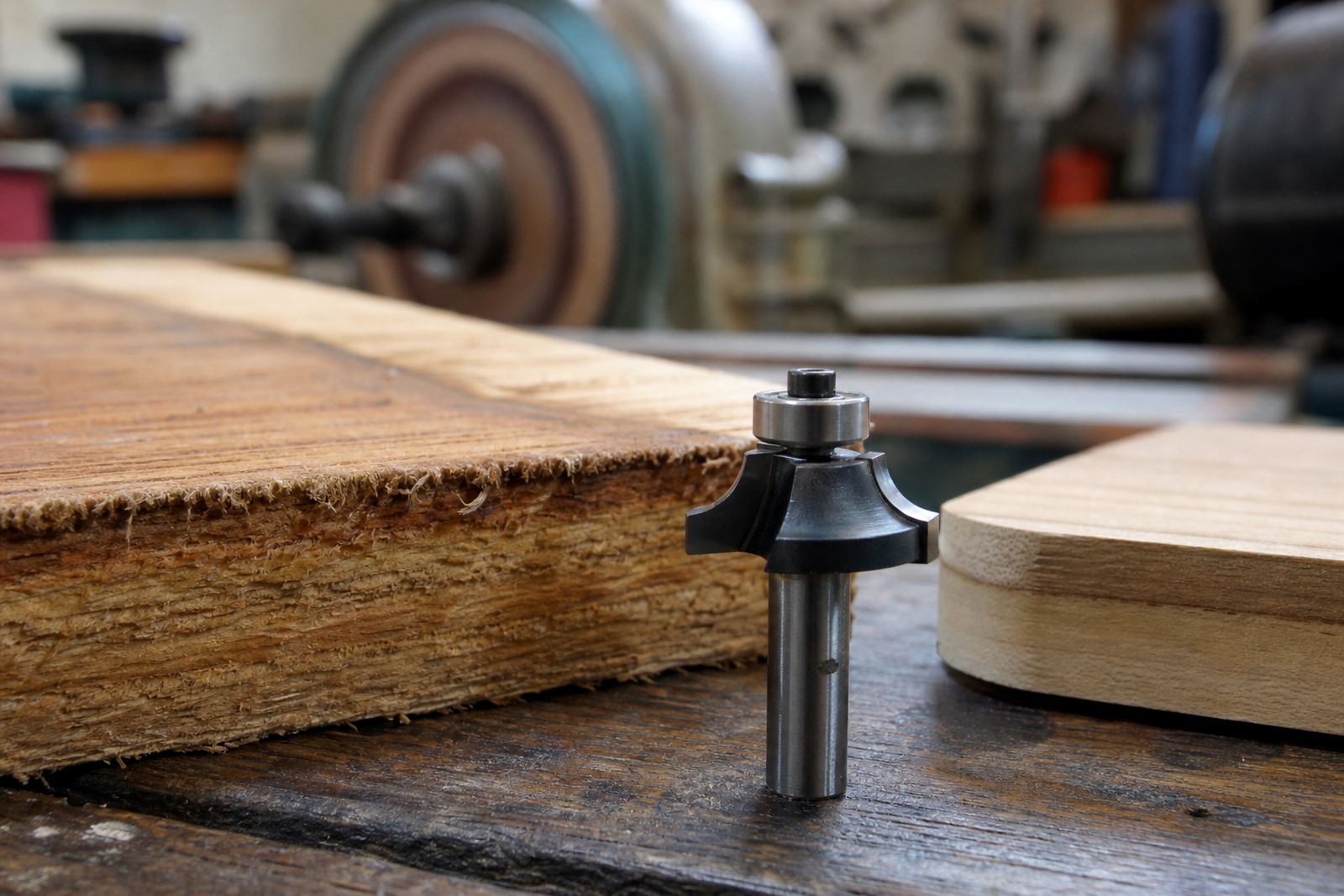
- Router bit sharpening to restore clean profiles and edges
- Diameter correction, top grinding and tooth face grinding where needed
- Burn mark removal, chipped edge recovery and angle resetting for damaged tools
In Pinetown and the surrounding area, schools often send mixed batches together so the whole set can be checked at once. That saves time and keeps the workshop running instead of waiting on one tool at a time.
A practical example from a KwaZulu-Natal school workshop
A technical classroom in the greater Durban area can go through a lot in one week: woodwork periods, project prep and after-school club use. If the school keeps a simple log of what was used, by whom and what looked wrong after the lesson, the maintenance cycle becomes much easier to manage.
For example, one group might notice a router bit leaving burn marks on MDF, while another reports a saw blade dragging on pine. Those are not separate problems. Often the same maintenance issue is behind both, and a proper inspection catches it before the next class starts. A quick collection booking and a tagged batch can save a school from losing half a term to dull tools.
For schools in Pinetown, Westville, Hillcrest, Durban, Pietermaritzburg, Johannesburg, Pretoria and Cape Town, courier collection is useful when the tools are too many to drop off in person. It keeps the process simple, and it means the workshop staff can focus on teaching instead of transport.
Training learners to respect the tools they use
Tool care should be part of the lesson, not an afterthought. When learners understand why a blade needs cleaning, why a drill must not be forced and why a router bit must be stored properly, they handle equipment with more care. That habit follows them into apprenticeships and later jobs.
Short training sessions work well in schools. A half hour on cleaning, storage and basic fault spotting can reduce tool damage for the rest of the year. Starter kits also help the workshop start with the right basics: cloths, markers, storage trays and a simple tagging system for shared tools.
CutTool Sharpening works with schools, hobby users and trade teams from our Pinetown base, with courier collection across South Africa. The aim is straightforward: keep the tools cutting properly, keep the workshop orderly, and reduce avoidable replacement costs.