
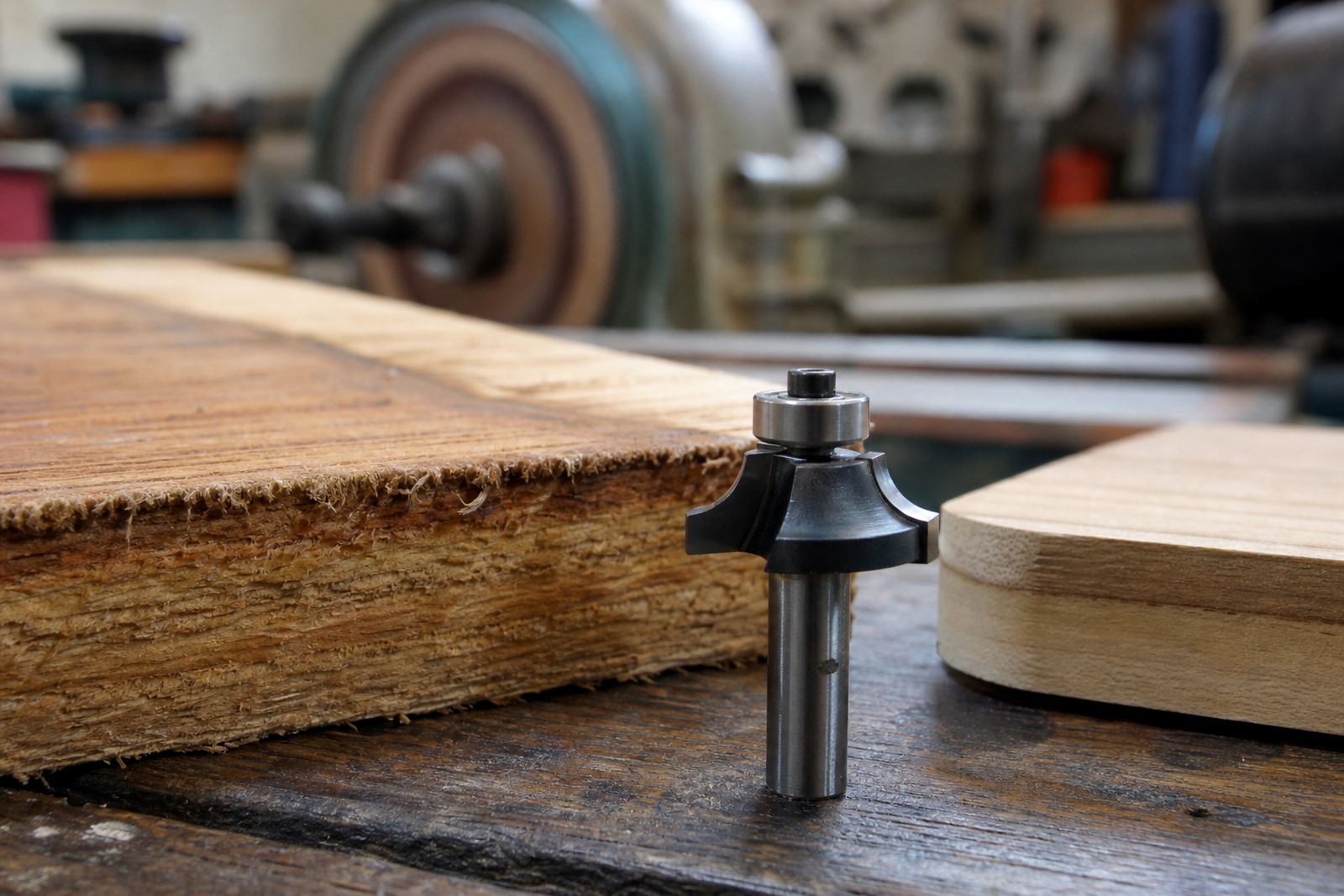
What a healthy router bit should leave behind
A sharp router bit cuts cleanly, throws controlled chips, and leaves an even edge with little sanding needed afterwards. On timber, board, or laminate, the pass should feel steady through the machine, with no extra push needed from the operator.
When a bit is in good condition, the cut line stays crisp and the surface looks consistent from start to finish. If the machine is set up correctly but the finish starts changing, the cutter is often the first place to check.
Early cutting changes that show a bit is going dull
The first warning signs are usually small. You may notice more friction, a warmer cutter, or a slight change in the sound of the cut. The router can begin to chatter more, or it may leave a fuzzy edge where it once left a clean one.
- More force needed to push the work through
- Burn marks appearing at the edge or on the face
- Tear-out on end grain or soft timber
- A rougher finish that needs extra sanding
- Fine dust instead of proper chips
If two or more of these show up together, the bit is likely past its best cutting state and needs attention soon.
Burning, glazing and poor chip removal
Burn marks are one of the clearest signs of dullness, especially on hardwoods and MDF. A sharp cutter removes material quickly enough to stop heat building up. A worn edge rubs more than it cuts, and that rubbing leaves dark marks along the cut.
Chip removal matters too. If the flute edges are worn or packed with resin, chips clog the cut and the bit starts to drag. In humid coastal areas like Durban and Pinetown, resin build-up can show earlier, especially if tools are stored badly between jobs.
- Resin sticking to the cutting edge
- Smoke or smell during normal feed rates
- Glazed edges on the workpiece
- Stain marks on light timber or board
When the finished profile starts losing shape
A dull router bit does not only affect the surface, it can alter the shape of the profile. Corners may round off too much, rebates may come out uneven, and the final dimension can drift slightly. That is a real problem on joinery parts where consistency matters from one piece to the next.
In a Pietermaritzburg workshop making cabinet doors, for example, one worn bit can leave a batch with different edge profiles by the end of the morning. The operator often blames the timber first, but if the same error keeps repeating on different stock, the cutter is usually at fault.
Simple workshop checks before the problem gets worse
You do not need special test gear to spot most dulling. A quick visual and hands-on check can tell you a lot before a job runs badly. Stop the machine, clean the cutter, and look closely at the edge under good light.
- Check for chipped carbide or rounded cutting edges
- Look for resin, pitch, or burn polish on the flute
- Compare the latest cut against a known good sample
- Listen for a change in pitch or vibration
- Feel whether the feed rate has become harder to keep steady
On batch work, tag the cutter after each run so it is easier to track which tool caused the issue. That kind of habit saves time when you are handling repeat jobs or couriering tools between sites.
Why local conditions can shorten bit life
South African workshops deal with real wear factors. Coastal humidity can encourage resin build-up and surface corrosion, while dust, poor storage, and power interruptions can all affect tool condition. If a router is running after a load-shedding restart and the setup is slightly off, the cutter can show wear faster than expected.
Smaller shops in Westville or Hillcrest may keep bits in a drawer with mixed accessories, while busy contractors moving between Johannesburg and Pretoria may keep them in a vehicle between sites. In both cases, edge damage can happen before anyone notices. Good storage and regular inspection matter as much as sharpening, maybe more.
Once a bit starts showing repeated burn marks, rough finsh, or shape drift, it is usually worth sending it for regrinding rather than trying to push through one more job.