Why a dirty blade can feel blunt before it is worn out
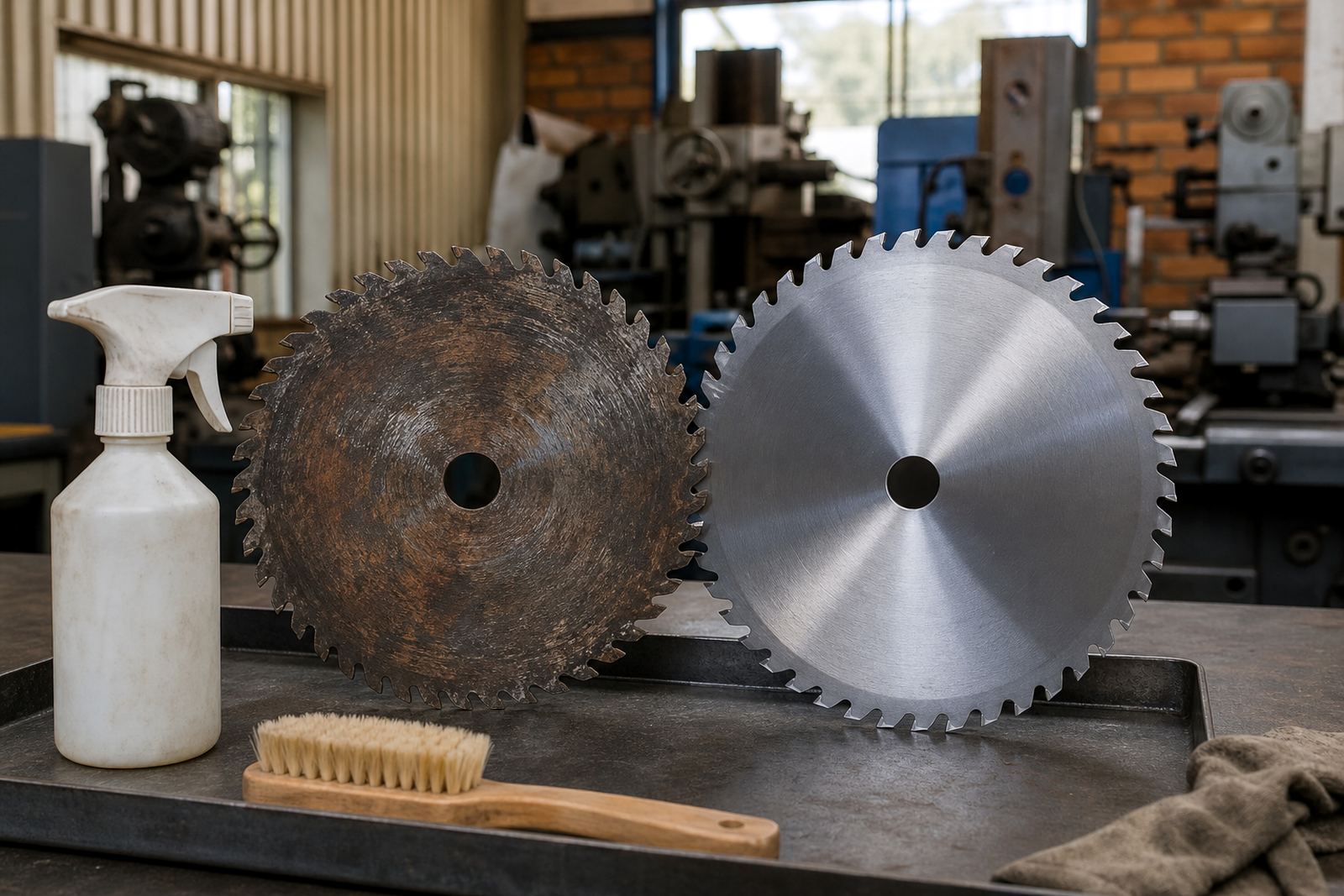
In workshops across Pinetown, Durban and Pietermaritzburg, a blade that has picked up resin can start to drag long before the edge is actually worn down. The saw still cuts, but it needs more feed pressure, leaves a rougher finish and may burn timber or mark the edge of laminated board. That is often mistaken for ordinary wear, yet the problem can be a layer of residue sitting on the cutting face.
Resin, glue line dust, aluminium chips and fine sawdust all build up in use. Once that happens the cutting edge no longer meets the material cleanly. The tool has to work harder, temperatures rise, and the machine operator often pushes the feed rate to compensate. In time that can lead to chipped edges, extra regrinding and avoidable down time.
Cleaning is not a cosmetic step. It is part of tool care, just like sharpening and setting. If a blade is regularly cleaned and checked, the operator can see true wear earlier and avoid over-sharpening a tool that only needed a proper wash-down and inspection.
What resin and debris do to cutting performance
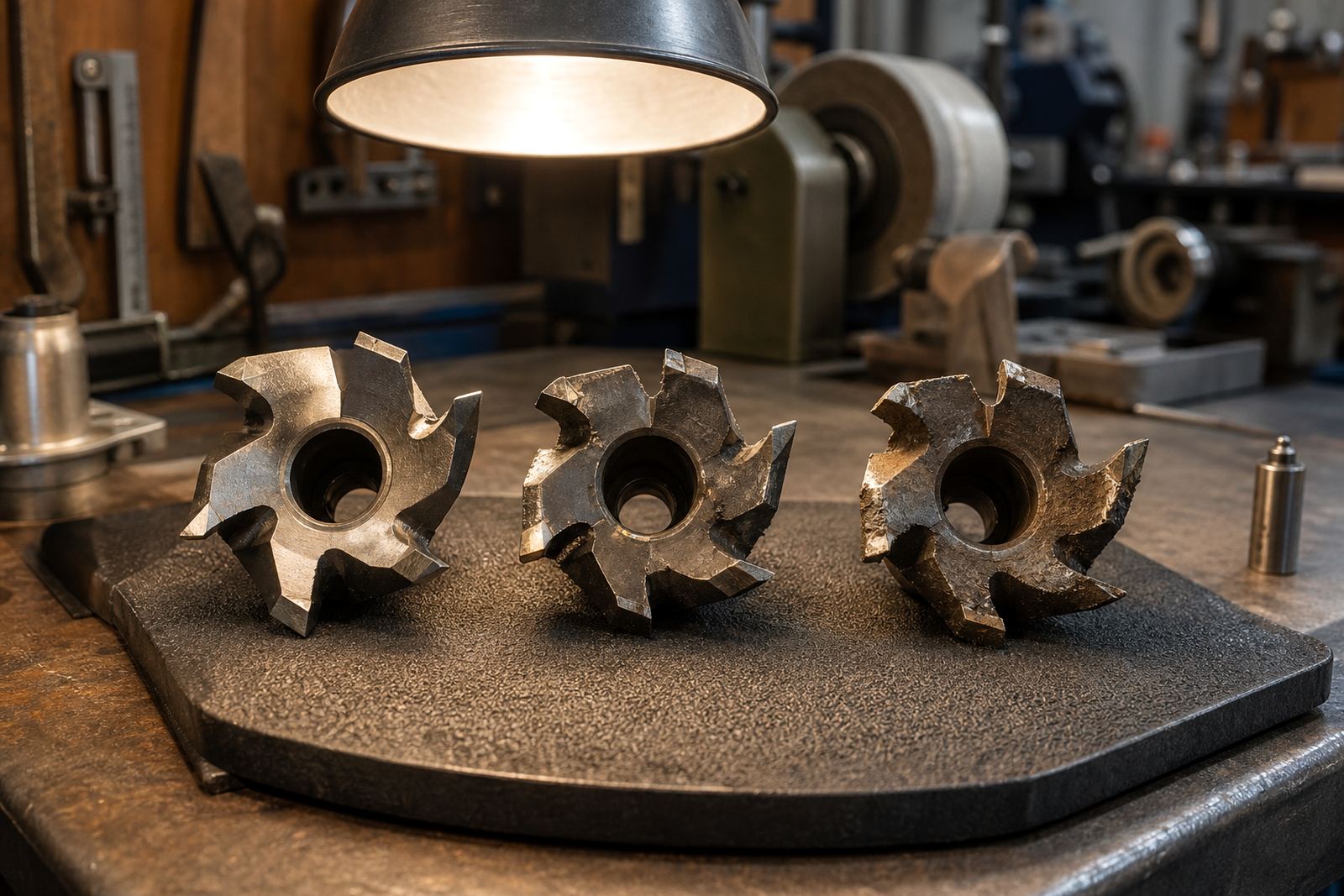
When build-up forms on saw blades, drill bits or router bits, several things happen at once. The cutting geometry changes, the chip clearance becomes smaller, and heat stays at the edge for longer. On finer work, that can show up as burn marks, fuzzy edges or a surface that needs extra sanding. On heavier cuts, it can increase vibration and make the machine sound rougher than it should.
In KwaZulu-Natal coastal conditions, humidity can make residue stick even faster. Workshops near the coast often see a mix of dust and moisture that cakes onto the tool surface. If the workshop also has load-shedding interruptions, tools may sit longer between jobs and the residue hardens. By the time the blade is used again, the build-up can be stubborn enough to need a proper clean before any sharpening work starts.
- Resin narrows the gullets and reduces chip clearance.
- Dust and adhesive residue can make a sharp edge behave like a blunt one.
- Heat build-up can shorten edge life and affect the set of the teeth.
- Clean tools are easier to inspect for chipped teeth, cracks and uneven wear.
A simple cleaning routine before sharpening
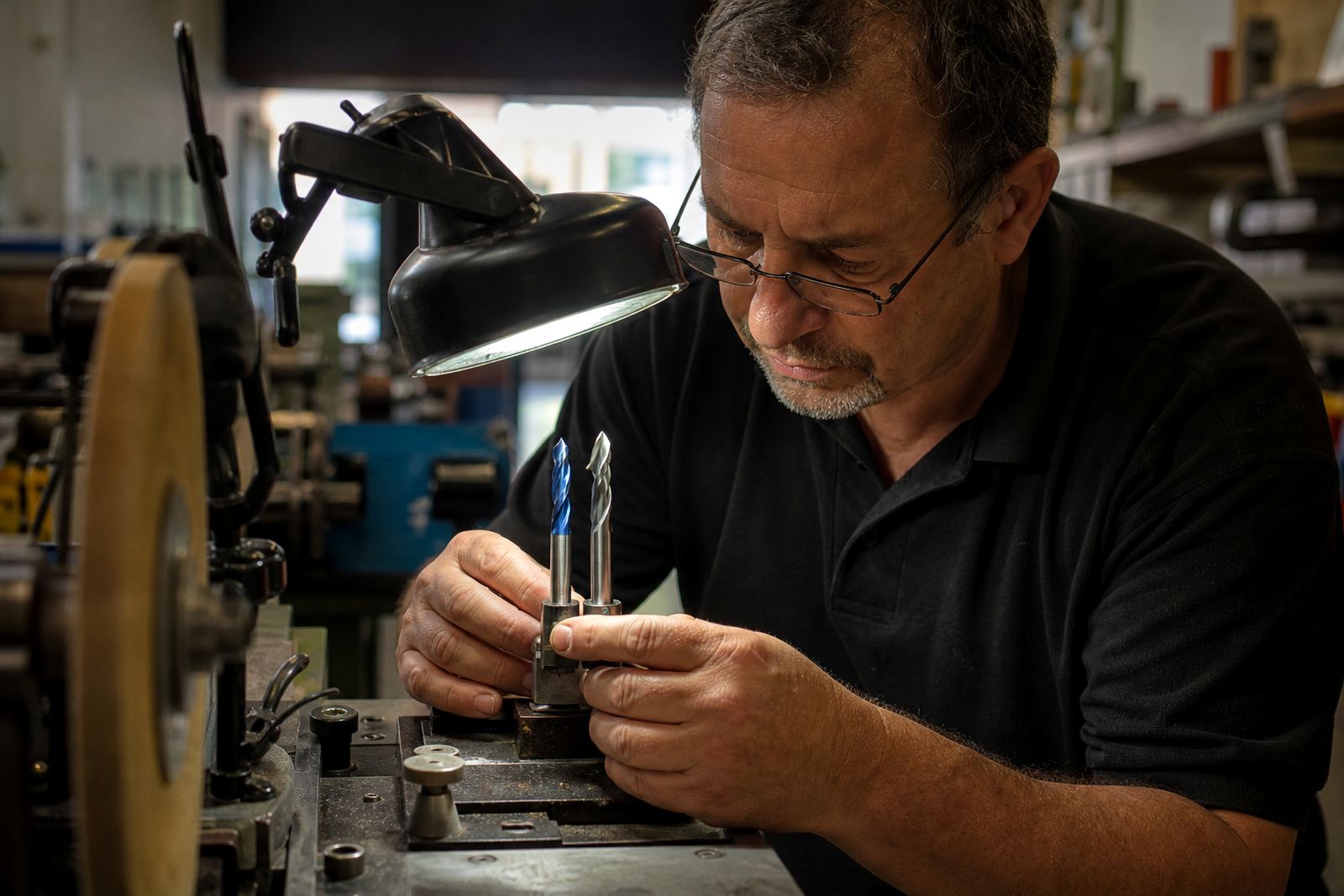
A proper workshop routine starts with inspection, then cleaning, then sharpening or regrinding if needed. That order matters because a dirty blade can hide damage. Once the surface is clean, it is easier to check tooth condition, diameter loss, burn marks, balance and any areas where the edge has chipped. It also helps the technician decide whether the tool needs top grinding, angle resetting or diameter correction.
For many users, the safest approach is to clean tools after each busy run or at the end of the week, especially if the blade has been cutting pine, MDF, laminated boards or material with adhesive. Fine dust should be removed before storage. If tools are packed away dirty, the residue hardens and becomes harder to remove later.
- Brush off loose dust before it is pressed into the teeth.
- Use a suitable cleaning method for the material and coating.
- Dry the tool fully before storage to limit rust and staining.
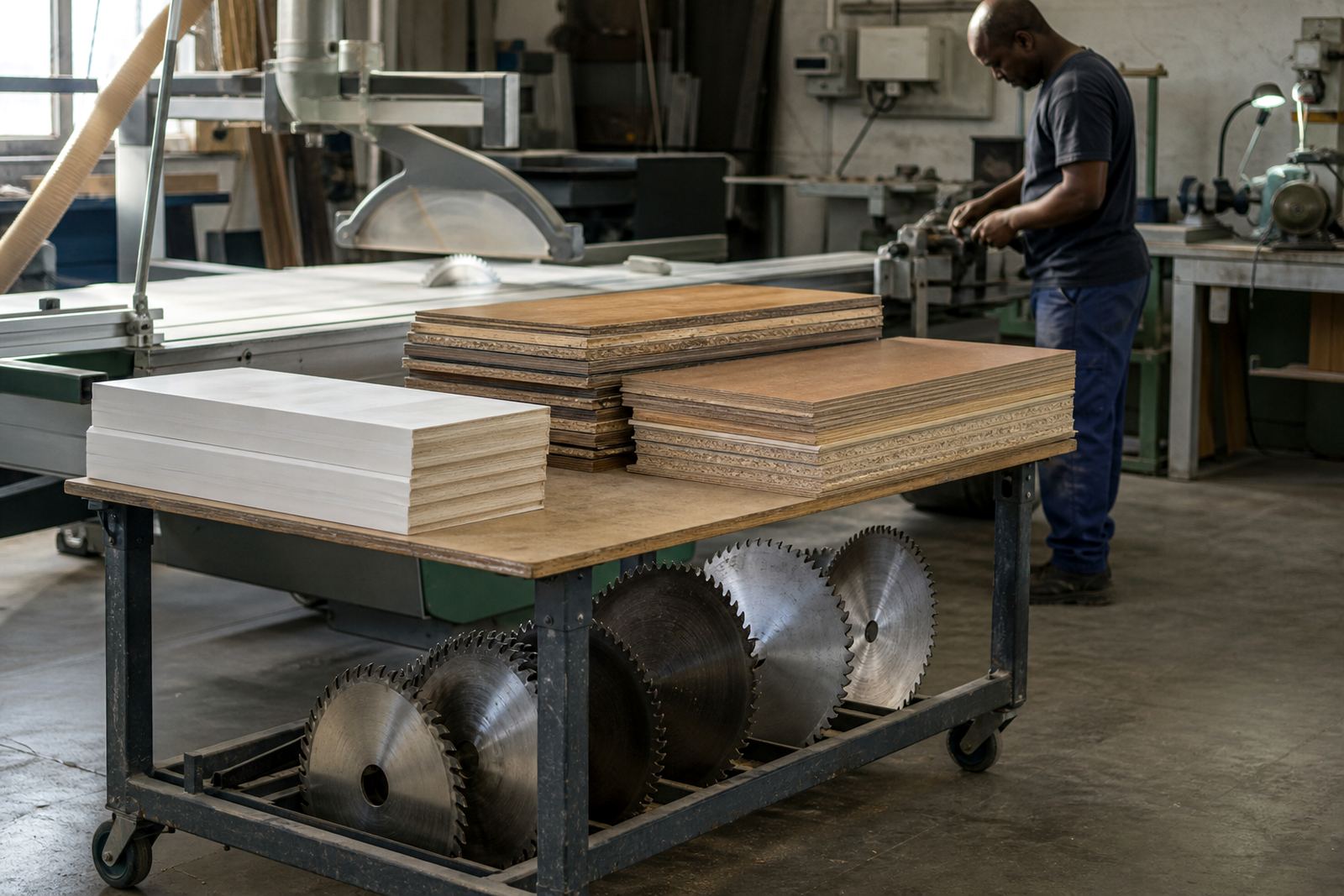
- Keep blades separated so teeth do not strike each other in transit.
For smaller workshops, even a basic routine makes a difference. It reduces confusion about whether a blade is dull or simply dirty, and that helps avoid needless regrinding.
Signs a tool needs cleaning first, not more sharpening
There are a few clear signs that cleaning should happen before any grinding work. If the cut has started to burn, but the teeth still look even, residue may be the cause. If the blade has a sticky feel, or you can see dark deposits around the gullet, the edge may still be serviceable. The same applies to router bits that leave scorched edges or drills that seem to labour in material that should be easy to cut.
It is also worth checking the machine itself. A badly aligned fence, worn bearings or a feed issue can be mistaken for a blunt tool. But if the blade has been cutting hardwood, pine with sap, or material with glue, cleaning should come before conclusions. That saves money and keeps the sharpening schedule honest.
At CutTool Sharpening, tools from Westville, Hillcrest and the wider Durban area are often booked in because the user wants a new edge, but the first issue is usually build-up. Once cleaned and assessed, some blades only need a light regrind. Others may need chipped edge recovery or a proper tooth face grind to return to service.
How clean tools support better regrinding and longer service life
Regrinding works best when the technician can read the true condition of the cutting edge. A clean blade gives a clearer picture of wear patterns, tooth symmetry and heat damage. That matters for saw blade sharpening, drill sharpening and router bit sharpening, because each tool type responds differently to excess heat and residue.
Clean tools also make batch handling easier. When a workshop tags jobs properly and checks each item on intake, it can sort out which tools need cleaning only and which need actual grinding work. That saves time for customers in Johannesburg, Pretoria and Cape Town who send tools through courier collection and need them returned in good order, not just sharpened without inspection.
Regular cleaning also helps with:
- better balance checking after regrinding
- less chance of hidden chips being missed
- more accurate diameter correction on worn blades
- fewer surprises when tools go back into production
For professional workshops, that can mean steadier output and less rework. For hobby users, it means cleaner cuts and fewer ruined boards.
A practical habit for South African workshops
In a busy South African workshop, blade cleaning needs to fit around real working conditions. There is dust, power cuts, wet weather, courier turnaround and the pressure to finish jobs on time. A simple cleaning habit is easier to keep up than a once-off deep clean when a blade has already suffered. Wipe down, inspect, store dry and send for sharpening when the edge genuinely needs it.
For businesses that handle saws, drills and router bits every week, a small maintenance routine is often the difference between tools that last and tools that constantly come back too late. It also helps staff work more safely, because a clean cutting edge is easier to handle and inspect. The important thing is to treat cleaning as part of the sharpening cycle, not an optional extra.
CutTool Sharpening works with hobbyists and trade users across Pinetown, Durban, Pietermaritzburg, Johannesburg, Pretoria and Cape Town, with courier collection available for customers who cannot drop off in person. If a blade looks dull, the first question should be whether it is actually worn or simply dirty. That small check can save time, keep cuts cleaner and extend the life of the tool.
Clean first, sharpen second
Before any edge is ground away, the tool should be free of the residue that hides its real condition. That is the simplest way to protect the blade and get honest results from the sharpening process.
Clean tools cut better, last longer and tell the truth about their wear.