Why board material is harder on cutting tools than solid timber
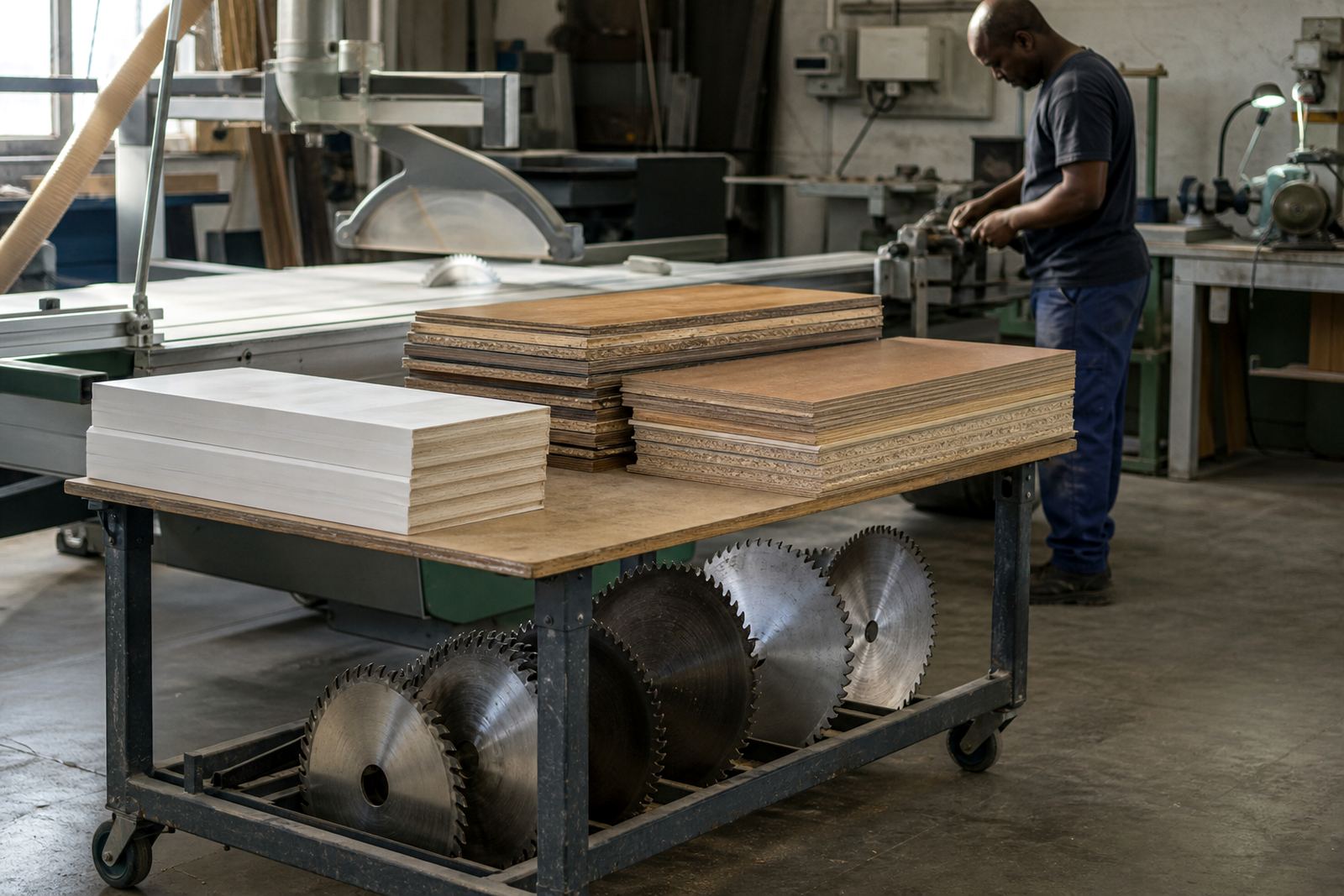
Board material is made to be consistent, but that consistency puts pressure on the cutting edge. Glue lines, resin, fine fibres and coatings all affect how a saw blade or cutter behaves, especially on long production runs or repeated workshop jobs.
When a blade is dull, board edges start to look rough before the operator notices a major fault. You may see extra dust, more noise, slow feed rates and a hotter cut. In Pinetown and Durban workshops, that often shows up fastest on cabinet jobs where the same sheet size gets processed all day.
Good board cutting depends on a sharp edge, the correct tooth form and proper clearance. If one part of that setup is out, the cut quality drops quickly and the machine has to work harder than it should.
What a clean cut should look like on board products
A clean board cut should have a neat edge, minimal burn and no visible tearing at the laminate or veneer face. The top edge and bottom edge should both stay tidy, with no heavy breakout around the corners or slots.
- Melamine board should leave a crisp finish with little to no lifting on the surface.
- MDF should cut without fuzzy edges or powdery tearing along the line.
- Chipboard should not chip away at the face when the blade enters or exits.
- Plywood should hold the veneer layers together without splintering or stepped edges.
If your saw starts leaving scorched lines or the router bit is pulling fibres instead of slicing them, the tool likely needs attention. A small change in edge quality can turn into a lot of rework by the end of the day.
Signs your saw blade or cutter needs regrinding
Most board cutting problems begin with wear that creeps in gradually. Operators often adjust the machine, slow down the feed, or blame the sheet material when the real issue is the cutting edge. That can waste time and hide a problem that is already getting worse.
- Burn marks start appearing on straight cuts or rips.
- The machine pushes harder, or the motor sounds strained.
- Cut edges chip more on melamine, laminated board or veneered panels.
- Tool marks appear on the face and the cut feels rough to touch.
- Dust output increases even when the extractor is working properly.
For workshops in Hillcrest or Westville, where smaller joinery runs often mix with repair work, it is common to keep tools in use far longer than they should be. A scheduled sharpen and regrind is usually cheaper than scrapping a few damaged sheets, and it keeps the next batch moving.
The geometry matters more than most people think
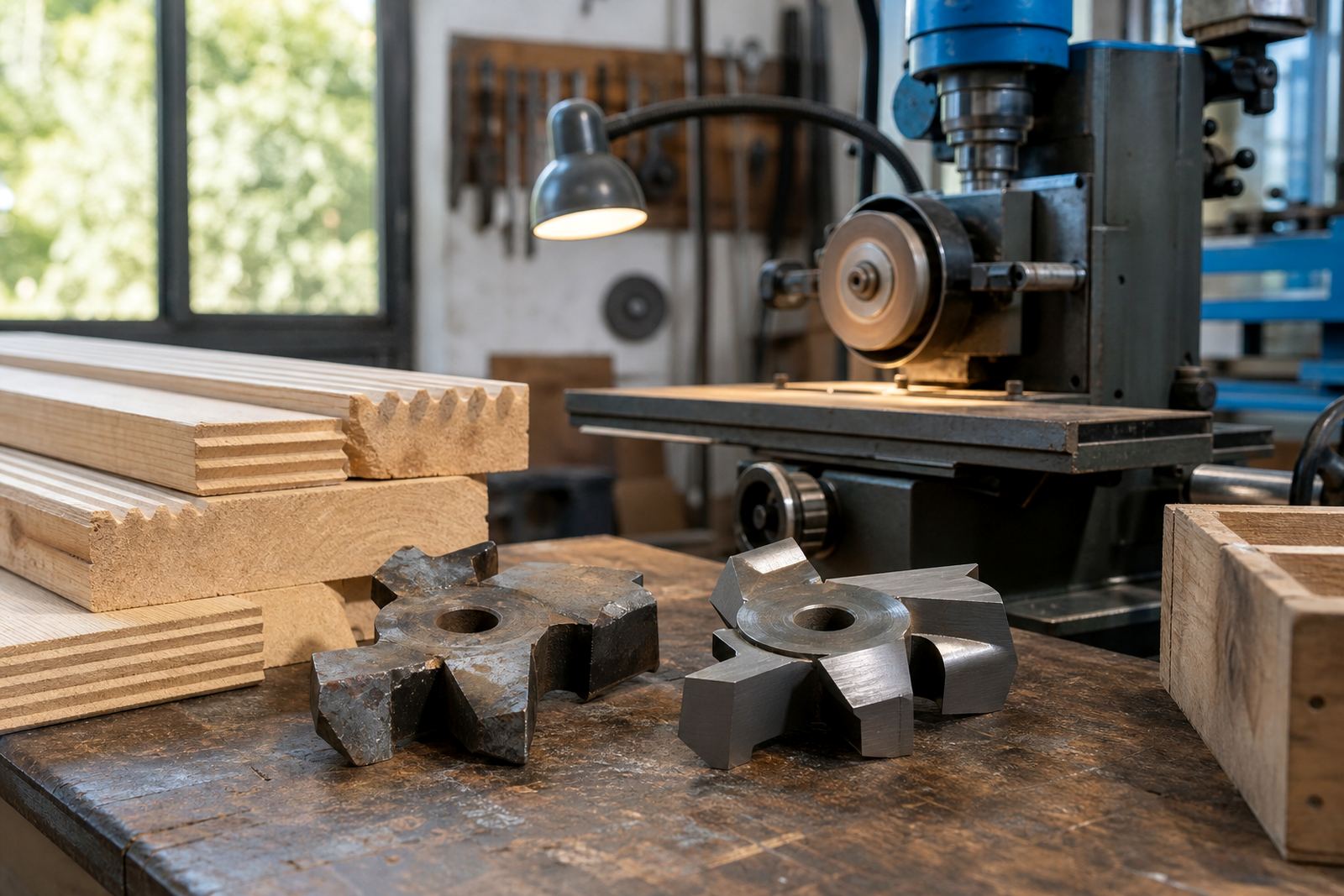
Board products place specific demands on saw geometry and cutter sharpness. A general purpose edge may cut timber well enough, but board often needs more controlled tooth form, accurate top grinding and the right angle setting to reduce tear-out.
We see this often with saws used on laminated panels and dense sheet goods. If the tooth face is worn or the angle has drifted, the blade may still cut, but the finish becomes inconsistent. That is where tooth face grinding, top grinding and angle resetting make a real difference.
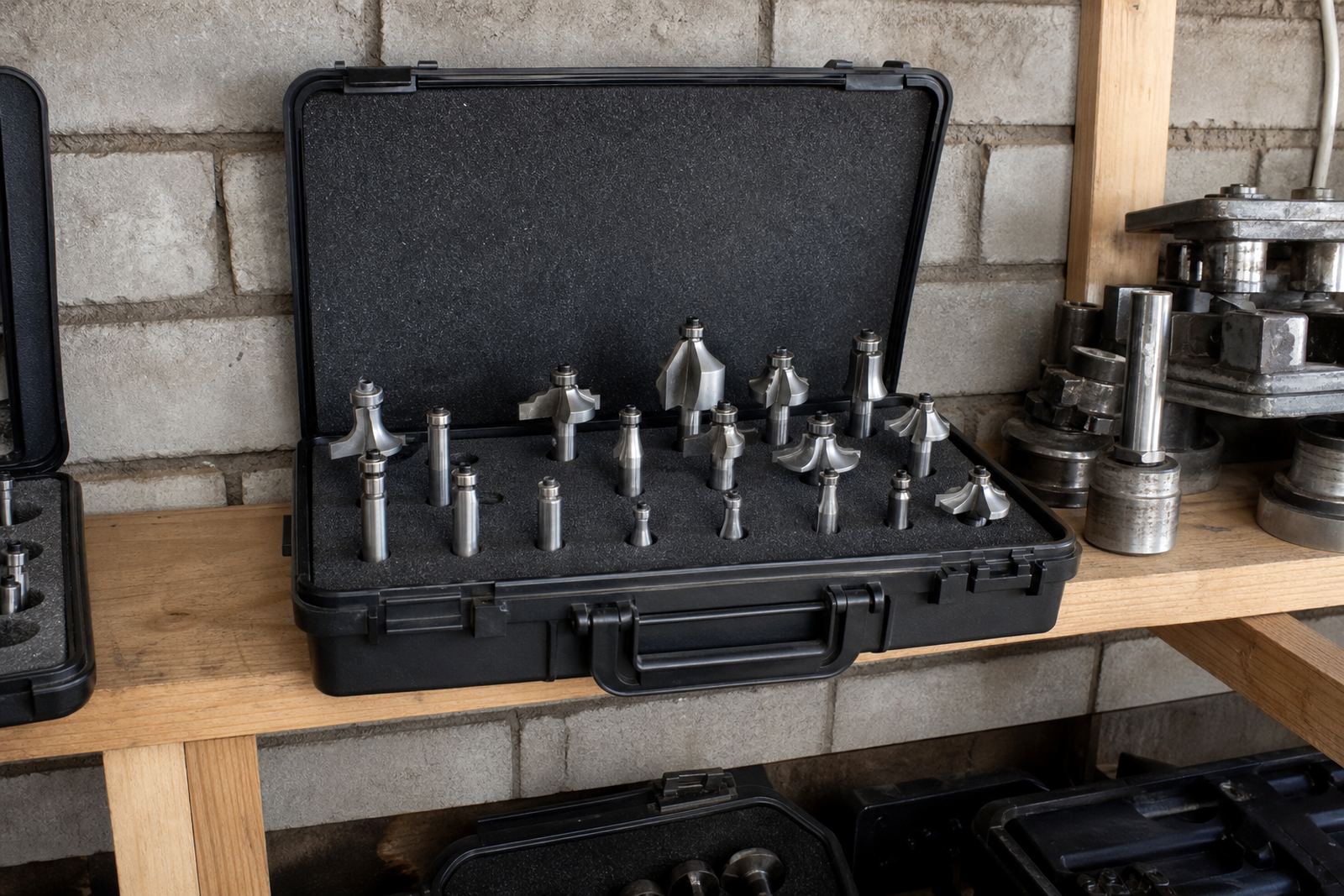
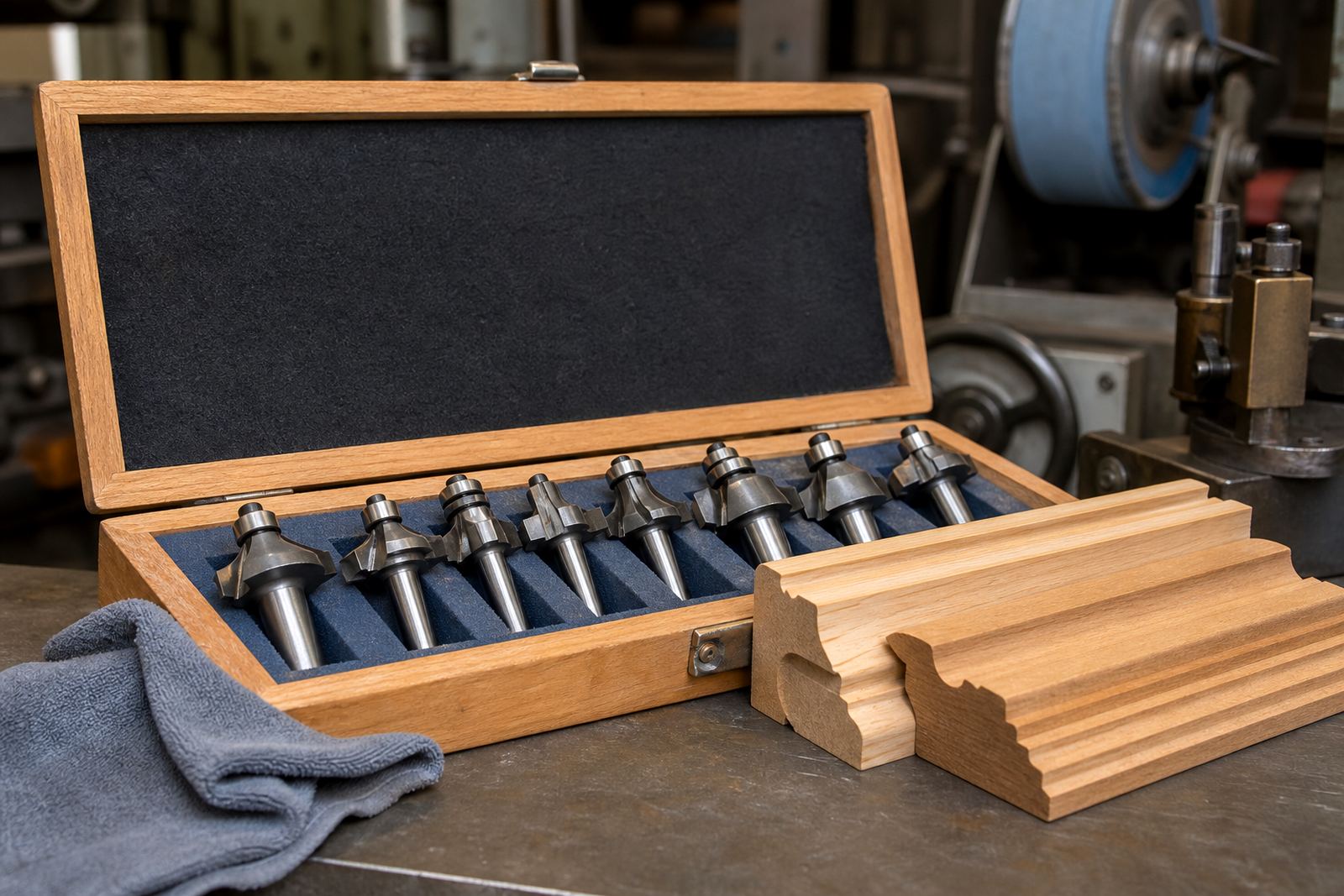
For router work, the same principle applies. Router bits used on board need sharp cutting edges and clean balance. If the bit is chipped or out of shape, it can chatter, mark the board and leave a finish that needs extra sanding.
Practical workshop habits that protect the finish
Even a well sharpened tool will struggle if the setup is poor. Feed speed, machine alignment, extraction and board support all affect the final edge. The best results come from matching the tool condition to the way the machine is being used.
- Keep board flat and fully supported during cutting to stop vibration.
- Check fence alignment and blade height before long runs.
- Use the correct blade for the board thickness and coating type.
- Remove pitch, adhesive and dust before the tool heats up.
- Rotate tools in batches so one worn blade does not hold up the whole job.
In coastal areas like Durban, humidity can also affect storage. Tools left in a damp corner or on an open trolley can pick up surface corrosion, which shortens cutting life. A simple storage routine helps keep the edge stable between services.
How CutTool supports board cutting jobs across South Africa
CutTool Sharpening runs from Pinetown, with courier collection available for workshops and tradespeople in Durban, Pietermaritzburg, Johannesburg, Pretoria and Cape Town. We sharpen and regrind saw blades, drill bits and router bits used on board materials every day, from single workshop tools to larger batch jobs.
Our team checks each tool for wear, chips, burn marks and balance before the work is done. Where needed, we carry out diameter correction, chipped edge recovery, burn mark removal, angle resetting and batch tool tagging so tools come back organised and ready for the next run.
For a small cabinet shop in Pietermaritzburg, that may mean a few saws and routers that need a clean finish before a delivery date. For a larger operation in Johannesburg or Pretoria, it may mean a weekly collection plan that keeps the cutting room moving without a pile-up of blunt tools. Either way, the aim is the same: better cuts, less waste, and less time spent fighting the machine.