Why profile bits need more than a quick touch-up
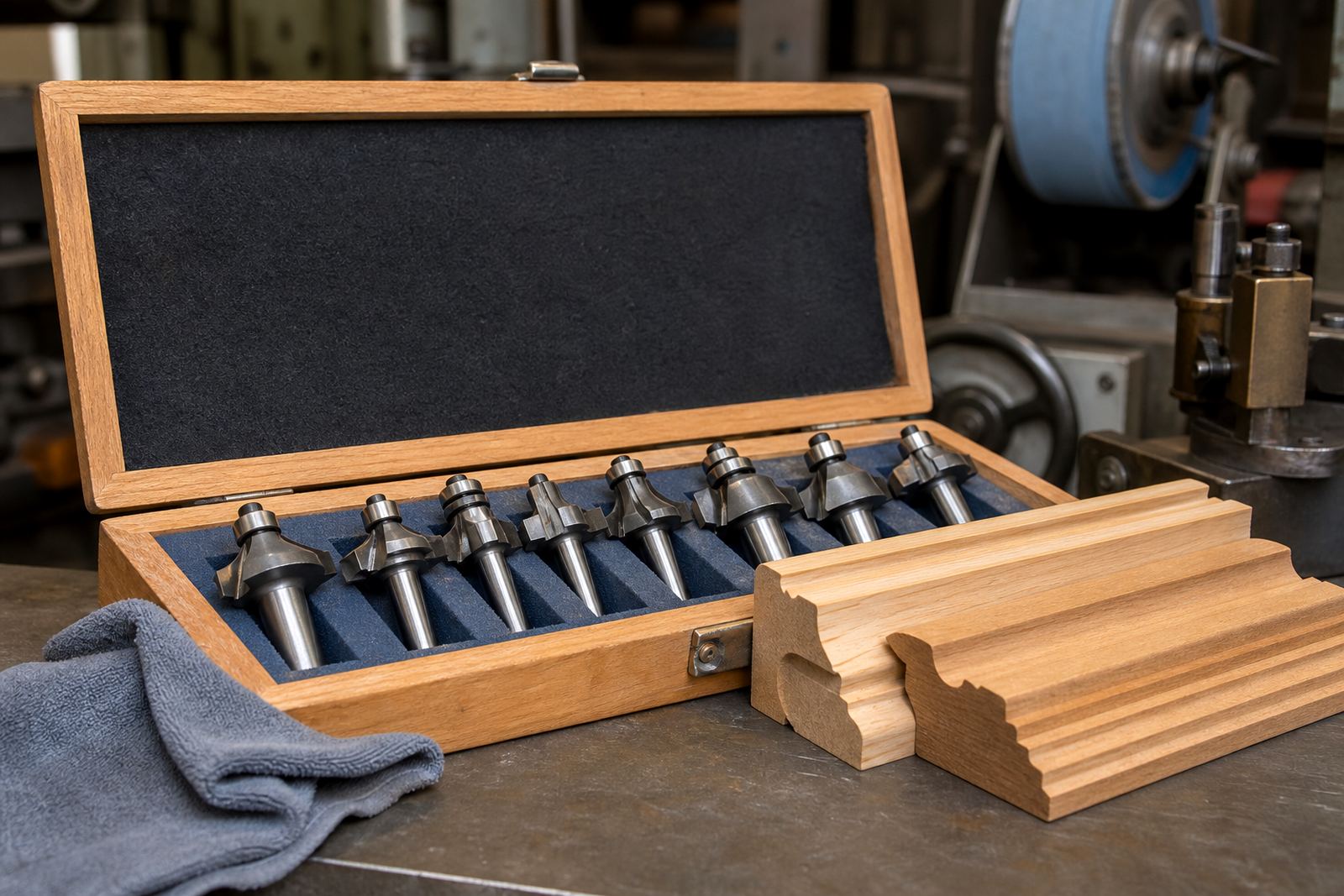
Profile cutters are not like a straight blade that can be sharpened back to one simple line. A router profile bit has a shaped cutting edge, often with a bearing, relief angle and a specific radius or pattern that must stay consistent from one sharpening to the next. If too much material is removed, the profile changes and the cut no longer matches the job.
That is why profile care starts before the bit comes back for regrinding. The user must keep feed rates steady, avoid forcing the tool through hard knots or board edges, and watch for resin build-up. Heat is another issue. In a Pinetown workshop, or on a site where the power goes off and machines restart after load-shedding, a bit that has already been run hot can lose edge quality faster than expected.
Small profile bits are especially sensitive because there is less carbide available for repeat work. Once the edge is chipped or the corner is rounded, the repair has to be measured carefully. The aim is not just to make it cut again, but to keep the original shape intact so the finished piece still matches the template or moulding.
How to handle router bits between jobs
Good handling habits save money and reduce downtime. A profile bit that is dropped on a concrete floor, put loose in a toolbox or wiped down with grit on the cloth will often lose its edge before it even touches timber again. In humid coastal conditions, like along the Durban side of the coast, rust can also start on the shank and bearing area if the tool is put away damp.
- Store each bit in a sleeve, tray or labelled holder so carbide edges do not knock together.
- Wipe resin off with a clean cloth and suitable cleaner after use, then dry the tool fully.
- Check the bearing for play, rough movement or heat marks before the next run.
- Keep the cutter away from loose screws, nails and metal offcuts in the tool box.
- Do not mix long-run production bits with hobby bits if you want a clear wear record.
For workshops that rotate several cutters through different jobs, batch tagging helps keep track of what was sharpened, what needs inspection and what is ready for collection. That matters when the same profile is used on a weekly basis and a missed issue can stop a whole run.
Signs a profile bit needs regrinding
Most profile bits do not fail all at once. The signs usually start small, then show up in the finish. Burn marks on the workpiece, rough edges after a clean pass, or a profile that no longer matches the original pattern are common indicators. If the bit starts to chatter, leaves tear-out on the edge, or needs extra pressure to cut, it is time for inspection.
Another warning is uneven wear from one side of the cutter face. This happens when the feed is inconsistent, the stock is too hard, or the machine alignment is out. In some cases the issue is not the profile itself but the setting of the router table or the fence. A good technician checks both the cutter and the way it has been used before deciding on the repair path.
- Burning on pine, MDF or laminated board
- Chipped corners or a missing section on the cutting edge
- Rounded profile detail that should be crisp
- Vibration, chatter or poor balance at speed
- More sanding required after routing than usual
The earlier the bit comes in, the better the chance of saving the original shape. Waiting too long can mean deeper grinding, more material loss and a profile that no longer suits the moulding or trim being produced.
What careful regrinding should preserve
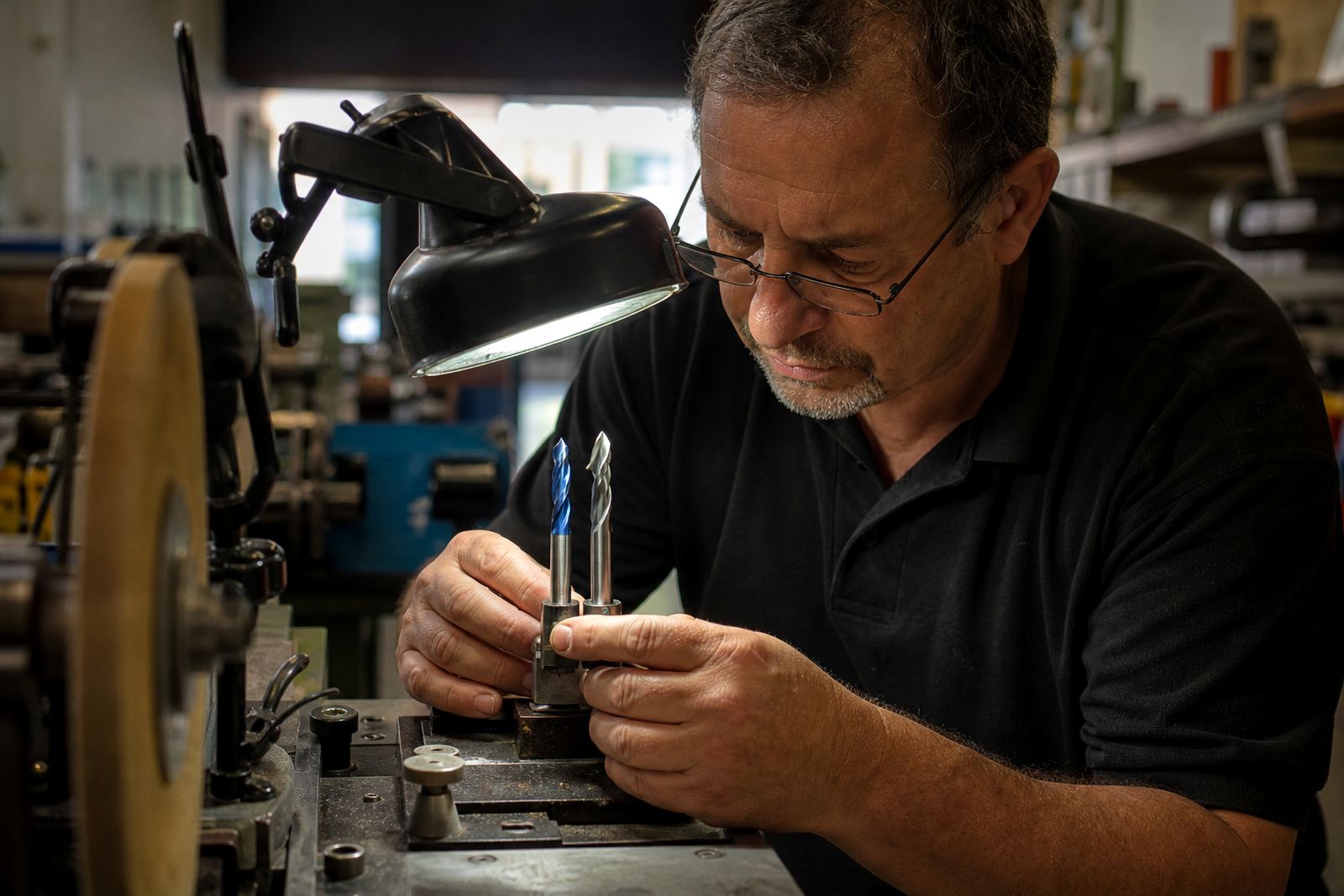
Regrinding a router profile bit is a precision job. The cutting edge has to be restored without changing the profile geometry, relief angle or diameter beyond the allowable limit. That means the technician must work slowly and measure often. If the bit has been used on a job where accuracy matters, such as cabinetry, door components or decorative trim, even a small change can show in the final fit.
A proper service should protect the following points:
- Profile shape and radius
- Cutting diameter within workable limits
- Balance so the bit runs smoothly
- Clear cutting edges with no burrs left behind
- Overall safety for the next run
At CutTool Sharpening, profile bit care includes checking for damaged edges, removing heat affected marks, and confirming whether the cutter still has enough material for another service. If the bit has been ground too many times already, that must be said plainly so the workshop can plan a replacement before a job goes wrong.
Cleaning and storage in a coastal or humid workshop
KwaZulu-Natal humidity can be hard on steel and carbide tooling, especially if the shop is near the coast or the workshop is not climate controlled. After a long day of cutting, resin, dust and moisture settle into the cutter body and bearing. If the bit is put away without drying, corrosion can start in small patches and the bearing may stiffen over time.
That risk increases where power interruptions interrupt the normal clean-down routine. A quick restart after load-shedding often means the team is in a hurry and tools get put away too fast. The fix is simple enough, but it needs discipline.
- Remove resin and dust after each shift
- Dry the bit fully before storage
- Keep cutter boxes off the floor where damp collects
- Use labelled trays for different profiles and sizes
- Inspect bearing movement before the next project
In Durban, Westville and Hillcrest, where moisture can linger in the air, a clean and dry storage routine makes a real difference. It also helps when bits are sent by courier from Johannesburg, Pretoria or Cape Town, because well-packed tools arrive in better condition and are easier to inspect on arrival.
When training makes a difference in bit life
Many profile tool problems start with handling, not the grind itself. That is why basic training matters for small workshops and larger production teams alike. A technician or operator who knows how to identify chatter, read wear patterns and store cutters correctly can extend tool life and reduce unnecessary rework.
Starter kits and practical training are useful for teams that are building a maintenance routine from scratch. The goal is not theory on paper, but day to day control of the tools that actually earn the money. This includes how to check a bit before use, what to record after a sharpening, and when to stop using a cutter that has gone beyond safe limits.
For a workshop in Pinetown making cabinet doors for a client in Pietermaritzburg, that knowledge can prevent delays. The operator spots a chipped profile early, books the bit for courier collection, and the regrind is handled before the next production slot. That saves the timber, the set-up time and the follow-up sanding that comes from a poor cut.
Good router profile care is really about control. Keep the profile true, keep the cutter clean and do not wait until the damage is obvious. The longer a damaged bit is run, the more shape is lost.