Why the same cutter lasts longer on some timber than others
Not all wood behaves the same under a cutting edge. A soft pine board from a site in Pietermaritzburg may cut cleanly with only light wear, while a dense hardwood panel in Durban can dull the same blade much faster. The difference comes from grain density, natural resins, silica content and how dry the timber is at the time of cutting.
In practical terms, that means your sharpening schedule should follow the timber you work with, not just the number of days since the last service. If your workshop moves between cabinet work, site trimming and batch production, edge wear can change from one job to the next.
- Softwoods usually cut easier but can still gum up the edge if the resin is heavy.
- Hardwoods often need more power and place more strain on the tooth face.
- Dry timber can chip edges faster than timber with a bit of moisture, though wet wood can leave burn marks and poor finishes.
Dense hardwoods in South African workshops
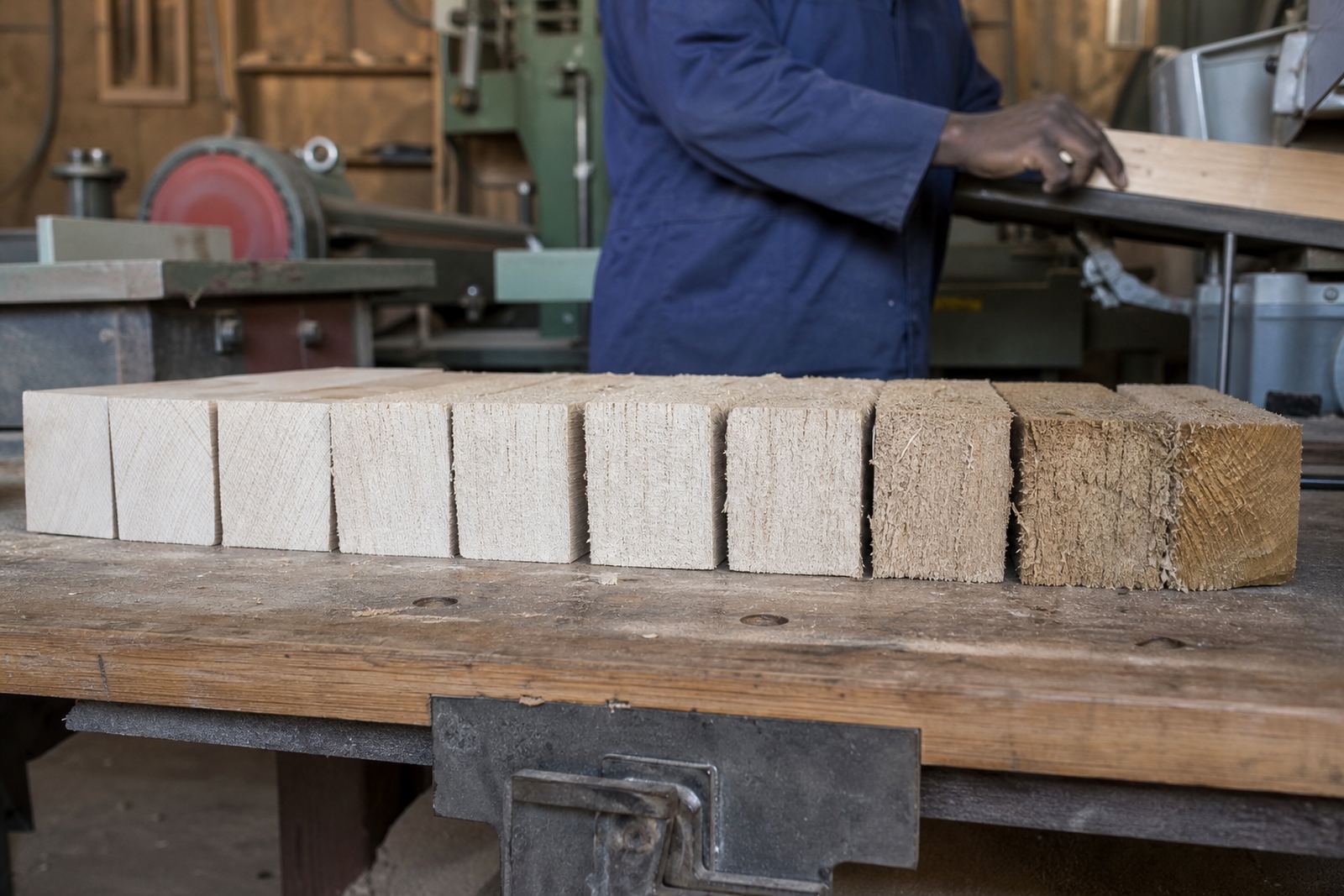
Many local workshops work with hardwoods that are hard on cutting tools. Species with tight grain, interlocked grain or mineral streaks can push the edge off square very quickly. You may notice extra heat, a rougher finish, or a cut that starts to wander even when the machine is set correctly.
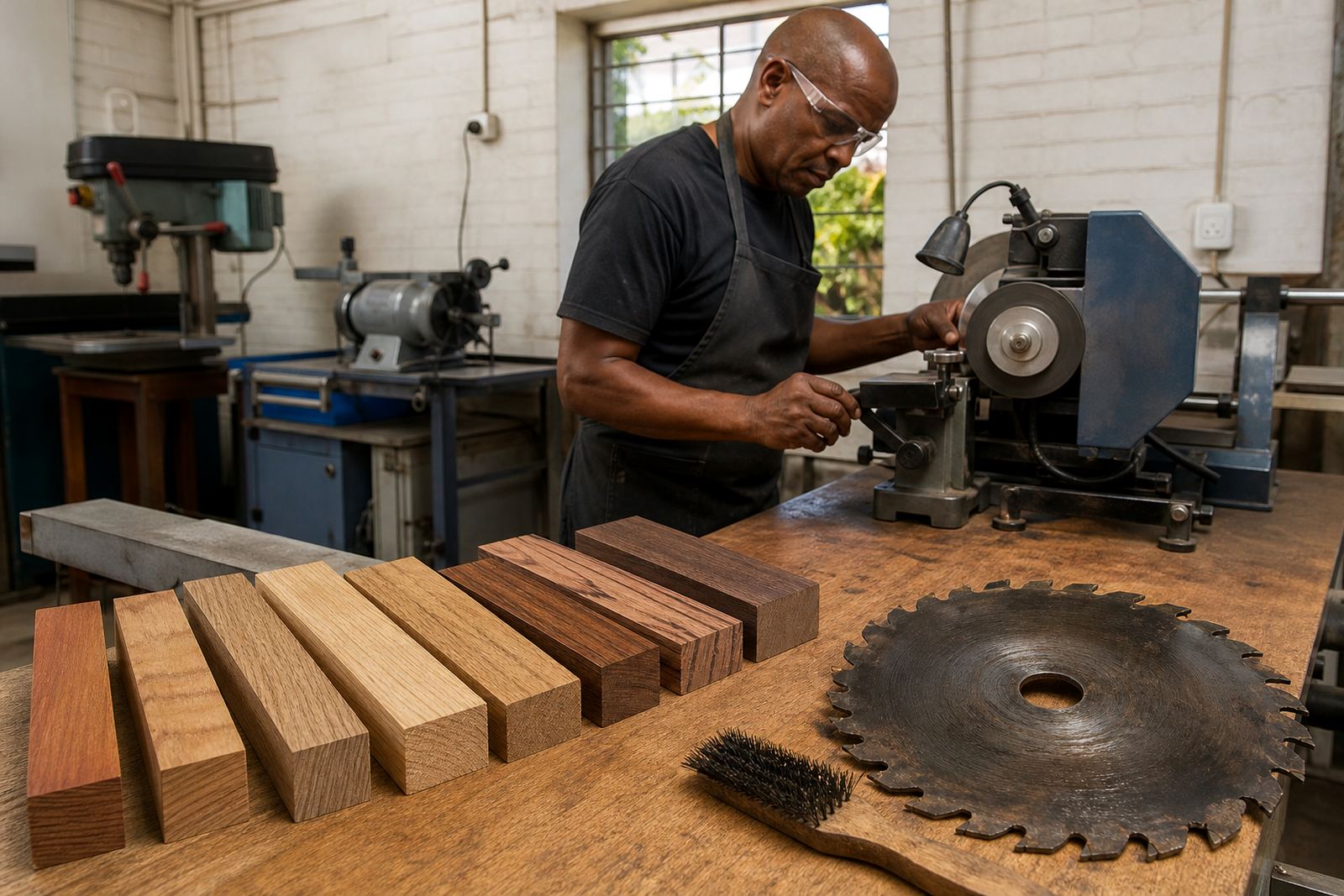
At our Pinetown workshop we often see blades from joinery jobs where the timber has been through a lot of handling. Once grit gets into the boards, the teeth can lose their sharpness in a short run. That is one reason we check for chipped edges, burn marks and balance issues before we send any tool back out.
- Watch for a higher motor load when the same machine normally cuts easily.
- Look for darkened cut lines, which often point to heat build-up.
- Inspect the first few cuts after a timber change, especially on mixed batches.
Softwoods still wear tools, just in a different way
Softwood is often seen as easy on tooling, but that is only partly true. Pine and similar timbers can carry sticky resin that builds up on saw teeth and router bits. Once that build-up starts, the cutter no longer slices properly and the machine begins to burn rather than cut. The result is poor finish and unnecessary regrinding.
For hobbyists doing weekend work in Westville or Hillcrest, this can be a surprise. A blade that looked fine on Friday can drag badly by Sunday if it has been cutting resinous stock without cleaning. Regular inspection helps you catch the problem before it turns into full edge damage.
- Clean resin from the edge before storing tools.
- Check for pitch on the tooth face after every long session.
- Do not keep cutting once you see smoke or hear the motor labouring.
How grain direction and knots change wear rates
Even within the same species, the grain can change how fast an edge wears. Straight grain usually cuts more evenly, but knots, growth rings and reversing grain can chip the edge or leave a rough track. Router bits are especially sensitive because they work at high speed and can be punished by sudden changes in timber density.
Knots are a common cause of chipped edge recovery work. They can nick the tooth, throw the balance off and leave one side cutting harder than the other. If you keep seeing the same damage pattern, the problem may be the timber stock, not the machine setting.
- Plan passes around knots where possible.
- Use lighter feed pressure on mixed-grain boards.
- Reset the angle if the cutter starts leaving a stepped edge.
What to look for before a cutter starts failing
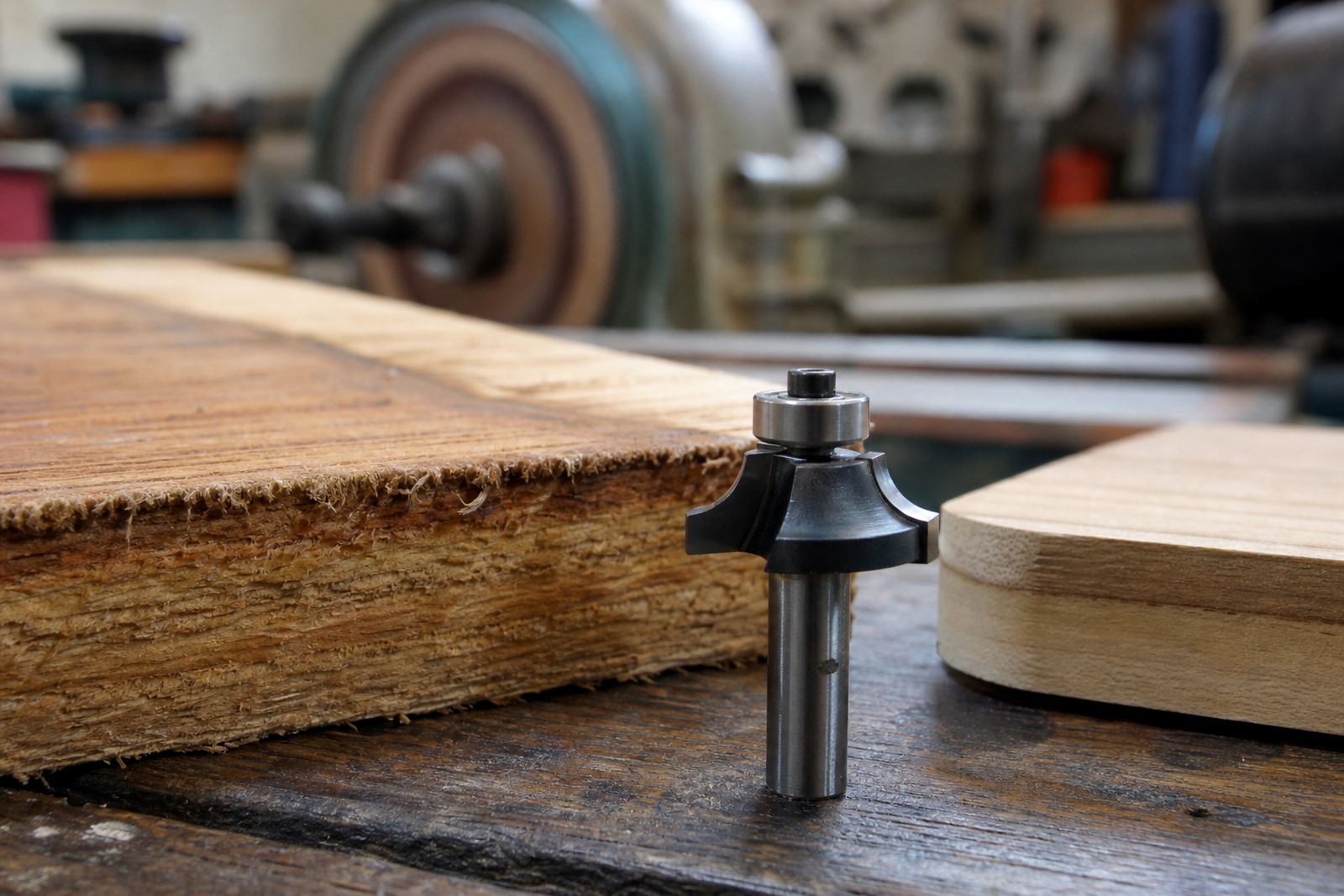
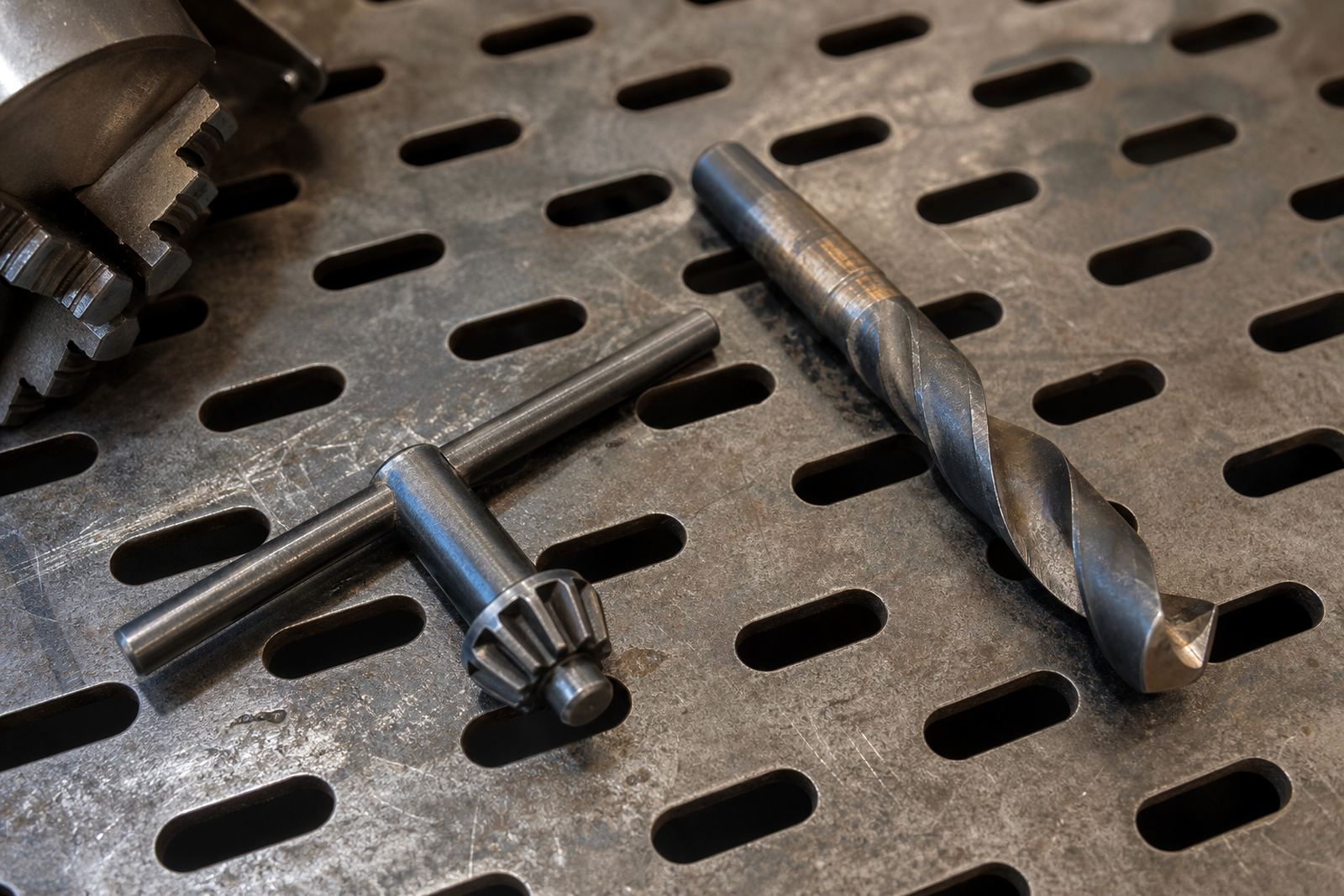
Most wear problems show warning signs before a tool is fully done. A saw that needs more pressure, a drill that heats up too fast, or a router bit that leaves feathered edges is telling you something. If you catch it early, a sharpening or regrinding service can often bring the tool back before the damage spreads.
We see this often with batch work collected from Durban, Pretoria and Johannesburg. Some tools arrive with the same complaint but for different reasons. One may need top grinding and diameter correction, while another only needs tooth face grinding and balance checking. Knowing the timber helps us decide the right fix.
- Uneven cut sound often points to edge wear or poor balance.
- Burn marks usually mean heat from a dull or clogged edge.
- Chatter marks can mean the cutter needs angle resetting or a full regrind.
A local example from a mixed-timber job in KwaZulu-Natal
A small shop in Durban sent in a mixed batch after cutting pine framing in the morning and a dense hardwood section in the afternoon. The pine work looked acceptable, but the hardwood run left scorch marks and a few chipped teeth. The customer thought the saw was at fault, yet the issue was the shift in timber type and the fact that the blade had already lost its clean cutting edge.
We sorted the set with burn mark removal, tooth face grinding and a balance check, then tagged the batch so the team could keep track of use after collection. Once the tools went back, the shop kept separate cutters for softwood and hardwood jobs. That simple change reduced wear and cut downtime during load-shedding days when production windows were already tight.
For busy workshops, separating timber types can save money. It also makes it easier to plan courier collections from Pinetown to Durban, Pietermaritzburg, Johannesburg, Pretoria and Cape Town without sending in tools that only need light service versus full regrinding.
How to stretch edge life without guessing
You do not need to guess when a cutter is due. Track the timber type, the number of boards or metres cut, and the finish quality you are getting. If one species is clearly harsher on your tooling, set a shorter service interval for that batch and keep a spare cutter ready. This helps hobbyists and trade users alike avoid stops in the middle of a job.
CutTool Sharpening also helps clients with training and starter kits, so your team can recognise wear earlier and store tools properly between jobs. If you are running saws, drills or router bits across different timbers, a simple maintenance routine will usually do more for tool life than waiting for a full failure.
- Keep separate cutters for resin-heavy softwood and dense hardwood where practical.
- Record the timber species used on each batch.
- Book collection before the edge damage gets too far gone.