Why storage matters more than most workshops think
Cutting tools do not usually get damaged only during use. Many edges lose life in the waiting period between jobs, when bits are left loose in a drawer, dropped into a bucket or packed away while still damp from cleaning. A small nick on a router bit or a fine burr on a drill can change the finish on the next job and waste time at the machine.
In a KwaZulu-Natal workshop, humidity is part of the daily problem. In coastal air, a clean tool can start showing surface rust sooner than expected if it is put away wet or stored in a closed box with trapped moisture. Add dust from timber, resin build-up and the odd knock in transit, and the edge condition can slip fast. Good storage is not fussy, it is practical maintenance.
Clean tools before they go back on the shelf
The first rule is simple: never store a tool in the same state it came off the machine. Wipe away resin, dust and metal fines, then dry the tool fully. If a blade or bit has been washed or degreased, let it air dry before packing. A tool that looks dry on the outside may still hold moisture in flutes, gullets or around brazed joints.
- Use a clean rag that does not leave lint behind.
- Dry flutes, gullets and cutting points by hand.
- Keep solvents and oily rags away from loose storage tubs.
- Check for sticky pitch before the next use.
A clean edge is easier to inspect too. You can spot a chipped tip, uneven tooth face or bent shank much sooner when there is no grime covering it. That makes the next sharpening or regrinding job more accurate, and sometimes it saves a tool that might otherwise be set aside too late.
Separate each bit so edges do not knock against each other
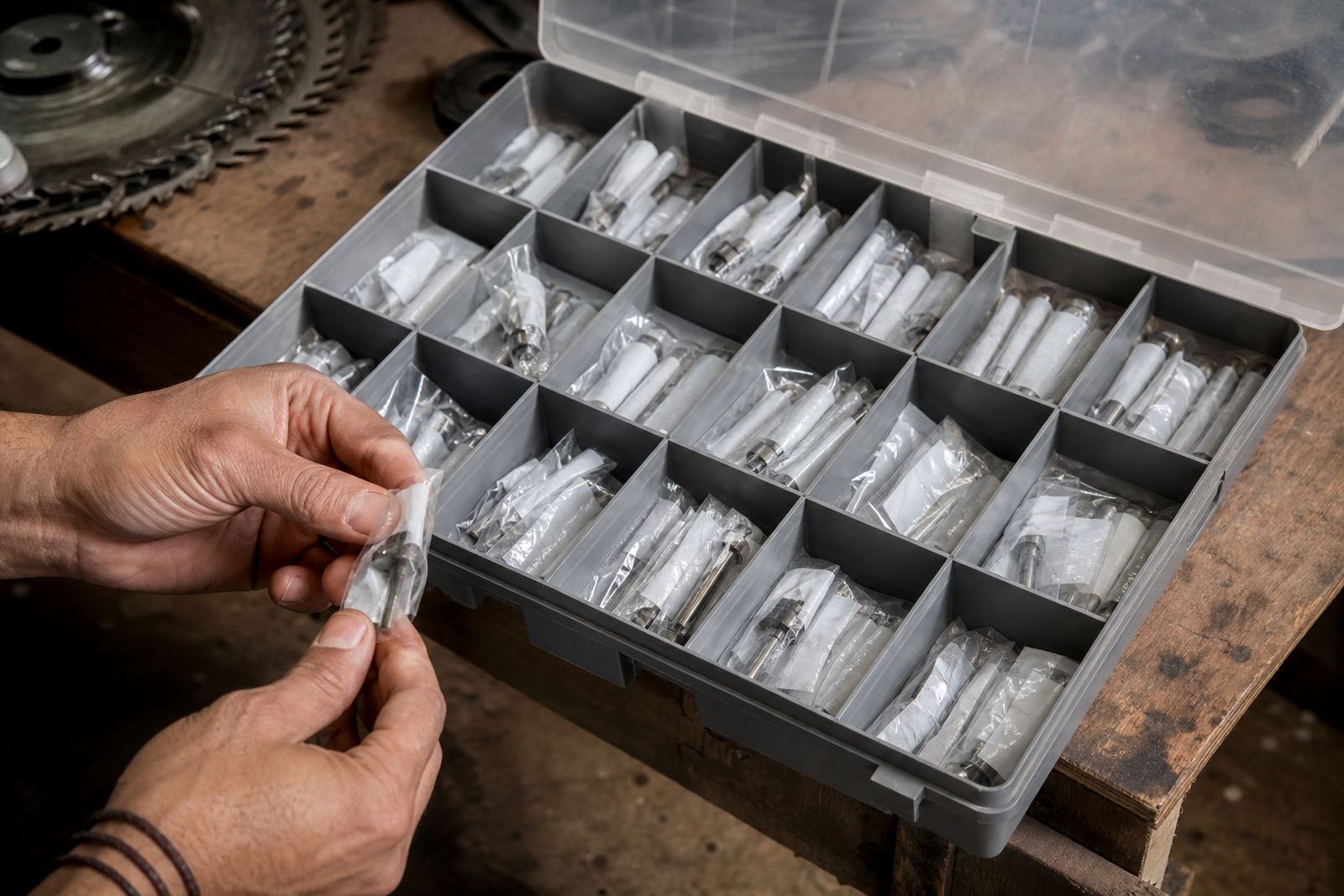
The most common storage damage is plain contact. A router bit rattling against another bit, or a drill rolling in a metal tray, will chip edges over time. Even light movement in a toolbox can mark a cutting surface. The fix is to keep each tool from touching the next one.
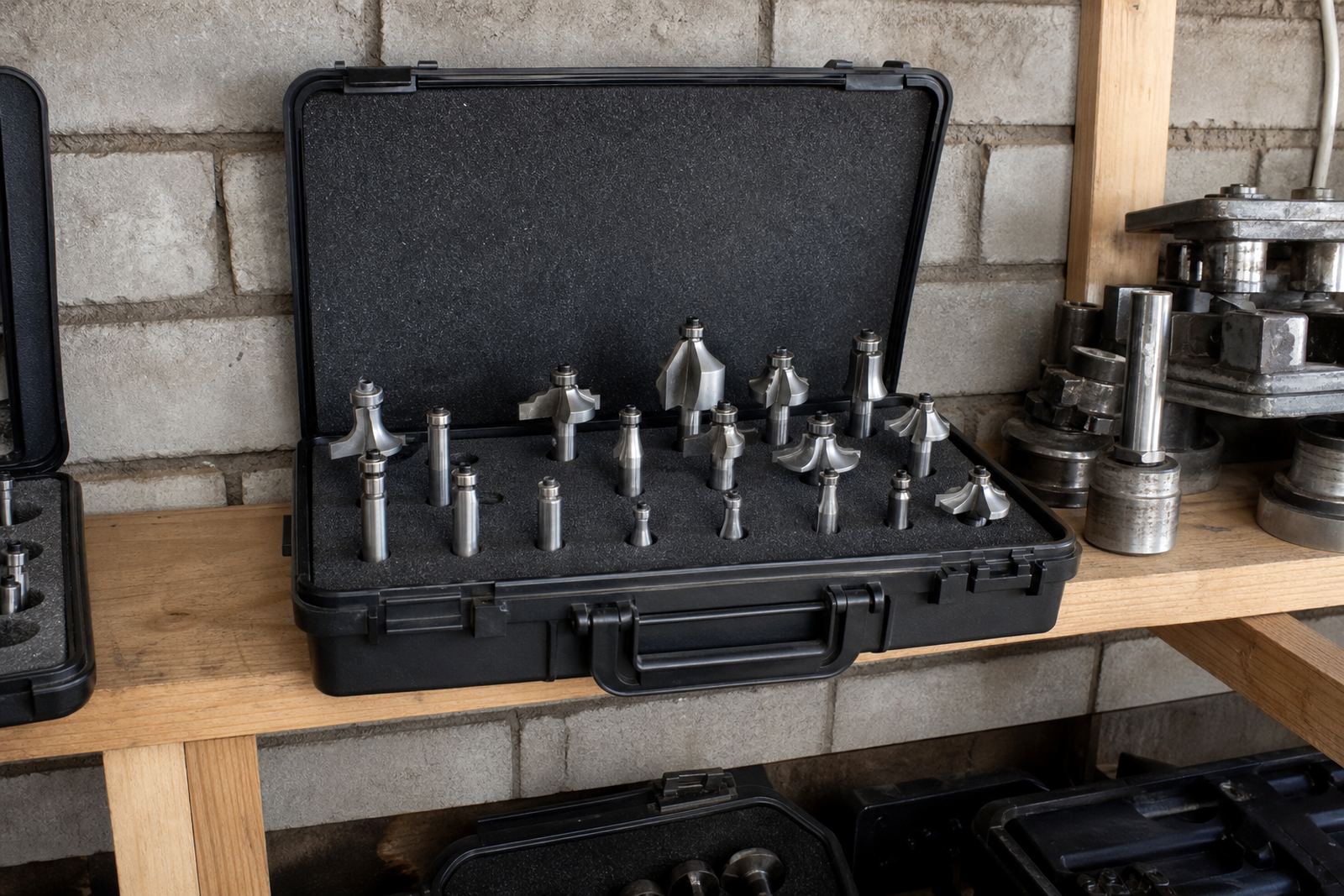
Use slot organisers, partitioned boxes, foam inserts or individual sleeves. The main thing is that tools should sit still and not clash when a drawer is opened or a case is carried. For larger saws, use racking that keeps each blade upright and spaced. For smaller bits, group them by size and type so you are not fishing around with fingers near the edges.
- Store router bits in fitted holders or tubes.
- Keep drills upright rather than loose in a tray.
- Separate sharp ends with cardboard, foam or plastic dividers.
- Do not stack heavy tools on top of one another.
Watch humidity, dust and temperature swings
Storage conditions matter most in places where weather changes quickly or the workshop is not climate controlled. In Pinetown and along the Durban side, moisture can hang in the air for long periods, especially after rain. A cabinet that closes tightly is good for dust, but if a tool goes in damp it can hold the moisture inside. That is where light rust starts.
Keep tools in a dry area away from open roller doors, floor puddles and direct spray from cleaning bays. If you use silica gel packs or other moisture absorbers, replace them regularly. Avoid leaving tools on cold concrete floors overnight, because condensation can form underneath them. A shelf at waist height is usually better than a box on the floor.
Where load-shedding affects the workshop, there may be less lighting and more stop-start work. That is when tools get put down in the wrong place or packed away in a rush. A fixed storage routine helps reduce those mistakes, even on a busy day.
Use tags and order so the right tool stays with the right job
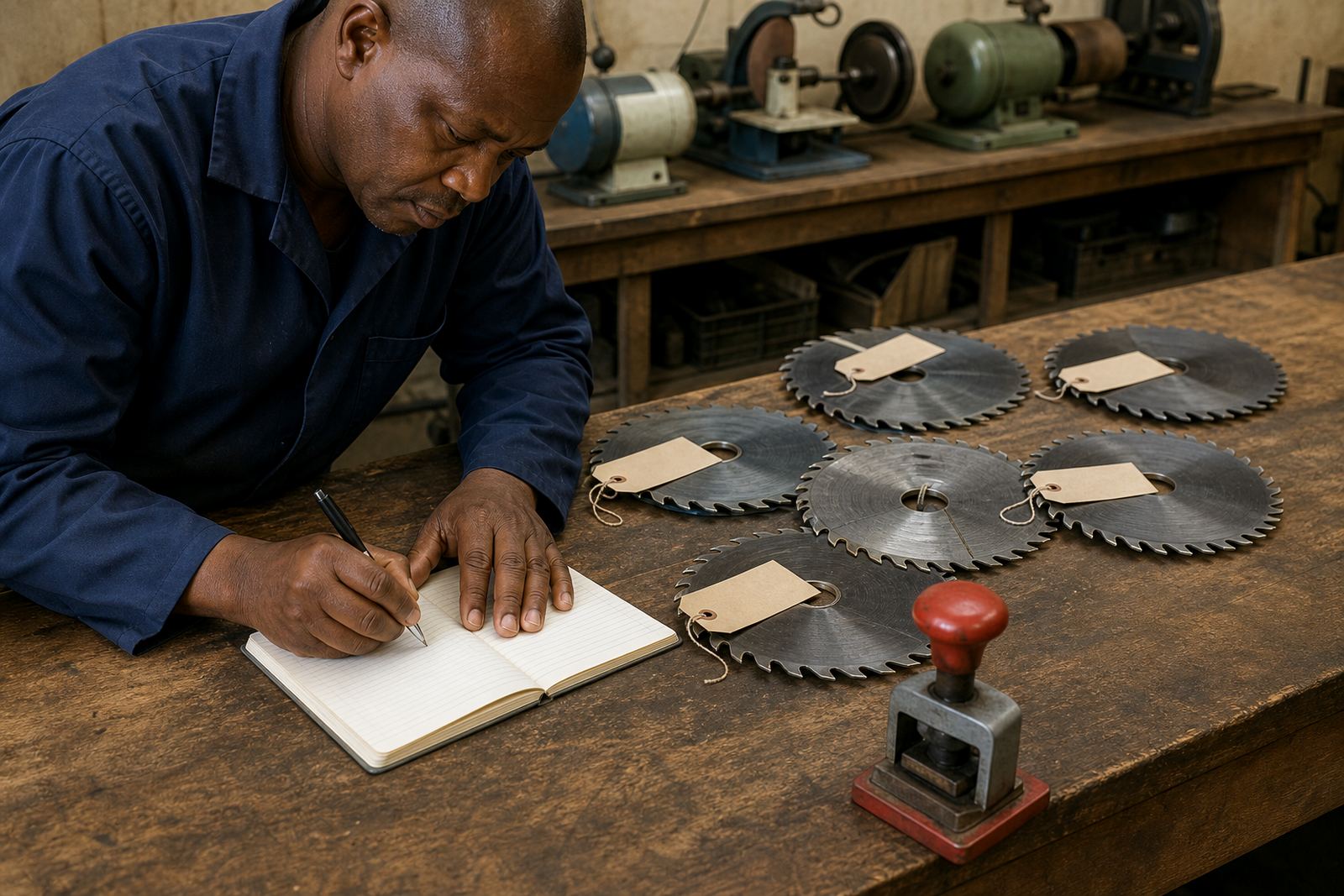
Good storage is not only about protection. It is also about control. If tools are mixed up, they get handled more than necessary and that creates extra wear. Batch tool tagging helps here. When each item is marked by size, type or job set, there is less chance of it being dragged out and handled unnecessarily.
This is especially useful for workshops that send tools in batches by courier from Johannesburg, Pretoria, Cape Town or Pietermaritzburg. Proper tags make receiving, sorting and checking much faster when the tools come back. The same system helps in local collections around Westville, Hillcrest and Durban, where a job may move through more than one pair of hands before it reaches the machine again.
- Label tools by diameter, tooth count or flute count.
- Keep matching sets together.
- Mark tools that need attention before the next run.
- Store finished jobs apart from waiting jobs.
Transport habits matter just as much as shelf habits
Many tools are damaged not on the shelf but on the way to and from the workshop. A bit that is wrapped badly, or a saw blade that slides inside a box, can arrive with a fresh nick before it is ever used again. If you collect tools by courier, pack them so they cannot move inside the carton. One loose bit inside a large box can do more damage than a full day of cutting.
Use cardboard separators, bubble wrap where needed, and rigid boxes that do not collapse. Keep sharp ends covered, and avoid packing tools next to heavy offcuts, bolts or other hard items. It sounds basic, but this is where many edge problems start. Good packing is part of storage, not an afterthought.
For busy workshops in and around Pinetown, a simple rule works well: if a tool would rattle when you shake the box, it is not packed properly. That one habit saves a lot of regrinding later on.
Build a return routine that makes damage easy to spot
When tools come back from use, give them the same short check every time. Look for chipped edges, burn marks, bent sections and uneven wear. If a tool has lost balance or picked up a nick, remove it from the regular storage area until it is sorted. Mixing damaged tools back into the main stock is how small faults become repeat problems.
A simple return routine might include cleaning, drying, inspection, tagging and shelving in that order. Keep it the same for saws, drills and router bits so the process becomes automatic. That way the storage habit supports the sharpening schedule instead of creating more work later. It also helps when training new staff, because everyone follows the same steps from day one.
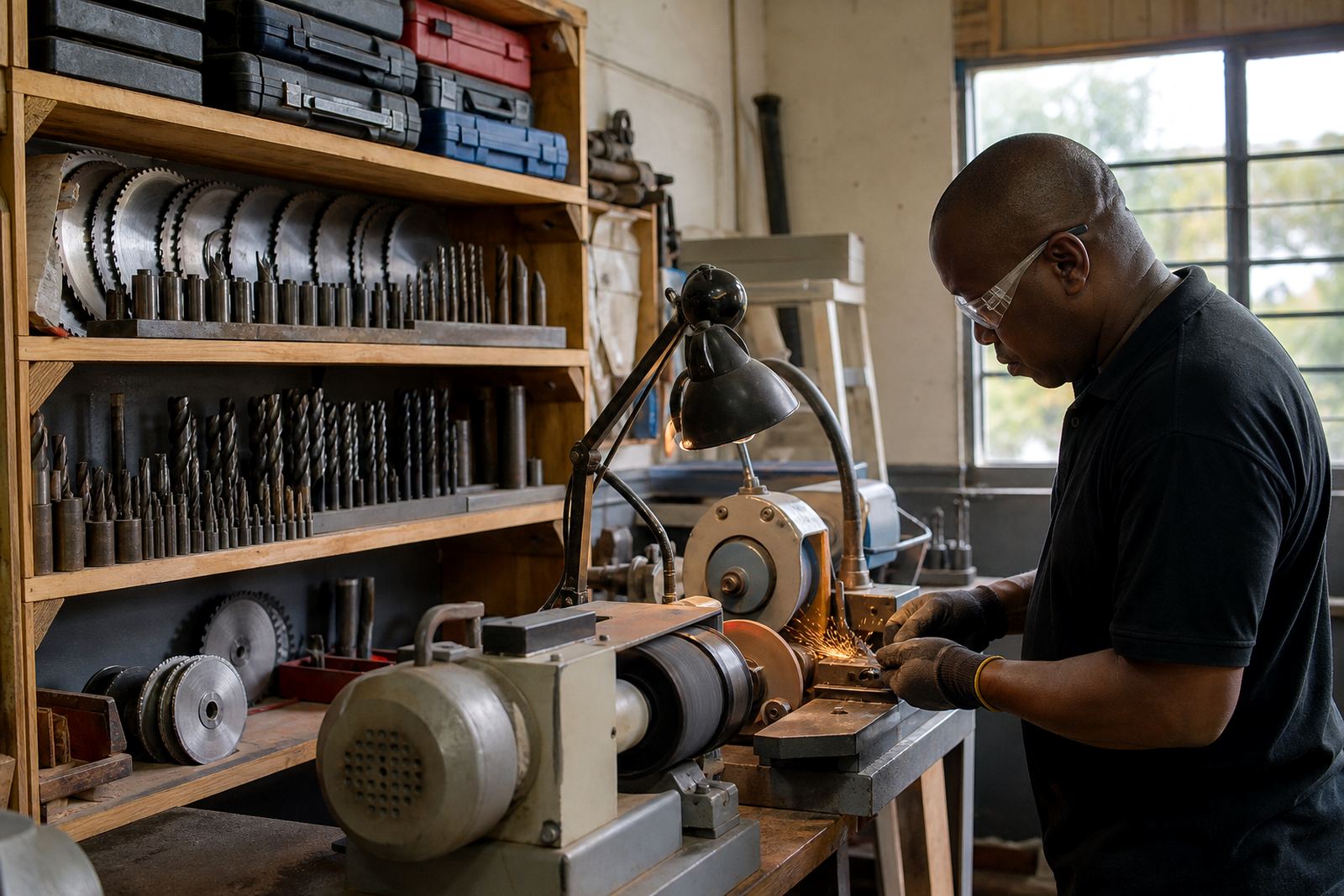
At CutTool Sharpening in Pinetown, we see the difference straight away when tools arrive well stored. The cutting edge is easier to assess, the regrind is more predictable and the turnaround is smoother. Good storage does not replace sharpening, but it does help the sharp edge last longer between jobs.