Why router bits get damaged in transit
Router bits look tough, but the cutting edges are thin and the tips can take a knock very easily. When a batch of small cutters rattles inside a container, the carbide can chip, the shank can score, and the cutting profile can lose its shape before it even reaches the workshop.
In our Pinetown workshop we see this often with bits sent in from Durban, Pietermaritzburg, Johannesburg and Cape Town. The problem is usually not distance alone, it is movement inside the parcel. A few millimetres of space is enough for bits to knock together each time the box is lifted, turned, or stacked during courier handling.
Choose a container that stops movement
The first rule is simple: the contents must not slide. A strong box is better than a soft envelope, but the real issue is how well the bits are held in place. If the cutters can shift side to side or bounce upwards, they will strike one another or the wall of the carton.
- Use a box that is close to the size of the load, not oversized.
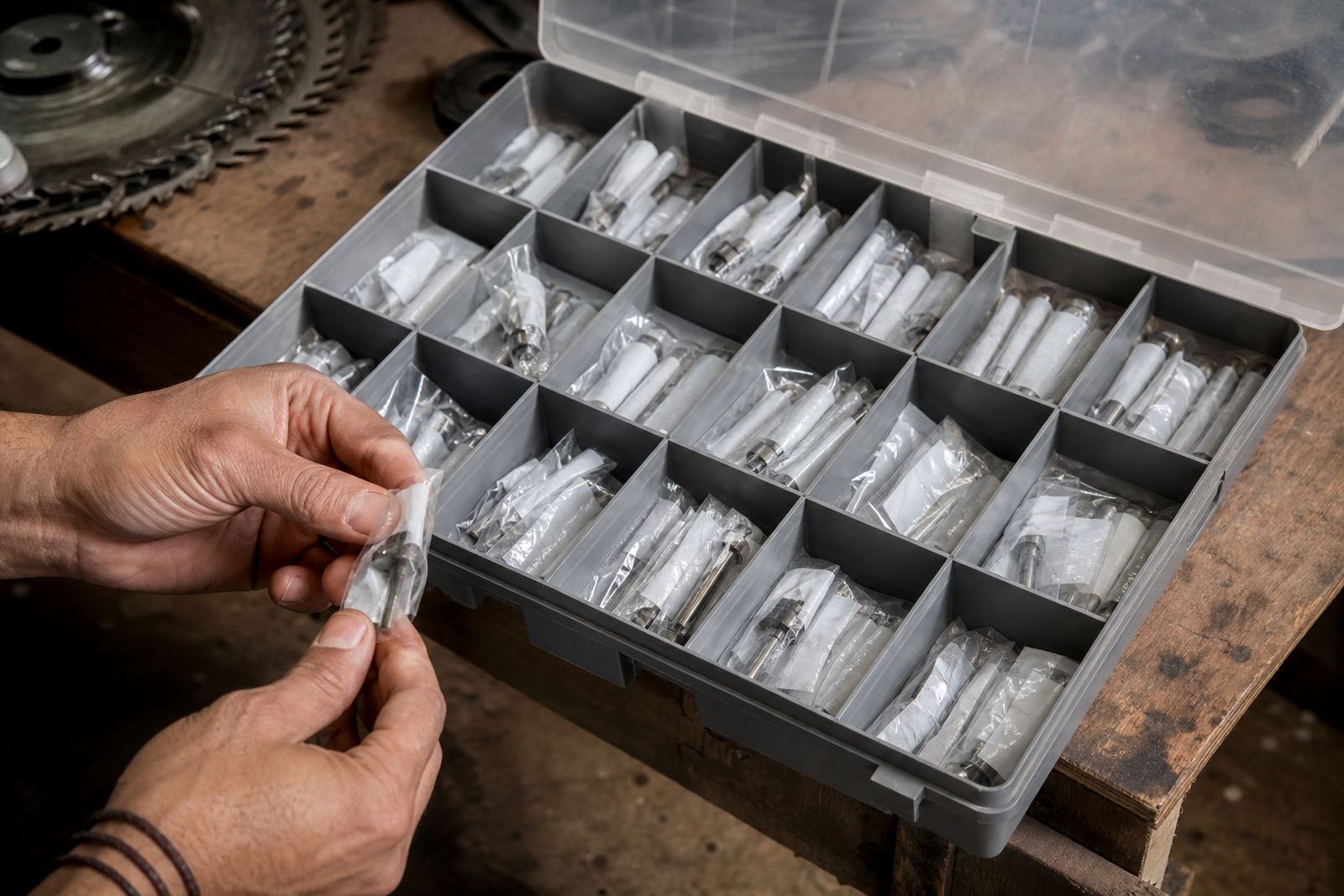
- Wrap each cutter or small group separately before placing it inside.
- Fill empty spaces with paper, foam, or folded cardboard so nothing moves.
- Seal the carton well, especially if it is going through multiple courier stops.
If you are sending a few bits only, a smaller inner container inside the main box helps a lot. That extra layer reduces impact when the parcel is dropped onto a sorting belt or stacked under heavier freight.
Separate cutters by size and cutting style
Not every router bit should be packed in the same way. Small straight bits, bearing-guided bits, profile cutters and larger diameter cutters all have different weak points. If they sit loose together, the sharpest edges will often touch first and that is where chips start.
A sensible method is to sort them before packing. Keep similar sizes together and avoid mixing very thin cutters with heavier bits. It also helps when the parcel is unpacked at the workshop, because the tools can be checked and logged faster.
- Group bits by diameter or profile.
- Keep freshly sharpened bits apart from dull ones.
- Do not let shanks rub against cutting edges.
- Tag each group if you are sending several sets at once.
This is especially useful for cabinet makers and sign shops working on repeat jobs. If one bit is damaged in transit, you want to know exactly which piece was affected and which batch still needs attention.
Protect the cutting edges and shanks
The sharp edge is the part that needs the most care, but the shank also matters. A bent or scored shank can cause poor running in the spindle and may lead to vibration. That vibration can then affect cut quality and tool life.
For smaller bits, a simple wrap can be enough if it is done properly. Use clean paper, bubble wrap, or foam sleeves and make sure the cutting edge cannot punch through the layer. Do not use loose offcuts that unravel in the box or sticky tape placed directly on the cutter, because that can leave residue and make inspection harder.
When the weather is damp, especially around the coastal belt, pack the bits dry and keep them dry. Moisture and metal do not get along well. A bit that arrives with light surface rust will still need cleaning before sharpening or regrinding, and that adds time.
Courier collection across South Africa needs extra care
Courier transport is convenient, but it means the parcel may be handled more than once before it gets to us. That is why packaging for collection should be stronger than packaging for a short local handover. A box that feels fine in the workshop may not hold up after a few scans, transfers, and stackings.
When clients book courier collection from Pinetown, Westville, Hillcrest, Durban, or farther afield such as Pretoria or Cape Town, we recommend a parcel that can handle a little rough handling. Load-shedding delays can also mean parcels sit longer in depots than planned, so a neat, sealed package is better than a loose wrap that opens under pressure.
- Close and tape all box seams.
- Write the sender and job details clearly on the outer box.
- Use a return address or job reference inside the parcel as well.
- Avoid packing loose cutters in the same box as heavy tools or hardware.
How to pack batches from a busy workshop
If you are running a production shop, batch packing saves time and reduces mistakes. The idea is to keep each order traceable from collection to return. That matters when you have several sets of router bits going out for sharpening, regrinding, diameter correction or chipped edge recovery at the same time.
We suggest a simple routine: count the tools, separate them by job, and pack each batch with its own label. A little discipline here prevents mix-ups later. One missing bit can delay a whole job and nobody wants to hold up production because a 12 mm cutter was packed with a 6 mm set by mistake.
- Count every bit before sealing the box.
- Label each batch with the job name or order reference.
- Keep worn cutters apart from those that have already been serviced.
- Make sure the heaviest pieces are at the bottom and the lightest at the top.
If the order is large, split it into two smaller boxes instead of one overloaded carton. That often gives better protection and is easier for the courier to handle.
What happens when bits arrive badly packed
Bad packing usually shows up quickly. You may see chipped corners, scuffed carbide, damaged bearing areas, or bits that no longer run true. In some cases the tool can still be saved, but extra regrinding may be needed to restore the cutting geometry. That means more material removed and less life left in the cutter.
A cleaner arrival helps us get straight into sharpening, top grinding, tooth face work or angle resetting, instead of first sorting out transport damage. It also means better results for the client. A well packed parcel is not just safer, it is quicker to process and less likely to need extra correction.
For workshop owners and hobby users alike, the goal is the same: keep the cutters still, keep them dry, and keep the edges from touching. That small bit of care makes a real difference once the parcel is on the road.