Why one spare blade is not enough in a busy shop
In a workshop that cuts every day, one spare blade is often not enough. If the blade on the machine is blunt and the backup is already in use, the whole line slows down while someone waits for sharpening, transport, or a quick fix that never really holds up.
A proper blade rotation plan gives you a simple order of use for saw blades, with a clean blade in service, a second blade ready to fit, and a third blade on the way to sharpening or regrinding. That way you are not forced to run a worn blade until it burns, chips or starts wandering off line.
For many shops in Pinetown, Durban and the surrounding industrial areas, the real cost is not the sharpening fee. It is the idle machine, the staff standing by, and the extra labour needed to rework material that was cut badly the first time.
What a practical rotation plan looks like on the floor
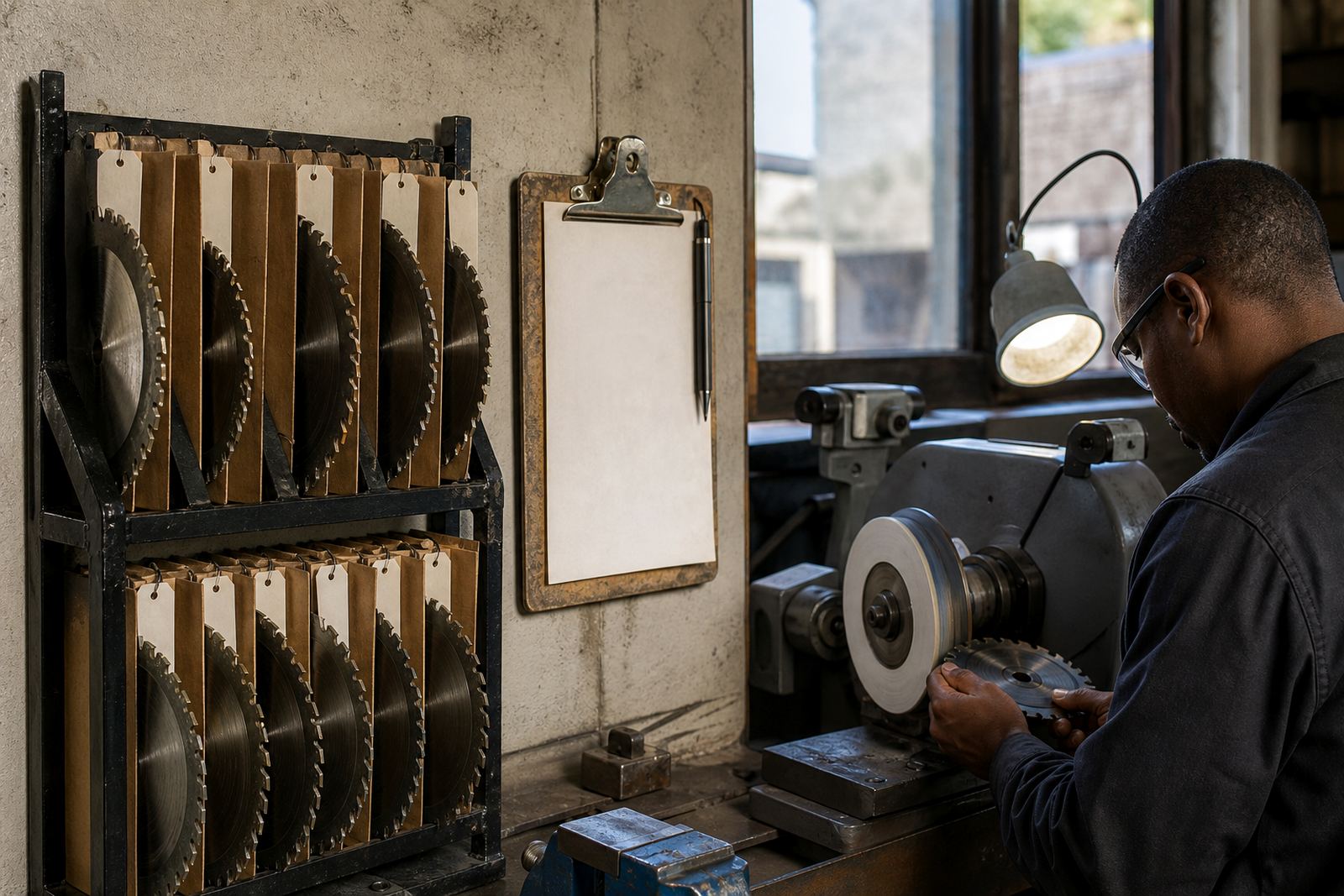
You do not need a complicated system. Start by separating blades into three clear groups: in use, ready, and out for service. Each blade should have a tag showing the diameter, tooth count, material it is meant for, and the date it last came back from sharpening.
- Keep one blade fitted to the machine for daily cutting.
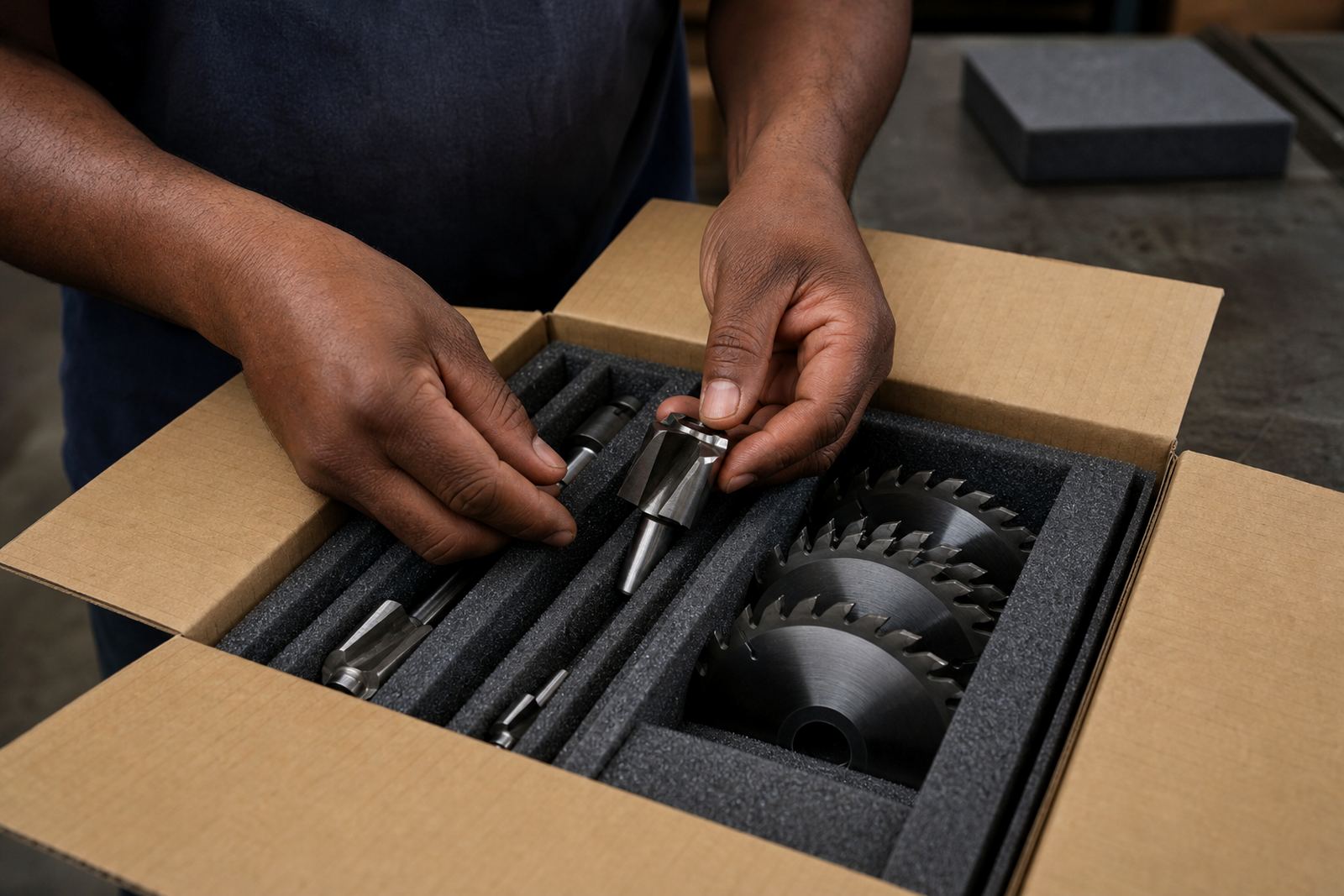
- Keep one spare sharpened blade on the shelf, packed and protected from knocks.
- Keep one blade in the sharpening cycle so there is always a fresh option coming back.
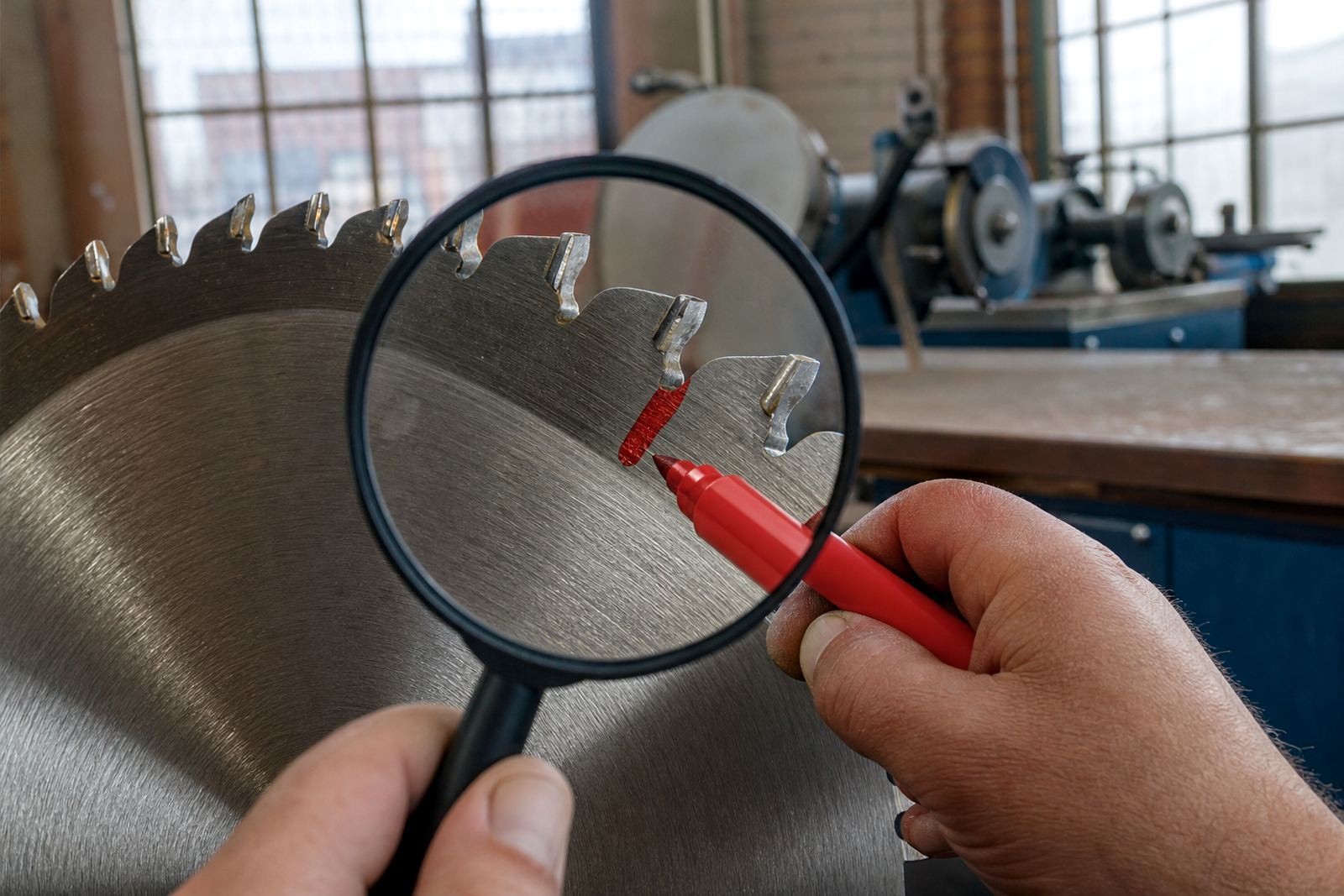
- Record any burn marks, chipped teeth or vibration before the blade is sent in.
This approach works well for cabinet shops, joiners, engineering workshops and sites that run smaller batch jobs. It also helps when different operators use the same machine and each one has their own way of pushing a blade hard, or a bit too hard.
Signs a blade should leave the machine before it causes trouble
Many workshops wait too long before taking a blade out of service. By the time the cut starts dragging or the motor sounds strained, the blade may already be damaging the job and the machine. In KwaZulu-Natal, coastal humidity can also add to the problem if blades are stored badly, especially after a wet week or a hot day with the roller door open.
Watch for these common signs:
- Rough cut edges that need sanding or extra trimming.
- Burn marks on timber or plastic.
- More effort needed to feed the material through.
- Noise or vibration that was not there before.
- Missing tips, chipped edges, or an uneven cutting line.
If a blade starts showing any of these signs, take it off the machine and log it for checking. A small issue can turn into a bigger repair if the blade keeps running and the teeth begin to seperate under stress.
How rotation cuts costs in places like Pinetown and Durban
In a Pinetown workshop, a blade rotation system can mean the difference between a smooth morning shift and a scramble for courier collection. When a blade is sent for sharpening early, the spare blade keeps the job moving while the first blade is being reworked. That is far better than waiting for a failure and then paying for urgent handling, rushed fitting and lost time.
For businesses serving Durban, Pietermaritzburg, Johannesburg, Pretoria and Cape Town, courier collection makes the rotation even easier. Blades can be grouped, tagged and sent together, which is useful if you have separate sites or different teams using the same cutting equipment. One week you may need fine finish blades, the next week heavier production blades, so the rotation must match the work, not just the calendar.
There is also less wastage. A sharpened blade that is rotated properly tends to last longer, because it is not pushed to the point where the body overheats or the teeth wear unevenly. That means fewer emergency replacements and better control of your workshop budget in Rand.
Storage and handling rules that keep sharpened blades ready
Sharpened blades only help if they stay sharp. Store them in a dry, organised place where the cutting edges do not knock against each other. Avoid loose stacking on benches, under machines, or in open boxes where dust, moisture and accidental impact can ruin a clean edge before it is even fitted.
- Use sleeves, racks or separated slots for each blade size.
- Keep blades off damp floors and away from water spray.
- Mark the blade after each service so it is easy to track.
- Check for rust, residue and transport damage before fitting.
If you are running loadshedding schedules, keep the storage area easy to access during changeovers. When power comes back and the team wants to start fast, the last thing anyone needs is to hunt for the correct blade or clean off damage that could have been avoided.
Training the team so the rotation plan actually works
A blade rotation plan fails when only one person understands it. Every operator should know how to identify the blade type, how to remove it safely, and where to place it after use. That simple habit reduces mix ups and helps the workshop keep a clear record of what is in service and what is due for sharpening.
Training should also cover the difference between sharpening, regrinding and correction work. Some blades need a standard sharpening pass, while others need tooth face grinding, top grinding, angle resetting or diameter correction. If the team understands this, they are more likely to spot problems early and send the blade in before the damage spreads.
At CutTool Sharpening, this is where starter kits and practical guidance help new teams get their system in place. It is easier to maintain a rotation plan when the people using the blades know what a healthy cutting edge looks like and what a worn one sounds like.
A simple local example from a Pinetown workshop
Consider a small production shop in Pinetown cutting boards and trims for local fitment work. They run two shifts and use the same saw all week. Before they started managing spare blades properly, the team would keep one blade on the machine until the cut quality dropped off, then send it for sharpening and wait. Jobs backed up, and the delivery schedule slipped.
After setting up a rotation plan, they kept one blade in use, one ready on the shelf, and one with the sharpening shop. They also started batch tool tagging, so each blade could be matched to its service history. That change made the workflow calmer and the cuts more consistent. The workshop still had busy days, but it no longer lost time looking for a blade or pushing a dull one through another job.
That is the real value of blade rotation. It is not just about keeping spares. It is about making sure the next clean cut is always close at hand, even when the day gets hectic.