Start with a clean, dry tool before it goes in the box
Before packing, wipe off resin, oil, dust and loose swarf. A blade with sticky pitch or a drill with metal fines can rub through wrapping in transit, and moisture trapped under packing can start rust before the parcel reaches Pinetown. In coastal areas like Durban and Westville, humidity is often enough to leave a light film overnight, so do not leave tools in an open tray after cleaning.
Sort tools by type and condition first. Keep chipped blades separate from serviceable ones, and do not mix router bits with drills in the same loose bundle. If you are sending a batch from a workshop in Hillcrest or Pietermaritzburg, label the items before packing so the same set comes back to the same job bag. That saves time when tools are checked in and after regrinding.
- Wipe tools dry with a clean cloth before wrapping.
- Remove sawdust, resin and swarf from flutes, gullets and cutting faces.
- Keep wet or oily tools out of sealed plastic until they are fully dry.
Protect cutting edges so they cannot touch each other
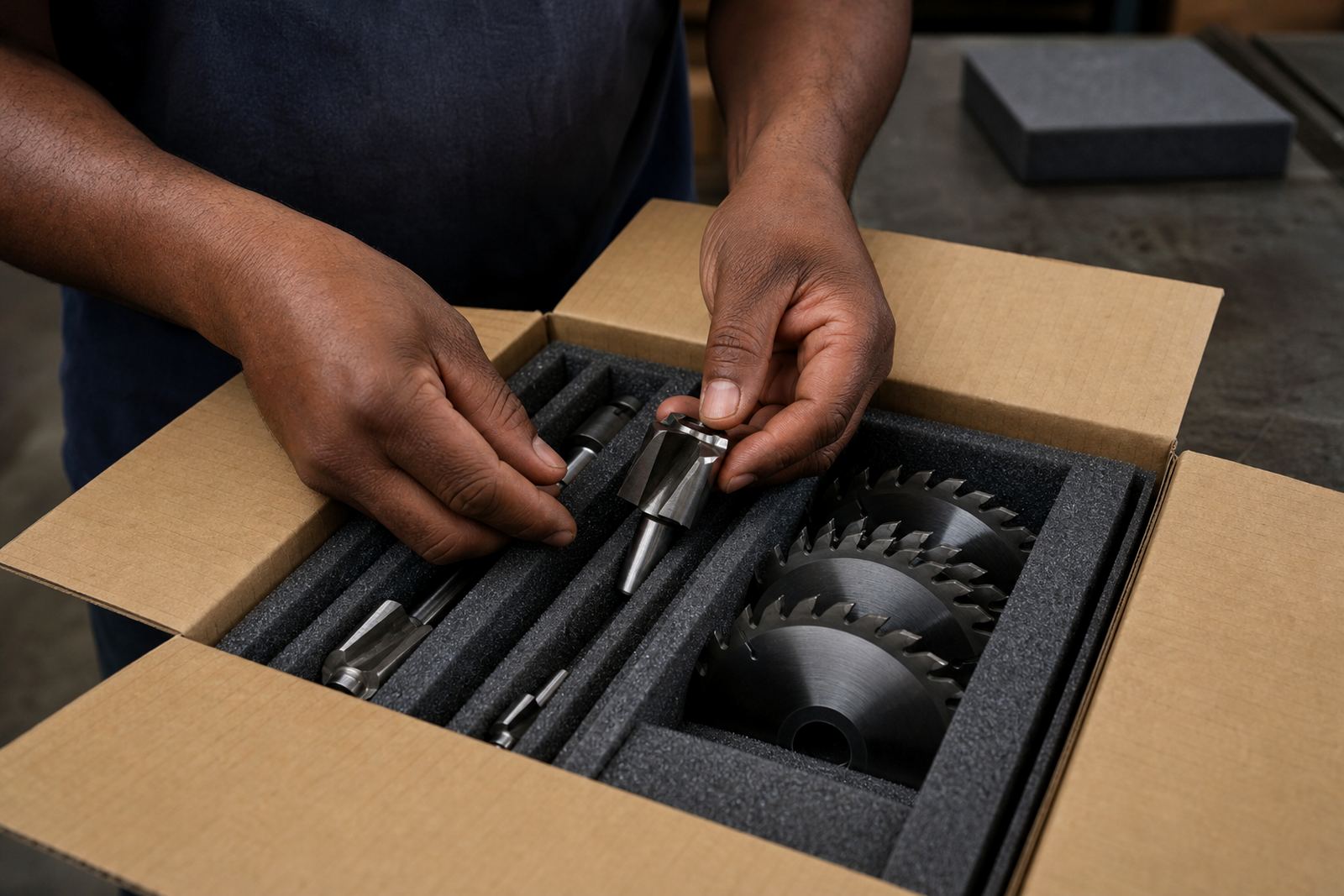
The main packing rule is simple, do not let sharp edges touch. Saw teeth can chip if they rub together, and router bits can knock against steel surfaces hard enough to damage carbide tips. For saw blades, place cardboard, foam or corrugated board between each blade. For smaller drill bits and router bits, use sleeves, tubes or divided containers so each item stays still.
When wrapping a single blade, cover both faces and tape the wrap so it cannot open. If the blade has exposed teeth or a sharpened rim, add a second outer layer. For broad blades, a flat board on each side helps stop bending. This matters with courier handling in Johannesburg, Pretoria and Cape Town where parcels may be stacked more than once before they reach the final stop. A parcel that rattles is usually a parcel that arrives with damage.
- Never pack loose blades together face to face.
- Use cardboard spacers, foam sheets or thick paper between items.
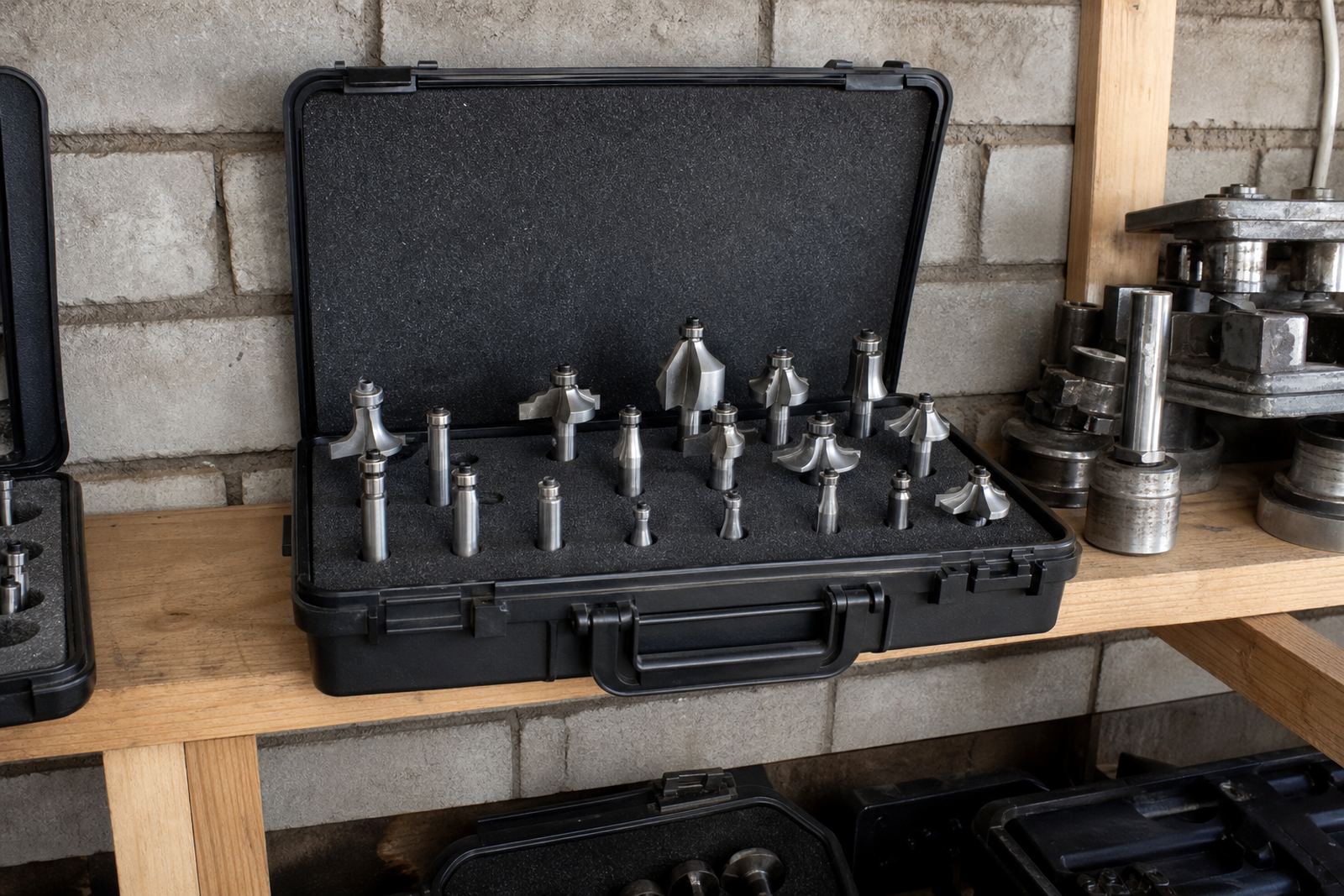
- Keep router bits in individual sleeves or a partitioned box.
- Secure each item so it cannot slide inside the parcel.
Choose a box that matches the weight and shape of the load
Use a strong carton or a hard-sided container for heavy or mixed tool sets. Thin boxes collapse under pressure, especially when a parcel is sent with other workshop goods. A good box should allow enough room for padding on all sides, but not so much space that the contents move around. If you are sending a few large saw blades, a flat box is better than a deep one because it keeps the load stable.
Double-boxing is worth it for valuable tools or bulk batches. Put the wrapped tools in a smaller inner box, then place that inside a larger outer box with cushioning between the two. This helps when courier sorting is rough, or if a box is caught in load-shedding related delays and sits longer than planned in a depot. In our workshop, carefull packing also helps with batch tool tagging because each bag stays together and easier to check on arrival.
- Use a box that can take the tool weight without sagging.
- Fill empty spaces with paper, foam or cardboard inserts.
- Seal all seams with strong packing tape, not just the centre strip.
- For heavy sets, use a second box for extra protection.
Mark the parcel clearly and keep the paperwork inside
Clear marking helps the courier move the parcel safely and helps the workshop identify it quickly. Write the sender name, contact details and job reference on the outside of the box, and keep a copy of the same details inside the parcel in a sealed envelope or plastic sleeve. That way, if the outer label is damaged, the contents can still be matched to the right client.
It also helps to note whether the parcel contains sharp tools, mixed items or blades that must stay flat. Do not write anything that could invite unnecessary handling comments. A simple label is enough. If you are sending from Durban or Cape Town, a reference number and branch area can help when several boxes arrive on the same day. This is useful for repeated workshop clients and also for hobby users sending a few items at a time.
- Write the sender name and job reference on the box.
- Place a copy of the details inside the parcel.
- Mark fragile cutting tools if the box contains loose or fine items.
- Keep the same reference on every parcel in a batch.
Pack by tool type, not by whatever fits first
Different tools need different packing methods. Saw blades need flat support. Drills need end protection so the points do not bend. Router bits need firm sleeves to protect the cutters and shanks. Packing them all the same way often leads to avoidable damage. If you send mixed items, group like with like and keep each group separate inside the box.
For blades, lay them flat with spacers. For drills, place them in a tube, roll or divider so the points face one direction and cannot strike each other. For router bits, use small tubes, foam blocks or a bit case that holds the shank firmly. If you have only one or two items, a small padded box is fine. If you have a workshop batch from Pinetown, Westville or Hillcrest, splitting the load into two parcels can be safer than forcing everything into one heavy carton.
- Pack saw blades flat with support on both sides.
- Keep drills aligned so points and flutes do not rub.
- Use individual sleeves for router bits where possible.
- Separate mixed batches into smaller sets if needed.
Use a simple handover routine for courier collection
Before the driver collects, check the parcel one last time. Shake it lightly. If you hear movement, open it and add more padding. Make sure all tape is pressed down and no sharp edge can work through the carton. For regular clients in Durban, Johannesburg or Pretoria, it helps to keep a packing checklist near the tool bench so the same routine is followed every time.
It is also worth photographing the packed parcel before collection. That gives you a clear record of the condition at dispatch and helps if you need to check a label or confirm how the tools were packed. Once the box is sealed, do not reopen it unless the contents need another layer of support. Good packing is about repeatable habits, not guesswork, and that matters when tools are travelling through several hands before they reach the workshop and come back sharpened.
- Check for movement before the parcel leaves.
- Seal all flaps and edges with proper tape.
- Take a quick photo of the packed box before collection.
- Use the same packing method for future batches.