Why a small bearing can change the whole cut
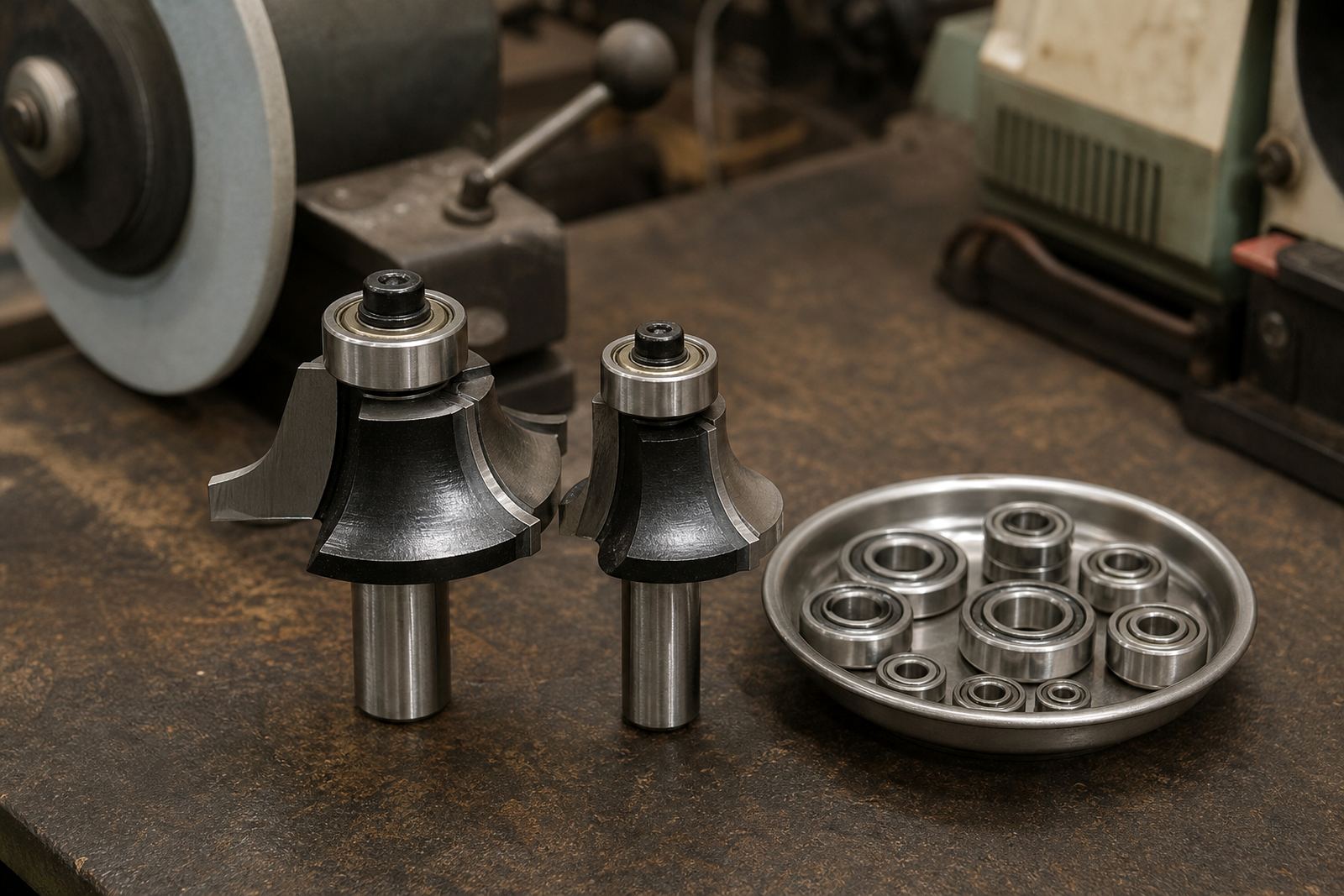
A router bit bearing is a simple part, but it carries a lot of responsibility. On trim and rebate work it controls how the cutter follows the edge, so when it runs true the finish is clean and the cut stays consistent. When it does not, the router starts to fight the job instead of guiding it.
In workshop terms, a bad bearing can cause chatter, heat, burning, and a finish that needs extra sanding. That means more time spent on each board and more chance of ruining a good edge. For small shops in Pinetown or Durban doing cabinet doors, edging, or site fitting, that extra waste adds up fast.
- Loose bearings can leave a wavy edge
- Dry bearings can overheat and mark timber
- Seized bearings can burn the workpiece and strain the router
- Worn bearings can change the cut depth without warning
Signs the bearing needs attention before the bit gets written off
Most bearing problems give warning signs before the bit becomes unusable. The trick is to check them before the next job rather than after a ruined panel or skirting board. A quick hand test can tell you a lot if you know what to look for.
Turn the bearing with your fingers. It should rotate smoothly, without grinding, tight spots, or sideways play. If it feels rough or noisy, the seal may be damaged or the grease may be gone. In some cases the bearing still turns but the edge is no longer running straight and that can be just as harmful.
- Grinding or squeaking when turned by hand
- Side-to-side movement on the bearing
- Visible rust, dust build-up, or black staining
- Burn marks appearing on work that was once clean
- More tear-out on the same timber type than usual
What to check after a busy week in the workshop
After a full week of routing, especially on MDF, hardwood, or resinous boards, give each bearing a proper look. Dust and glue residue can hide wear, and in coastal areas like Durban the extra humidity can speed up corrosion if bits are stored badly. A bearing that looked fine on Friday can feel very different by Monday morning.
Do the checks with the bit cool and clean. Wipe off resin, inspect the shield or seal, then spin the bearing and feel for drag. If a bit has been run hard on a job with long passes, check whether the bearing surface has flat spots or heat discolouration. It is a small task but it can save a more expensive cutter from damage, realy quickly.
- Clean off dust and resin before testing
- Look for cracked seals or missing grease
- Check whether the bearing sits square on the bit
- Store bits dry and separate from loose steel offcuts
When bearing wear affects the cut, not just the guide
Many operators think the bearing only matters if it stops turning. In practice, wear often changes the cut before the bearing fully fails. The profile may look slightly off, the rebate depth may drift, or the cutter may begin to burn along the edge when the router is pushed at the same feed rate as before.
That is why a bit should be checked as a whole, not only the cutting edges. If the cutters are sharp but the bearing is not true, the job still suffers. On site work in Johannesburg or Pretoria, where batches of trim and skirting often need to match across several rooms, a small bearing fault can create a lot of repeat work.
- Profile mismatch on repeated parts
- Uneven rebate width across the length of the board
- Extra sanding needed to hide heat marks
- Router vibration that was not there before
How bearing checks fit into a proper maintenance routine
A bearing check should sit alongside sharpening and regrinding, not after a failure. Keeping a routine means you can spot whether the problem is wear on the cutter, a bad bearing, or both. For busy workshops and hobby users alike, that is the difference between planned maintenance and a last minute rush.
At CutTool Sharpening we often see router bits brought in because the user noticed the cut had changed but could not say why. A proper inspection clears that up. If the cutter needs regrinding, we can also check for related issues like chipped edges, angle changes, or diameter correction where needed.
- Inspect before a new job run starts
- Check after any drop or impact
- Review bits that have cut dusty board material or hardwood all day
- Separate good bits from ones that need service so they do not get mixed up
Courier collections make checks easier across South Africa
If your router bits are used in different branches, or if you are working from home and cannot get into the workshop easily, courier collection makes maintenance simpler. We collect from Pinetown, Durban, Westville, Hillcrest, Pietermaritzburg, Johannesburg, Pretoria and Cape Town, so you do not need to leave tools sitting idle for too long.
When you book a collection, it helps to note what the tool has been doing. A bit used for trim work, rebate work, or a run of cabinet doors may show wear in different places. Clear notes help us inspect the bearing, check the cut quality, and decide whether the bit needs sharpening, regrinding, or further correction before it goes back into service.
- Tell us what material the bit has been cutting
- Include whether the bit has been burning, wobbling, or leaving a rough edge
- Keep each bit separate in a wrapped packet or labelled container
- Use batch tool tagging if more than one cutter is going in