Why carbide and steel behave differently on the cut
Steel cutting edges usually wear by gradually losing sharpness. The edge rounds over, the cut gets rougher, and you may notice more heat, more feed pressure, and a bit more noise. Carbide tipped tools act differently because the cutting tip is harder and more wear resistant, so they often hold an edge longer in abrasive work, but when they do fail the damage can be more sudden.
That difference matters for anyone in Pinetown, Westville or further afield who is working through timber, laminates, board products, plastics or light metal applications. A steel edge may give warning signs over time. A carbide edge can look fine right up until it chips, burns or starts leaving a poor finish. For workshop planning, that means you do not judge wear only by age, you judge it by the cut.
What wear looks like on steel tools in daily use
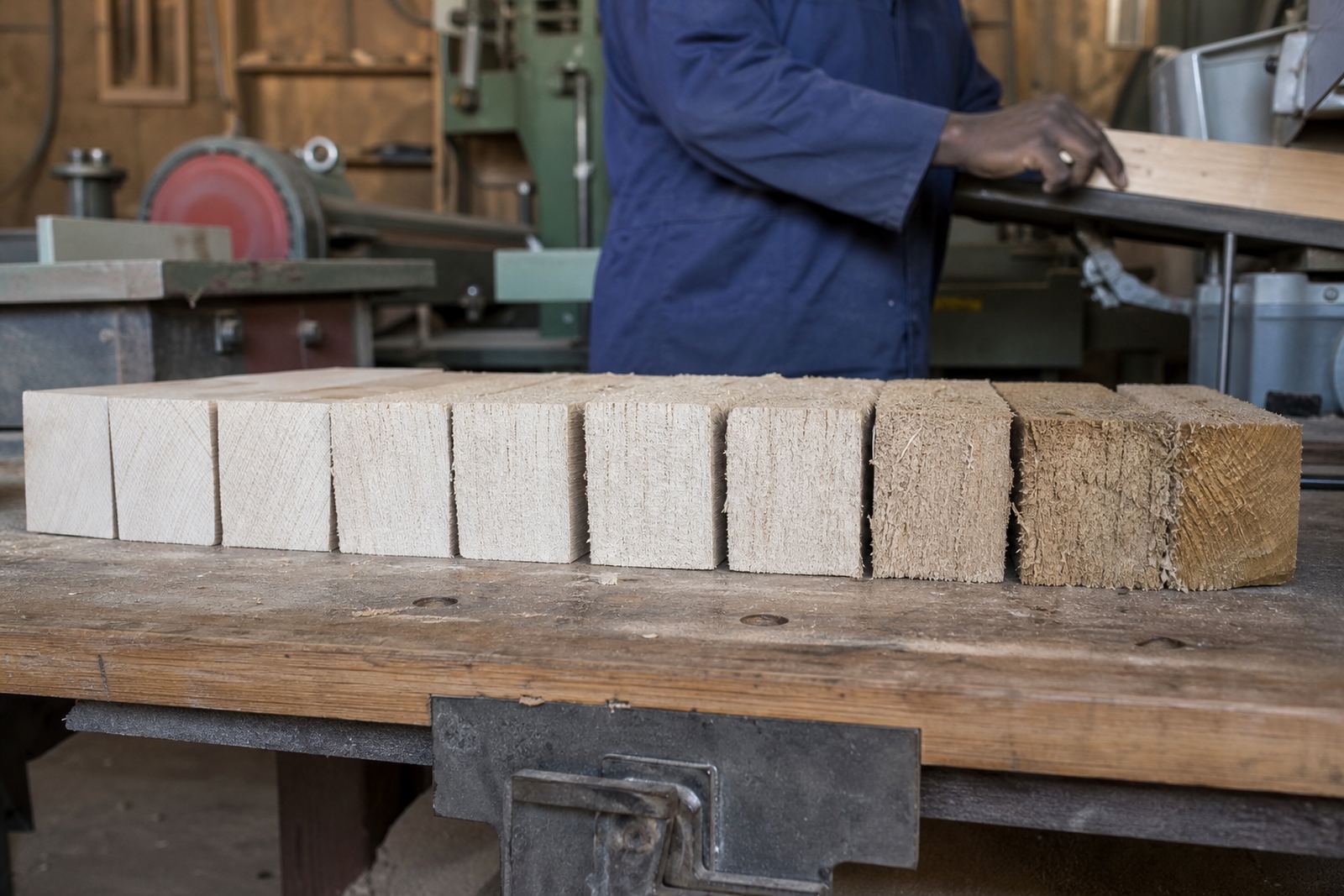
Steel tools tend to show wear in a more even pattern. The corners soften, the cutting edge stops biting cleanly and the operator often compensates by pushing harder. In humid coastal areas like Durban, storage also plays a part. A steel edge that is not cleaned and oiled can lose condition faster, especially if it sits in a shed with moisture in the air.
Typical signs on steel tools include:
- More friction and heat during cutting
- Fibre tearout or a fuzzy edge on timber
- Longer cutting times and more motor strain
- Visible rounding on the cutting lip
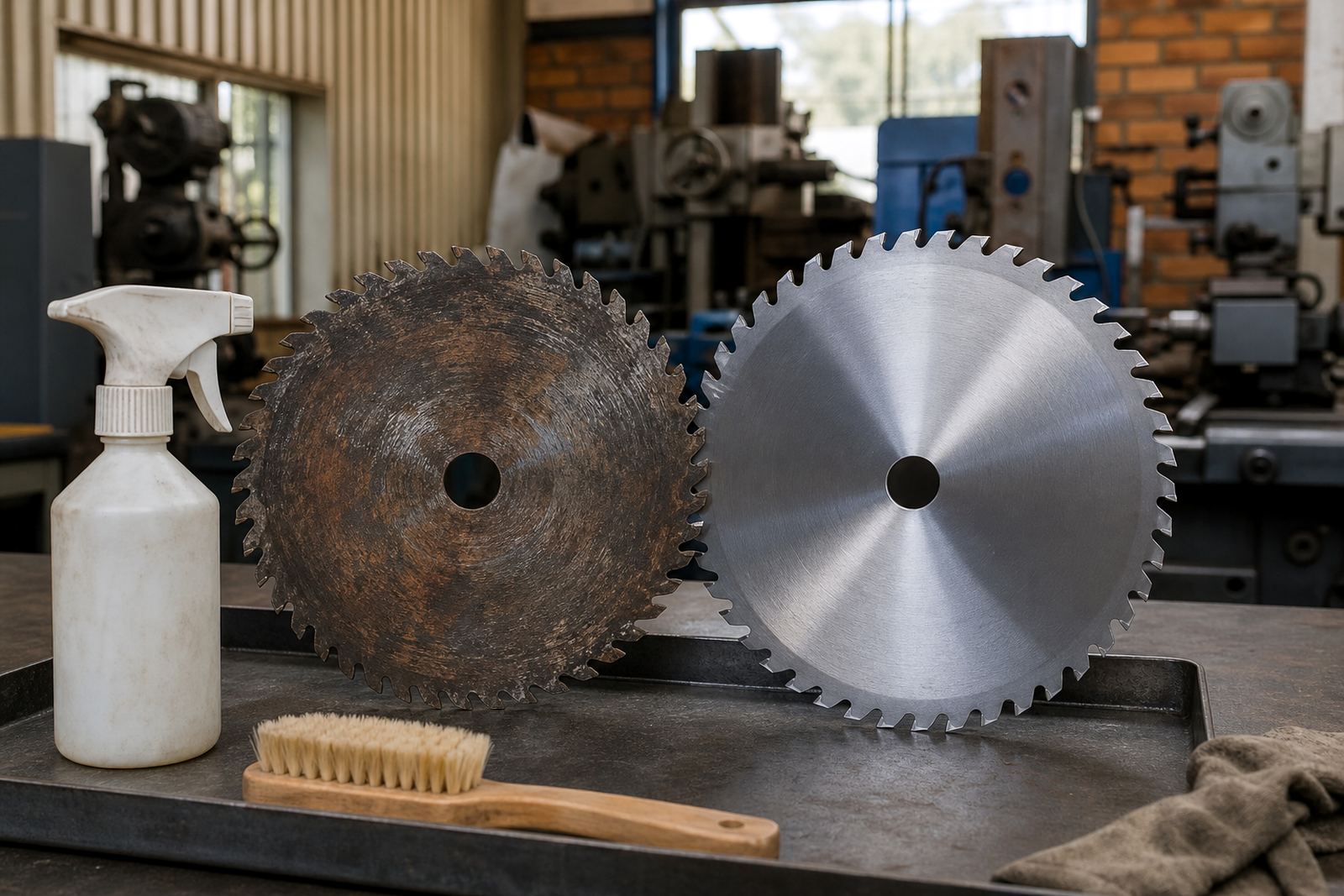
- Light surface corrosion after storage
Steel is often easier to regrind in small steps, which makes it a practical choice for hobby users and light production where tools are checked often. It is not a fit and forget option though. If you let steel run too long past its sharp stage, you can end up removing more material than necessary during the next sharpen.
How carbide wear shows up before failure
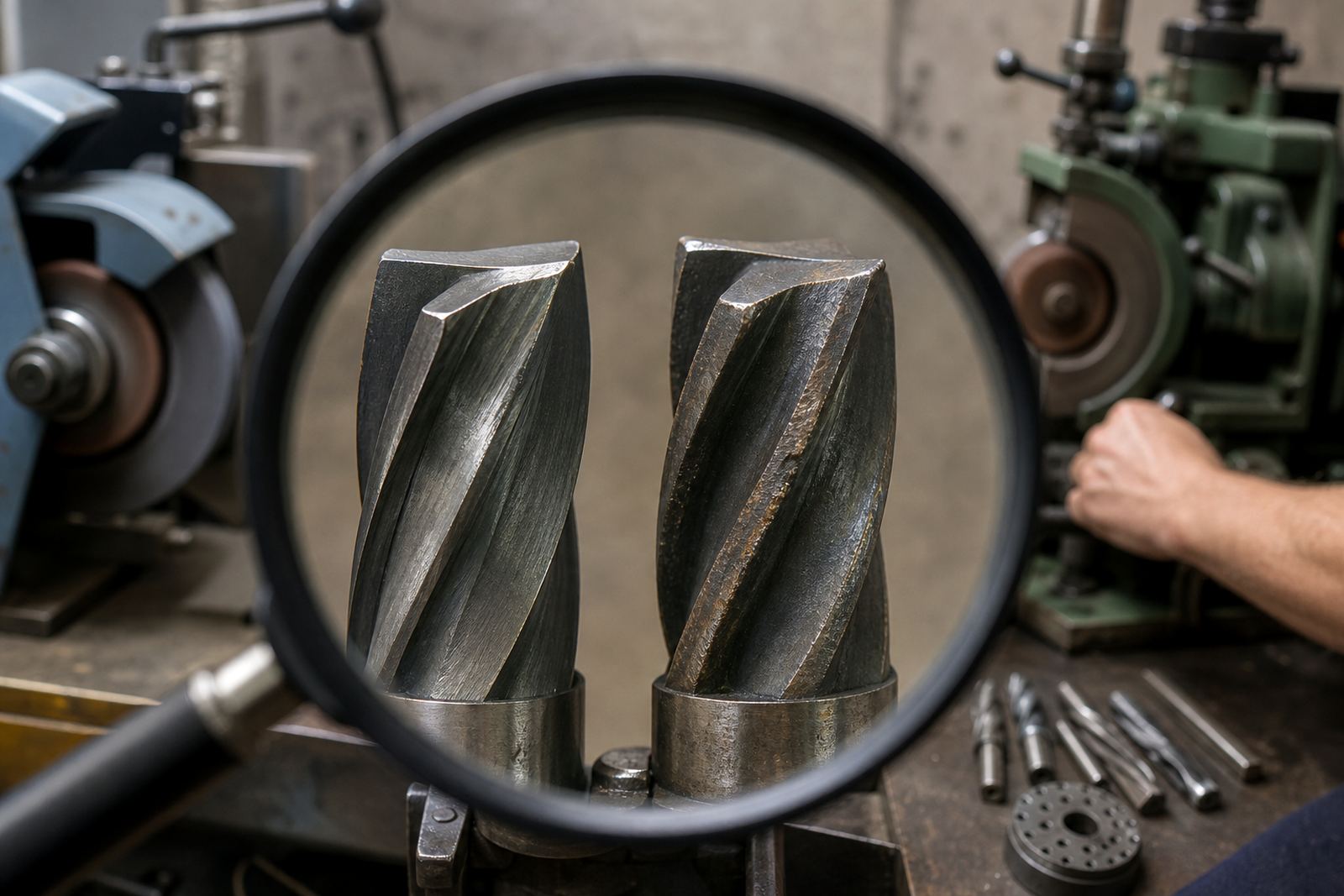
Carbide tipped tools can run for a long time with very little visible change, which is why many users trust them for batch work and repeated cuts. The challenge is that carbide does not usually dull in the same soft way as steel. It may chip at the corners, show micro cracks, or develop burn marks that point to heat build-up rather than simple blunting.
On saw blades, router bits and drill points, carbide wear often appears as:
- Small chips on the cutting edge
- Burning or dark marks on the workpiece
- A sudden increase in vibration
- Poor chip clearance and dust instead of clean shaving
- Uneven cut quality from one side of the blade to the other
Because carbide is harder, the regrinding process has to be accurate. If the angle is off, even by a small amount, the tool may cut badly or run out of balance. That is why carbide tools are usually best handled with proper inspection before grinding starts.
Which one lasts longer in South African workshop conditions
There is no single answer. Carbide usually lasts longer in abrasive, repeat work, especially when you are cutting hardboard, composite board, treated timber or material with glue lines. Steel can still be the better choice for some general workshop tasks because it is cheaper to buy and quicker to touch up.
In practical terms, if you are a cabinetmaker in Johannesburg doing steady production, carbide may give you better value because the tool stays useful longer between services. If you are a tradesperson in Pietermaritzburg doing mixed jobs, steel tools may suit you where replacement cost and quick turnaround matter more. The right choice depends on how often you cut, how clean the material is, and whether you can keep up with maintenance during load-shedding windows and busy production days.
For coastal users, humidity and storage matter as much as cutting load. A carbide blade with poor storage can still suffer rust on the body, while a steel cutter with no protection may degrade faster between jobs. So the real question is not only carbide versus steel, but how well the tool is cared for between uses.
When sharpening is worth it and when replacement makes more sense
A tool should be sharpened when the cutting edge is worn but the body is still true and the cutting geometry can be restored. Regrinding is usually worthwhile if the blade or bit has enough life left, the damage is limited, and the final dimensions will still meet the job requirement. Once a tool has too much wear, repeated chips, or unsafe imbalance, replacement may be the better option.
Good rules of thumb:
- Sharpen when cut quality changes, not only when the tool looks bad
- Check for burn marks, drift and vibration before forcing more cuts
- Do not keep using a chipped carbide edge on fine work
- Replace steel tools that have lost too much thickness or alignment
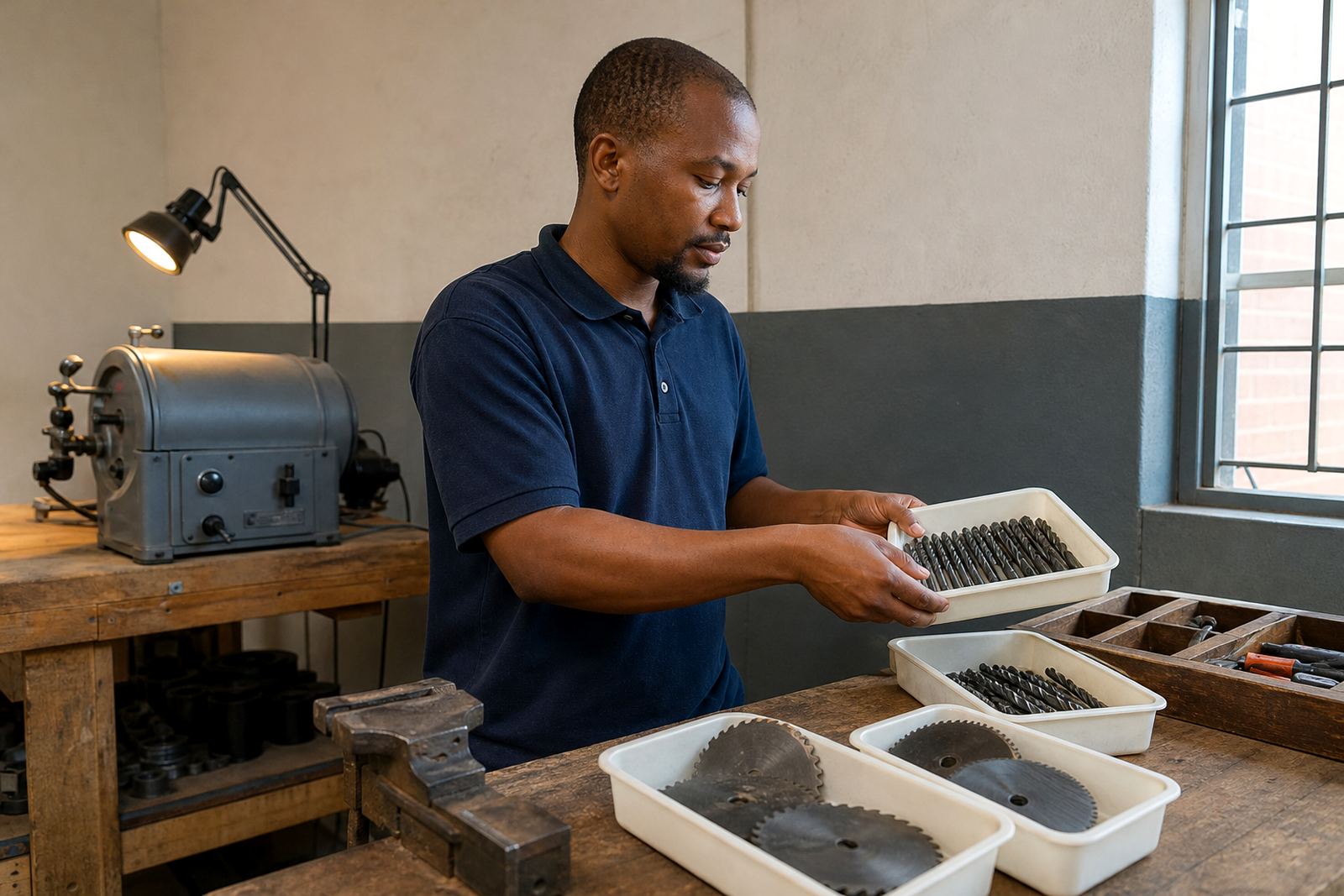
- Use batch sorting so only the sound tools go in for regrinding
At our workshop in Pinetown, we often see tools that could have been saved if they were sent in earlier. Early attention means less material removal, better balance, and a lower risk of a tool being scrapped. That saves money and time, which matters for small shops and larger operations alike.
A Durban example: same machine, two wear patterns
A Durban joinery shop sent in a mixed batch of saw blades after noticing rough edges on melamine board. The steel blades showed gradual dulling and needed regrinding across the full tooth face. The carbide tipped blades, by contrast, had a few chipped teeth and burn marks from overfeeding one machine after a power interruption. Same workshop, same week, different wear pattern.
Once the tools were sorted properly, the team could use the right process for each one: tooth face grinding where needed, angle resetting for the damaged carbide units, and balance checking before return to service. The lesson was simple. Wear is not just about how old the tool is, it is about how the tool has been used, stored and handled in real conditions.
Simple maintenance habits that extend edge life
A few small habits make a big difference to both carbide and steel tools. Clean cutting resin and dust off after use, store tools dry, and do not leave them loose in a toolbox where the teeth can knock against each other. If you run a busy workshop, batch tagging helps keep track of which tools need sharpening next and which ones are still in good condition.
Helpful habits include:
- Inspect tools before and after a job
- Keep blades and bits separated during transport
- Match feed speed to the material, especially on laminated board
- Use proper collection booking for larger batches from Durban, Cape Town or Gauteng
- Train staff to spot early signs of wear, not only total failure
That last point is important. Many wear problems start with one wrong setting or one rushed shift. A little training goes a long way, and it is easier to keep tools sharp than to fix a badly damaged edge later.