What upholstery workshops usually need sharpened
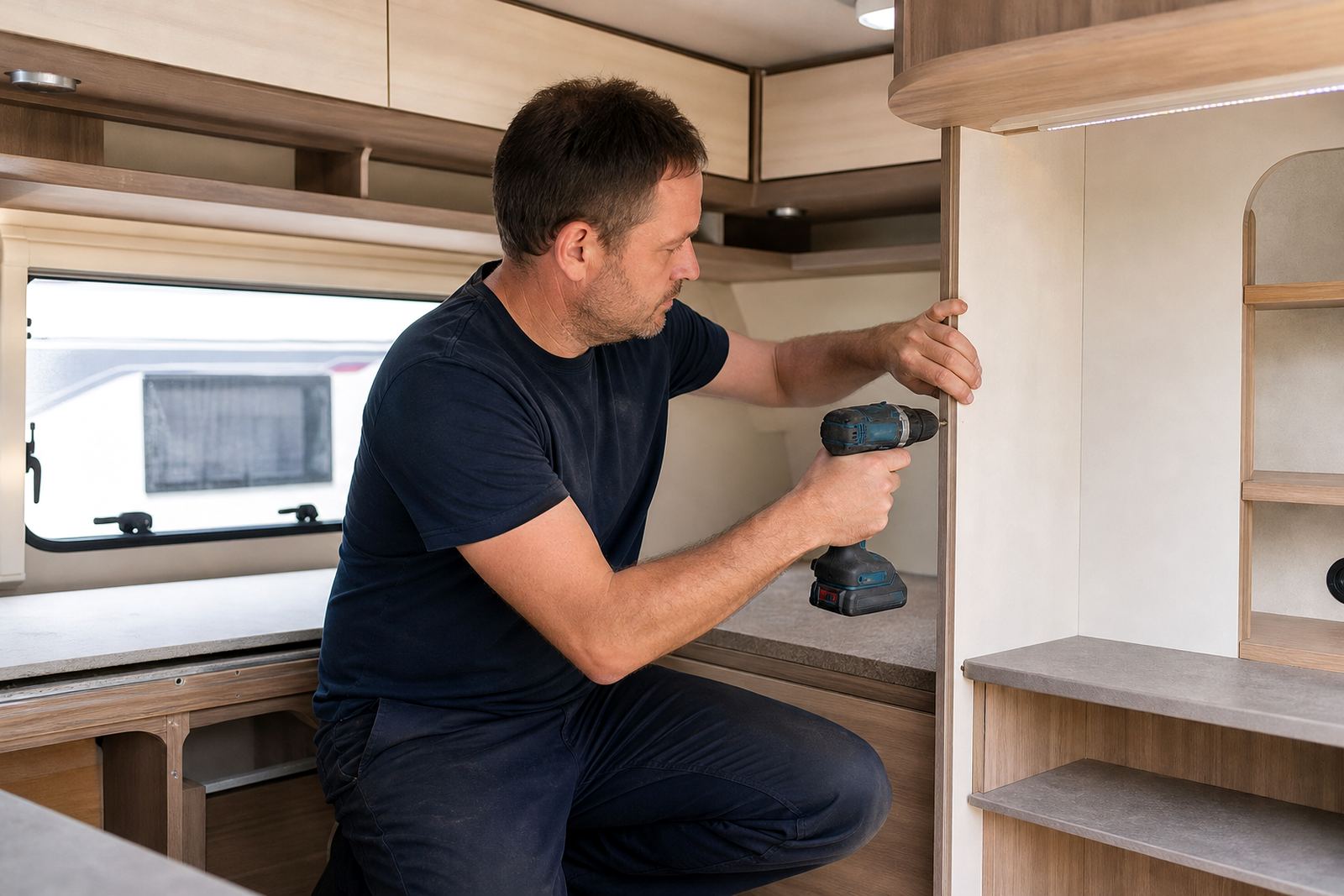
In an upholstery shop, a dull cutting edge shows up quickly. Plywood base panels splinter, drill bits wander on fixings, and router bits leave burn marks on trim pieces and edge detail. That slows production and creates rework, especially when you are fitting seats, panels, headboards or custom furniture to a deadline.
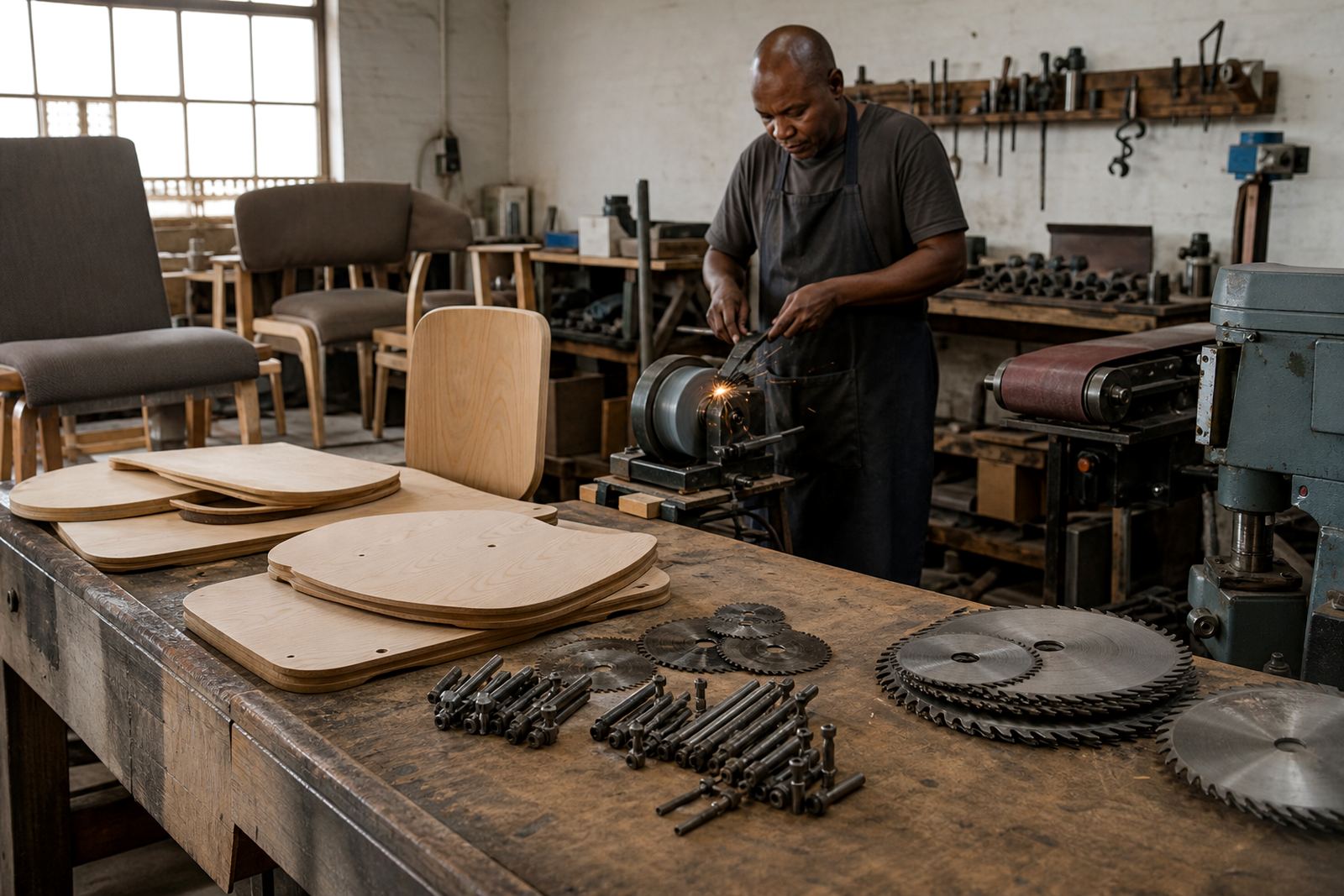
We work with hobby workshops and full production teams in Pinetown, Durban, Westville, Hillcrest and beyond. For day-to-day upholstery work the common items are circular saw blades, holemaking drills and router bits used on ply, MDF and hardwood trim. If the workshop is handling batch jobs, we can also tag tools by job number so items come back in the right order.
- Saw blades for plywood and panel cutting
- Drills used for pilot holes, fittings and fixings
- Router bits for grooves, trims and finishing profiles
- Tools showing burn marks, chipped edges or poor balance
How clean cutting helps the fit and finish
Upholstery work is often judged by what the client sees in the final finish, but the prep stage matters just as much. A sharp saw blade gives a cleaner edge on plywood bases, which means less sanding and fewer gaps when foam, fabric and trim are fitted. On repetitive work, that small saving adds up over the week.
Sharp drills help when you are fixing frames, brackets and mounting points. Router bits that are properly ground keep edges even and stop overheating on laminated board. In a workshop with load-shedding back-up power, it helps to keep tools in top condition because you do not want to lose time to a rough cut after a power interruption. Our team also checks for balance and angle correction when needed, so the tool runs properly at speed.
- Less splintering on plywood and MDF
- Cleaner holes for fittings and fasteners
- Less burn mark cleanup on trimmed edges
- Better consistency from one job to the next
Workshop layout advice for busy upholstery teams
If you are setting up or tidying a workshop, keep the cutting area separate from the upholstery bench area where possible. Sawing, drilling and routing make dust that should not settle on fabric, glue lines or finished panels. A simple flow works best: receive material, cut, drill, shape, then move to fitting and sewing.
For smaller workshops in Pinetown or Hillcrest, a compact layout can still work well if you keep the blade and bit storage close to the cutting station. Label each job tray and keep a simple log of blade diameter, tooth count and the material it was used on. That makes regrinding easier and reduces confusion when multiple teams share the same set. If you send tools by courier from Johannesburg, Pretoria or Cape Town, pack them in a sealed box with a clear note inside and outside.
- Keep cutting tools away from fabric stock and glue
- Store blades flat in labelled sleeves or trays
- Separate heavily used tools from clean spare sets
- Use batch tagging for repeat production runs
Common mistakes that slow upholstery production
One common mistake is waiting until a blade is badly worn before sending it for sharpening. By then the cut quality has already dropped and the operator may have forced the machine through the job, which can shorten the life of the tool. Another issue is using the wrong tooth geometry for the board type, especially when moving between softwood, hardwood and composite panels.
We also see workshops ignore burn marks on router work until the edge starts chipping. That can lead to extra sanding or trimming, and it wastes labour. Chipped saw teeth and badly set angles are worth fixing early because the cost of regrinding is usually less than the cost of wasted material. If you have a team in Durban or Pietermaritzburg on a tight run, the best habit is to inspect cutting tools at the end of each batch, not at the end of the month.
- Sending tools only after major damage appears
- Using one blade for too many board types
- Ignoring heat marks and rough edge finish
- Mixing tagged and untagged tools in storage
Typical equipment sets and what we do with them
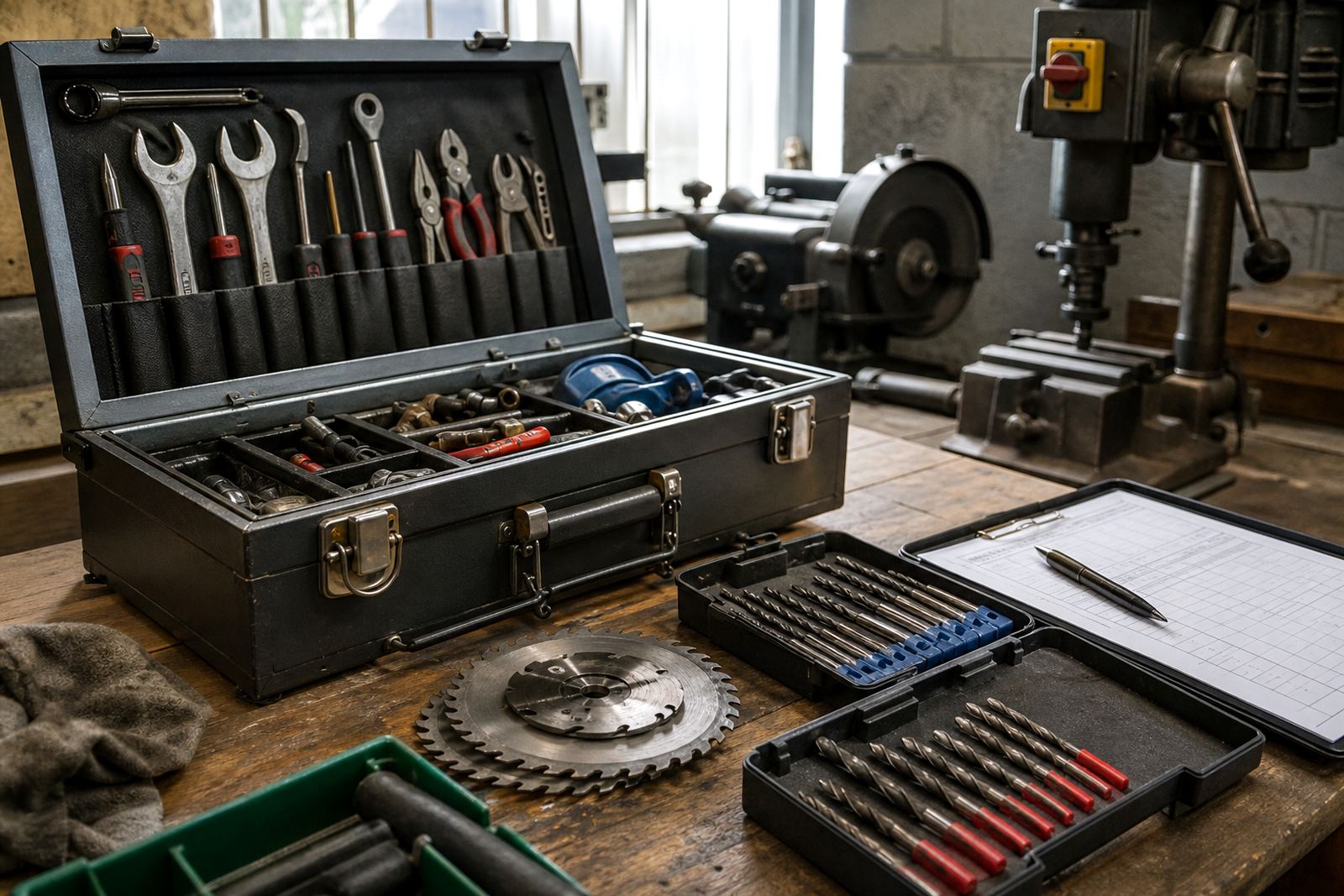
Most upholstery workshops run a practical set rather than a huge machine room. A panel saw or hand-held circular saw is used for plywood bases, a drill set handles pilot holes and fittings, and router bits take care of grooves, chamfers and trim detail. When a workshop starts taking larger contract work, the number of blades and cutters in rotation usually increases quite fast.
Our sharpening and regrinding service covers saw blade sharpening, drill sharpening and router bit sharpening, plus tooth face grinding, top grinding, diameter correction, burn mark removal, chipped edge recovery, angle resetting and balance checking. For teams with multiple jobs on the go, batch tool tagging and courier collection booking make it easier to keep production moving. We work from Pinetown and collect across South Africa, including Durban, Johannesburg, Pretoria and Cape Town.
- Panel cutting blades for sheet material
- Drill sets for fixings and pilot holes
- Router cutters for edges, grooves and trims
- Batch sets for recurring upholstery contracts
Budget ranges for sharpening and regrinding
Budget depends on tool size, wear, tooth damage and how many pieces you are sending in one batch. For a small upholstery workshop, a practical monthly spend might start around R350 to R900 if you are only maintaining a few blades and drills. A busier shop with regular trimming and panel cutting may spend between R1 200 and R3 500 a month, especially when router bits and damaged teeth need more work.
If a workshop is running full-time with several operators, it is worth budgeting for scheduled maintenance rather than emergency replacement. Regrinding can often extend the working life of a tool and keep the cutting standard steady. Courier costs depend on location and parcel size, but many clients find it easier to group tools by week or by job type so collection is more efficient. For a quote, use the enquiry form on our contact page and include the tool type, quantity and town.
- Small workshop maintenance: R350 to R900 a month
- Mid-size workshop: R1 200 to R3 500 a month
- Higher volume or damaged tools: quoted per batch
- Courier collection arranged per location and parcel size