When a Timber Yard Starts Losing Cut Quality
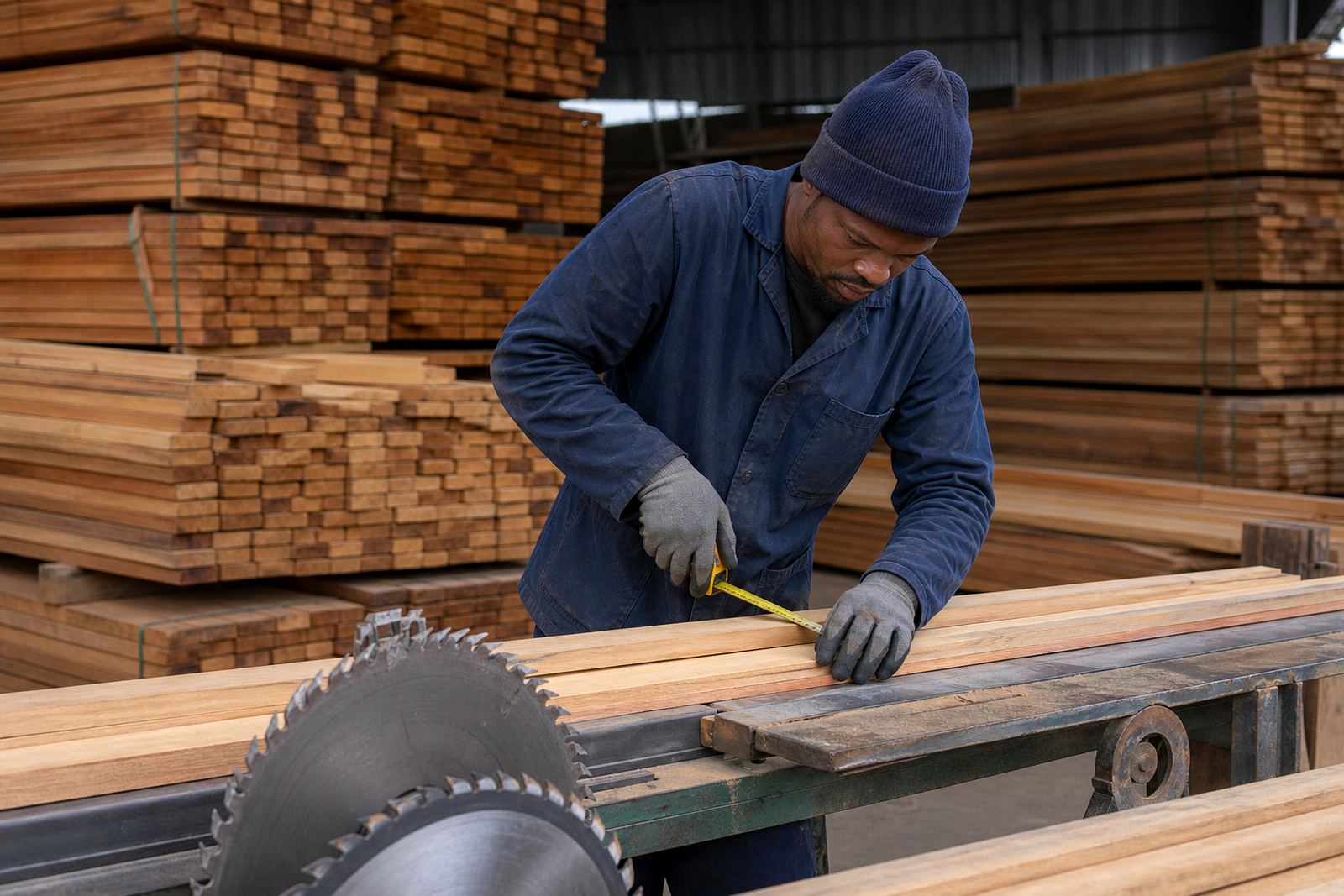
In a timber merchant’s cutting section, dull blades show up fast. You will see more burn marks on pine and saligna, rough edges on board cuts, slower feed rates, and more waste from chipped corners. If the team keeps pushing blunt tools through wet or knotty timber, the machines work harder and the finish gets worse.
We help with saw blade sharpening, drill sharpening and router bit sharpening for merchants that cut lengths for builders, cabinet shops, joiners and walk-in trade customers. Our Pinetown workshop supports local yards in Durban, Westville and Hillcrest, plus courier collections to Pietermaritzburg, Johannesburg, Pretoria and Cape Town.
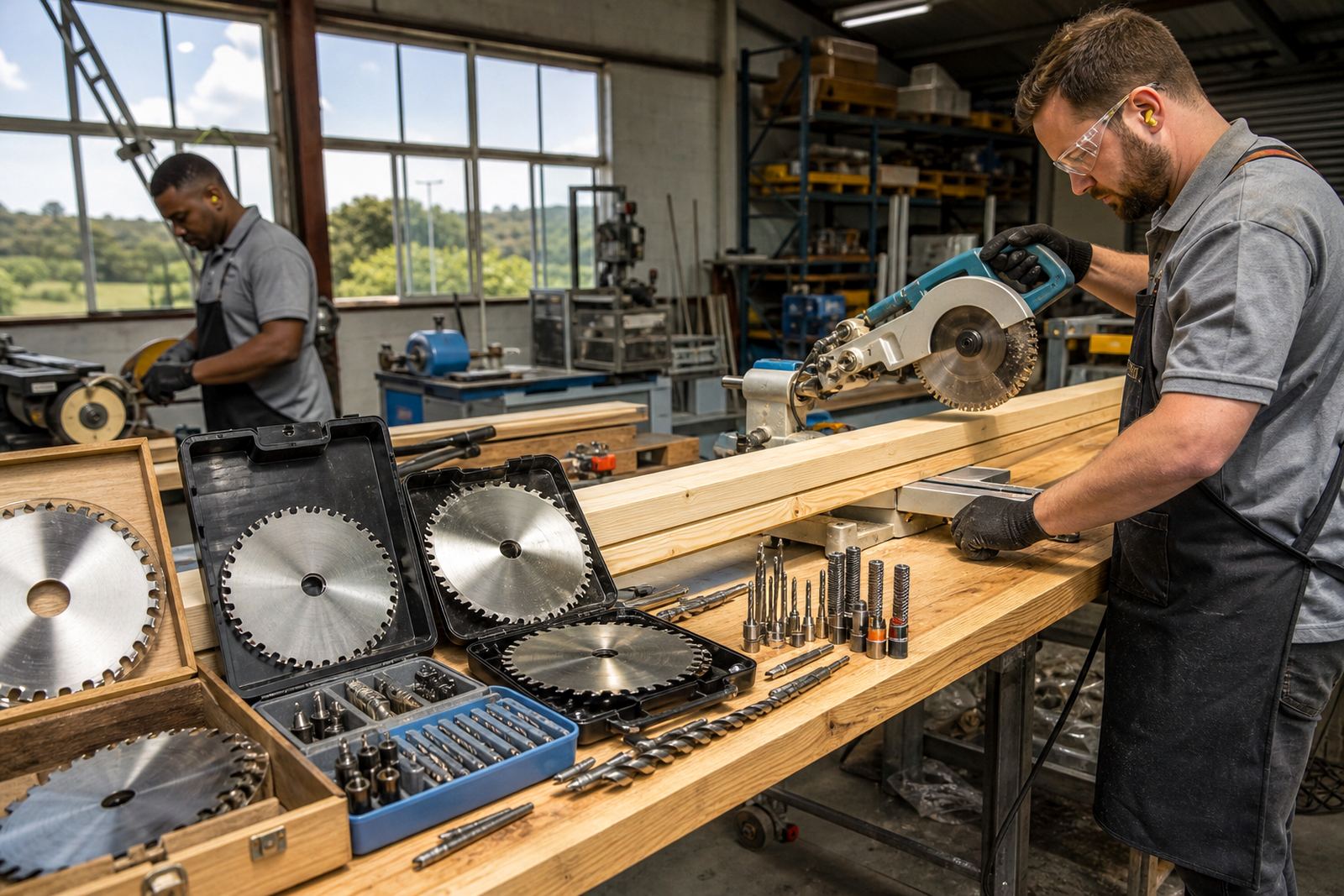
Typical Cutting Equipment Found in Timber Merchants
Most timber merchants run a mixed set of cutting and prep tools. Some are used all day, others only for trimming specials or making packaging and fixing jobs. The main point is that every tool needs the right edge geometry, not just a quick touch-up.
- Circular saw blades for cross-cutting and rip cuts
- Router bits for grooves, rebates and profiling work
- Drill bits for jig making, fixing strips and shop maintenance
- Blades with resin build-up from treated timber or coastal humidity
- Tools with chipped tips from knots, nails or dirty stock
We also handle tooth face grinding, top grinding, diameter correction, burn mark removal, chipped edge recovery, angle resetting and balance checking. If a batch of blades is tracked by size or machine line, we can do batch tool tagging as well.
How to Plan a Sharpening Routine Around Stock Flow
A timber yard should not wait until every blade is blunt. The better plan is to keep a rotation so one set is in use while another set is away for sharpening. That matters when orders peak on Mondays, month-end or before public holidays, and it matters even more if load-shedding interrupts the day and the saw shop has to catch up later.
For smaller yards, a simple two-batch system often works. For busier merchants, three batches gives more breathing room and less downtime. Keep the sharp tools for finish cuts and the less critical set for rough prep or stock trimming.
- Separate blades by machine and cut type
- Mark damaged tools as soon as they start burning or wandering
- Record how many cuts a blade handles before it drops off
- Use courier collection booking for branches outside KwaZulu-Natal
- Keep tools dry in storage, especially near the coast
Common Mistakes That Cost Money in the Cutting Bay
The biggest mistake is waiting too long. Once a blade starts forcing the saw or leaving heat marks, the wear spreads through the set-up and the operator starts compensating. That can lead to bad cuts, extra sanding, and more damage to timber that should have been sold as first grade.
Another common issue is mixing tools from different jobs without tagging them. A router bit that has been used on rough framing timber may not be right for finishing work, and the wrong tool can throw off a whole batch. We often see merchants sending in a pile of mixed blades with no note on machine size, cut type or problem area. That slows things down and can lead to avoidable repeat work.
- Ignoring burn marks until the cut list starts failing
- Using the same blade for wet stock and fine finishing
- Leaving tools exposed to damp air in coastal areas
- Skipping balance checking after repair work
- Running damaged tools through more timber to save a few Rand
Layout Advice for a Practical Merchant Workshop
If your timber yard has an in-house cutting section, give it a clear workflow. Keep incoming stock, cutting, offcut sorting and blade storage separate if possible. Even a small space can work well when tools are labelled, measured and stored in dry racks. In Durban and other humid areas, closed storage is worth the effort because rust and resin build-up can spoil the edge before the next use.
For planning, make room for a clean surface where used tools can be checked before collection. If your team has a basic log for blade size, bore size and problem notes, the turnaround is usually faster. A neat handover also helps if you need servicing for multiple branches or for a merchant with work in Pinetown, Johannesburg and Cape Town at the same time.
Budget Ranges for Sharpening and Regrinding
Costs depend on tool size, condition and the type of work needed. A simple sharpening job is usually cheaper than a full regrind with edge correction or chipped-tooth recovery. For timber merchants, it makes sense to budget by batch rather than by one-off emergency repairs.
As a working guide, many trade customers allow around R150 to R450 per standard saw blade for basic sharpening, while more involved regrinding can sit between R250 and R650 per blade. Router bit work and drill sharpening often start lower, but heavily damaged items can cost more if there is burn removal, angle resetting or diameter correction involved. For regular users, setting aside a monthly tool maintenance budget of R2 500 to R12 000 is not unusual, depending on the number of cutting lines and how often the yard runs through stock.
Courier collection can make budgeting easier for branches in Pretoria, Pietermaritzburg or Cape Town because you are not losing staff time on trips. If you need training for a new storeman or saw operator, starter kits and maintenance guidance can help keep the team on the same process.
What Timber Merchants Can Send and How We Work
We work with trade customers, hobby users and businesses that need a dependable sharpening run between busy cutting weeks. Our team in Pinetown handles saw blade sharpening, drill sharpening, router bit sharpening, batch tool tagging and courier collection booking. Clients reach us through the enquiry form on our contact page, and we then help arrange collection or drop-off based on location and volume.
Sibusiso Mthethwa leads the business as Managing Director, with Ayesha Naidoo overseeing operations. Thabo Dlamini handles senior sharpening work, Johan van Zyl manages regrinding, Lerato Molefe coordinates training, and Nokuthula Khumalo arranges courier collections. That means your tools are dealt with by people who know the difference between a quick touch-up and proper edge recovery, which saves time and keeps the cutting bay moving.