Sign Shop Work That Needs Sharp, Clean-Cutting Tools
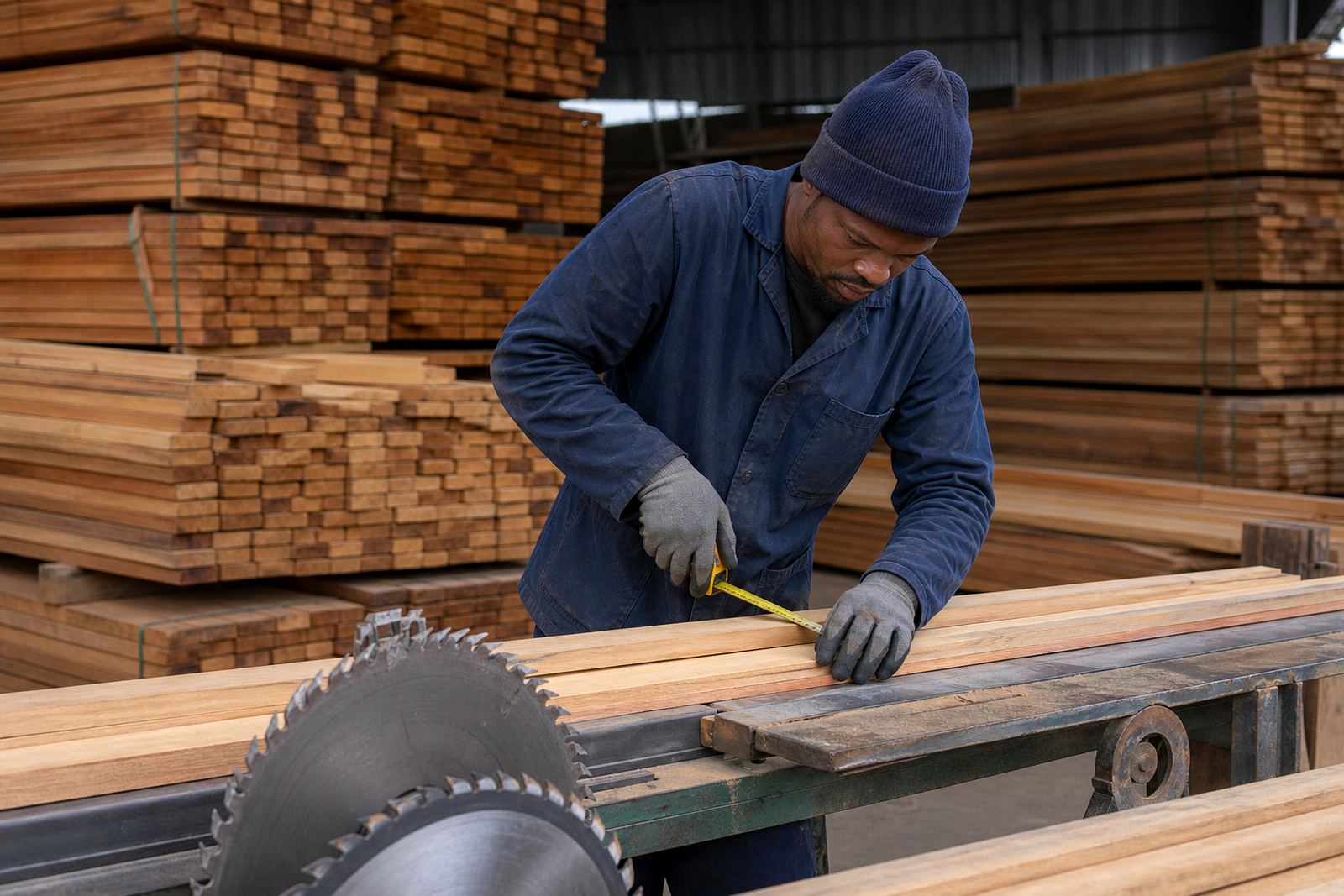
Sign making is hard on cutting edges. From PVC board and acrylic to aluminium composite panel and dense timber for routed lettering, the tools take repeated stress and heat. When a blade starts burning, a drill loses its point or a router bit begins to chatter, the job slows down and the finish suffers.
For shops in Pinetown, Durban, Westville and Hillcrest, the usual pattern is the same: one batch of panels needs a neat edge, another needs pockets or letters cut accurately, and a third has to go out the same afternoon. That is where regular sharpening and regrinding helps. It keeps the cut cleaner, reduces scrap, and gives your team more control on long runs and one-off jobs alike.
- Saw blades for board, plastic and trim work
- Drills for fixing points, jig work and pilot holes
- Router bits for detailed lettering and sign profiles
Typical Equipment Set In A Busy Sign Workshop
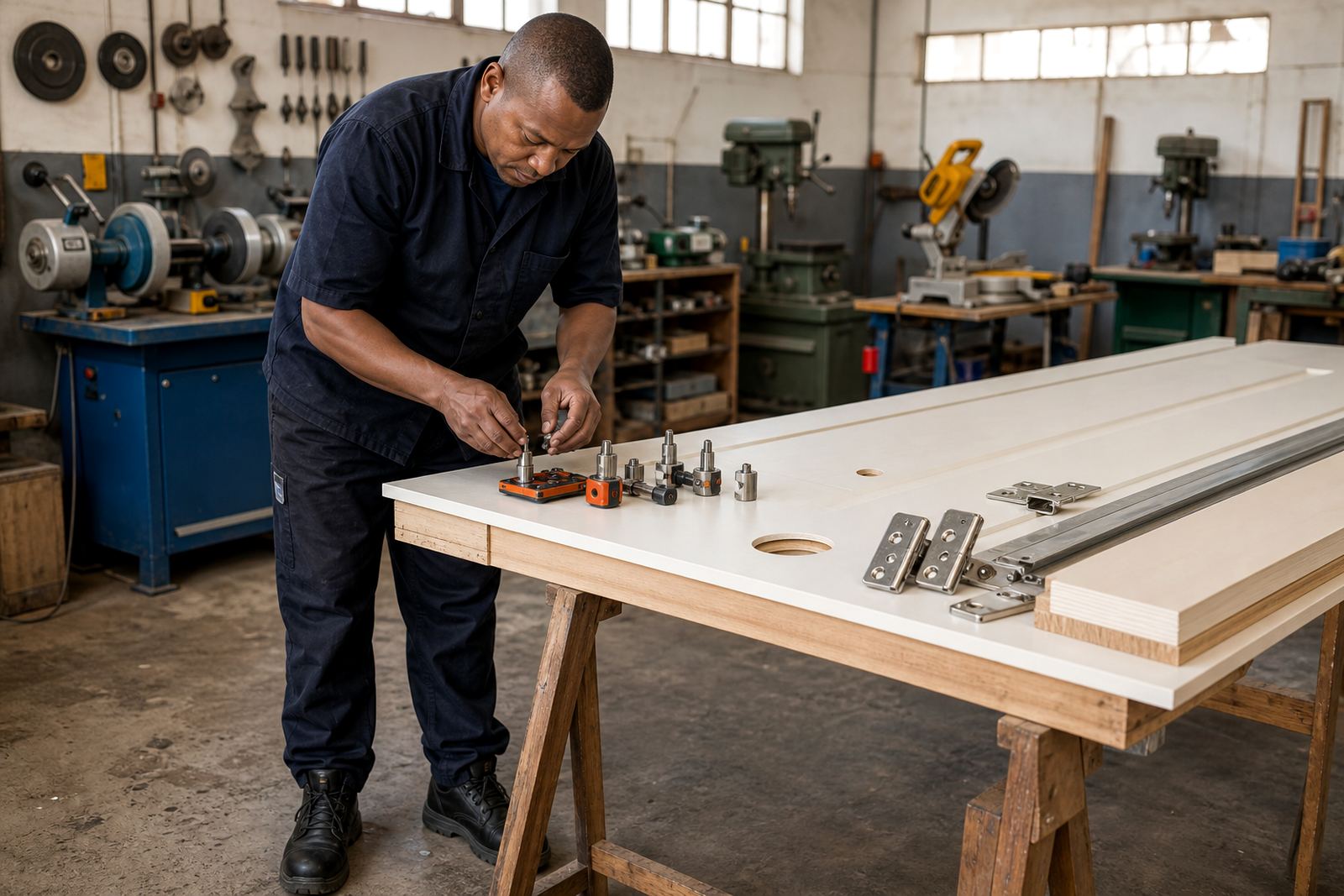
A sign shop does not usually run on one type of cutter. You may have panel saw blades for sheet breakdown, routers for lettering, drill sets for assembly and mounting, plus specialty bits for fine detail. Some workshops also keep backup sets for load-shedding days or when a courier delay means you need to keep production going with what is on hand.
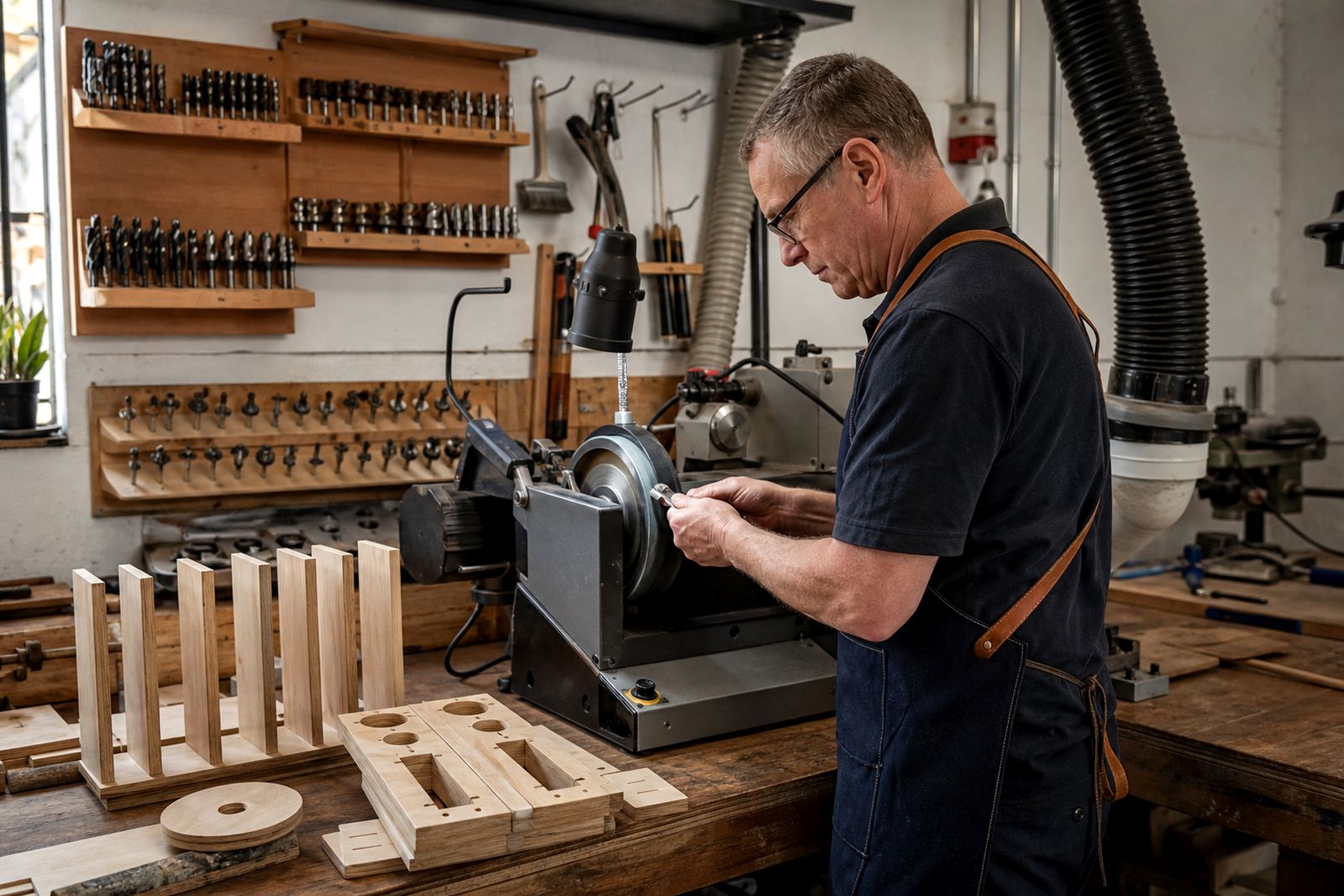
Our workshop handles saw blade sharpening, drill sharpening and router bit sharpening, plus tooth face grinding, top grinding, diameter correction, burn mark removal, chipped edge recovery, angle resetting and balance checking. That matters when a cutter is still salvageable but not quite right. A small nick on a bit can ruin a clean edge, and a slightly unbalanced blade can leave a rough finish on long cuts, especially in heat and coastal humidity.
- Standard production tools for daily cutting
- Fine-detail cutters for routed lettering
- Back-up sets for busy periods and courier turnaround
Planning Your Tool Set So Jobs Stay Moving
Good planning starts with grouping tools by use, not just by size. Keep your most-used blades and bits marked for board, plastics or timber, then rotate spares through sharpening before they fail completely. If a tool runs hot, starts leaving burn marks or needs extra pressure to cut, it is usually time to check it before the damage gets worse.
Many sign makers in Pretoria, Johannesburg and Cape Town use batch tool tagging so each set can be tracked by job type. That helps when different cutters are used by different operators or for different materials. Courier collection can also be planned around your production calendar, so a batch goes out early in the week and returns before the next run. It saves last-minute panic and keeps the workshop tidier, which every sign maker needs.
- Label tools by material and machine use
- Send groups for sharpening before full failure
- Plan courier pickups around production peaks
Common Mistakes That Cost Sign Shops Time And Money
One common mistake is waiting until a cutter is badly damaged. A chipped edge can often be recovered, but if the tool keeps running after that, the repair gets more expensive and the finish gets worse. Another issue is mixing tools between jobs without tracking wear, which makes it harder to spot which cutter is causing the problem.
Some shops also push dull tools through material to finish a rush job. That usually leads to more heat, more burn marks, and a rougher cut on the next panel too. It is also worth checking balance and angle settings rather than assuming every blade issue is just bluntness. A lot of wasted material comes from the small things, not the big ones.
- Do not keep using chipped blades and bits
- Do not force dull tools through tough material
- Do not ignore burn marks or uneven cuts
Courier Collection Across South Africa
CutTool Sharpening is based in Pinetown and supports sign makers across Durban, Pietermaritzburg, Johannesburg, Pretoria and Cape Town, with collection arranged through the enquiry form on our contact page. That works well for workshops that cannot spare staff time to deliver tools themselves, especially when production is running on tight deadlines.
If your shop serves walk-in customers or does contract work for builders, malls or schools, a regular collection routine helps keep the cutters in circulation. We also work with Westville and Hillcrest businesses that need local support without losing a full day to travel. The aim is simple: less downtime, cleaner cuts and better use of the tools you already own.
- Collection booking through the enquiry form
- Suitable for single items or batch sets
- Helpful for busy shops with limited spare stock
Budget Ranges For Sharpening And Regrinding
Most sign shops budget by tool type and frequency, rather than by one-off emergencies. Smaller sharpenings may sit in the low hundreds of Rand per item, while more involved regrinding, diameter correction or chipped edge recovery can cost more depending on damage and size. A mixed batch of saw blades, drills and router bits can therefore range from a few hundred Rand to several thousand Rand, especially if the tools need different treatments.
For a workshop that handles regular board cutting and detailed routing, it usually pays to build a maintenance cycle into the month instead of treating sharpening as a last resort. That keeps the spend more predictable and helps you avoid scrapping an expensive cutter too early. If you are unsure where a set sits, it is better to ask for assessment first rather than guessing and running it until it fails, because that gets costly quickly.
- Small refresh jobs can cost a few hundred Rand
- Mixed batches often fall between R500 and R3 000+
- Heavy damage, regrinding or correction can cost more