What a home workshop usually brings to us
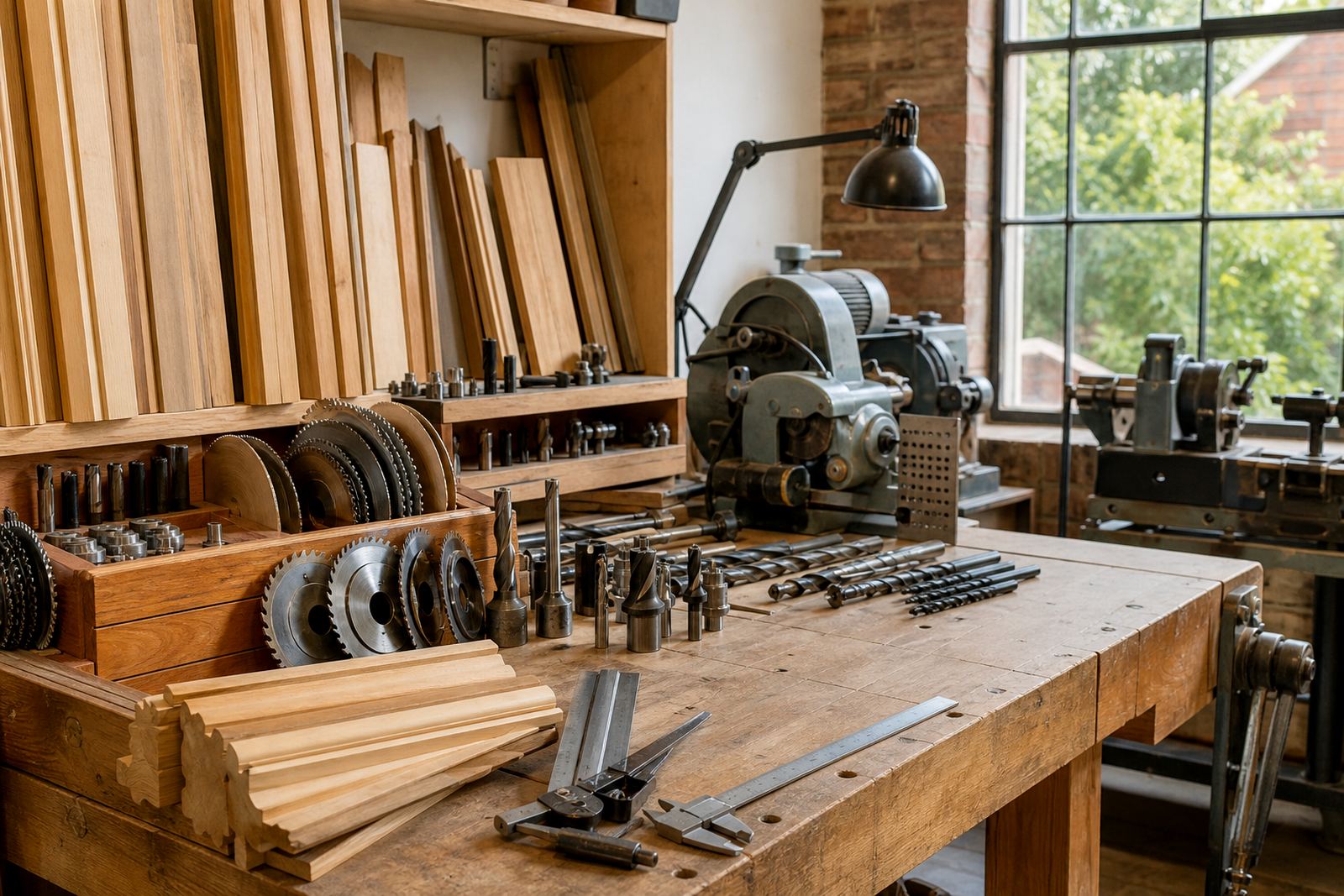
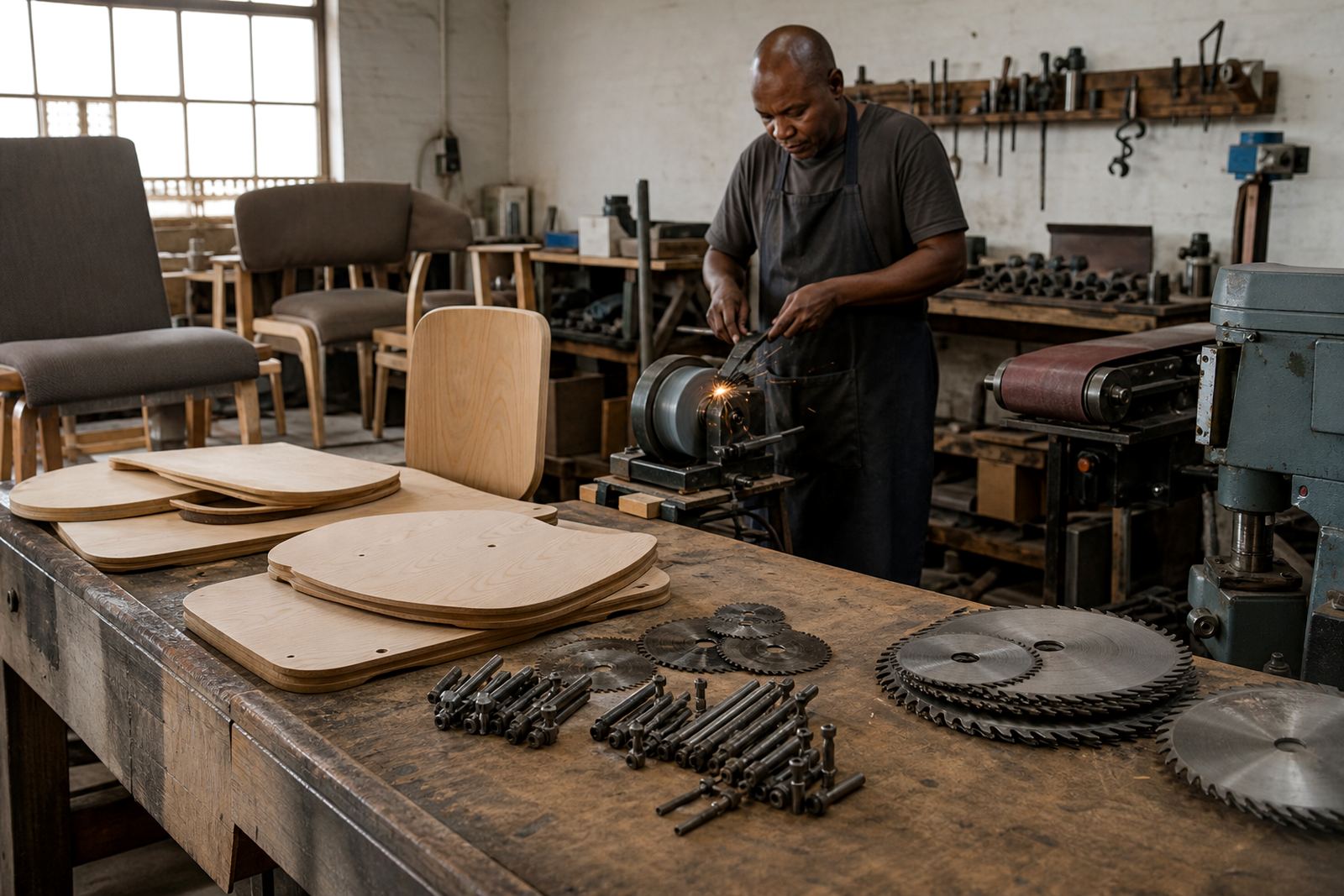
Most hobby woodworkers do not send in huge industrial batches. It is usually a mix of circular saw blades, handsaw blades, drills, router bits and the odd cutter that has started burning timber or leaving a rough edge. Some customers are fixing furniture in Westville, making small cabinets in Hillcrest or building garden pieces in Pinetown, and they need their tools back in working order without a lot of fuss.
We see the same problems again and again. Blades start wandering, router bits leave scorch marks, and drills need too much pressure to bite into hardwood or pine. In many cases the tool is not finished, it just needs proper sharpening, regrinding or a bit of correction so it cuts straight again.
- Bench saw and hand held saw blades
- Straight drills and step drills
- Router bits used for edging, grooves and profiles
- Small mixed batches from one workshop
Why clean cutting matters when you work on weekends
For a hobby woodworker, a bad cut can waste a plank that cost real money. A dull blade also puts more strain on smaller saws and drill motors, which matters when you are using domestic power and dealing with load-shedding. A sharp tool needs less force, runs cooler and gives a cleaner finish that often needs less sanding afterwards.
It also helps with safety. A tool that burns, grabs or chatters can kick back or slip more easily, especially on narrow offcuts. If your workshop is only used on Saturdays and evenings, it is easy to leave a blunt tool in service longer than you should. That is where regular sharpening becomes part of the normal maintenance, not a repair job.
- Cleaner edges on pine, plywood and hardwoods
- Less burning on cuts and routed edges
- Lower wear on motors and bearings
- Better accuracy for repeat work
Planning a small workshop layout around sharp tools
You do not need a large space to keep tools in good condition, but a little planning helps. In a home workshop the best setup is usually a dry shelf for clean tools, a separate tray for dull or damaged items, and a labelled box for loose blades, screws and cutters. Keep cutting tools off the floor and away from moisture, especially in coastal areas like Durban where humidity can lead to rust faster than many people expect.
If you have a small bench and limited storage, group tools by type and use. Keep general purpose blades apart from fine finish blades, and store router bits in holders or wrapped trays so the cutting edges do not knock against one another. A simple tag system helps too, especially if you have several similar pieces. It saves time when the job comes back and you are getting ready for the next project.
- Use a dry cupboard or plastic container with a lid
- Keep blades separated with cardboard, sleeves or dividers
- Label tools by diameter, tooth count or cutter type
- Store away from open windows and damp concrete floors
Common mistakes hobby woodworkers make with sharpening
One of the biggest mistakes is waiting until a blade is badly damaged before sending it in. Chipped teeth, burn marks and rough cuts are often signs that the tool has been working too hard for too long. If the edge is already badly worn, there may be more material to remove and that can shorten the useful life of the tool.
Another common issue is mixing up sharpening and replacement. Some tools can be reconditioned with tooth face grinding, top grinding, angle resetting or diameter correction. Others are simply too far gone, or have bent sections and severe cracks that should not go back into service. We check each item and advise what is practical. No one wants to spend money on a tool that should have been retired.
- Sending in blades only after they start smoking timber
- Using a blunt drill and forcing the feed too hard
- Storing router bits loose in a toolbox where edges chip
- Trying to touch up specialised cutters with the wrong file or grinder
What sharpening and regrinding can fix on your tools
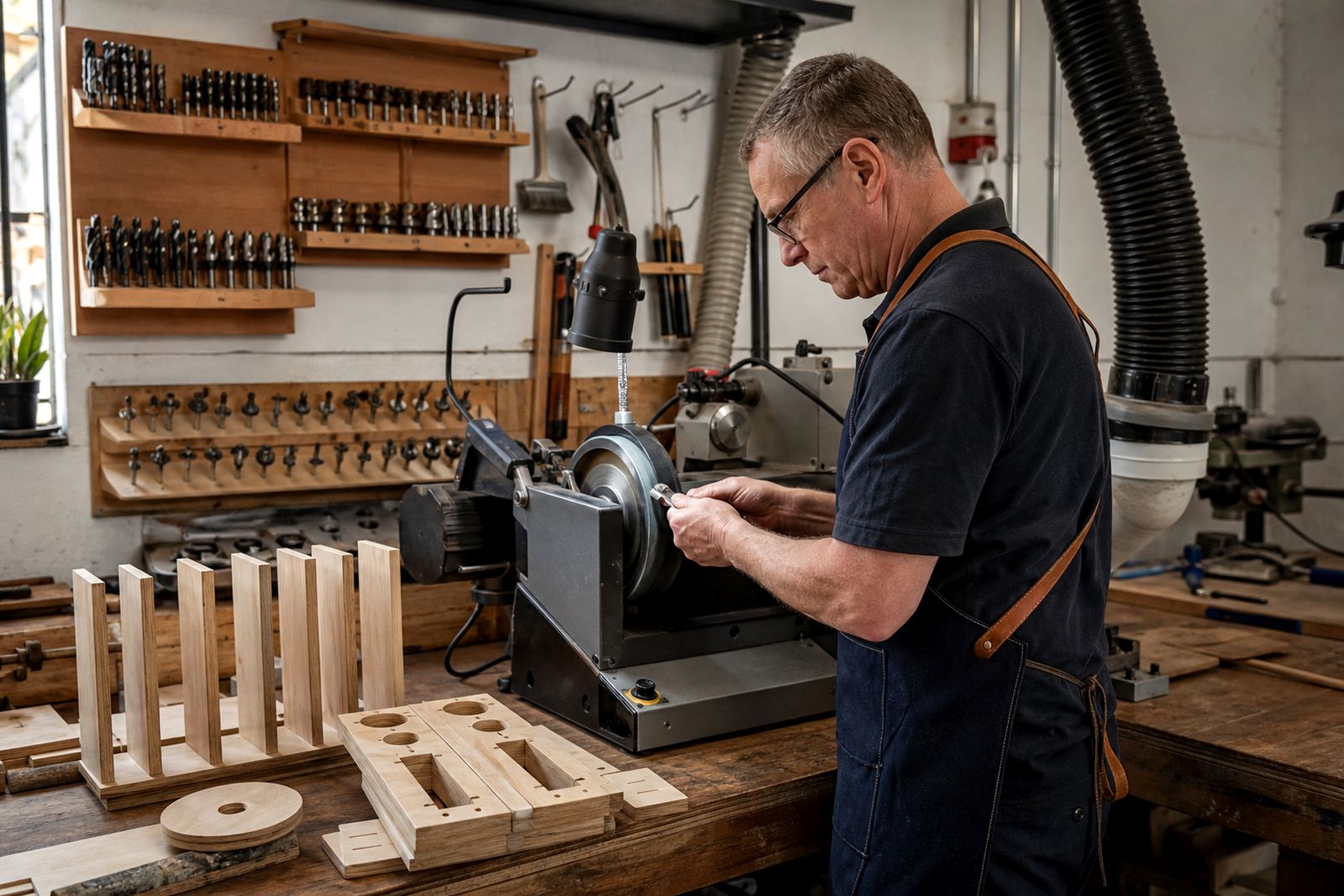
Different tools need different work. A saw blade may need sharpening, balance checking and burn mark removal. A drill may need the cutting lips restored so it bites cleanly again. Router bits often need careful regrinding because the profile must stay true, especially on decorative work and joinery. We also handle chipped edge recovery where possible, plus angle resetting when the edge geometry has gone off.
For hobby work, the point is not only to make the tool sharp, but to make it cut the way it should for another round of projects. A properly serviced tool is easier to guide, gives a neater finish and can last much longer than a neglected one. If you are doing furniture repairs, shelving or small fitted pieces, that extra accuracy makes a noticeable difference.
- Saw blade sharpening and reconditioning
- Drill sharpening for cleaner starts and less wandering
- Router bit sharpening for profiles, grooves and edging
- Balance checking and batch tool tagging for mixed jobs
Budget ranges for home workshop maintenance
Most hobby woodworkers want sensible pricing, not a full commercial service package. The cost depends on tool type, size, condition and how much work the edge needs. A simple sharpen is usually the cheapest option, while damaged teeth, diameter correction or angle resetting will cost more because they take longer and remove more material. It is worth asking for a check before you decide whether to sharpen or replace.
As a rough guide, many home workshop jobs can sit in the low hundreds of Rand per item, with more involved regrinding pushing higher when several cutters are included. If you have a few blades and bits, courier collection can still make sense because it saves fuel and time. For customers in Pinetown, Durban, Pietermaritzburg, Johannesburg, Pretoria and Cape Town, a grouped batch is often the best value.
- Simple sharpening jobs: usually lower cost per item
- Damaged or worn tools: higher cost because more grinding is needed
- Mixed batches: often better value than sending one item at a time
- Courier collection: useful when you have several tools to send together