What school workshops usually send in for sharpening
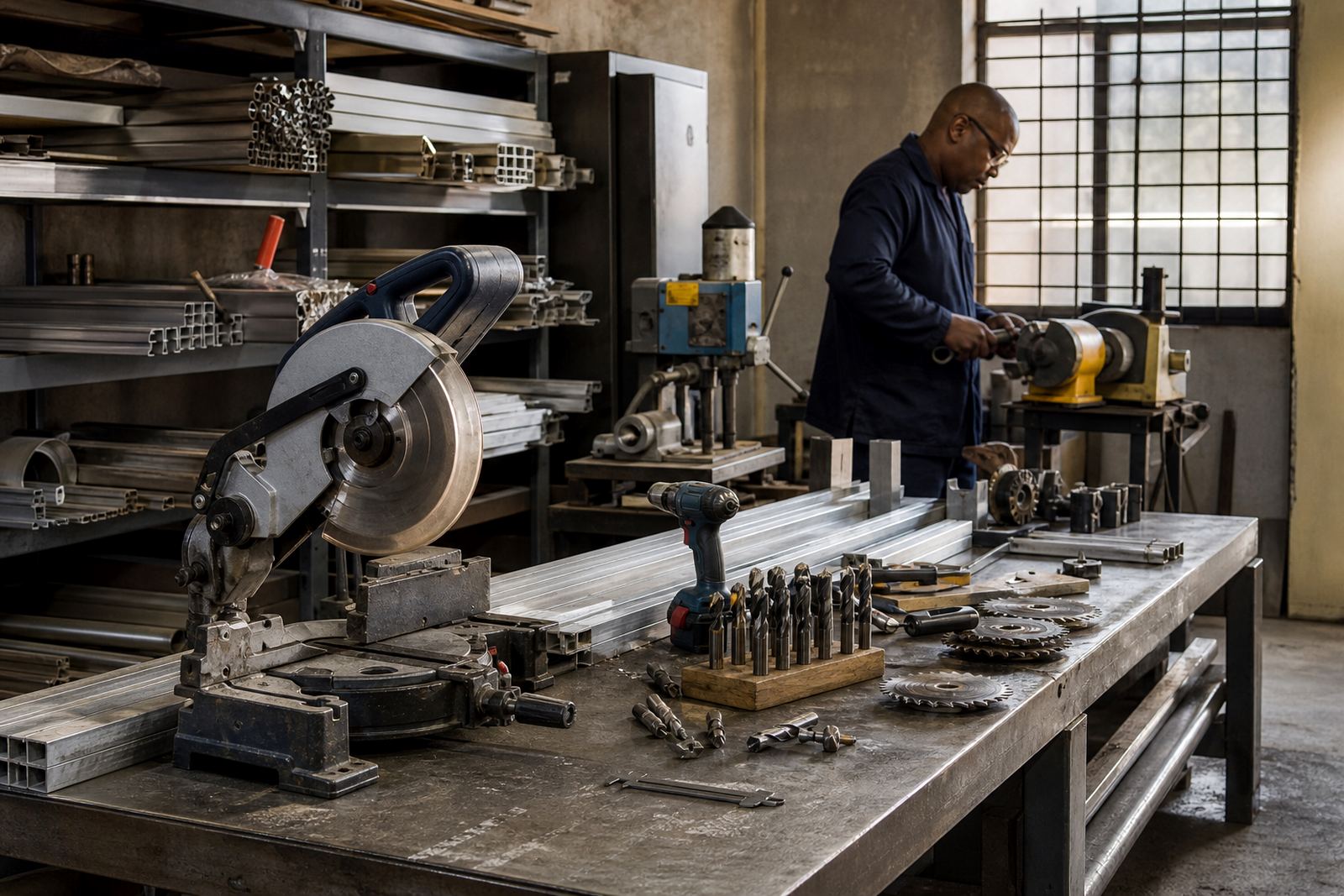
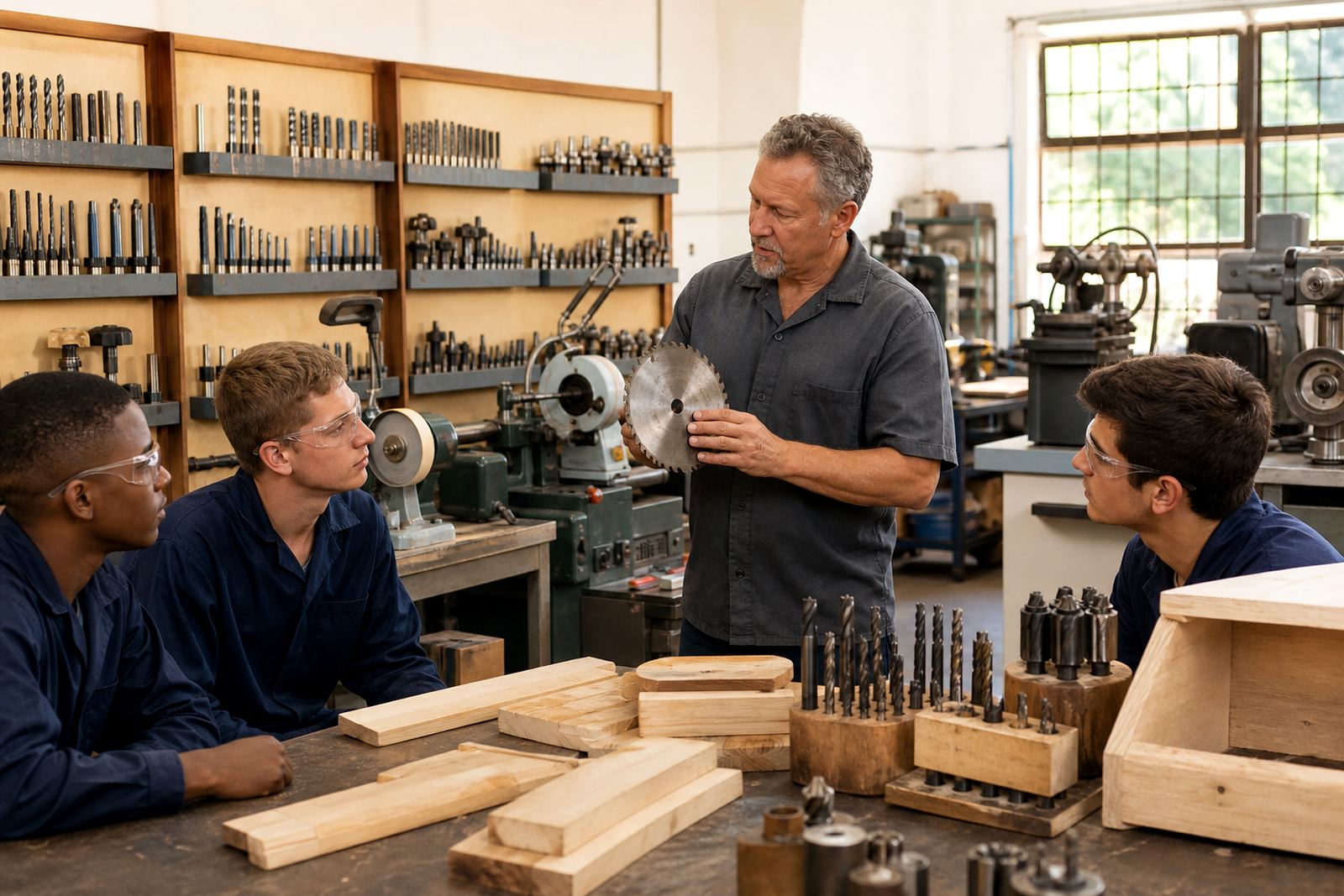
In a school workshop, the tool mix changes with each term, but the same items keep coming back for service. We usually see circular saw blades, drill bits, router bits, countersinks, hole saws and small cutting sets used for timber, plastics and light metal work. Some schools also send damaged blades with chipped teeth, burn marks, rounded cutting edges or a hard wobble that makes learners nervous at the machine.
For technical classrooms, the goal is not just sharpness. The tool must be consistent, easy to teach with and safe for repeated student use. A blade that cuts straight reduces forcing, kickback risk and the need for staff to keep adjusting settings during a lesson.
- Standard workshop saw blades for timber and board work
- Drills used on bench machines and hand drills
- Router bits for joinery, edging and profile work
- Damaged tools needing diameter correction or angle resetting
- Mixed batches from one class, one machine room or one department
How to plan a school workshop tool set properly
Good planning starts with the machines already in the room, the age group using them and how many periods the workshop runs each week. A technical room for Grade 8 and 9 learners may only need a modest batch of blades and drills. A senior workshop or training centre with frequent practicals will need a bigger rotation so one set can be in use while another is being cleaned, checked and sharpened.
It helps to list each tool type by size and use. That way the workshop can keep track of what is for wood only, what is for light metal and what should never be mixed with rough stock. In coastal areas like Durban, humidity can also affect storage, so tools should be kept off the floor in sealed boxes or labelled drawers to reduce rust and edge damage.
- Keep separate bins for wood, metal and mixed-use tools
- Label each blade or bit with size, tooth count or diameter
- Use closed storage cabinets away from damp concrete floors
- Schedule sharpening before peak practical weeks, not after tools fail
- Keep a spare set for high-use machines so teaching can continue
Common sharpening problems in training centres
School tools are often used by many hands, which means wear builds up faster than in a private workshop. The most common problems are blunt cutting edges, uneven tooth faces, chipped carbide tips, poor balance and burnt cuts caused by dull tools being pushed too hard. Some blades also develop a diameter mismatch after repeated grinding, which can affect cut depth and machine setup.
We handle tooth face grinding, top grinding, burn mark removal, chipped edge recovery, angle resetting, balance checking and diameter correction where the tool can still be saved. If a blade has been badly abused, we will say so plainly. A school budget should not go into repeated repairs on something that is past its useful life.
- Burn marks on timber from a dull or dirty blade
- Chatter and rough edges from poor balance
- Drill bits slipping instead of biting cleanly
- Router bits leaving tear-out along the edge
- Inconsistent cuts between learners using the same machine
Budget ranges for school workshop maintenance
Budgets vary depending on how many tools are in circulation and how heavily they are used. A small school with a few saw blades and drill bits may spend a few hundred Rand at a time. A bigger technical department or training centre with regular practicals can easily plan for a monthly or termly sharpening budget in the low thousands.
As a working guide, smaller batches often fall between R450 and R1 200, medium school collections between R1 200 and R3 500, and larger multi-room batches can run from about R3 500 upwards depending on the number of blades, the amount of damage and whether courier collection is needed. Starter kits and training support are useful for schools that want staff or technicians to manage basic tool care between collection cycles.
- Small batch service for a few damaged tools
- Termly batch collection for one workshop room
- Multi-department service for bigger technical centres
- Courier collection to save staff travel time
- Starter kits for cleaning, labelling and basic care
Courier collection and turn-around for schools around South Africa
For schools outside Pinetown, courier collection is often the easiest option. We collect across South Africa, including Durban, Pietermaritzburg, Johannesburg, Pretoria and Cape Town. That helps schools avoid sending staff off-site and keeps the tool return process in one clear chain from collection to tagging, sharpening and dispatch back to the campus.
Schools benefit from one contact point, one set of labels and one list of tools per batch. Ayesha Naidoo manages operations and courier collections, while the sharpening team led by Thabo Dlamini and Johan van Zyl handles the actual regrinding work. That structure matters when tools need to come back sorted by room, not mixed together in one box.
- One batch per workshop room or subject area
- Clear labels for sizes, counts and machine types
- Courier booking for regional and national schools
- Return packing that keeps sharp edges protected
- Direct enquiry through the contact form for school quotes
How to reduce waste and extend tool life during the year
The best school workshops do not just sharpen tools when they fail. They build a simple routine around cleaning, inspection and storage. A learner or technician can check for missing teeth, loose tips, chipped edges and rust before every practical block. Small faults caught early are cheaper to fix and easier to teach around.
We also recommend separating training tools from rough stock tools where possible. A blade used on clean material will last longer than one pushed through dirty timber or metal offcuts. Good housekeeping matters just as much as sharpening, and it makes the workshop safer for everyone using it.
- Inspect tools at the start and end of each term
- Replace damaged storage boxes and blade sleeves
- Keep a simple log of sharpening dates and tool condition
- Use the right tool for the right material
- Book a service before the practical calendar gets full