What aluminium fabricators usually bring in
In light aluminium fabrication, the cutting edge has to stay sharp and the geometry has to be right. A blade or drill that is fine for mild steel can leave burrs, chatter marks and heat staining on aluminium, especially when the job is repeated through the week. We see work from small workshop teams, one-man operators and maintenance crews that cut frames, panels, guards and brackets for local jobs in Pinetown, Durban, Westville, Hillcrest and further afield through courier collection.
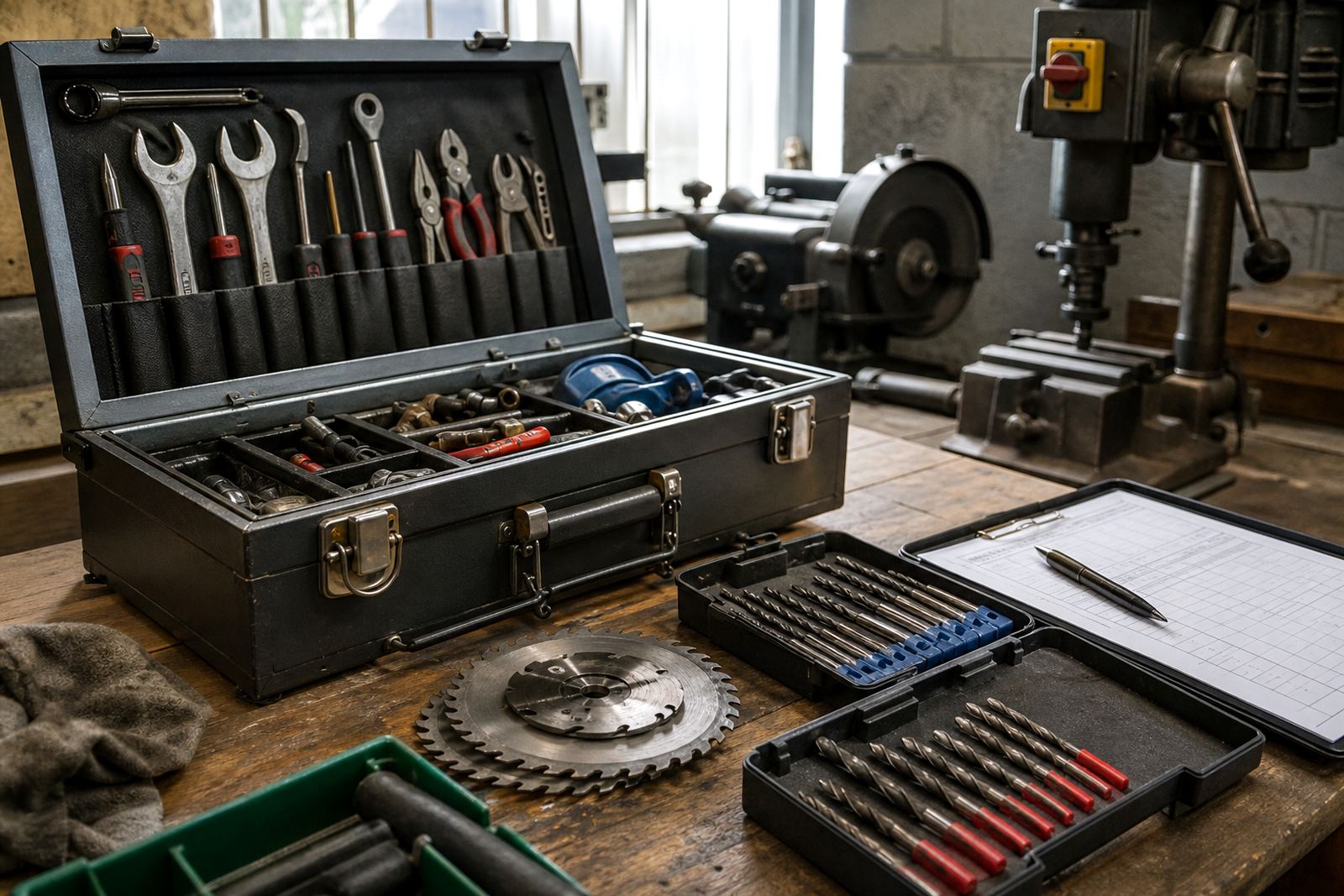
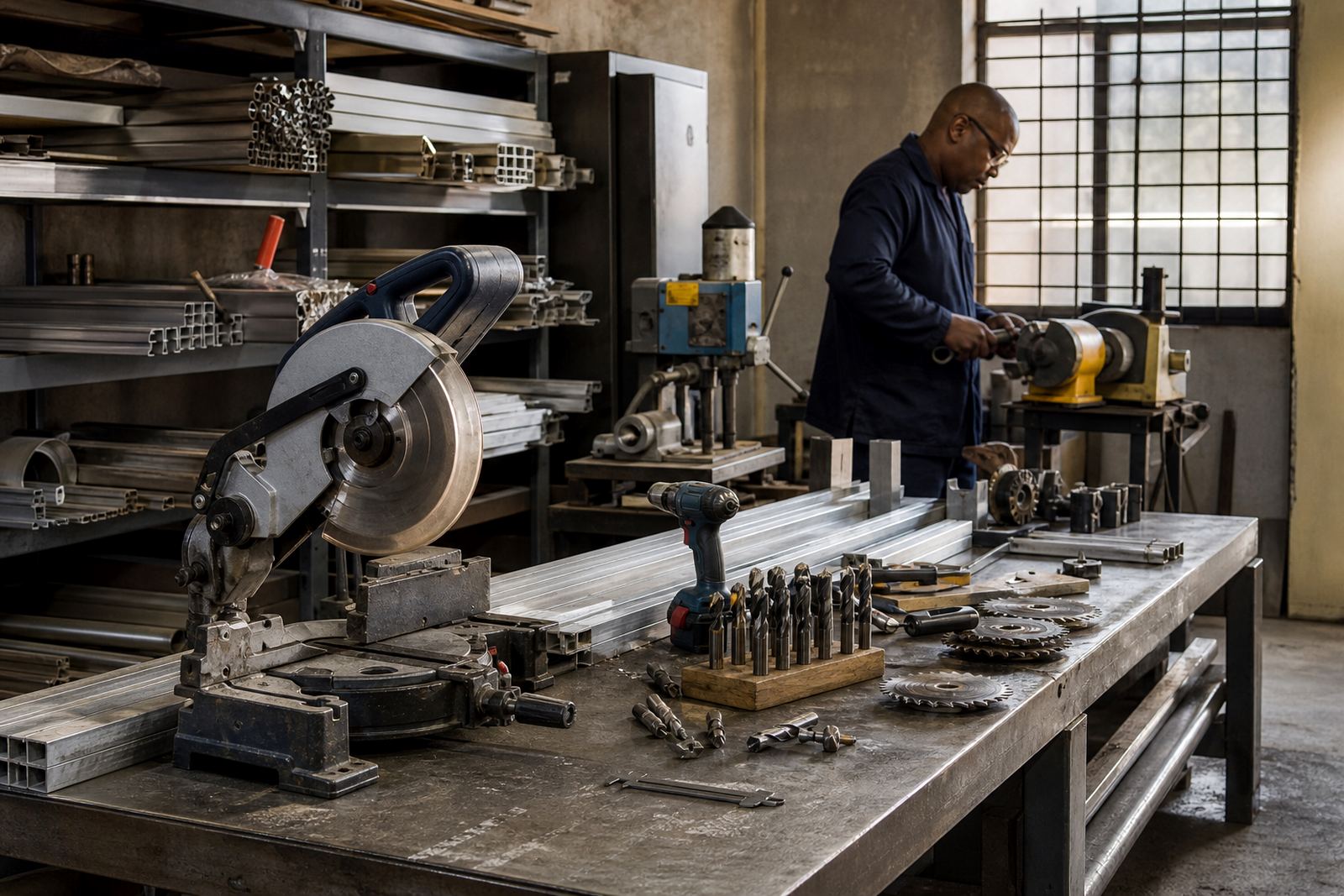
Typical items include circular saw blades used on non-ferrous machines, HSS drills, carbide drills where applicable, and router bits used for trimming light alloy sections and sheet-based work. If a tool is meant for aluminium, it still needs checking for tooth wear, resin build-up, edge rounding and any chip damage from dropped stock or a fast feed rate. A simple regrind can often restore clean cutting and save replacing a tool too early.
- Saw blades for aluminium section cutting and trimming
- Drills used for pilot holes, fixings and assembly work
- Router bits for light profiling and edge work
- Tools showing burn marks, vibration or burr-heavy cuts
Signs your tools are slowing the job down
When a saw starts making a rough edge or a drill wanders at the start of a hole, the problem is usually not the operator alone. Aluminium shows faults quickly. A dull tooth can drag and polish the cut instead of shearing it, while a drill with a tired point may overheat and leave a hole that needs cleanup before the next step. That extra handling costs time and can throw off measurements on repeat work.
Watch for rising amp draw on the machine, a louder cut than normal, chips turning into fine dust, or the need to push harder on the feed. On thin wall material, the wrong edge condition can also cause grabbing. In our workshop we check the condition of the cutting edge, the tooth face, and the overall balance where needed. If there are chipped teeth or a damaged point, we advise whether recovery is practical or whether the tool is beyond economic repair.
- Burn marks on cut edges
- More burrs than usual after drilling
- Uneven cut sound or vibration
- Tools needing extra pressure to bite
Workshop layout and planning for cleaner output
Good tool condition works best when the workshop layout supports it. For aluminium work, keep cutting and drilling areas separate from grinding dust, steel offcuts and oily maintenance benches. Even small contamination can spoil finish quality. If your team runs a mixed workshop, set aside a clean storage tray for aluminium tools and label them clearly so the wrong blade does not go onto the wrong job, which happens more often than people like to admit.
Plan for regular rotation. If the same blade stays on the saw until it is badly worn, the regrind becomes more complicated and the cut quality drops in the meantime. Many shops do better with a small pool of working tools and a spare set in circulation. That way one batch can be collected by courier while another is still in use. For teams that work around load-shedding or variable shift patterns, this also helps avoid last-minute stoppages when a tool goes off-spec mid-run.
- Store aluminium tools separately from steel cutting tools
- Label batches by machine, size and job type
- Keep a spare set for higher volume days
- Book collection before the last usable edge is gone
Common mistakes that cost money
The biggest mistake is assuming all cutting tools can be ground the same way. Aluminium tools need the right face and relief for clean shearing, and forcing a general-purpose setting onto them can make the cut worse. Another common issue is ignoring diameter correction on blades that have been overheated or handled badly. If the blade is out of shape, the machine may still run but the work will not stay consistent.
We also see tools sent in after chip damage has spread along the cutting edge. Once that happens, the repair may still be possible, but the amount of material that must be removed can shorten the usable life of the tool. A small chip caught early is far cheaper to deal with than a blade that has been running dull for weeks. The same applies to drill points. A point that has wandered and then been re-used often cuts oversize or leaves a rough entry that needs more finishing.
- Using mixed-purpose geometry on aluminium tools
- Leaving blades in service after visible heat damage
- Sending tools too late after chips or breakage
- Mixing up drill sets between aluminium and steel jobs
Budget ranges for light aluminium tool maintenance
For small fabrication teams, the right budget is usually less than the cost of replacing tools every month. A basic sharpening or regrind on a standard drill or saw blade is often the first line of control, while more involved work such as tooth face grinding, top grinding, diameter correction or chipped edge recovery will sit higher. The final figure depends on size, condition and how many tools are booked in together.
As a practical guide, many light fabrication jobs fall into a range of about R60 to R180 per small drill, R150 to R450 for common saw blade sharpening work, and R250 to R600 or more where regrinding, balance checking or correction is needed. Courier collection can be cost-effective when the batch is larger, because several tools can move together instead of paying for separate local runs. For regular workshop users, batching tools every 2 to 4 weeks often keeps spend predictable.
If you are setting a maintenance budget for a month, allow for the usual wear pattern, plus a little extra for damaged tools after busy periods or rushed work. That keeps the workshop from getting caught out when a key blade or drill suddenly goes out of tolerance.
How to send tools from Pinetown or anywhere in South Africa
Clients reach us through the enquiry form on our contact page, then we arrange the next step from there. We handle courier collection bookings for Pinetown, Durban, Pietermaritzburg, Johannesburg, Pretoria and Cape Town, as well as nearby areas like Westville and Hillcrest. Tools can be booked in as single items or as a batch, with tagging so each set comes back matched to the correct job or machine.
For workshop teams, training can also help with storage, inspection and simple maintenance between services. We offer starter kits and practical guidance so your team knows what to look for before a tool becomes a bigger repair job. If you have a mixed batch of saws, drills and router bits, send the list with the enquiry and we will advise on what can be processed together and what needs separate handling. It saves time and keeps the turnaround straightforward.
- Use the enquiry form to start the booking
- List the tool type, size and any visible damage
- Batch tools where possible for better value
- Ask about training if staff handle tool care on site