Why kitchen fitting teams need sharpened tools on schedule
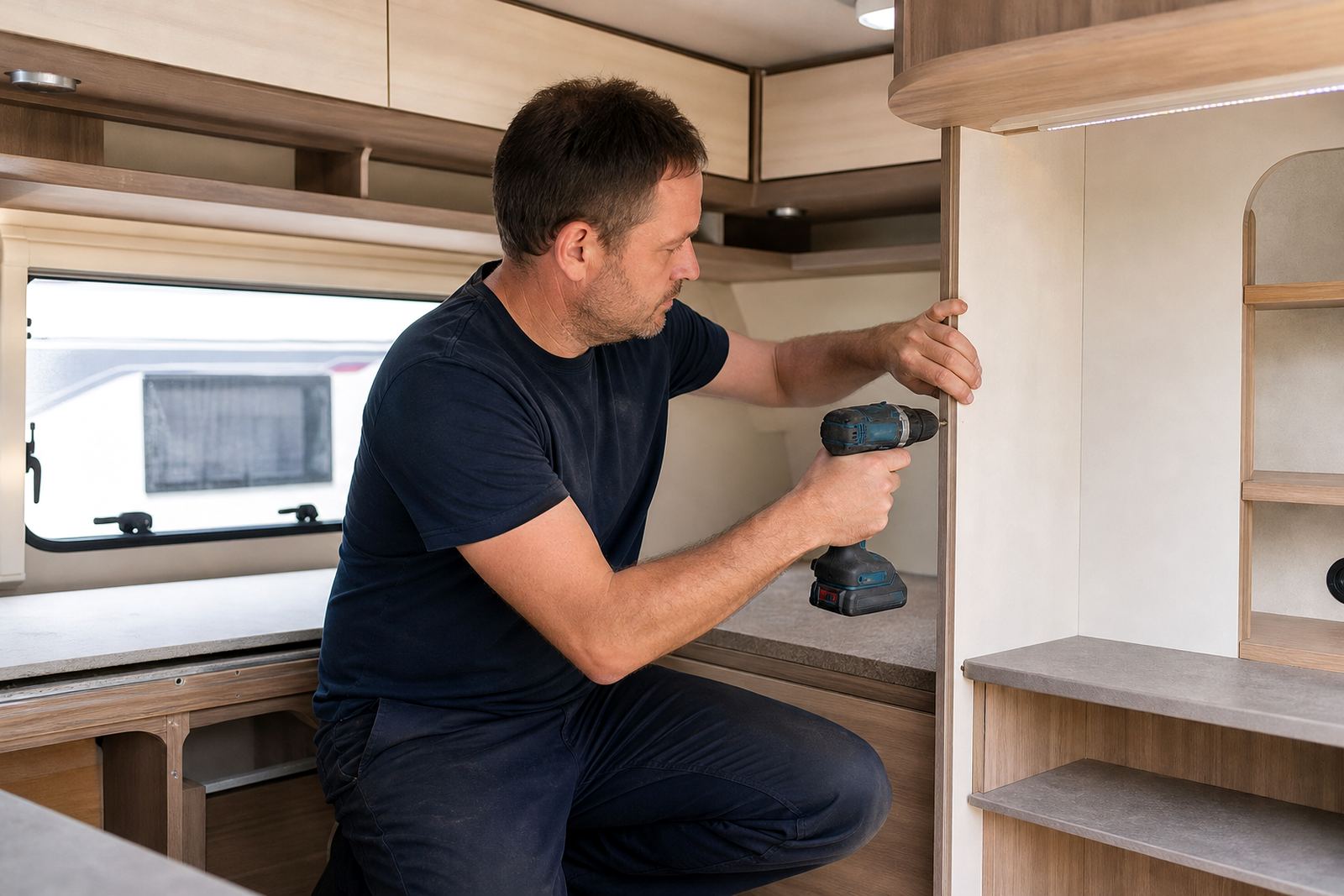
A kitchen install often starts in the workshop and finishes in the client’s home or apartment, with little room for delays. When a blade burns melamine, a drill wanders in hardwood, or a trim bit leaves a rough edge, the whole job takes longer and the finish suffers.
We support kitchen installers in Pinetown, Durban, Westville, Hillcrest, Pietermaritzburg, Johannesburg, Pretoria and Cape Town with courier collection across South Africa. That helps teams keep a steady flow of sharpened tools coming back in time for templating, cabinet fitting, sink cut-outs and final trim work.
For many fitting crews, the biggest pressure comes from doing more with fewer tools on site. A sharp set means less forcing, cleaner cuts and less strain on the installer. It also helps when load-shedding interrupts your workshop routine, because your tools are ready when power comes back on and work can continue without lost time.
Typical kitchen installer tools we see every week
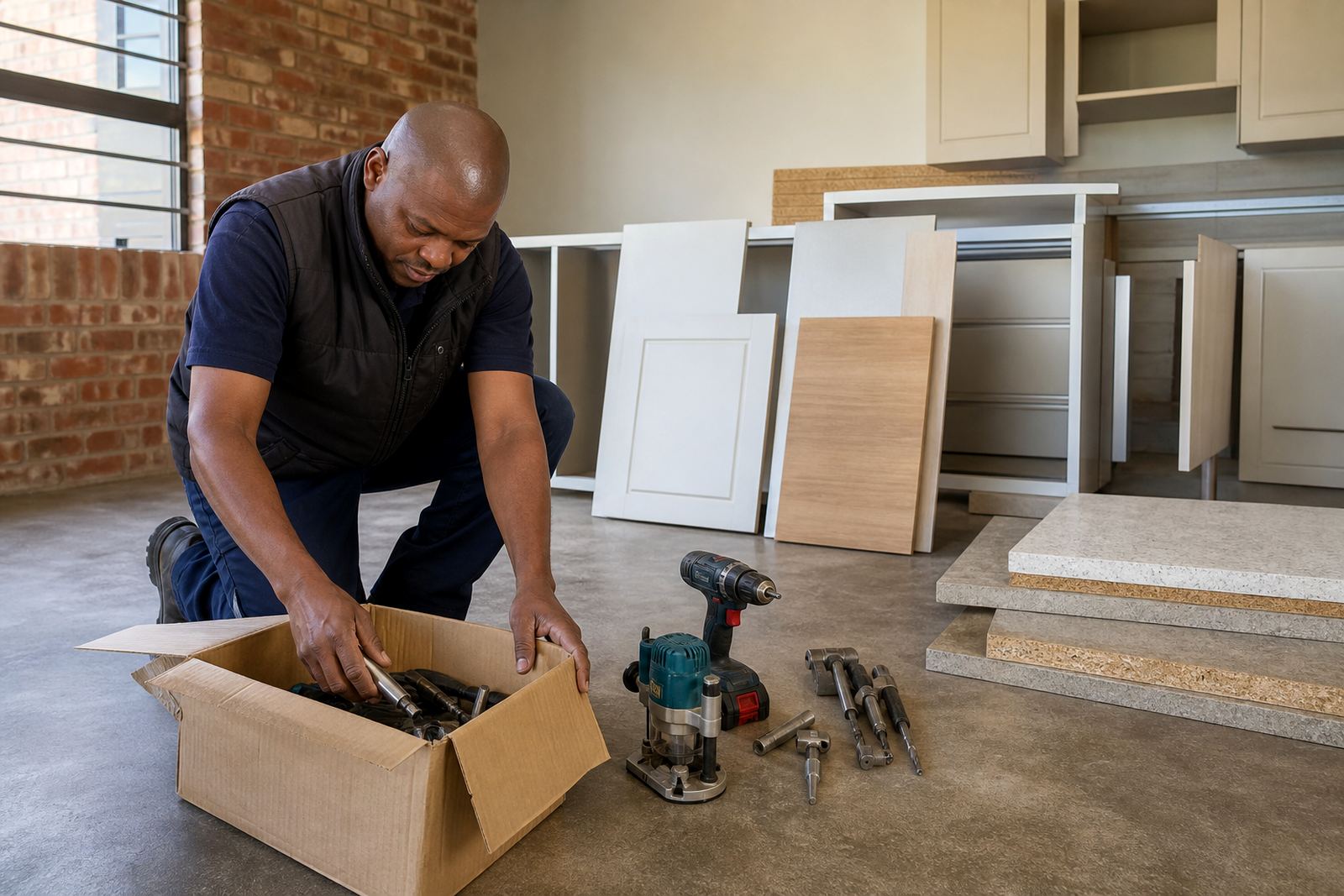
Kitchen installation teams usually send a mix of cutting and drilling tools for maintenance. The exact set depends on whether the team handles full carcass installation, on-site modifications or final finishing work.
- Table saw and circular saw blades for boards, strips and finish cuts
- Drill bits for pilot holes, hinge work and fixing points
- Router bits for edging, grooves and cut-outs
- Trim bits used for clean flush finishing
- Blades with minor burn marks, chipped edges or a dull cutting face
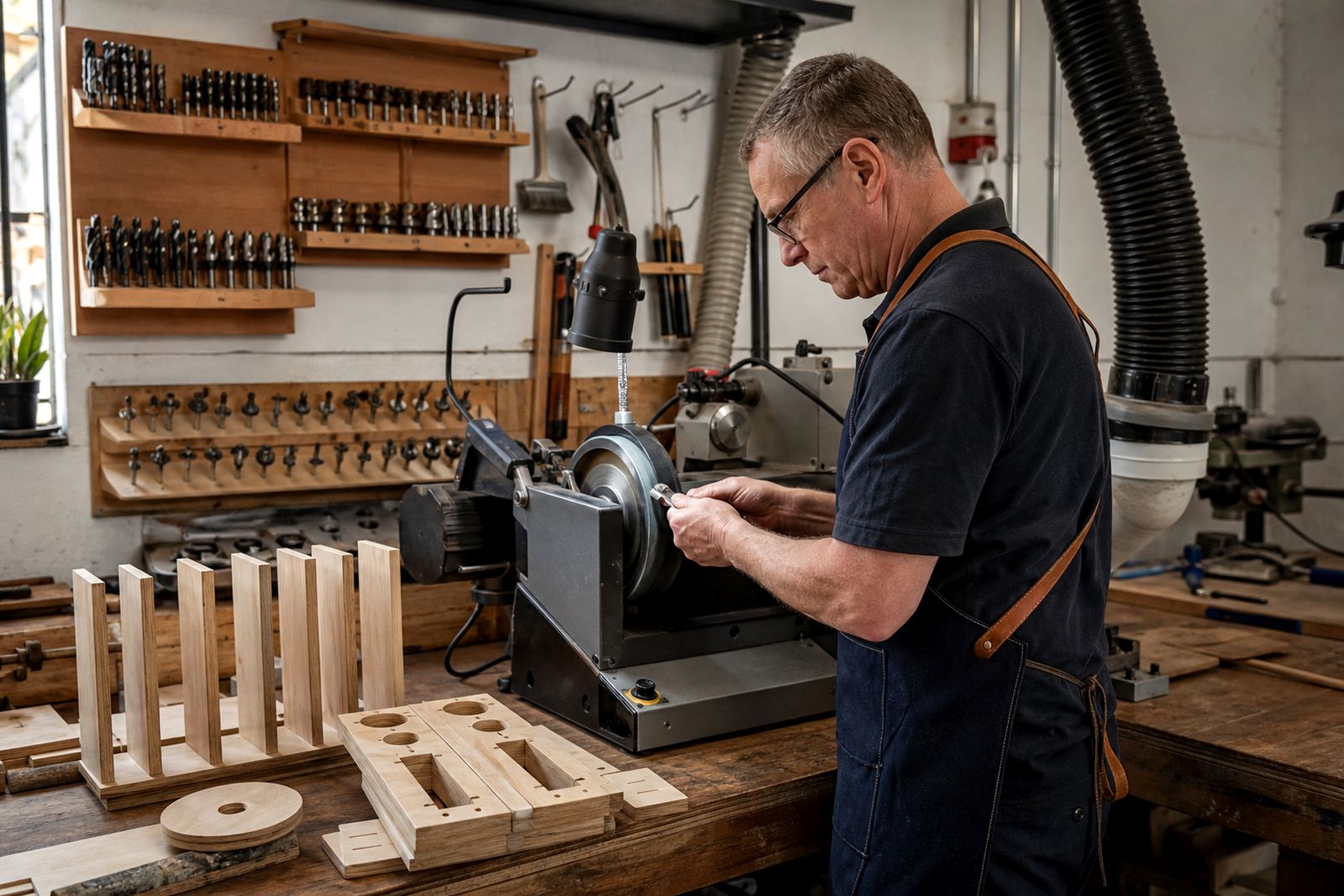
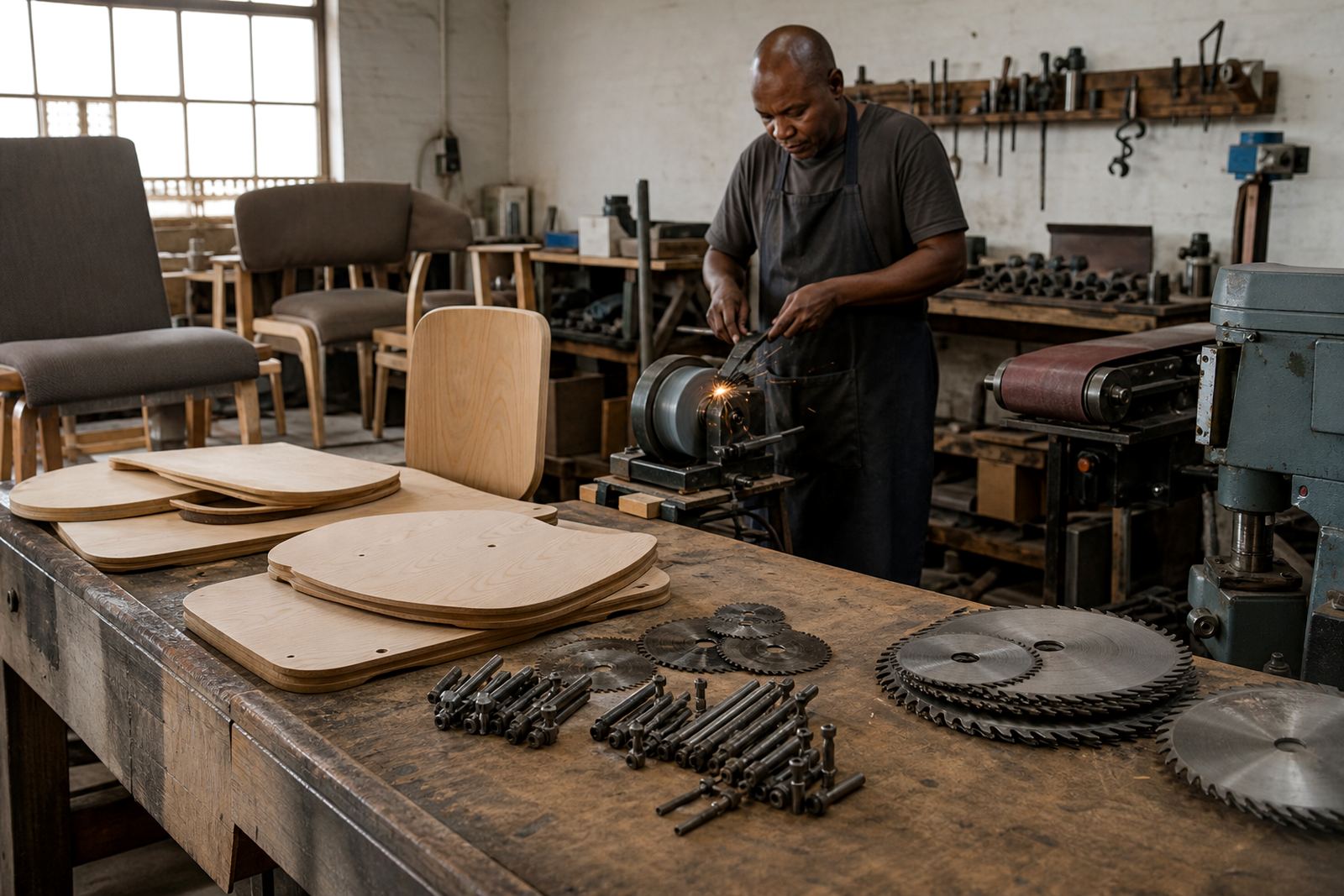
We also handle diameter correction, tooth face grinding, top grinding, angle resetting and balance checking where needed. If a blade or bit has picked up a chip from a hidden nail, a bracket or a hard knot in timber, we can assess whether it can be recovered or whether the wear is too far gone. That saves your team from guessing, and helps avoid sending a not-quite-right tool back onto a job.
How to plan your tool rotation around install dates
Good planning is half the battle in kitchen fitting. If your crew has a busy week of site visits, measure-ups and cabinet installs, do not wait until every tool is blunt. Build a simple rotation so one set is in use, one set is in transit, and one set is ready for the next run. It sounds basic, but it stops the workshop from going dead quiet on a Thursday afternoon when a blade suddenly gives up.
For teams working across multiple sites, batch tool tagging is useful because each blade, bit and drill can be tracked by installer or van. Courier collection booking also helps when you are moving tools between Pinetown and other centres like Johannesburg or Cape Town. That way your sharpening schedule follows the job schedule, not the other way round.
- Separate blades by material use, such as board, solid timber or mixed work
- Label tools by van, fitter or job number before collection
- Book collection before the week starts if you have fittings lined up
- Keep a spare blade or bit set for emergency changes on site
If your team works in coastal areas, rust protection matters too. Durban and other humid spots can be hard on steel, so tools should be cleaned and stored dry after every job. A little care between collections goes a long way, and it keeps the edge in better shape once the tools come back from regrinding.
Common mistakes that slow kitchen installations
We often see the same problems repeat on kitchen jobs. Most of them are preventable with a better sharpening routine and a bit of shop discipline. The issue is not just dull tools, but using the wrong tool for too long or pushing past the point where the cut quality drops off.
- Using a blunt blade until it starts burning chipboard or melamine
- Forcing a drill bit instead of sharpening it early
- Mixing up trim bits and using the wrong profile for the finish required
- Ignoring chipped teeth after a hard impact
- Sending tools back to site without a balance check after repair
A common complaint from installers is that a blade leaves a rough edge on the last few cuts of the day. That usually means the edge has gone over, or the set is uneven. Another issue is cost drift, where the team keeps buying replacements instead of sharpening what is already in use. In most cases, regrinding is the cheaper route and it keeps your preferred cutting profile intact.
What sharpening support usually costs in Rand
Budgets vary by tool size, condition and the amount of work needed. A simple sharpen on a saw blade is usually far cheaper than replacement, while chipped edge recovery, burn mark removal or angle resetting can add to the cost. For kitchen installers, the aim is to keep the per-job tool spend under control without giving up clean cuts.
As a rough working guide, many teams budget a few hundred Rand per collection for smaller batches, and more for larger mixed loads that include saw blades, drill bits and router bits. A regular workshop rotation is often the most cost-effective option, because tools are maintained before they fail badly. If a blade has severe damage or a bit is worn beyond recovery, we’ll advise on the practical next step rather than wasting your time on a poor result.
For installers in Pinetown and surrounding areas, local drop-off can be convenient. For teams in Durban, Pietermaritzburg, Pretoria, Johannesburg or Cape Town, courier collection keeps the process moving without taking a fitter off site. That matters when the next install is already booked and the client is waiting on the final fit-off.
Training and starter kits for fitter teams
Some kitchen companies want more than sharpening alone. We also offer training and starter kits for teams that want better tool handling, longer edge life and fewer mistakes on site. That can be especially useful for newer fitters, small crews or firms taking on more install work and needing a stronger maintenance routine.
Training usually covers practical points such as how to spot early wear, how to store blades safely, and how to avoid damage from poor handling in the van or workshop. Starter kits help teams put those habits into practice from day one, instead of waiting until a tool fails on a busy morning. It is simple stuff, but it makes a real difference when your crew is working to a deadline and there is no room for rework.
If your kitchen fitting team needs a reliable sharpen-regrind cycle, we can help you keep the cutting side of the job under control. From Pinetown to the main metros, the goal is the same: sharp tools, cleaner work and less downtime.