

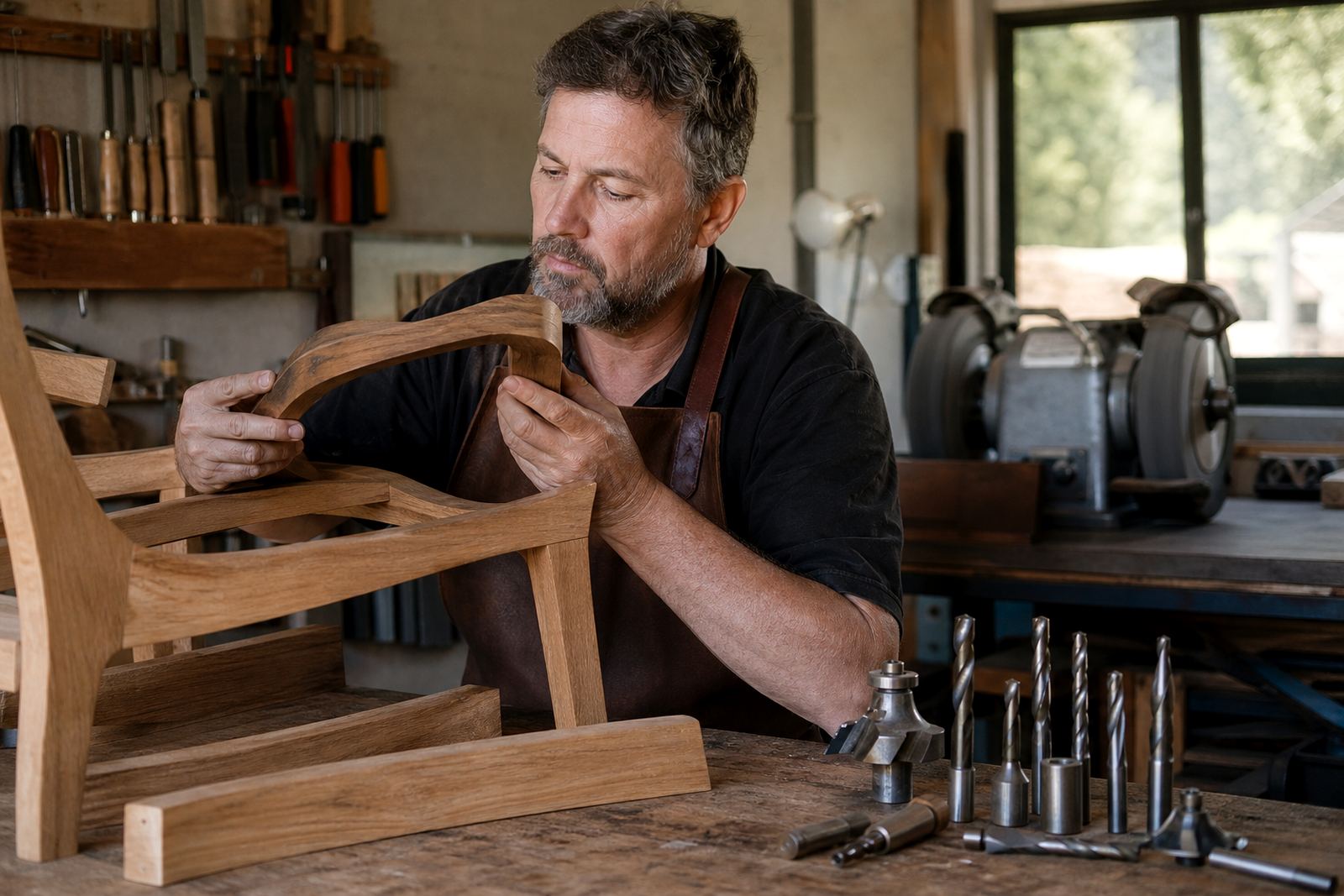
Furniture Makers
Home / Who For / Furniture Makers

Who For

Furniture Makers

Furniture makers need clean cuts, true bores and tools that hold an edge through long production runs. CutTool Sharpening helps workshops keep saws, drills and router bits in service with sharpening, regrinding and collection across South Africa.

When a furniture workshop starts losing accuracy

In furniture making, small tool changes show up fast. A saw blade that burns edges, a drill that wanders off line, or a router bit that leaves chatter can slow a whole job. If you are cutting hardwood, board products or veneer-faced panels, you need predictable results from the first piece to the last.

Many makers in Pinetown, Durban and the surrounding areas run mixed work, from custom cabinets to fitted units and one-off pieces. The common thread is precision. When tools are dull, the machine has to work harder, the finish goes off, and the time spent sanding or redoing parts increases. That is where proper sharpening and regrinding keeps the workflow steady.

We work with hobby woodworkers, small joinery shops and busy production teams. If you are hand feeding, running a panel saw, or setting up a router table, tool condition affects both quality and safety. A clean edge is not a luxury, it is part of getting paid for neat work.

Typical tools we see in furniture shops

Furniture makers usually bring in a mix of cutting and boring tools. Some are used every day, others only for special profiles or repetitive production runs. We sharpen and regrind tools that need a clean cutting edge, proper geometry and balanced performance.

  • Saw blades for panel cutting, trimming and crosscut work
  • Drills used for boring hinges, fittings and fixing points
  • Router bits for edge shaping, grooves and clean profile work
  • Tools with chipped edges, burn marks or poor cutting action
  • Items that need diameter correction, angle resetting or balance checking

For furniture work, a blade that is only partly sharp can still cut, but it often leaves scorch marks, tear-out or a rougher edge that takes more finishing. The same applies to router bits and drills. Once the edge or geometry is off, the tool starts pulling, rubbing or heating the material instead of cutting it properly.

We also handle batch tool tagging for shops that send several items at once. That helps keep different cutter sizes, profiles and jobs separated, which saves confusion when you are running more than one order at a time.

How we support layout and production planning

Good tool maintenance should fit your production schedule, not interrupt it. For furniture makers, that often means planning around delivery dates, fitting appointments and machine runs. In practical terms, it helps to keep spare blades and cutters in rotation so your main set can go out for sharpening without stopping work.

We offer courier collection booking for Pinetown, Westville, Hillcrest, Durban, Pietermaritzburg, Johannesburg, Pretoria and Cape Town. That is useful if your team is working on-site, or if your workshop is too busy to release someone for a delivery run. For many clients, collection on the same week as production planning makes all the difference.

  • Separate high-use cutters from project-specific profiled bits
  • Label tools by machine, diameter and job type
  • Keep a small spare set for critical saws and drilling work
  • Book sharpening before tools are fully worn down
  • Check cutting results at the start of each shift, not after a batch is complete

In coastal KwaZulu-Natal, humidity can also affect storage. Tools left damp or packed away with sawdust can corrode faster, especially after a long weekend or load-shedding stop-start operations. Clean, dry storage and regular sharpening help prevent that extra wear.

Common mistakes that cost furniture makers time

One of the biggest mistakes is waiting until a tool is badly damaged before sending it in. At that point the job may need more than a basic sharpen. It can mean tooth face grinding, chipped edge recovery or diameter correction, which costs more and takes longer than planned.

Another common issue is mixing up sharpening needs with normal wear. A saw blade that is burning may need a new edge, but it may also need angle resetting or balance checking. A router bit that is leaving a rough profile may be out of true, not just blunt. If the geometry is wrong, a quick touch-up will not solve the problem properly.

Furniture shops also lose time when they do not track which tools belong to which machine or job. That leads to incorrect refitting, poor cut quality and unnecessary setup time. Small mistakes like using the wrong diameter cutter or a drill that is no longer centred can affect the whole batch. These are the kind of issues that creep in quietly and then become expensive.

Budget ranges for sharpening and regrinding

Budget depends on the tool type, condition and how much rework is needed. A basic sharpen is usually the lowest-cost option, while tools with burn marks, chips or incorrect angles may need additional work. For furniture makers, it is usually better to spend a little more on keeping a tool accurate than to pay for wasted material and rework.

As a working guide, smaller sharpening jobs may start from around R40 to R120 per item, while more involved saw blade or router bit regrinding can move into the R150 to R450 range depending on size and wear. Batch work, larger diameters and damaged edges can sit higher. Courier collection and return costs are added separately where required.

If you are running a small workshop, a sensible monthly sharpening allowance might be from R500 to R2,500. Medium production teams often budget more, especially where saws, drills and router bits are in regular rotation. The exact amount depends on how much you cut, the materials you work with, and how often tools are removed from service for maintenance.

For ongoing work, it helps to compare the cost of sharpening against the cost of slower cutting, extra sanding and rejected parts. In most furniture shops, the hidden cost is not the sharpen itself, it is the time lost while a dull tool keeps working.

What a good workshop handover looks like

When you send tools in, the more detail you give, the better the outcome. Let us know what machine the tool is used on, what material it cuts, and what problem you are seeing. That allows the technician to check for wear patterns, cutting angle and any signs of imbalance or damage.

For furniture makers, this is especially useful when the work mix changes through the month. You may be cutting melamine one week and solid timber the next, or switching between straight cuts and profile work. Different materials place different demands on the edge, so a tool that looks fine at a glance may still need adjustment.

  • List the job type, such as cutting, boring or edging
  • Mark urgent tools that must be returned first
  • Keep similar cutters together for easier sorting
  • Tell us about burn marks, chatter, tear-out or wandering drills
  • Use the enquiry form on the contact page to arrange collection

We serve furniture makers from Pinetown and across South Africa, with a practical process that suits busy workshops. If you need sharp tools, accurate profiles and better repeatability, regular maintenance is a simple way to keep production moving.

Training and starter support for new workshops

Some furniture makers are still building their tool maintenance habits, especially new workshops and smaller teams starting to handle more of their own production. In those cases, training and starter kits can help staff understand when a tool needs sharpening, how to store it properly and what signs to watch for before damage gets worse.

That support is useful where one person is managing purchasing, setup and finishing at the same time. A clear routine saves money and reduces mistakes. It also helps keep sharp tools in better condition between collections, which matters if your team is working through load-shedding disruptions or staggered shifts.

If you are expanding your workshop, it is worth setting a simple maintenance plan early. Keep a log of what came in, what went out, and which machine each tool belongs to. It sounds basic, but in busy furniture production those notes prevent mix-ups and keep the whole place moving cleaner.

What our Tool Sharpening customers say

Verified Google reviews

Questions we get asked

What furniture tools can CutTool Sharpening handle?

We sharpen and regrind saw blades, drills and router bits used in furniture making, including work that needs tooth face grinding, top grinding, diameter correction and balance checking.

Do you collect tools from furniture workshops outside Pinetown?

Yes. We arrange courier collection across South Africa, including Durban, Pietermaritzburg, Johannesburg, Pretoria and Cape Town, as well as nearby areas like Westville and Hillcrest.

How often should a furniture maker sharpen tools?

It depends on material and workload, but most workshops should book sharpening as soon as cutting quality drops, before burn marks, chatter or oversized wear starts affecting output.

Planning something? Send the team a message.

Contact form