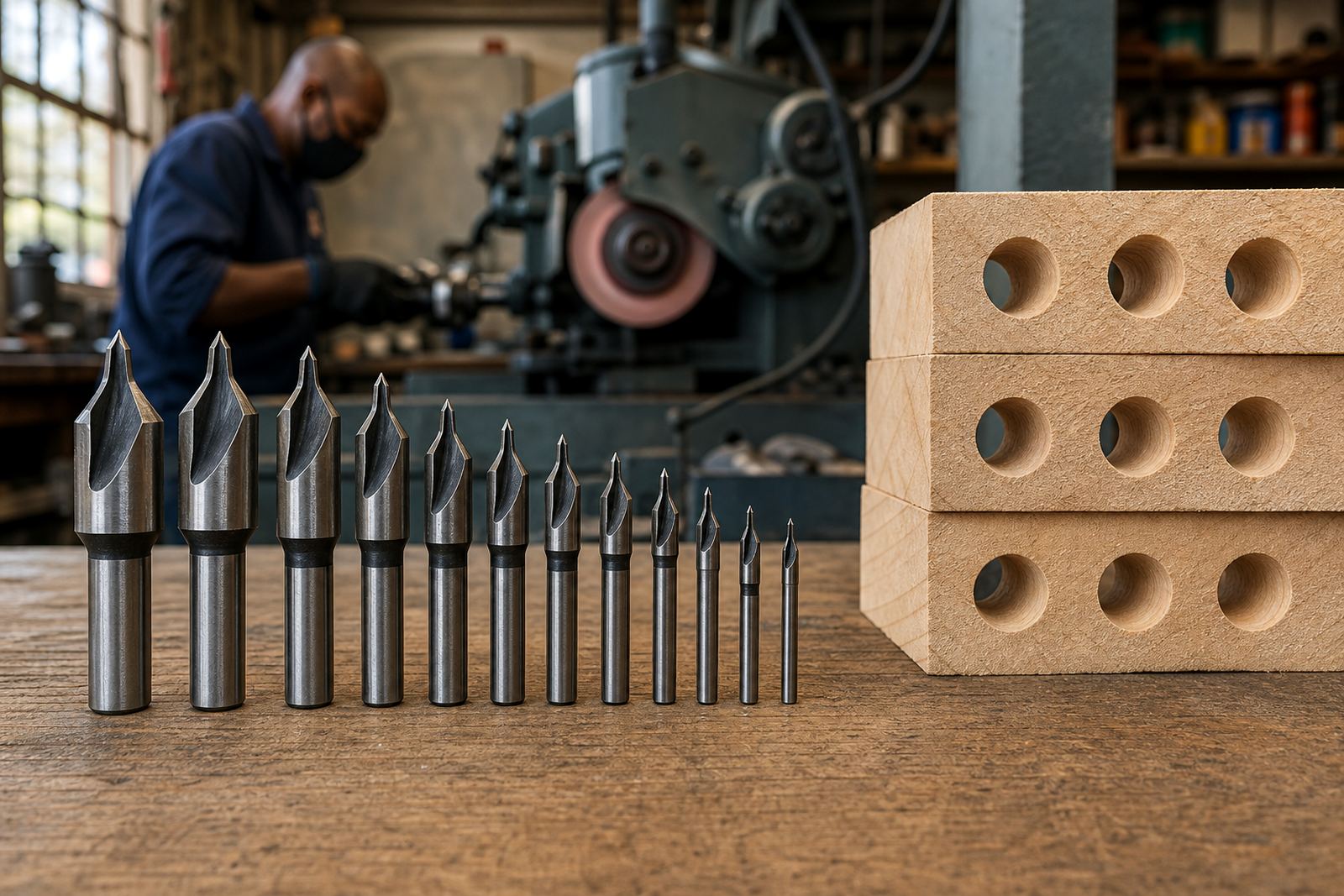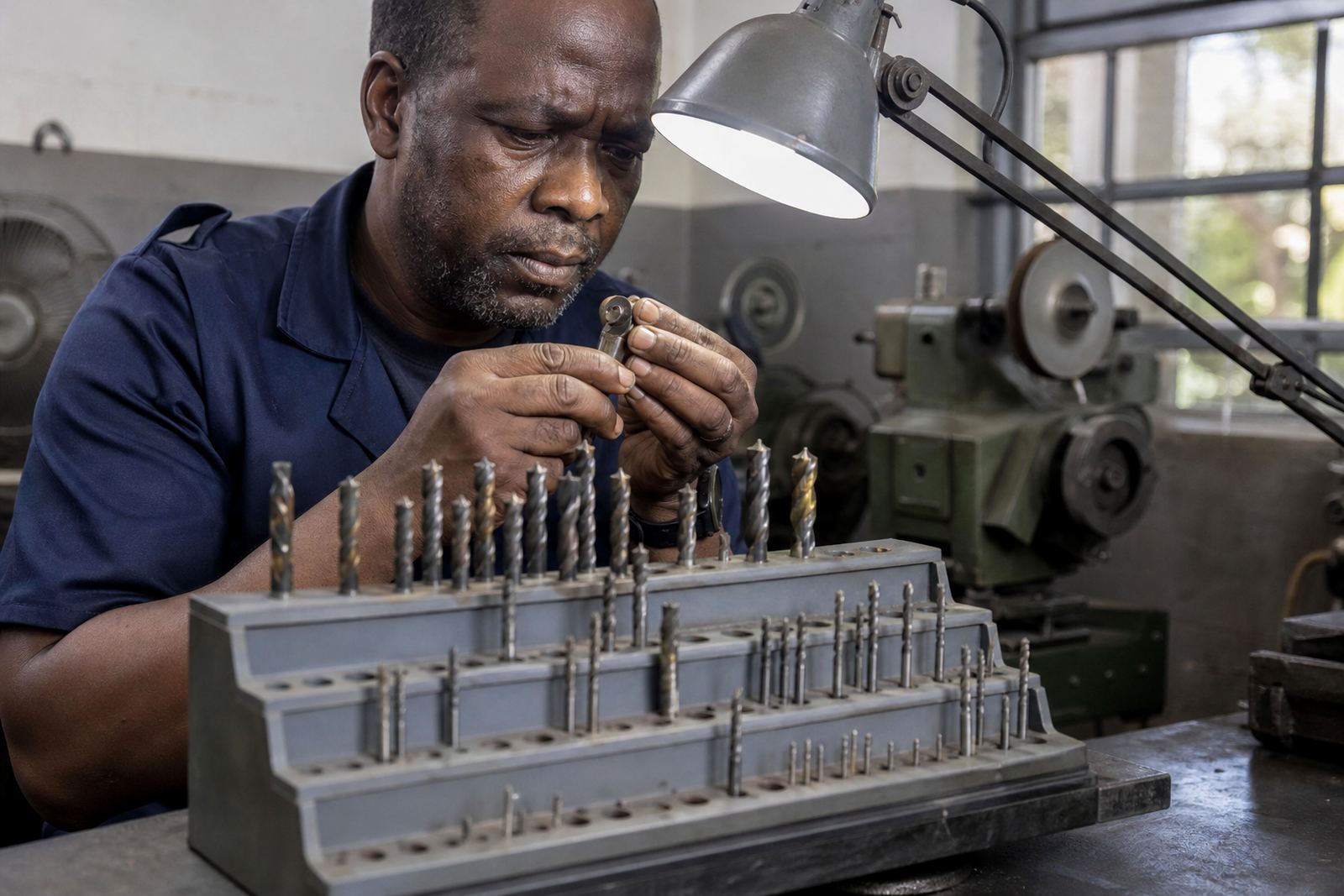
What twist drill sharpening covers
Twist drills are the everyday cutters used for pilot holes, clearance holes, bolt holes and general workshop drilling in steel, mild steel, aluminium and some plastics. Over time the lips go blunt, the chisel edge grows, and the drill starts to rub instead of cut. That is when heat builds up, holes wander and the drill can grab or squeal.
Our sharpening and regrinding service restores the cutting geometry on general purpose twist drills so they cut cleaner and last longer. We work on common jobbing sizes and mixed batches, whether you are running maintenance in Pinetown, doing fabrication in Durban, or sending in drill sets from Johannesburg and Pretoria through our courier collection service.
- General purpose twist drills for hand drills, pillar drills and machine drilling
- Single drills, boxed sets and mixed workshop batches
- Routine sharpening, regrinding and point correction
- Suitable for trade use, plant maintenance and home workshop work
Sizes, points and drill types we handle
We sharpen the usual straight-shank twist drills found in maintenance stores, fabrication benches and site tool kits. Standard workshop drills are often between 1 mm and 20 mm, with many common sizes in between. Larger sizes can be handled as long as the condition allows for safe grinding and correct point formation.
Where needed, we can correct the point for the material and the job. A 118 degree point is common for general steel work, while some jobs call for a different point for better centring or reduced walking. Split point work may be possible on certain sizes, depending on the original drill and how much material must be removed. We check the lips, web thickness and symmetry before sharpening so the drill does not come back cutting off-centre, which is a pain on production jobs.
- Metric twist drills in common workshop and maintenance sizes
- Standard point correction and lip equalising
- Diameter recovery where wear is slight and safe to correct
- Batch sorting and tagging for mixed sets
Where twist drills work best in South African workshops
Sharpened twist drills suit maintenance teams, metal workshops, farms, engineering shops and building contractors who need dependable holes without constantly replacing consumables. In coastal areas like Durban and the greater KZN coast, drills can pick up rust from damp storage, so a proper sharpen and clean-up makes a real difference. In inland shops around Pietermaritzburg, Johannesburg and Pretoria, heat and heavy duty use often blunt the cutting lips long before the drill is fully worn out.
They are also a practical choice for workshops dealing with load shedding, since a sharp drill reduces strain on battery drills and lower powered machines. A blunt drill demands more force, which drains batteries faster and can overheat motor units. For smaller fabrication jobs and repairs, a cleanly sharpened drill helps the operator keep control, especially on thin sheet and bracket work.
Machine, power and site requirements
Twist drill sharpening is done in our workshop in Pinetown and does not require power or gas at your site. If you are sending drills for sharpening, the main requirement is that they are packed safely and identified clearly for return. For mixed batches, we recommend separating good drills from broken or heavily damaged ones so we can assess each piece properly.
There is no installation needed for the customer. If you are using the drills on site, the usual requirements still apply: a suitable drill machine, correct chuck size, a steady feed rate and the right cutting lubricant for the material. A sharpened drill will not fix a bent spindle or a sloppy chuck, so it is worth checking the machine as well, even if the cutting edge is sorted.
- No site power or gas requirement for the sharpening service
- Courier collection available from Pinetown, Durban, Westville, Hillcrest, Pietermaritzburg, Johannesburg, Pretoria and Cape Town
- Suitable for hand drills, pillar drills and machine drilling setups
- Packaging must prevent edge damage during transport
What to check before sending drills for sharpening
Before you book a courier collection, sort the drills by size and condition if you can. Note any that are chipped, burnt, badly worn or snapped. This helps our team decide whether the drill should be sharpened, reconditioned or replaced. For large batches, a simple list of sizes and quantities saves time and avoids confusion when the order comes back.
Check these points before sending them in:
- Shank condition and whether the drill still fits the chuck properly
- Visible chips on the lips or broken corners on the point
- Excessive blueing or burn marks from overheating
- Uneven wear, wobble or a bent body
- Any special point angle needed for the material you drill most often
If a drill has been overheated badly or ground too many times, it may be too short to keep in service safely. We will advise on that during assessment. It is better to know early than to keep fighting with a drill that keeps wandering off line.
Care after sharpening and regrinding
Once your twist drills are sharpened, store them dry and separated by size. In humid coastal conditions, a light rust film can start fast, so wipe them down after use and keep them in a case, tube or labelled tray. On site, avoid throwing drills into a loose toolbox where the edges knock against each other. That is a quick way to blunt fresh work.
For longer life, use cutting fluid on suitable materials, avoid forcing the feed, and back the drill out to clear chips. Let the drill do the work. If you notice squealing, smoke or rising pressure on the feed handle, stop and check the point. A quick inspection saves time and helps prevent another round of burn marks and chipped edges.
- Wipe dry after use and store away from moisture
- Keep sizes separated so edges do not strike each other
- Use cutting fluid where the material calls for it
- Recheck cutting performance before a big job starts
Workshop service options and turnaround
CutTool Sharpening handles twist drills from hobby users, maintenance teams and trade workshops across South Africa. We also offer batch tool tagging, which helps when several technicians are sending in mixed sets from the same site. For larger orders, courier collection can be arranged through our Pinetown base, with regular collections from Durban, Pietermaritzburg, Johannesburg, Pretoria and Cape Town.
If you are running a shop in Westville or Hillcrest, or a fabrication team in the Durban area, you can send in drills with the rest of your cutting tools for sorting and sharpening. Our aim is straightforward: return drills that cut cleanly, stay centred and are ready for the next job, no fuss.
Key facts
| Service type | Sharpening and regrinding for general purpose twist drills |
|---|---|
| Common sizes | Typically 1 mm to 20 mm, subject to condition and safe grinding |
| Point angles | Standard 118 degree and other angles where suitable |
| Material use | Mild steel, steel, aluminium and selected plastics |
| Collection areas | Pinetown, Durban, Westville, Hillcrest, Pietermaritzburg, Johannesburg, Pretoria, Cape Town |
| Order method | Submit an enquiry through the contact page for courier collection booking |