What a compression bit does on laminated board
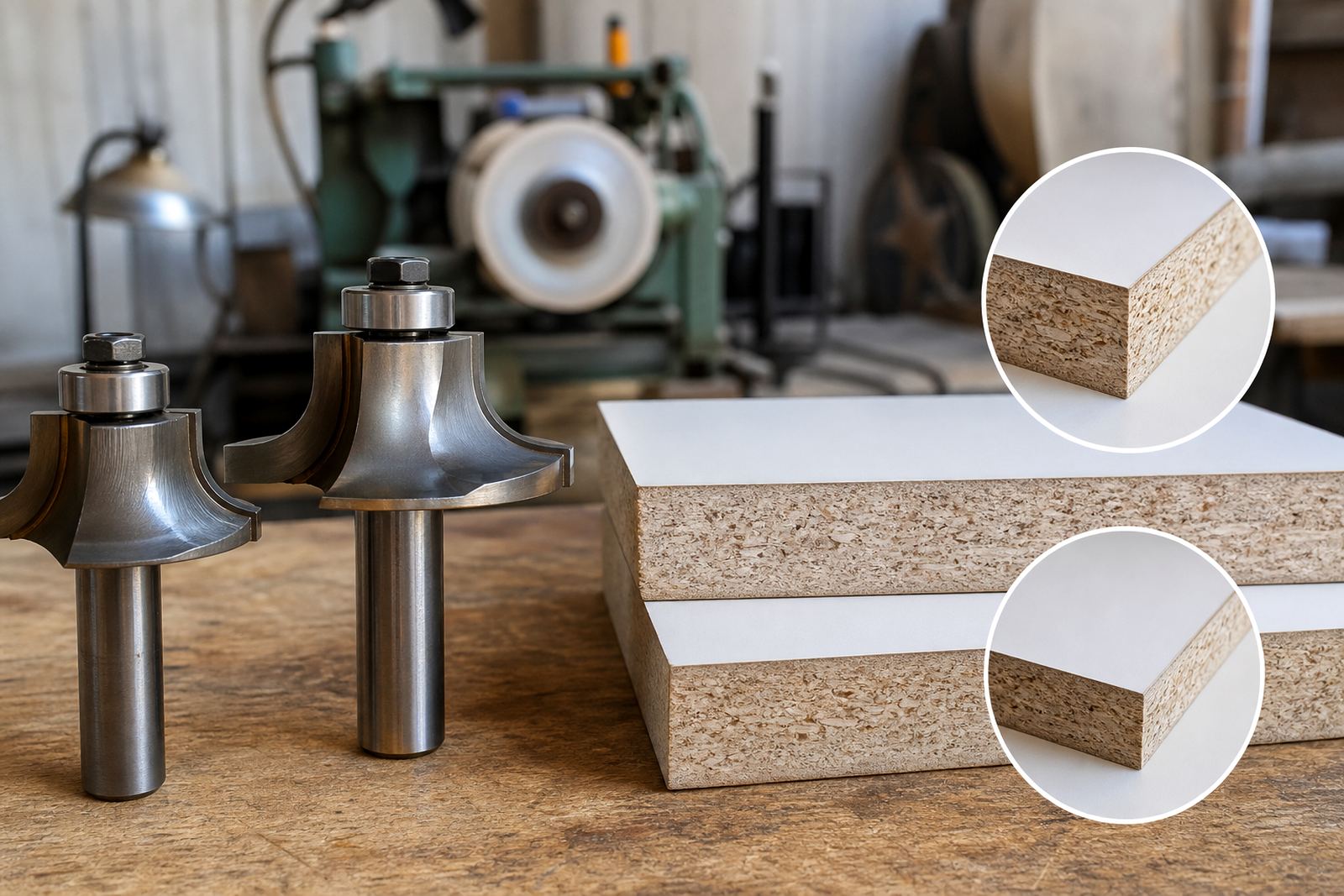
A compression bit is a routing cutter made to reduce tear-out on double-sided laminated sheet materials, melamine boards, laminated plywood and some veneered panels. The cutter uses opposing cutting directions on the top and bottom of the flute set, so the material is pushed toward the centre while it is being cut. That is what helps leave a neater edge on both faces.
These cutters are common in cabinet shops, joinery work and repeat production jobs where edge finish matters. When the cutting edges go dull, you often see fuzzing, burn marks, chips at the entry point and rough edges that need more sanding than they should. A good sharpened bit saves time and gives more consistent results, especially on high-pressure laminate and board that is costly to waste.
We sharpen compression bits by regrinding the cutting edges, checking the form and keeping the bit usable for another service cycle where possible. If the carbide is too short or the body has damage, we will tell you straight up. No point forcing a bit back into service if it will not hold a proper edge.
Sizes, cutter styles and what we can service
Compression bits come in different diameters, flute lengths and shank sizes. Common sizes include 6 mm, 8 mm and 12 mm shanks, with cutter diameters from about 6 mm up to 20 mm and above depending on the job. Some are short pattern bits for light work, while others are longer cutters for deeper passes in CNC routers or handheld machines.
We service straight compression bits, upcut and downcut combinations, spiral compression bits and similar cutters used on sheet goods. For regrinding, the original cutter geometry must be preserved as closely as possible. That means the end result should still cut cleanly without changing the tool’s intended behaviour in the machine. If a bit has been modified before, we check it carefully before we grind.
- Shank sizes commonly serviced: 6 mm, 8 mm, 12 mm
- Typical cutter diameters: 6 mm to 20 mm plus
- Suitable for CNC routers and selected handheld routers
Where compression bits suit the job best
Compression bits suit cutting laminated chipboard, MDF with laminate, plywood, veneered sheet and similar materials where edge quality matters. They are especially useful for cut-outs, panel sizing, drawer parts and repeat cabinet components. On the right material and machine settings, they help reduce edge cleanup and protect the finished face of the board.
They are less suitable for rough timber, dirty material with nails or staples, and jobs where the sheet is badly warped. If the board is moving, the cutter is worn, or the feed rate is wrong, you will still get marks or chips. In other words the bit can only do so much. The rest depends on the machine, the clamp-up and the operator.
For coastal workshops in Durban and Cape Town, regular cleaning matters because humidity can leave resin and fine dust sticking to the cutter body. In inland areas such as Johannesburg and Pretoria, dry dust build-up is the usual issue. Either way, a blunt cutter starts heating up quickly and that is when burning and premature wear begin.
What to check before sending a bit for sharpening
Before you book a compression bit in for sharpening, check the shank size, overall length, cutter diameter and whether the bit has any visible chips or cracks. It helps to know what material it was used on and whether it was cutting cleanly before it dulled. If the tool has been overheated, the carbide may be discoloured and the body could have picked up stress.
Please also check if the bit has been previously shortened, modified or repaired. Some cutters have very little carbide left after repeated regrinds, so measuring the flute and cutting edge is important. We can assess whether the bit is still worth saving or whether replacement is the better call.
- Measure shank diameter and cutter diameter
- Check for chips, cracks and burn marks
- Tell us what material it was cutting
- Let us know if it has been reground before
If you are not sure, send a photo through the enquiry form with the dimensions you have. That saves time and helps us advise on the next step before collection or drop-off.
How we sharpen and regrind compression bits
Our sharpening process starts with inspection. We check the cutting edges, the geometry and the condition of the carbide before any grinding begins. The main aim is to restore the edge without changing the cutting profile more than necessary. That matters because a compression bit depends on its upcut and downcut sections working together.
Depending on the condition of the tool, we may carry out edge sharpening, top grinding, tooth face grinding, angle resetting, burn mark removal and balance checking. If the tool has minor damage, chipped edge recovery may be possible. If the bit is off balance or has uneven wear, we correct it as far as the tool allows so it runs better in the machine.
For workshop planning, collection can be arranged through our courier service from Pinetown, Durban, Pietermaritzburg, Johannesburg, Pretoria, Cape Town, Westville and Hillcrest. That is useful when power cuts, transport delays or busy production schedules make it hard to visit in person. We keep the process practical and tidy.
Caring for compression bits between services
To get better life from a compression bit, clean it regularly and keep resin off the flute area. Use a suitable cutter cleaner and dry the tool fully before storage. If the cutter is left with damp dust on it, especially near the coast, the build-up can harden and make future sharpening less effective.
Store bits in a rack or case where the cutting edges do not knock against each other. Even small knocks can chip the carbide and affect the finish on the next job. Check collets and holders as well. A worn collet can create vibration, which leads to rougher edges and faster wear on the cutter.
On CNC and handheld machines, keep feeds and speeds within the maker’s guidance for the material. Too much heat is a common cause of dulling. If you are cutting laminated sheet all day, inspect the cutter more often instead of waiting for a bad finish to show up. That small habit can save a lot of scrap.
Key facts
| Product type | Compression bit sharpening and regrinding |
|---|---|
| Common shank sizes | 6 mm, 8 mm, 12 mm |
| Typical cutter diameters | 6 mm to 20 mm plus |
| Materials suited to | Laminate, melamine, veneered plywood, sheet goods |
| Service options | Edge sharpening, angle resetting, burn mark removal, balance checking |
| Collection area | Pinetown, Durban, Pietermaritzburg, Johannesburg, Pretoria, Cape Town and nearby areas |