What a flush trim bit does in the workshop
A flush trim bit is used when one material must be cut level with another, usually after routing a pattern, laminate, edging or a template. The bearing follows the guide and the cutters remove the overhang, so the final edge is straight, even and ready for the next step. When the bit is sharp, the cut follows the line properly and the work is less likely to burn, chatter or chip out.
These bits are common in cabinet shops, signmaking, fit-outs, joinery and general woodworking. They are often used on hardwood, ply, MDF, melamine faced board and some plastics. If the cutters are worn, the bearing is rough or the bit has been overheated, the tool starts to pull fibres instead of slicing them cleanly, and the template work becomes harder to control.
Sizes, cutter styles and how we service them
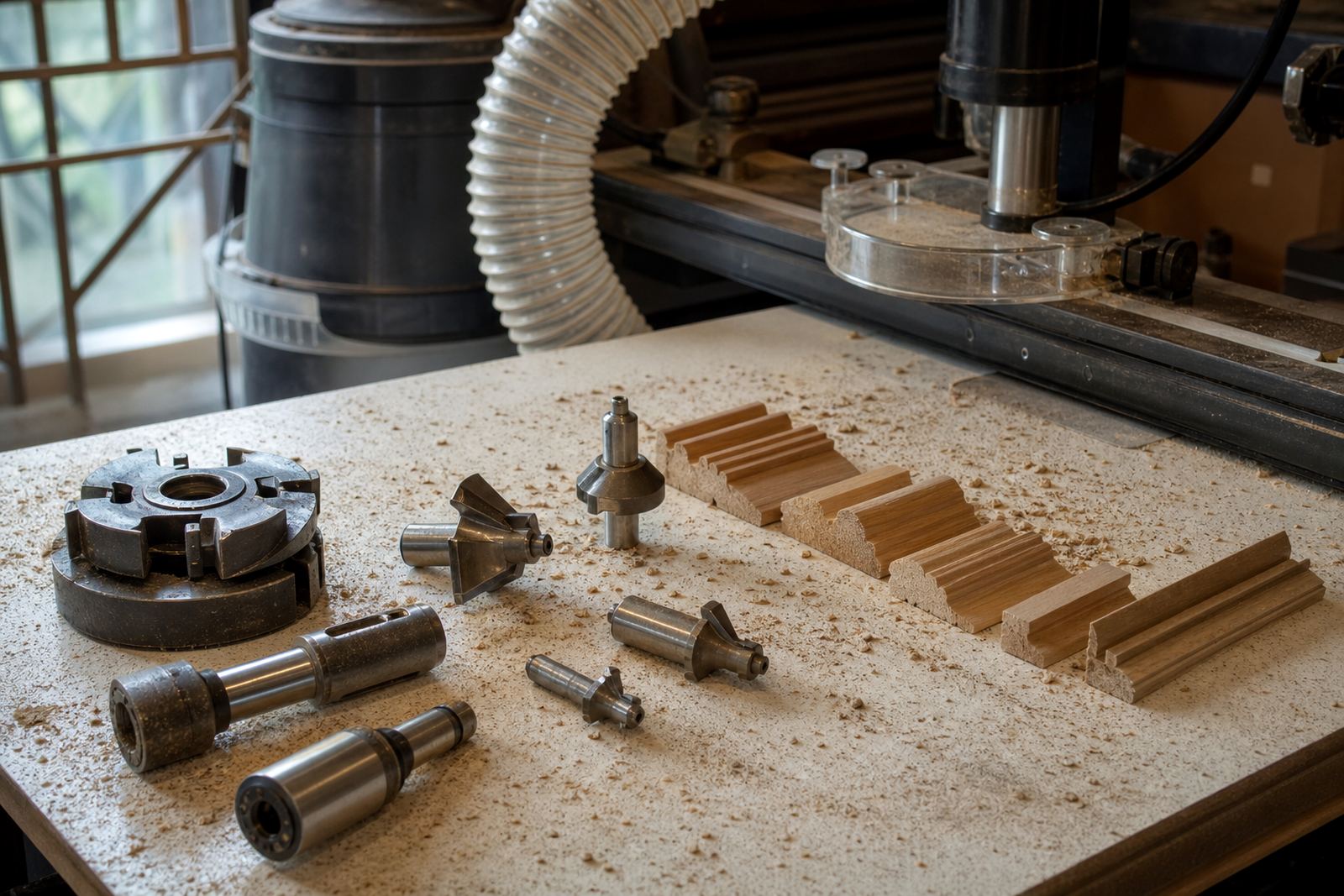
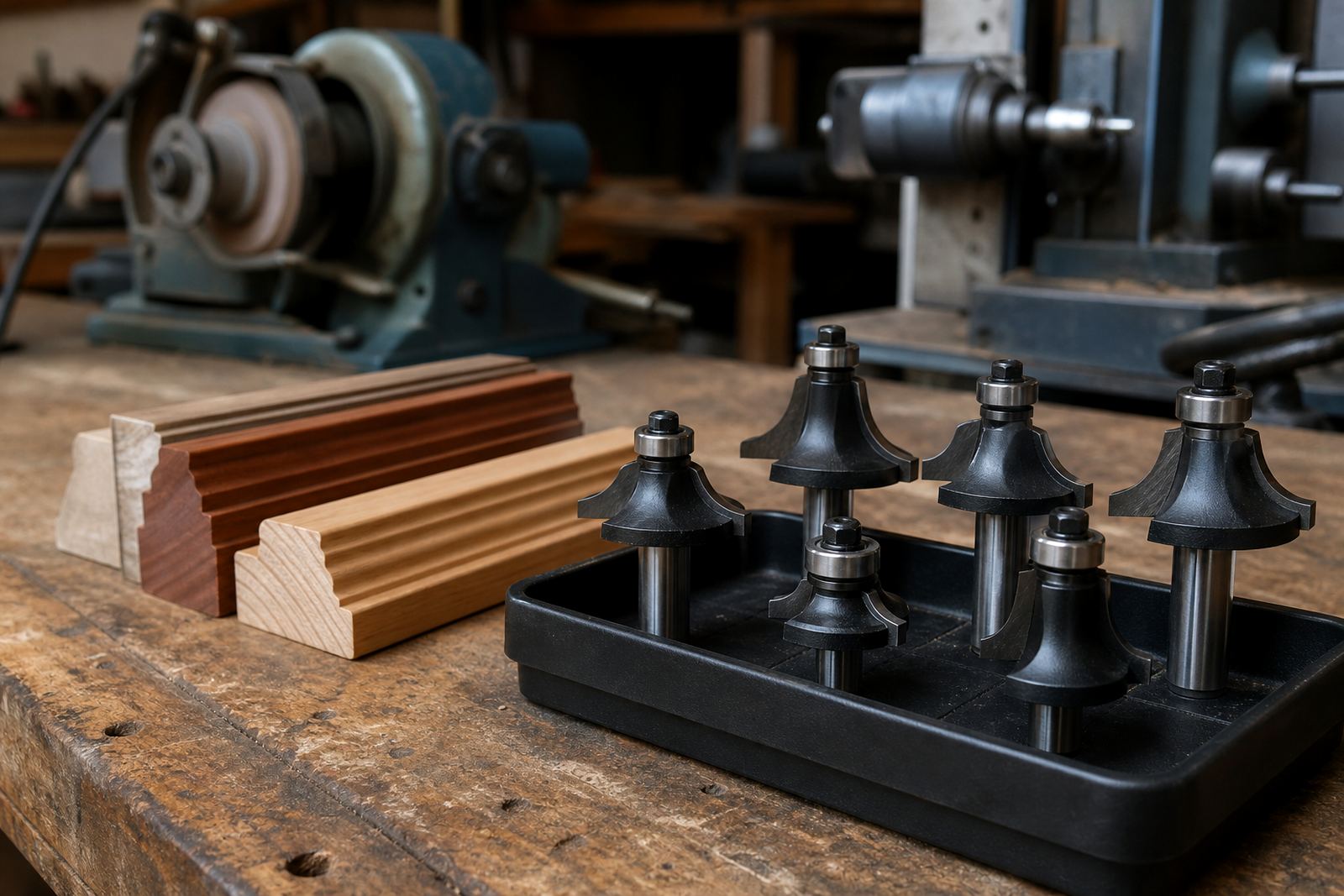
Flush trim bits come in a few practical sizes, from small handheld router bits through to larger pattern bits used in table work. Common cutter diameters range from about 6 mm to 19 mm, with cutting lengths that vary from short trim jobs to deeper passes on thicker material. We service straight flush trim bits, bearing-guided bits, top-bearing and bottom-bearing versions, and bits with carbide tips or replaceable cutters where applicable.
- Small bits for edging, laminate trimming and light template work
- Medium bits for cabinet parts, panels and fascia pieces
- Longer cutters for thicker boards and deeper flush passes
- Top-bearing or bottom-bearing layouts depending on the job
- Single-bearing and double-bearing options for different setups
For regrinding, we check the cutter profile, bearing condition and shaft wear before work starts. If the bit has been run too hot or has picked up damage from a nail, clamp or screw, we assess whether edge recovery is practical. In some cases the bit can be brought back properly, in others it is safer to replace it.
Where flush trim bits work best
Flush trim bits suit workshop work where the finish must match a line or template exactly. They are used on router tables, handheld routers and edge trimming setups. In Durban and other coastal areas, moisture in the air can affect timber movement, so a clean, accurate trim is important when fitting panels, doors and mouldings. In Gauteng, where many shops run long production hours, a sharp bit helps keep the cut quality consistent from the first panel to the last.
These bits are also useful for repeated batches of parts where every piece must match. If you are working with small runs, repair work or one-off custom jobs, a correctly sharpened bit saves time at the machine and reduces sanding afterwards. That is especially useful during load-shedding, when workshop time can be short and every pass counts.
- Cabinet and kitchen manufacturing
- Shopfitting and display work
- Joinery and furniture repairs
- Pattern and template routing
- General woodworking and hobby use
Machine set-up, power needs and safe use
Flush trim bits themselves do not need power when sharpened or reground, but they depend on the router or spindle being correctly set up once they go back into service. Check the collet size, shank fit and bearing movement before use. A loose shank or worn bearing can spoil the cut, even if the cutters are sharp. Make sure the machine is switched off and isolated before fitting or removing the bit, especially in shared workshops where more than one person uses the same equipment.
For best results, keep the feed rate steady and avoid forcing the bit through hard knots or thick glue lines. On smaller handheld routers, too much pressure can overheat the bit and shorten its life. On table-mounted work, a clean fence setup and proper hold-downs help keep the piece stable. If your shop runs through outages and generator changeovers, let the router come up to full speed before loading the cut so the bearing and cutters start properly.
Care, cleaning and regrinding intervals
Flush trim bits last longer when they are cleaned after use and stored dry. Resin, glue and fine dust can build up on the cutters and bearing, which raises friction and affects the finish. Wipe the bit down, keep bearings free and check for nicks before the next job. In coastal conditions, a bit left in a damp box can surface rust quicker than expected, so storage matters.
Signs that it is time for sharpening or regrinding include burnt marks, rough edges, increased sanding, more chatter and the need to push harder through the cut. If a bearing starts running badly, it can also make the bit feel uneven. For busy workshops in Pinetown, Durban, Johannesburg, Pretoria, Cape Town, Westville, Hillcrest and Pietermaritzburg, batching a few bits at once is often more practical than sending them one by one.
- Clean resin and dust off after every job
- Store in a dry holder or bit case
- Check the bearing for play or noise
- Watch for burn marks and tearing
- Send in matched batches where possible
What to check when you send in an order
When ordering sharpening for flush trim bits, send clear details so we can assess the job properly. Tell us the shank size, cutter diameter, overall length and whether the bit is top-bearing, bottom-bearing or double-bearing. If the bit has replaceable cutters or a special profile, include that too. It helps to note the material you cut most often, since a bit used on melamine needs a different finish expectation from one used on hardwood.
Also mention whether the issue is dullness, chipping, burning, balance or a damaged bearing. If the bit has been dropped or hit by a hidden fastener, say so upfront. That lets us check for tooth face damage, angle issues and possible diameter correction. Our team in Pinetown handles courier collections across South Africa, and clients can send an enquiry through the contact page to arrange the next step.
- Shank size and overall bit length
- Cutter diameter and cutting length
- Bearing type and condition
- Material being cut most often
- Nature of the fault or wear
Key facts
| Product type | Flush trim router bit sharpening and regrinding |
|---|---|
| Typical sizes | About 6 mm to 19 mm cutter diameters, depending on the bit |
| Common fits | Top-bearing, bottom-bearing and double-bearing styles |
| Materials serviced | Carbide-tipped flush trim bits and similar router bits |
| Use cases | Template work, edging, laminate trimming, cabinet and joinery work |
| Service area | Pinetown with courier collection across South Africa |