What a Brad Point Drill Does in the Workshop
A brad point drill is made for clean, accurate hole starting in wood, plywood, MDF and many laminated boards. The centre spur locates the drill before the cutting lips open the hole, which helps reduce wandering and gives a neat finish with less tear-out. When the point wears down, the drill starts to skate, burn, or cut a rough edge instead of a crisp entry.
We sharpen brad point drills to restore the centre accuracy and cutting geometry that makes them useful in the first place. This includes the main cutting lips, the centre spur and the outside spurs where needed, so the drill goes back into service with a proper lead-in. In many cases the drill can be saved even when the point has been chipped or dulled from repeated use.
These drills are common in joinery shops, cabinet work, sign making and general timber drilling. They are also useful for hobby users working on furniture, shelving and light shop fittings. If the hole starts clean and in the right place, the rest of the job is easier and you waste less material.
Sizes, Shanks and Typical Grinding Options
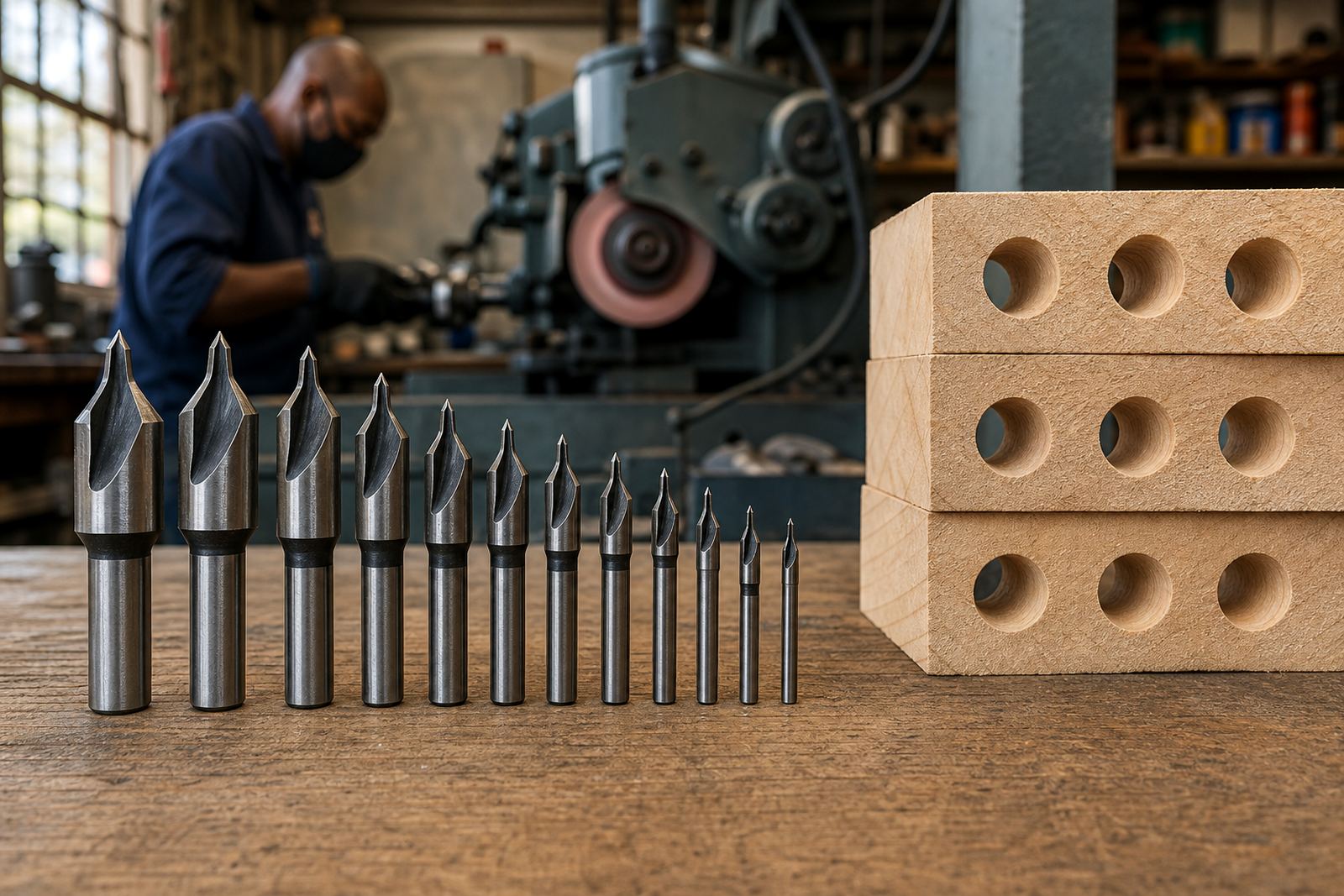
We handle common brad point drill sizes from small precision bits through to larger workshop sizes. The exact size range depends on the shaft condition and the amount of wear at the cutting point. If the drill has been shortened by previous regrinds, we check whether enough cutting length remains for safe use.
- Small diameter drills for fine timber work and pilot holes
- Mid-range sizes for cabinet panels, framing and general joinery
- Larger diameters for fixture holes, dowel work and hardware fitting
- Round shank and hex shank styles, where the condition allows regrinding
Grinding work can include restoring the centre point, cleaning up the cutting lips and correcting the tip angle where it has gone out. If the drill is hitting a hard knot or has been damaged on a metal fastener, we look for chipped edges, heat colouring and uneven wear. A drill that has gone blunt on one side usually leaves a poor hole and can pull off line.
For very worn bits, we may recommend diameter correction or a partial reprofile where possible. That helps bring the drill back to a usable state rather than leaving it with one good edge and one weak edge. Not every bit can be saved, but many can still do useful work after proper regrinding.
Where Brad Point Drills Work Best
Brad point drills are best where clean entry and accurate placement matter. They suit softwood, hardwood, plywood, particleboard and MDF, especially when you need a neat finish with less breakout at the face of the board. They are commonly used for hinge work, shelf pins, dowel holes and general furniture assembly.
They are less suitable for stone, concrete and most metals. If a drill has been pushed into the wrong material, the point may be overheated, chipped or flattened. In coastal areas like Durban and Pinetown, humidity can also affect storage and cause light corrosion on the shank or cutting edges if tools are left exposed for too long.
If you work in a small workshop with intermittent power, it helps to keep your drill sets organised and marked. That way you can identify which sizes are regularly used, which ones need attention, and which bits are worth sending in for sharpening as a batch.
- Cabinet and furniture making
- Shopfitting and joinery
- Maintenance and repair work
- Hobby woodwork and home projects
Workshop Care, Storage and Service Intervals
To get longer life from brad point drills, keep them clean and dry after use. Sawdust, adhesive residue and moisture all shorten cutting performance. A light coat of rust preventative helps, especially if the tools are stored in Durban, Cape Town or other coastal areas where air moisture is higher most of the year.
Do not force a blunt drill through timber. That usually causes burn marks, poor chip clearance and extra heat, and the point can lose its shape quickly. If you notice the drill needing more pressure, cutting off centre, or leaving fuzzy edges around the entry hole, it is time for service.
We also recommend checking each bit after contact with nails, screws or hidden fixings. Even a small chip can throw the hole off. For workshops running repeat jobs, batch servicing keeps the set consistent and makes it easier to manage spares when one bit is out for regrinding.
- Store drills in a rack or labelled case
- Wipe off resin, dust and moisture after use
- Send in dull or chipped bits before they fail completely
- Keep sizes grouped for easier batch tool tagging
What We Check Before Sharpening
When you send brad point drills in, we look at more than just the tip. We check the shank, overall straightness, wear on both cutting lips, spur condition and any sign of overheating. If the drill is bent, badly shortened or cracked, that affects whether it can be brought back safely.
It helps if you can tell us what material the drill has been used on, and whether the problem is poor centring, rough entry, slow cutting or burning. That gives us a better idea of the wear pattern. If a set has mixed sizes and conditions, we can separate them for individual attention rather than treating everything as if it were the same.
For courier collection, pack the bits securely so the points do not knock against each other in transit. A small labelled box or wrapped bundle is usually enough. Please also note any special instructions, such as keeping certain sizes apart or checking a batch for matching geometry.
- Size and shank type
- Visible chips, bends or rust
- Type of material drilled
- Whether you need batch tagging for returned sets
Courier Collection Across South Africa
Based in Pinetown, we receive brad point drills from Durban, Westville, Hillcrest, Pietermaritzburg, Johannesburg, Pretoria and Cape Town, as well as smaller towns and industrial areas across South Africa. Courier collection is useful for trade users who cannot afford long downtime, and it works well for mixed batches of drills, saws and router bits.
Our team manages incoming collections, sorting and turnaround planning from the workshop side so your tools come back ready for use. For busy sites, this is often easier than trying to replace a full set of specialist bits every time one or two go blunt. If your work depends on clean holes, it makes sense to keep the drill set in proper order.
Clients reach us through the enquiry form on our contact page. If you are unsure whether your brad point drills are worth sharpening, send a clear note with the batch and we will advise on the condition. A decent bit can do a lot more work after proper sharpening, and in many cases you will notice the difference as soon as it goes back into the timber.
Key facts
| Service | Brad point drill sharpening and regrinding |
|---|---|
| Typical use | Clean entry holes in timber, plywood, MDF and laminated board |
| Size range | Small precision bits through to larger workshop diameters, subject to condition |
| Common faults | Dull point, chipped spur, burning, poor centring, rough entry |
| Collection | Courier collection available across South Africa |
| Base | Pinetown, KwaZulu-Natal |