What Hinge Boring Bits Do In Cabinet Work
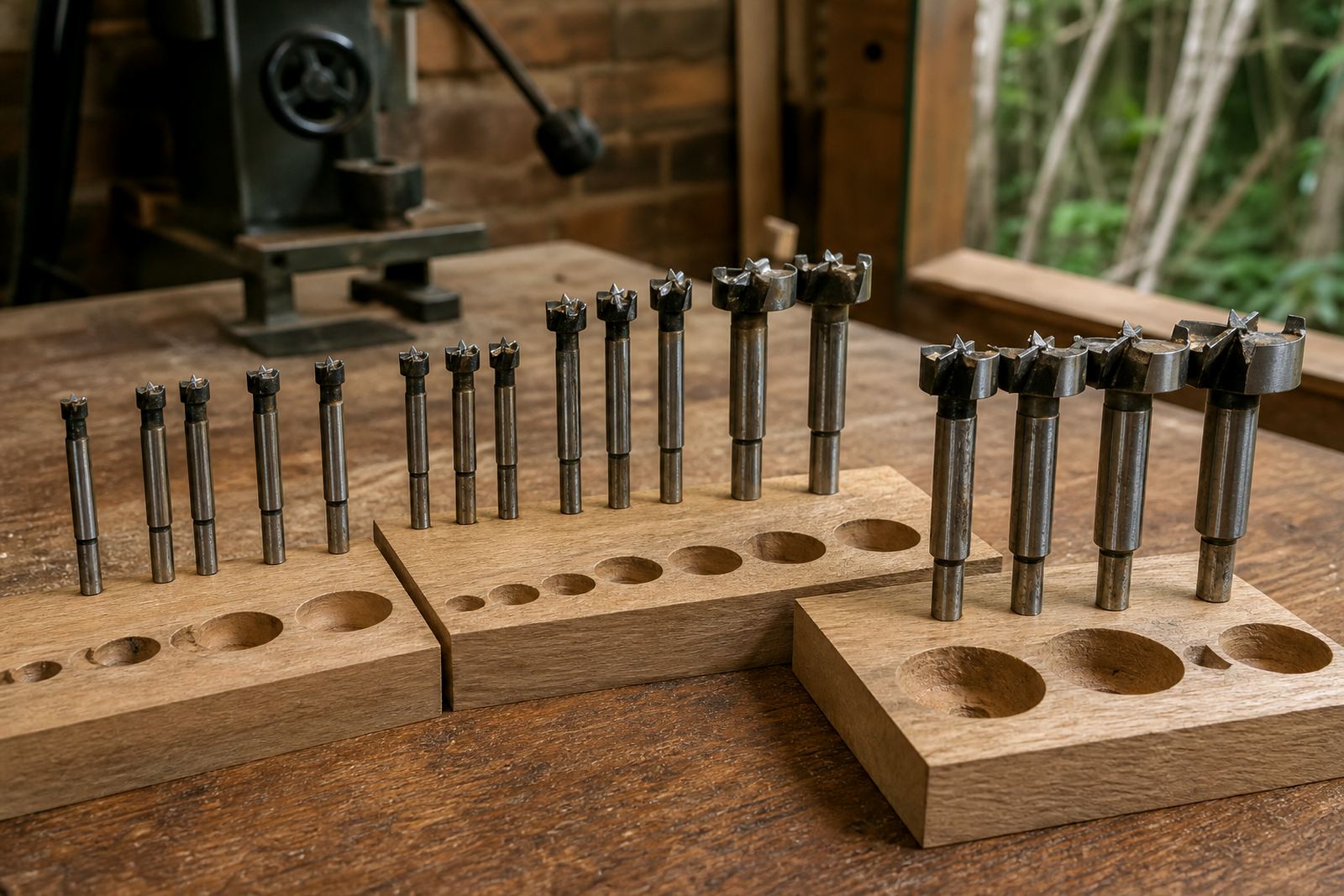
Hinge boring bits are used to cut the cup recess for concealed cabinet hinges in timber, MDF and board. On site or in the workshop, they have to enter cleanly, cut flat and leave a consistent depth so the hinge sits properly without tearing the face of the panel. When the cutting lips go dull, you start seeing burn marks, rough cups and more pressure on the drill press or line boring machine.
We sharpen and regrind hinge boring bits used in cabinet door preparation, including bits that have picked up small chips, lost their cutting angle or started to cut off centre. A bit that is still serviceable can often be brought back to a proper working edge with the right grind. That saves money, especially if you are running batches of doors in Pinetown, Durban, Westville, Hillcrest or sending tools in from Johannesburg and Cape Town.
For cabinet shops working through load-shedding, a clean-cut bit matters even more because you want less rework when power is back on and production must move quickly. One dull bit can slow the whole run down, and a slight wobble is enough to spoil your hinge alignment.
Sizes, Shanks And Bit Styles We Handle
Hinge boring bits come in a few common sizes and styles, depending on the hinge system and the machine being used. Most cabinet hinge cups are bored at 26 mm, 35 mm or similar, with shank sizes that may be 8 mm, 10 mm or 1/4 inch. We work on standard hinge boring bits used in hand held machines, drill presses and dedicated cabinet machinery, as long as the cutter can be safely measured and reset for regrinding.
If the bit has been re-ground several times already, diameter loss becomes important. We check whether the bit can still be used for the intended cup size and whether the centre point remains accurate. Some bits can be brought back for smaller tolerance work, while others are better kept for rougher jobs. That judgement is part of the service.
- Common cup diameters: 26 mm, 35 mm and related cabinet hinge sizes
- Typical shank sizes: 8 mm, 10 mm and 1/4 inch
- Suitable for timber, MDF and board used in cabinetry
- Works for workshop use, installation teams and production runs
Where A Reground Bit Gives Better Results
A properly sharpened hinge boring bit suits cabinet door drilling, face frame preparation, wardrobe work, shopfitting and small production runs. It is especially useful where clean cup edges matter and you need repeatable depth from door to door. If the bit is used on veneered board or moisture-sensitive material, sharpness helps reduce breakout and keeps the finish neater.
We often see bits that have been pushed too hard on high speed machines, which can leave heat marks or glaze the cutting edge. In KwaZulu-Natal coastal conditions, tools stored in a workshop with humidity can also pick up surface rust more quickly, so regular checking helps. If the bit has chipped on one side, or the pilot point is no longer leading true, the result is usually a crooked recess or overcut on one side.
Our sharpening is practical for both full-time cabinet makers and DIY users who only need a few bits restored before starting a kitchen or built in cupboard job. It also suits installers moving between sites in Durban, Pretoria and Cape Town who need their tools ready when they arrive, not after a day of sorting out rough cuts.
Installation, Machine Use And Power Needs
Hinge boring bits are fitted into the machine collet or chuck according to the shank size, then set to the required depth stop. Because these bits are used for accurate cup drilling, the machine must run with minimal play in the spindle and the workpiece must be clamped properly. A sharpened bit will still cut badly if the machine is loose or the door is not supported flat.
Most hinge boring work uses electric machines rather than gas. There is no gas requirement for the bit itself. What matters is stable power, correct speed and a clean feed. If you are using a drill press in a workshop with unstable supply or generator backup, keep the speed steady and avoid forcing the cut. Too much feed pressure causes overheating and shortens the life of the cutting edge.
- Check spindle runout before fitting the bit
- Use the correct depth stop for hinge cup depth
- Clamp doors and panels to prevent movement
- Keep speed and feed consistent for a cleaner bore
Care, Regrinding Intervals And Wear Signs
To keep hinge boring bits working properly, clean them after use and store them dry. Resin, dust and fine board particles build up fast, and that build up can make a sharp tool feel dull long before the edge is actually finished. Wipe the bit down after each job, especially in humid areas near the coast where condensation can leave the steel exposed overnight.
Bring the bit in for sharpening when you notice burning, rough cup walls, chipping around the edge or the need to push harder than usual. If the holes start varying in depth or the hinge cup no longer sits flush, the bit may need more than a light touch-up. We check for edge damage, point wear, balance and diameter correction if the bit has drifted from spec.
For regular cabinet production, many workshops send batches together. That makes it easier to track wear and keep spare bits moving through the job. Batch tool tagging is also available, so your bits are returned clearly marked and easier to sort in a busy workshop.
What To Check Before You Order Sharpening
Before you send hinge boring bits in, check the cup diameter, shank size, overall length and whether the bit has any missing carbide, severe heat damage or bent sections. If the pilot point is damaged, tell us because that affects the way the bit cuts and the type of regrind needed. If you use a specific hinge system or cabinet standard, include that detail with the order.
It helps to know how the bit is used too. A bit on a production line in Pinetown may need a different finish from one used for occasional fitting work in Hillcrest. If you are sending multiple tools, keep the order list simple and clear so each item is matched correctly when it comes back. A few minutes of checking now can save a lot of confusion later.
- Confirm cup diameter and shank size
- Note any chips, cracks or heat marks
- Say whether the bit is for hand use or machine use
- Include the job type: kitchen, wardrobe, shopfitting or repair work
- List any special tolerance or finish requirements
How CutTool Handles Hinge Boring Bit Orders
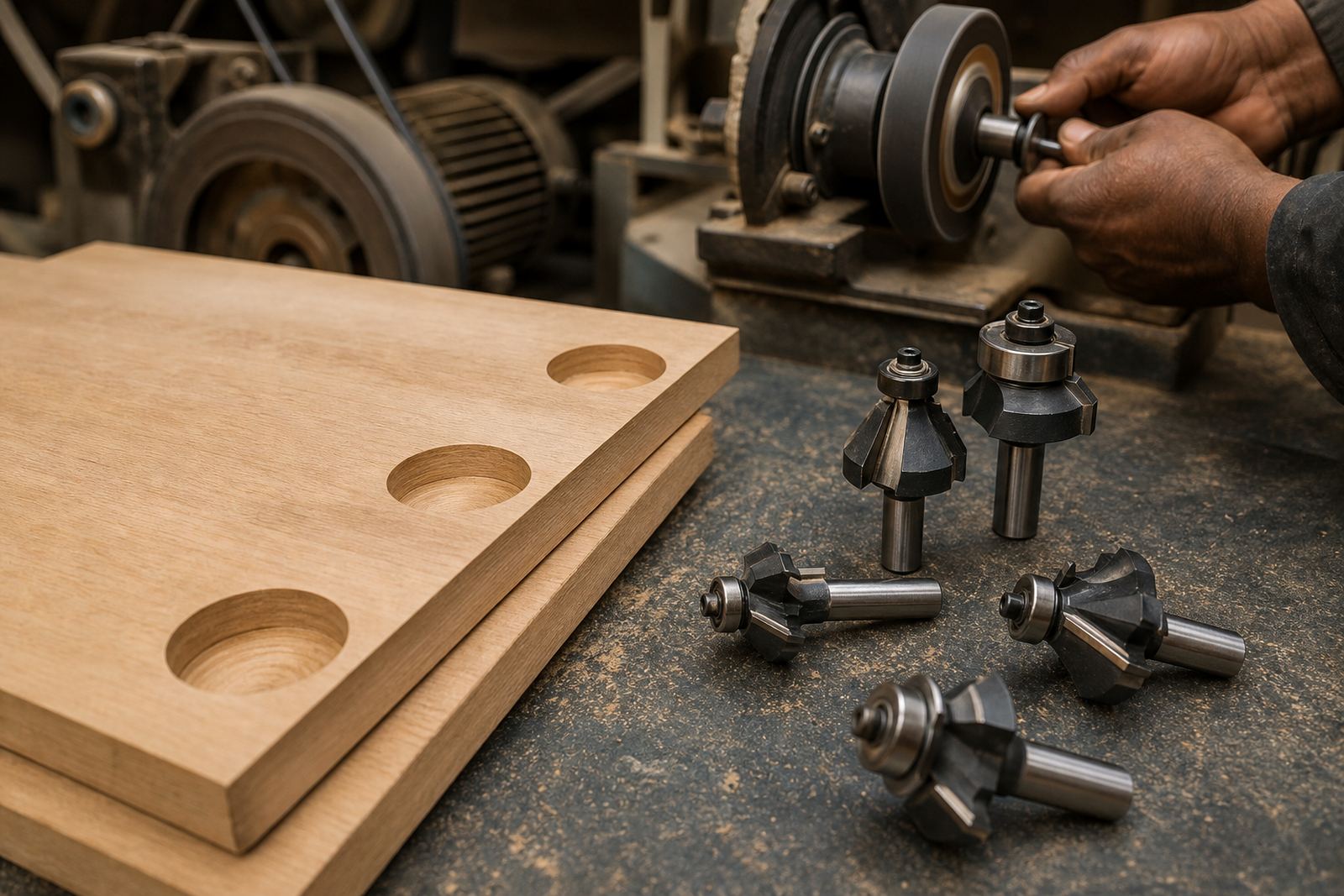
CutTool Sharpening works from Pinetown, KwaZulu-Natal and serves clients across South Africa through courier collection. We handle sharpening, regrinding and related checks for saws, drills and router bits, with hinge boring bits treated as part of the cabinet tool set that needs accurate, repeatable work. From Durban and Pietermaritzburg to Johannesburg, Pretoria and Cape Town, we keep the process practical for trade users and smaller workshops alike.
Our team includes Sibusiso Mthethwa, Ayesha Naidoo, Thabo Dlamini, Johan van Zyl, Lerato Molefe and Nokuthula Khumalo. That means your enquiry, collection, sharpening and return are handled by people who work with cutting tools every day. If you need training or a starter kit for maintenance, we can assist with that as well. For hinge boring bits, the goal is simple: cleaner cuts, fewer rejects and tools that stay useful for longer.
Key facts
| Product | Hinge boring bits for cabinet door hinge cup drilling |
|---|---|
| Common sizes | 26 mm, 35 mm and related cabinet hinge diameters |
| Shank sizes | 8 mm, 10 mm and 1/4 inch |
| Suitable materials | Timber, MDF and board used in cabinetry |
| Service type | Sharpening, regrinding, edge recovery and diameter correction |
| Collection area | Courier collection from Pinetown to Durban, Westville, Hillcrest, Pietermaritzburg, Johannesburg, Pretoria and Cape Town |