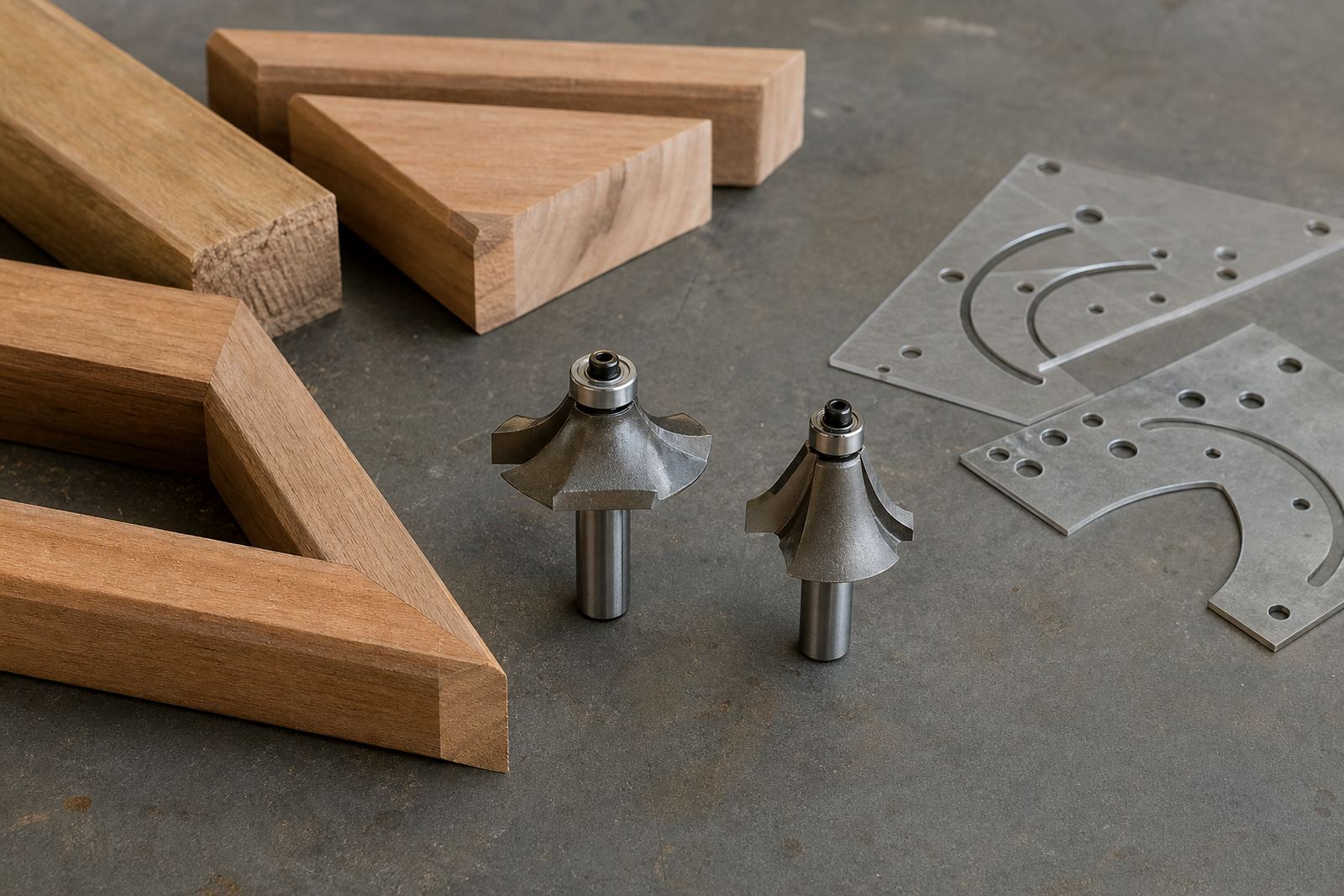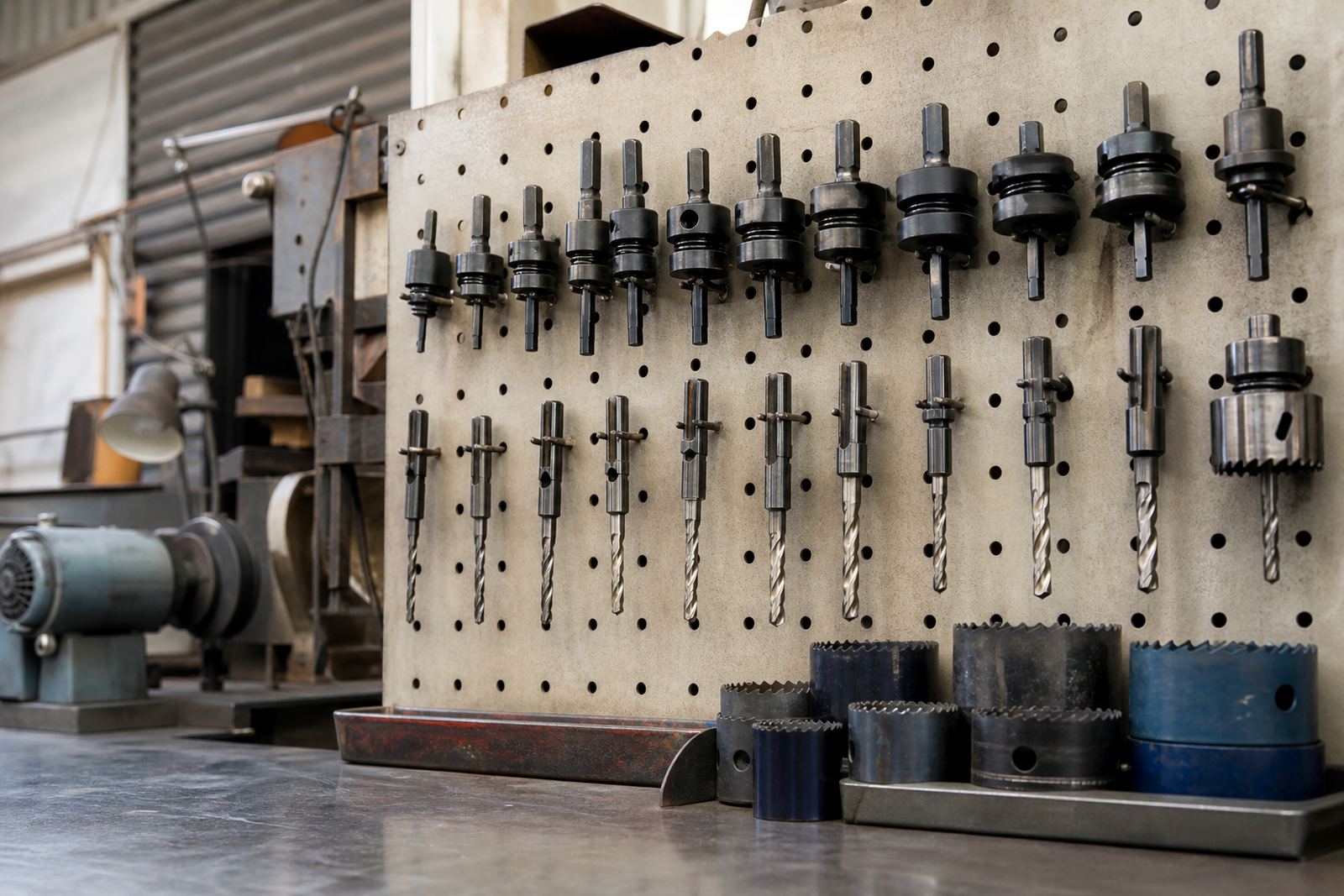

What Forstner bits do in the workshop
Forstner bits are used when you need a flat-bottomed hole with a clean wall and controlled entry. They are common for hinge cups, dowel recesses, furniture fittings, concealed fixings and neat timber boring where a standard twist drill would wander or tear the grain. When the cutting lip dulls, the bit starts to burn, chatter or leave a rough base, and the drill has to work harder than it should.
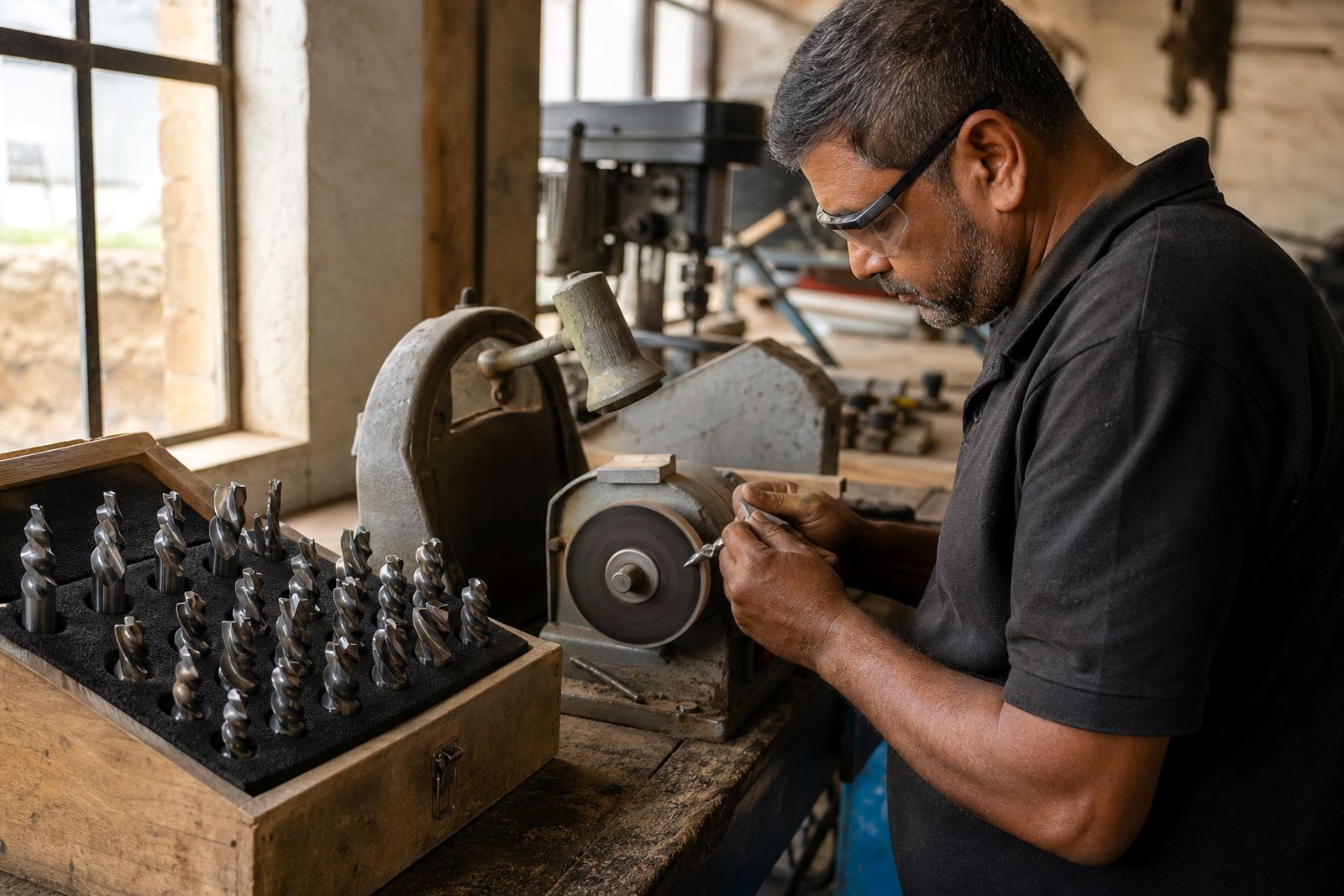
Our sharpening and regrinding service restores the cutting face and rim so the bit cuts cleanly again. We handle individual bits and batches from trade users, joiners, cabinet shops and home workshops. If your bits have been running hot in hardwood, pine, MDF or board, a proper regrind can bring them back into service without wasting good steel.
Sizes, shanks and edge styles we service
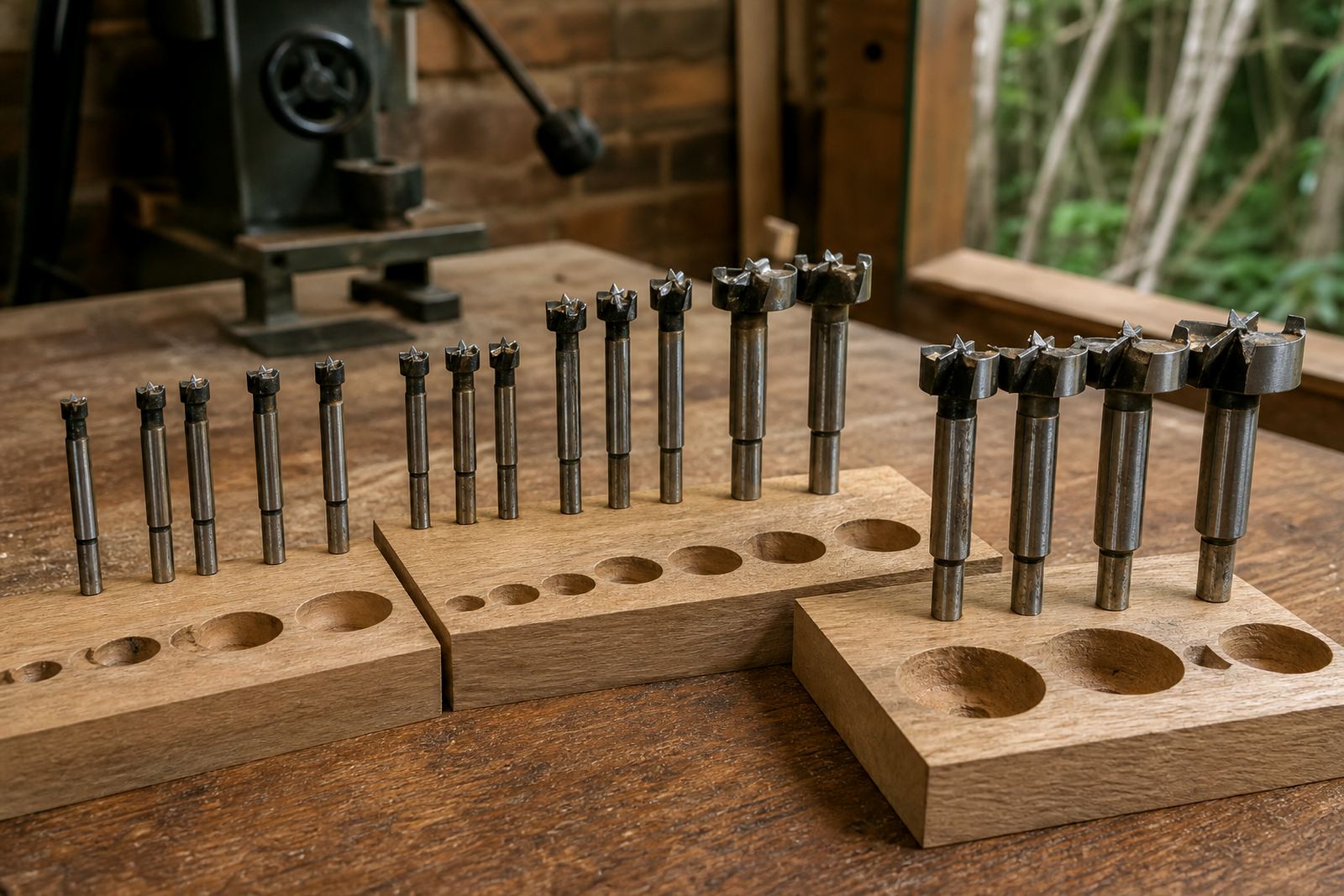
Forstner bits come in a wide range of diameters and shank sizes. We commonly service smaller bits for hinge work, medium sizes for fittings and larger diameters used in cabinetry, joinery and special drilling jigs. The exact size matters because it affects feed pressure, hole quality and how much material can be removed during regrinding.
- Typical diameters from small cabinet sizes through to larger workshop sizes
- Straight shank and hex shank styles, where the original geometry allows
- Bits with centre point, rim cutters and internal cutters
- Single bits, mixed sets and repeat batches for trade orders
- Units used in hand drills, drill presses and pillar drills
If a bit has a chipped edge or the cutting lips are uneven, we assess whether a standard sharpen will do the job or whether diameter correction is needed to bring the cutting path back into line. That helps keep the hole true and prevents one side from digging harder than the other.
Where Forstner bits suit the job
These bits suit clean timber boring where appearance and depth control matter. They are a practical choice for cabinet doors, shelving, furniture assembly, hinge recesses, speaker openings in timber panels, jigs, and detailed joinery work. They are less suited to random use in metal or hard composite materials, as that shortens edge life and can damage the point.
In coastal areas such as Durban and Pinetown, rust can form quickly on stored tools, especially in closed toolboxes and work vans. In dry inland conditions such as Pretoria or Johannesburg, dust build-up and poor storage can be the bigger issue. Either way, a bit that is stored properly and sharpened before it becomes badly worn lasts longer and cuts better.
- Best for flat-bottomed holes and accurate depth control
- Suitable for softwood, hardwood and many board materials
- Used where a neat finish matters more than speed alone
- Helps reduce tear-out around the hole edge when sharp
Installation, machine power and operating needs
Forstner bits do not need special fitting work beyond the correct shank size and a drill setup that holds the bit firmly. They are used in hand-held drills or drill presses, but the best results usually come from a steady drill press, especially on larger diameters. A good setup keeps the bit square to the workpiece and reduces wandering at the start of the cut.
Power needs depend on bit size, timber density and feed rate. Small bits can run comfortably in many standard drill setups, while larger diameters need more torque and a slow, controlled feed. In workshops affected by load-shedding, it is worth checking that your backup power supply can handle the drill press start-up load, because a weak supply can cause poor cutting speed and extra heat. For hand drilling, firm clamping of the workpiece is important, otherwise the bit can pull or mark the surface.
We do not supply installation parts, but we can advise on what to check before sending bits in for service, especially when the same set is used across different machines or sites.
Care and servicing between sharpening cycles
A sharp Forstner bit should cut with light pressure and leave a clean hole edge. Once it starts smoking, squealing or leaving fluffy fibres, it is time to stop and inspect the edge. Ongoing care helps you avoid unnecessary regrinding and keeps the tool working to the same standard from one job to the next.
Simple care steps make a difference, particularly in busy shops where bits are used daily and tossed back into drawers in a hurry.
- Brush off resin, sawdust and glue after use
- Wipe the bit dry before storage, especially near the coast
- Store bits in a holder or wrapped separately so edges do not knock together
- Do not force the feed if the bit starts to burn
- Check for bent shanks, loose pilot points and damaged lips before sending for service
- Use the correct speed for the diameter and material
If a bit has been overheated, it can lose cutting efficiency even if the edge still looks present. That is usually when a proper sharpen and regrind gives the best return.
What to check before you place an order
When you send Forstner bits for sharpening, it helps to give us clear information on the bit size, quantity and the type of work you do. That allows the team to check whether the edge can be sharpened back to standard or whether extra correction is needed. For mixed sets, marking the sizes or grouping them by diameter speeds up sorting and return.
Please check the following before ordering collection or dropping off in Pinetown, Durban, Westville, Hillcrest, Pietermaritzburg, Johannesburg, Pretoria or Cape Town:
- Bit diameter and shank type
- Whether the bit is standard or part of a matched set
- Any visible chips, cracks or bent sections
- Whether the bit burns, chatters or cuts off-centre
- How many pieces need service and whether they are for trade or private use
- If you need batch tool tagging for return sorting
For courier collection anywhere in South Africa, use the enquiry form on our contact page and we will arrange the booking from there. That is the easiest way to move single bits, full sets and workshop batches without wasting time.
How our sharpening workshop handles Forstner bits
At our Pinetown workshop, Forstner bits are assessed for edge condition, rim wear, chip damage and cutting balance before any work begins. We sharpen and regrind with an eye on clean cutting, because a bit that is only partly restored can still leave rough holes and cost time on site. If needed, we can also address angle resetting, balance checking and chipped edge recovery where the condition allows.
We serve clients in Durban, Pietermaritzburg, Johannesburg, Pretoria, Cape Town and nearby areas including Westville and Hillcrest. Trade users often send bits in regular batches so the same tooling standard can be kept across jobs. Hobby users benefit too, especially when they want a clean finish for cabinetry, shelving or repair work without replacing every worn bit. Turnaround depends on the condition and quantity, but the aim is always the same: a bit that cuts straight, leaves a cleaner base, and saves you from forcing the job.
Key facts
| Service type | Sharpening and regrinding for Forstner bits |
|---|---|
| Use | Flat-bottomed holes and clean timber boring |
| Typical diameters | Small cabinet sizes through larger workshop sizes |
| Compatible equipment | Hand drills and drill presses |
| Coverage | Pinetown, Durban, Pietermaritzburg, Johannesburg, Pretoria, Cape Town |
| Extra options | Diameter correction, balance checking, chipped edge recovery, courier collection |