What a hole saw arbor does in the cut
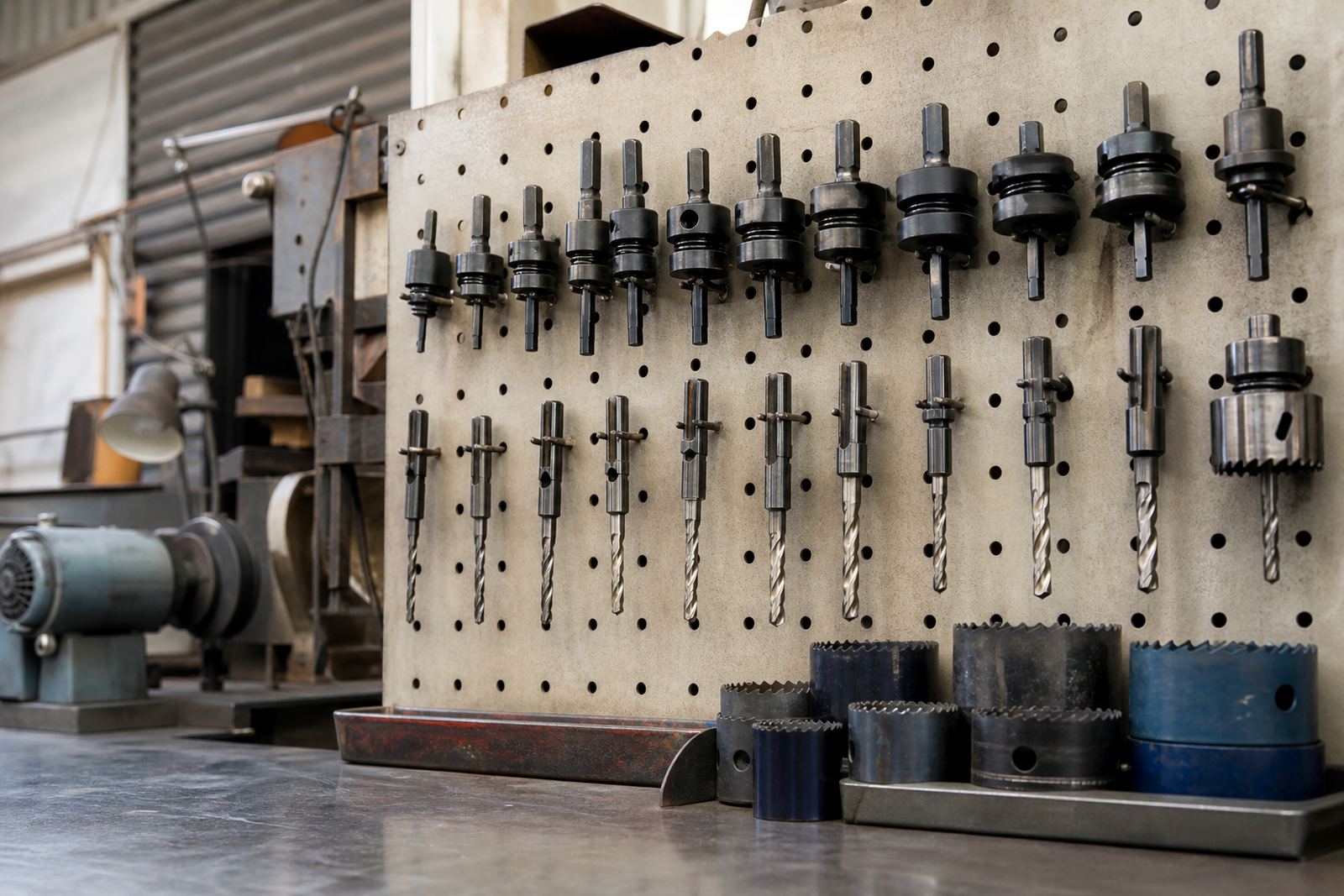
A hole saw arbor is the drive assembly that holds the hole saw cup and pilot drill in line with the machine. When the arbor is straight and the thread, collar and pilot seating are in good condition, the cut starts cleaner and the saw tracks truer through timber, plasterboard, plastics and thin steel. If the arbor is worn, the cutter can hunt, chatter or bind, which is hard on the tool and harder on the operator.
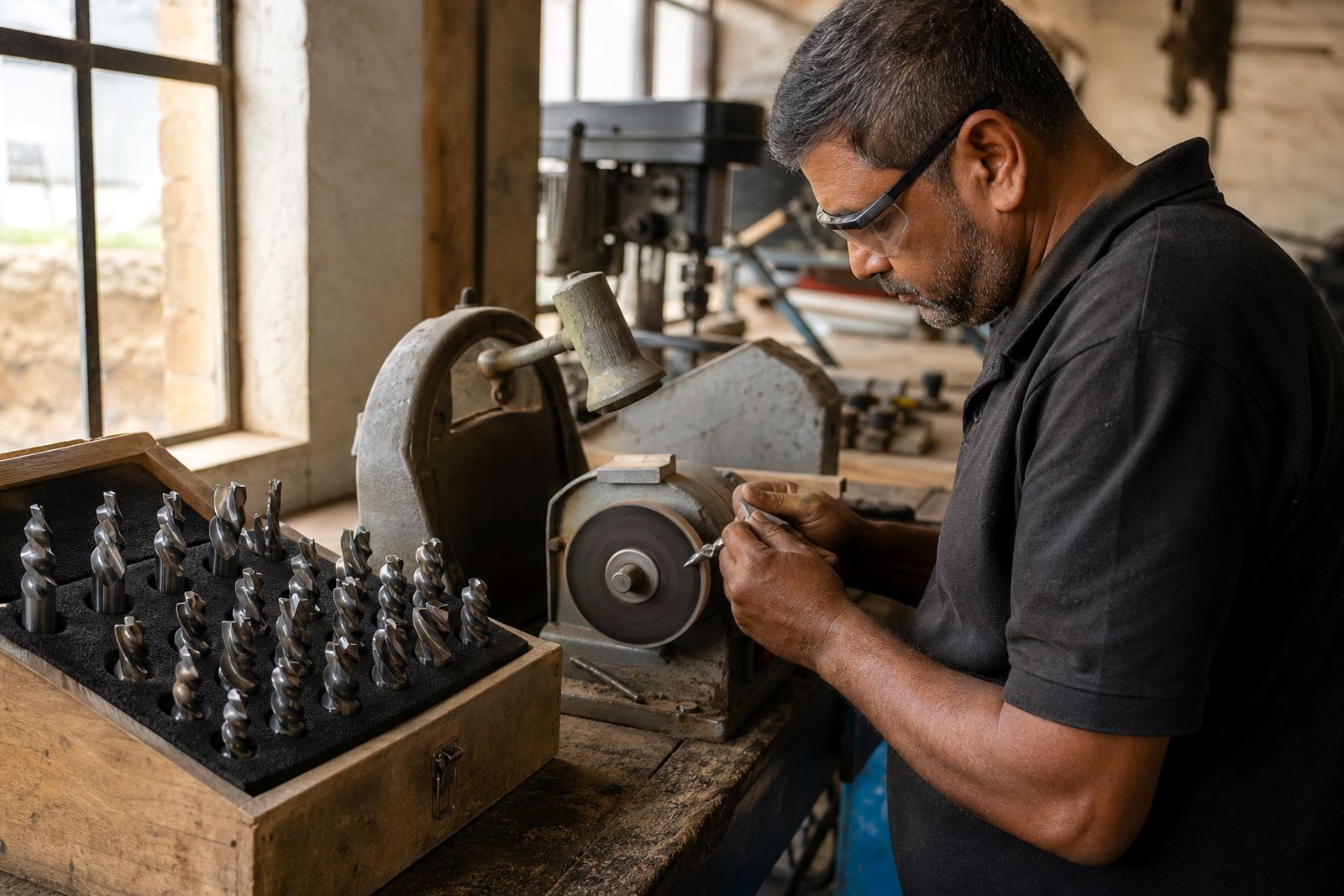
Our reconditioning service is aimed at reducing play in the assembly, restoring the mounting surfaces and checking that the pilot drill runs centrally. In practical terms that means less wobble, fewer burnt edges and a setup that feels more controlled on site or in the workshop. A lot of users only notice the arbor when it fails, but it has a direct effect on hole quality and tool life.
- Supports steady starting and consistent tracking
- Helps reduce side load on the pilot drill
- Useful for repeat work where hole size and finish matter
Sizes, thread types and assembly options
Hole saw arbors come in a range of lengths, thread patterns and shank sizes, so the correct fit matters. Common setups include arbors for small diameter saws used in electrical and cabinetry work, and heavier arbors for larger cup sizes used by maintenance teams and fabrication shops. We inspect the thread engagement, locking shoulder and pilot fit before recommending reconditioning or replacement of the worn parts.
Where possible, we work on standard quick-change and fixed-shank assemblies used across South African workshops. If your saw body uses a specific collar arrangement or a non-standard pilot size, send the full assembly for checking. That way the reconditioning is matched to the actual tool rather than only the threaded end.
- Small, medium and heavy duty arbor assemblies
- Quick-change and fixed-shank styles
- Pilot drill fitment checked for centring and wear
Where reconditioned arbors suit best
These assemblies are used in trade, maintenance and light industrial work where hole saws are called on often. They suit electricians, plumbers, joiners, signage crews, fitout teams and maintenance contractors who need reliable starts and clean cut edges. In Durban and other coastal areas, regular cleaning is especially useful because moisture and dust can combine into a gritty paste that wears threads and locking parts faster.
They also help in workshop settings where the same cutter is used day after day on mixed materials. If you are working in Pinetown, Westville or Hillcrest and the tool is bouncing on the start, that is often a sign the arbor or pilot assembly needs attention. A reconditioned setup is usually a sensible step before the hole saw body itself is written off.
- Trade work on timber, board, plastics and thin sheet metal
- Maintenance jobs that need repeatable hole placement
- Batch work where a consistent setup saves time
Installation, machine fit and power needs
Hole saw arbors are fitted to hand drills, drill stands and some low speed machines. The main requirement is that the machine can hold the assembly securely and turn it at the right speed for the material. Too much speed and the saw can burn, grab or glaze the cut. Too little support and the arbor can flex. No gas supply is needed, only the correct drill chuck or drive interface and enough torque for the diameter being used.
For larger hole saws, a slower speed and firm handling make a big difference. On cordless tools, battery condition matters as much as motor power because a tired battery can drop torque under load. If you are using a drill stand, check that the table and clamp arrangement are square and that there is enough clearance for the depth of cut.
- Works with hand drills and drill stands
- Best results come from correct speed and steady feed pressure
- No compressed air or gas needed for normal use
Care, servicing and signs the arbor needs attention
After use, brush off dust and swarf, then wipe the threads and pilot seat clean. If the assembly has been used on damp material or near coastal air, dry it before storage to slow corrosion. A light protective oil can help on carbon steel parts, but keep oil off the cutting edge where it may affect the first cut. Do not overtighten the saw body on the arbor, because that can damage the thread and collar over time.
Common signs that servicing is due include wobble on start-up, scoring on the pilot drill, visible thread wear, difficulty locking the saw body and uneven hole edges. If the hole saw starts burning one side more than the other, the arbor may no longer be running true. Catching that early usually saves the saw body and reduces waste.
- Clean and dry after every shift if possible
- Watch for wobble, thread wear and loose locking
- Store in a dry box or cabinet away from moisture
What to check when ordering a reconditioned arbor
Please send the full arbor and pilot assembly when possible, not only the loose shank or the saw body. We need to check the thread size, overall length, pilot diameter, locking style and the condition of the mounting face. If the assembly has been running hot or has chipped threads, note that on the enquiry so the workshop can assess whether reconditioning is practical or whether replacement parts are needed.
It also helps to note what the arbor is used for, whether it runs in a hand drill or stand, and what hole saw sizes it carries. For clients sending work from Johannesburg, Pretoria, Cape Town, Durban or Pietermaritzburg, courier collection can be arranged through our contact page. Batch tool tagging is available if you are sending several arbors with mixed sizes and need them returned in order.
- Thread size and locking style
- Pilot drill diameter and condition
- Machine type, material cut and hole saw size range
Key facts
| Service type | Reconditioning of hole saw arbors and pilot assemblies |
|---|---|
| Typical use | Cleaner, steadier cutting setup for hole saw work |
| Assembly parts checked | Thread, collar, pilot drill, seating and lock-up |
| Suitable machines | Hand drills, drill stands and similar low speed setups |
| Collection area | Pinetown with courier collection across South Africa |
| Workshop base | Pinetown, KwaZulu-Natal |