What Step Drills Do in Sheet Work
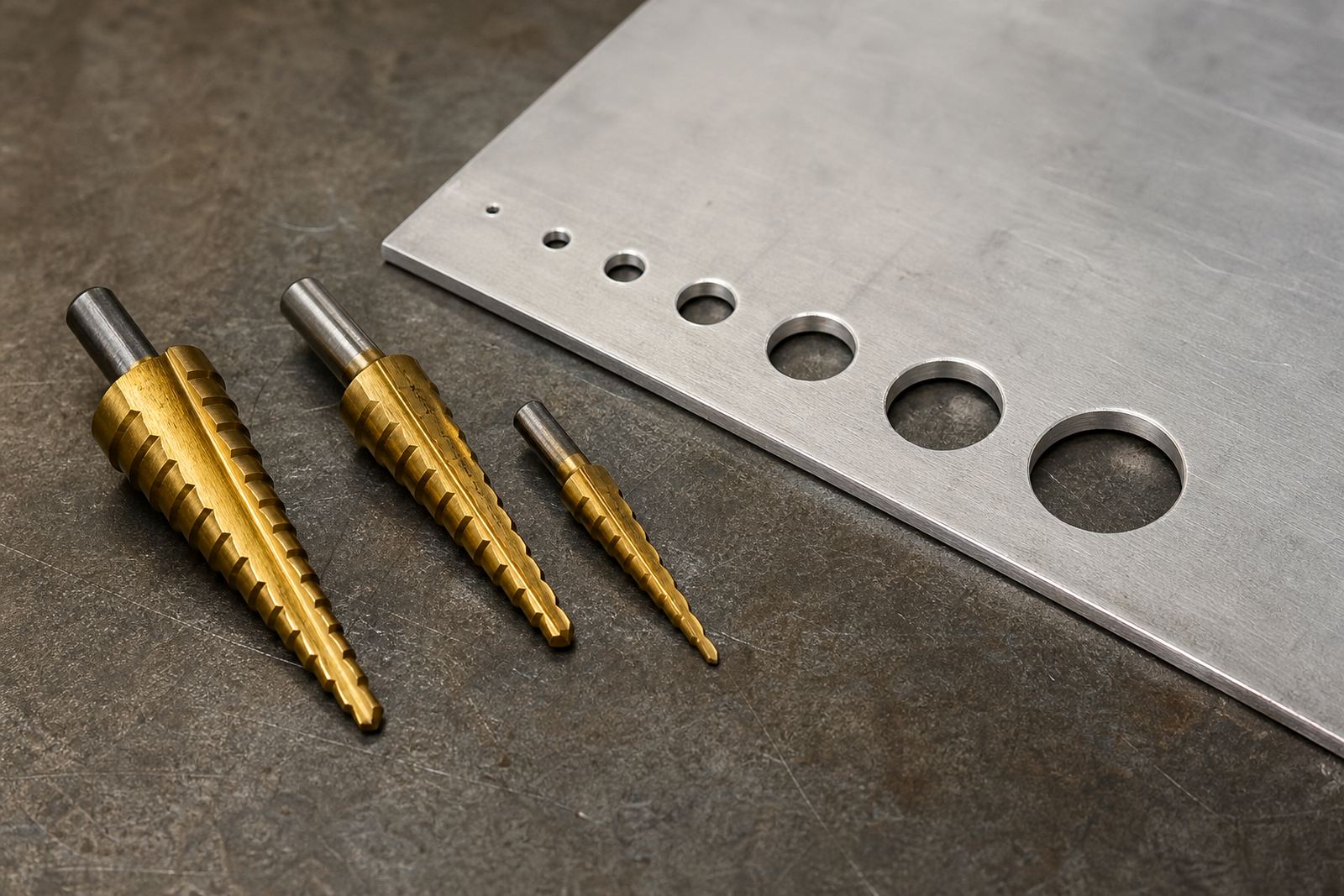
Step drills are used for enlarging holes in thin sheet, light plate, plastics and non-ferrous materials where a stepped profile helps control the size of each cut. They are common in panel work, electrical fitting, ducting, vehicle fit-out and general maintenance because one tool can open several hole sizes without changing bits each time.
When a step drill is sharp, it cuts cleanly and leaves a better edge for deburring. When it is blunt, the steps start to rub, the hole goes out of size, and the operator has to push harder. That creates heat, chatter and a poor finish, especially on stainless sheet and coated mild steel. Our sharpening and regrinding service restores the cutting faces so the tool can work properly again.
Sizes, Step Counts and Tool Types We Regrind
We sharpen common step drills used in hand drills and drill presses, including straight-shank and reduced-shank tools. Most jobs come in size ranges from 6 mm up to 30 mm or more, with step increments that depend on the tool pattern. We also handle tools with marked diameter steps, split point features and relief angles that have been worn down through repeated use.
- Small workshop step drills for light maintenance and fitment work
- Mid-range tools for sheet metal, plastic and aluminium panels
- Larger step drills for fabrication and service vehicles
- Tools with chipped steps, dull lips or uneven cutting edges
- Mixed batches from jobbing shops, contractors and maintenance teams
If you are not sure about the exact size, send the tool in as it is. We check the step count, major diameter, flute condition and the amount of material left for safe regrinding before any work starts.
Where Step Drills Suit the Job Best
Step drills suit thin material where a full twist drill can grab or wander. They are well suited to electrical cabinet work, roofing flashings, signage, stainless splashbacks, light fabrication and mobile repair jobs. They also help when you need a cleaner hole for cable glands, rivets, fixings or light deburring after cutting.
They are not the best choice for thick plate, hardened material or deep hole drilling. In those cases the tool may overheat quickly, and the cutting steps can wear unevenly. For users in Durban, Pinetown and coastal areas, moisture in the air can also affect stored tools, so a clean dry box is worth keeping near the machine or vehicle. It saves a lot of trouble later on, especially if the workshop is near the sea.
- Best for thin sheet and light plate
- Good for plastics, aluminium and coated panels
- Useful for hole sizing and deburring in one pass
- Less suitable for deep drilling or hard materials
How the Regrinding Process Works
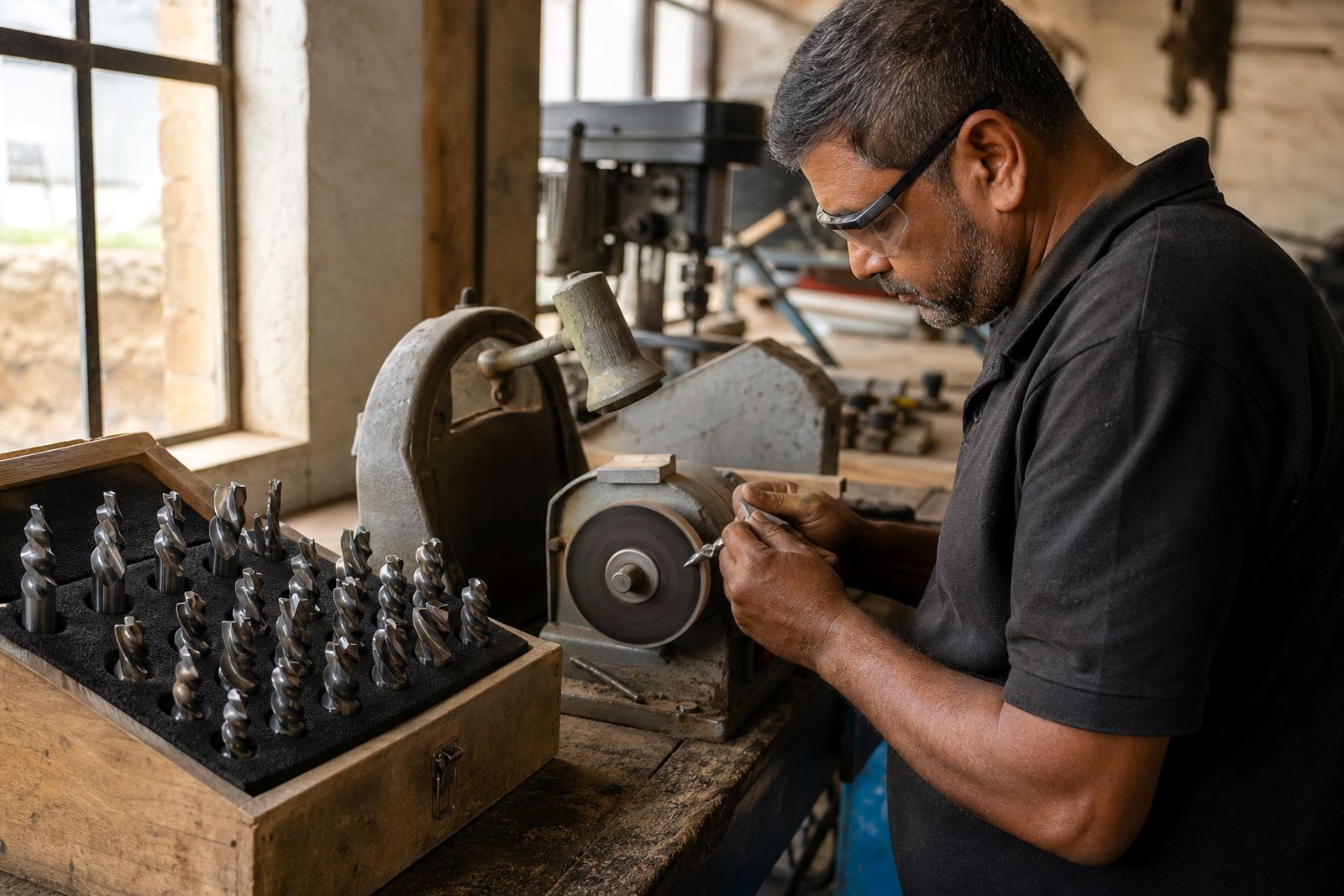
Each step drill is inspected for wear, burn marks, chipped edges and loss of diameter. We then reset the cutting geometry so the tool cuts evenly across the steps and does not pull to one side. Where needed, we remove light damage and restore the edge profile to suit the original form of the tool. If the step drill has been badly overloaded, we will say so before work continues.
Our workshop in Pinetown handles both single tools and batch work. For regular users, batch tool tagging helps keep track of which drill belongs to which job, department or fitter. That matters when several tools come in at once and the work needs to return to the correct site without mix-ups.
Power, Machine Set-Up and On-Site Use
Step drills do not need special power supply for use, but they do need the correct machine speed and firm control. Hand drills, magnetic drill setups and drill presses all need to match the material and tool size. Too much speed causes heat build-up and short tool life. Too little speed can make the drill rub instead of cut.
For most light sheet work, a steady feed and a secure clamping setup matter more than force. Use cutting fluid where suitable, especially on stainless or tougher sheet. If your workshop deals with load-shedding, keep the tools cleaned and stored properly after use so they do not sit with moisture on the flutes between shifts. A small amount of care goes a long way in keeping the cutting edge honest.
- Use the correct speed for the material and diameter
- Clamp the workpiece firmly before drilling
- Apply suitable cutting fluid where needed
- Clear swarf regularly to prevent heating
What to Check Before You Send a Step Drill In
Before ordering sharpening or regrinding, check the tool body for cracks, severe bends and missing material. If the cutting steps are badly chipped or the flute is worn too thin, the tool may still work after a light regrind, but not every drill can be saved. Also check whether the shank is still true and whether the tool has been overheated and bluish from past use.
When you book a collection or drop-off, let us know the quantity, size range and the type of work the drills are used for. That helps us match the finish to the job. We work with hobby users, maintenance teams and trade workshops across Pinetown, Durban, Westville, Hillcrest, Pietermaritzburg, Johannesburg, Pretoria and Cape Town through courier collection or direct enquiry on our contact page.
- Check the number of steps and the marked size range
- Look for cracks, heavy chips or bends
- Confirm the shank is still straight
- Tell us if the tools are for sheet metal, plastic or aluminium
- Send the batch count so tagging can be done properly
Key facts
| Tool type | Step drills for sheet material hole sizing and deburring |
|---|---|
| Size range | Typically 6 mm to 30 mm plus, depending on tool pattern |
| Material suitability | Thin sheet, light plate, plastics, aluminium and coated panels |
| Service available | Sharpening, regrinding, edge recovery and batch tagging |
| Collection area | Pinetown, Durban, Pietermaritzburg, Johannesburg, Pretoria and Cape Town |
| Workshop base | Pinetown, KwaZulu-Natal |