What planer knives do in the workshop
Planer knives sit in the cutterhead and shave timber down to size, so the edge has to be straight, even and properly matched across the set. When the knives are dull, you see tear-out, ridges, burnishing and extra strain on the machine, and the finish starts looking rough even before the last sanding pass. For small home shops in Westville or Hillcrest, that means slower work and more rework. For busy cabinet makers in Durban, Pietermaritzburg, Johannesburg or Cape Town, it means wasted time and poor output.
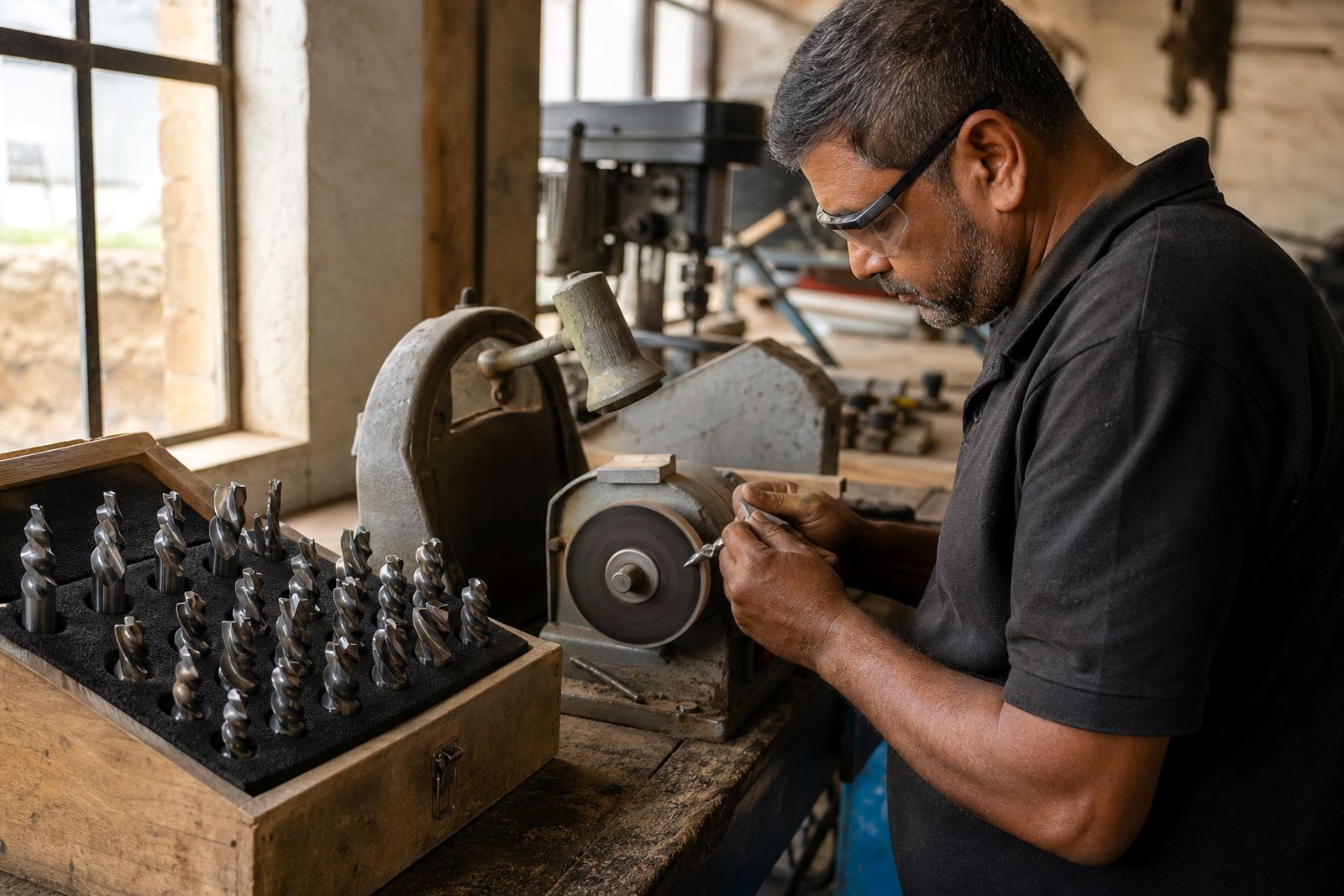
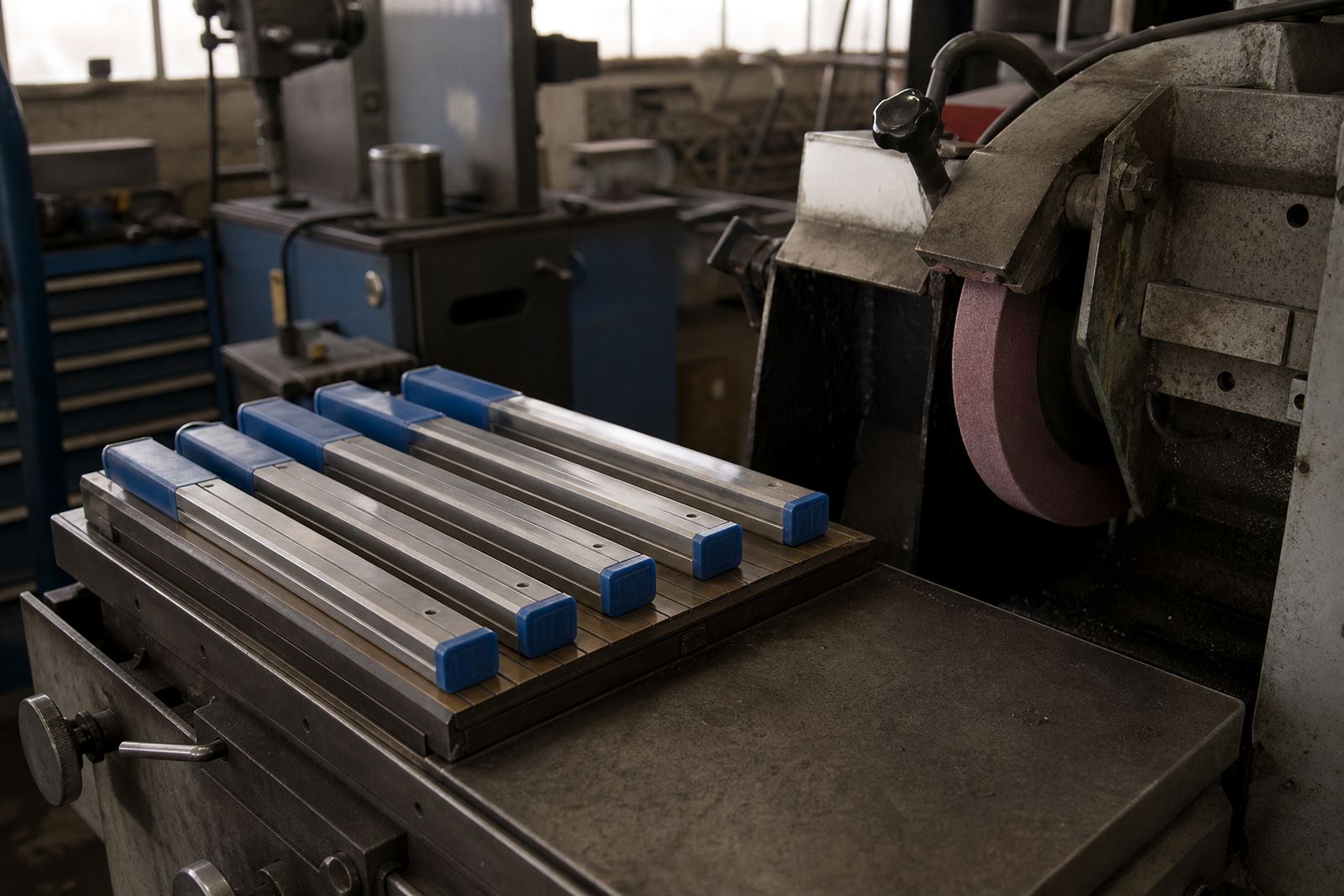
We sharpen and regrind planer knives to restore the cutting face and the cutting angle, so the knives take a consistent bite through softwood, hardwood, pine boards and laminated stock. If the knives are nicked, chipped or uneven, we can also recover the edge where the steel still allows it. A proper sharpened set keeps the feed steady and the surface cleaner, with less sanding needed after machining.
Knife sizes, profiles and matching options
Planer knives are not all the same length or thickness, and some machines use straight knives while others use profiled or reversible sets. We work on common workshop sizes used in South Africa, from short hobby machine knives to longer industrial sets. If you are unsure of the exact size, send the old knives in and we can measure them before work starts.
- Knife lengths commonly from 150 mm up to 630 mm
- Typical thicknesses from 1.5 mm to 3.0 mm
- Straight cutting edges for standard planers and thicknessers
- Matched sets for cutterheads that need equal blade height and weight
- Edge recovery for light chips and small burn marks
- Batch tagging for repeat orders and mixed workshop loads
For multi-machine shops, keeping each set tagged saves confusion when the knives come back from service. That matters when you are running different timber grades in the same week and need the right set back in the right machine, without mix ups.
Where planer knife sharpening suits best
Planer knife sharpening suits furniture makers, timber merchants, cabinet shops, joinery yards, school workshops and serious DIY users who want clean timber faces. It is also useful for places working near the coast, where humidity in Durban or the South Coast can affect timber movement and make poor cutting even more noticeable. In inland areas like Pretoria or Johannesburg, dust build-up and heavy use can blunt knives quickly if extraction is not kept up.
We also help with on-site maintenance planning for workshops that want fewer stoppages. If your machine runs daily, it is better to keep one sharpened set ready than to wait until the cut starts dragging. That is especially practical during load-shedding, when workshop time gets compressed and you need the machine to perform first time.
- Cabinet and furniture production
- Joinery and door making
- Timber preparation yards
- Training workshops and trade schools
- Home workshops doing regular timber prep
Installation fitment and machine setup
Planer knives themselves do not need power or gas, but they must be fitted correctly into the cutterhead and set to the same height across the set. If the knives sit unevenly, the machine can chatter, leave lines or pull unevenly through the stock. Before fitting, check the head is clean, the clamp bars are sound and the seating faces are free of pitch and dust. A quick wipe-down goes a long way, and so does checking that all fasteners are secure.
When reinstalling, follow the machine manual for the correct knife projection and torque settings. If the machine uses a guillotine-style holder, make sure the knife edge sits true along the full length. If the cutterhead is worn or the seats are damaged, sharpening alone will not solve the problem. In that case we suggest checking the head, the infeed rollers and the pressure bars as well.
- Clean cutterhead seats before refitting
- Check knife height across the full length
- Inspect clamps, screws and pressure bars
- Test on scrap timber before production runs
Care, servicing and sharpening intervals
How often planer knives need service depends on the timber type, feed rate and how much dirt is in the wood. Timber with grit, knots or hidden foreign material will dull a knife faster than clean stock. As a general guide, many workshops inspect knives daily and send them for sharpening when the cut starts to drag, or when tear-out becomes visible. If you wait too long, the edge may chip instead of just dulling, and then the regrind takes more work.
Keep knives wrapped, dry and separated so the edges do not touch each other in transit. In humid coastal conditions, store them in a dry box or sealed sleeve to limit surface rust. A light protective coat helps too. If a set comes in with rust, a bent edge or heavy adhesive build-up, tell us upfront so we can assess the condition before turning the job around. Regular servicing is cheaper than replacing a full set, and it keeps your finish more predictable.
What to check before you place an order
Before sending planer knives for sharpening, check the length, width, thickness and hole pattern if the knives are slotted or drilled. If you have a matched set, send all blades together so the heights can be kept consistent. For best results, include the machine make and model, the timber you run most often and whether you want standard sharpening or edge recovery. That helps us set the grind for the job rather than a one-size-fit approach.
- Exact knife dimensions
- Number of knives in the set
- Machine make and model
- Preferred finish standard
- Any chips, bends or burnt edges
- Whether courier collection is needed from your site
Clients can book courier collection from Pinetown, Durban, Westville, Hillcrest, Pietermaritzburg, Johannesburg, Pretoria and Cape Town, or send in a parcel from anywhere in South Africa. Once the knives arrive, we log them, inspect them and confirm what can be sharpened, reground or repaired.
Key facts
| Service type | Sharpening and regrinding for planer knives |
|---|---|
| Typical knife lengths | 150 mm to 630 mm |
| Typical thickness range | 1.5 mm to 3.0 mm |
| Work area | Pinetown, KwaZulu-Natal with courier collection nationwide |
| Turnaround | Depends on quantity, wear and edge condition |
| Best suited to | Joinery, cabinet shops, timber prep and workshop use |