What thicknesser knives do in day-to-day work
Thicknesser knives do the cutting inside the machine head, shaving timber down to a set thickness while leaving a smooth surface behind. When the edges dull, you start seeing tear-out, chatter marks, burn lines, and extra strain on the motor and feed system. In a workshop that runs all week, that soon means more waste and more hand finishing.
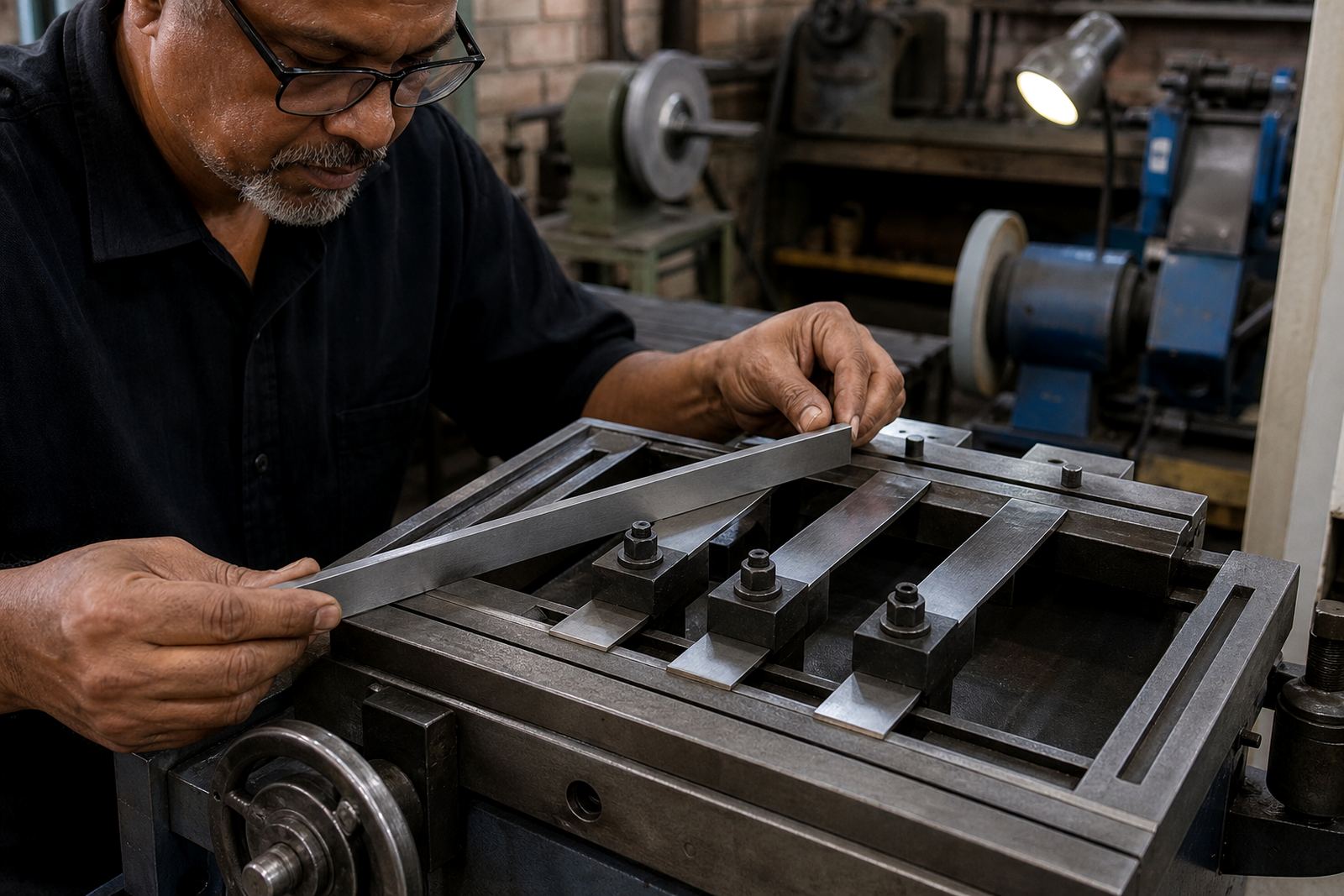
We sharpen thicknesser knife sets for pine, hardwood, board, and mixed timber use. The aim is simple: keep the knives sharp enough to cut cleanly, while keeping the set even so the machine runs true. If one knife is higher than the others, the finish changes straight away and the machine starts to vibrate more than it should.
For shops in Pinetown, Durban, Hillcrest, Westville and further afield in Johannesburg, Pretoria, Pietermaritzburg and Cape Town, the practical value is the same. You get better finish quality, less sanding, and less time spent compensating for blunt tooling.
Knife sizes, steel types, and common set options
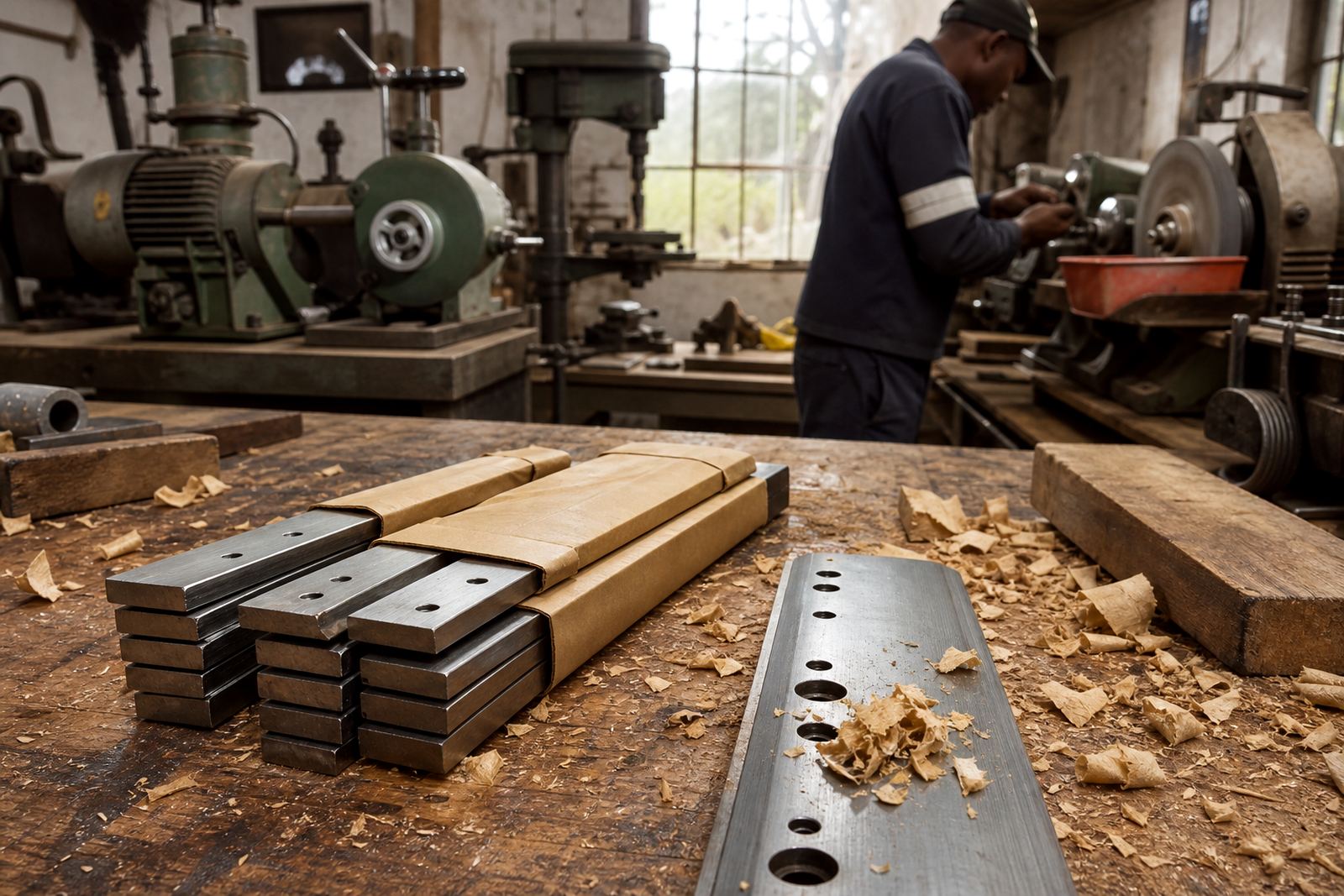
Thicknesser knives come in different lengths, widths, hole patterns, and steel grades. Some are straight reversible knives, while others are matched sets for specific cutter heads. We work from the knife you send in, so the sharpening follows the original profile and fixing points as closely as possible.
Before booking a set in, check these points:
- Knife length in millimetres, measured end to end
- Knife width and thickness
- Number of fixing holes or slots
- Whether the knives are straight, reversible, or profiled
- Any visible chips, burn marks, or edge damage
- Whether the set must stay matched for one cutter head
For workshops that run multiple machines, batch tool tagging helps keep sets apart and avoids mix-ups. That is useful when you have one knife set coming out of a jointer thicknesser, another from a stand-alone machine, and a third held as backup for emergency use.
Where thicknesser knife sharpening suits best
This service suits cabinet shops, furniture makers, joinery yards, school workshops, builders who do their own trimming, and home woodworkers who want a better finish on timber. It also suits operations that work through load-shedding and want to make the most of the time they do have on machine. Sharp knives reduce the load on the motor, which helps the machine feed more steadily when power returns and the workflow gets busy again.
Thicknesser knives are especially worth maintaining in places with coastal humidity, because damp air can lead to surface rust and pitting if the blades are stored badly. In inland areas, dust and resin build-up are more common. Either way, a regular sharpening cycle is cheaper than running knives until they are chipped beyond a clean regrind.
- Busy woodworking workshops running daily production
- Small makers who want cleaner final dimensions
- Schools and training rooms with shared machines
- Mobile carpentry teams that rotate tools between sites
If you are in Durban or Cape Town and working near the coast, it pays to wipe knives down after use and keep them wrapped dry. In Gauteng, keep them away from grinding dust and metal offcuts so the edges do not pick up nicks before fitting.
Installation, machine set-up, and power needs
Thicknesser knives are fitted into the cutter head by a competent operator or workshop technician. The knives must sit at equal height and with the correct clamping pressure, otherwise the machine will leave ridges, snipe, or a rough finish. Always follow the machine maker’s fitting method for your specific head type, because small differences in setup matter.
There are no gas requirements for the knives themselves. The machine will need a suitable electrical supply, and the workshop should have enough stable power for the thicknesser, dust extraction, and any accessory equipment used nearby. If you are running through municipal load-shedding, plan your sharpening and fitting work so the machine can be tested properly before it goes back into service.
- Check knife seating and clamp condition before fitting
- Test for even projection across the full length
- Inspect the cutter head for resin, rust, or dents
- Confirm feed rollers and tables are clean and aligned
If the machine has been standing, check the head and bearings as well. A sharp knife set cannot correct mechanical play, and that is where many finish problems start.
Care, storage, and servicing between regrinds
Good knife care extends the life of each set and keeps the finish more consistent between services. After use, remove sawdust and resin with a dry cloth or suitable cleaner, then store the knives in a dry container or sleeve. Do not leave them loose in a drawer with drills, fasteners, or plane irons because that is how small edge nicks happen.
We recommend regular inspection rather than waiting for a blunt edge to cause scrap. A knife set that is just starting to fade may still cut, but it will usually show up as rougher surface quality, more motor strain, and a higher chance of burning on harder timber. If the knives are chipped, have edge lift, or are no longer sitting evenly in the head, send them in before the damage spreads.
For workshop planning, it helps to keep one spare set on hand. That way you can swap over while the used set is out for sharpening and regrinding, instead of stopping production.
What to check when ordering sharpening for a knife set
When you send in thicknesser knives, the more detail you give us, the easier it is to return the right result. A quick note on the machine model, knife dimensions, and the type of cutting you do makes a big difference. If the knives are for softwood only, the edge wear pattern is often different from knives used on hardwood or laminated material.
Please check the following before booking a courier collection or dropping off in Pinetown:
- Exact knife count in the set
- Length, width, thickness, and hole pattern
- Any special angle or profile to preserve
- Whether you want burn mark removal or chipped edge recovery
- Any previous repairs or shortened knives
- Return address and whether the set must be tagged separately
Clients across South Africa can use the enquiry form on our contact page to arrange collection or ask about the best way to pack the knives. If the set has heavy rust, bent fixing points, or uneven wear, mention that upfront so we can assess the work properly before it moves through the workshop.
Key facts
| Product type | Thicknesser knife sharpening and regrinding |
|---|---|
| Typical use | Planing and finishing timber in woodworking workshops |
| Common knife lengths | From small portable machines to long industrial sets, measured on receipt |
| Material types | High-speed steel and similar workshop knife steels |
| Service options | Sharpening, regrinding, diameter correction, burn mark removal, balance checking |
| Coverage | Pinetown, Durban, Pietermaritzburg, Johannesburg, Pretoria, Cape Town, Westville and Hillcrest with courier collection nationwide |