What Panel Sizing Blades Do In The Workshop
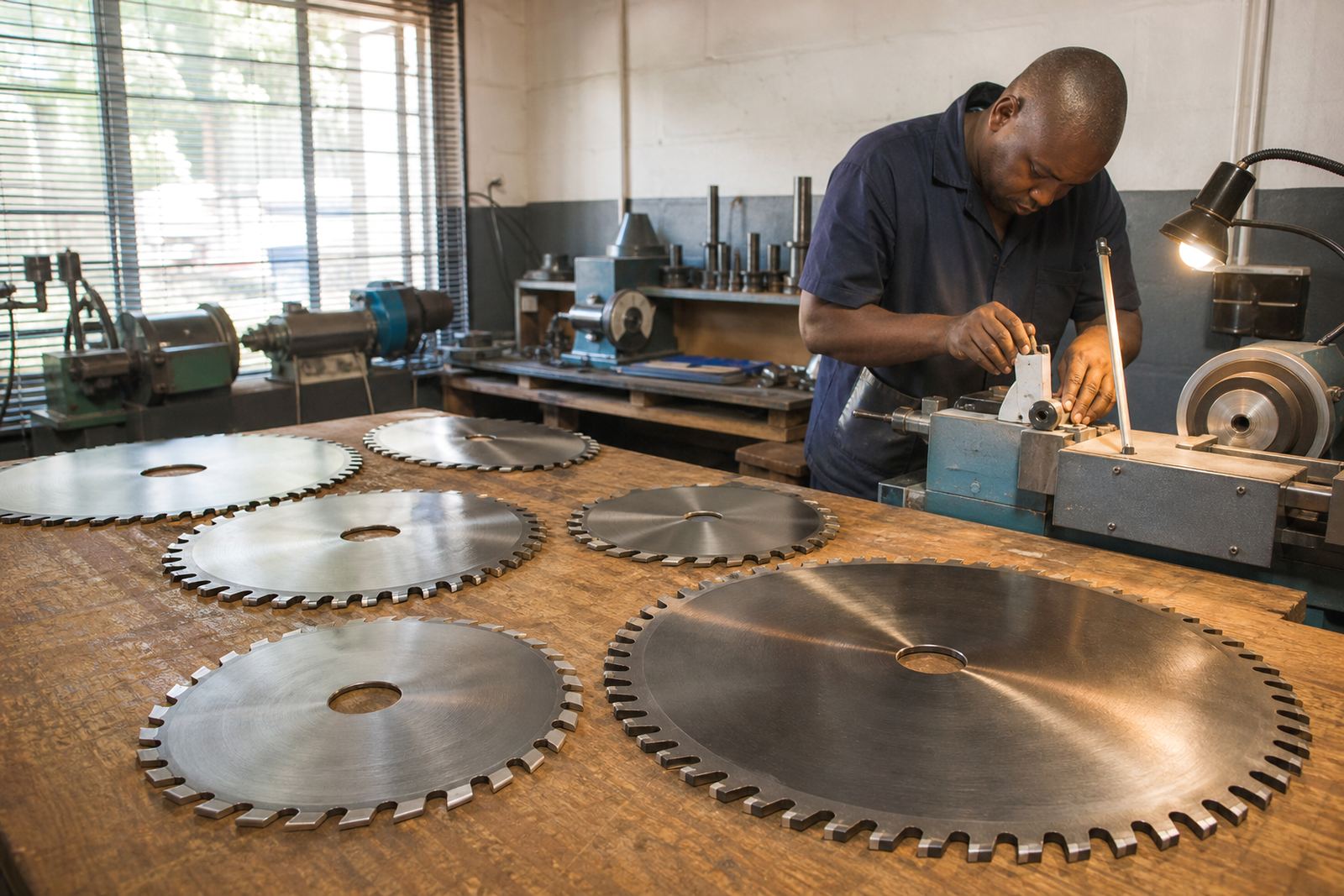
Panel sizing blades are used on saws that cut sheet and board materials into straight, accurate sizes. On melamine faced board, MDF, particle board and laminated panels, the aim is a clean edge with as little chip-out as possible. When the teeth go dull the blade starts forcing the cut, leaves burn marks and can pull the machine off line.
We service blades used by cabinet shops, shopfitters, joinery teams and home workshops around Pinetown, Durban, Pietermaritzburg, Johannesburg, Pretoria and Cape Town. The work is practical: sharpen the cutting faces, restore the top grind where needed, check for damaged teeth and set the blade back to a usable condition. If the blade has been badly abused, we will say so before work starts. No point spending money on steel that is beyond recovery.
Sizes, Tooth Patterns And Blade Options
Panel sizing blades are supplied in a range of diameters, bore sizes and tooth counts. The right option depends on the saw, the material and the finish you need. Fewer teeth usually clears material faster, while higher tooth counts give a cleaner edge on sensitive board. Tooth form matters too, because the wrong profile can leave a rough cut or a lot of burning.
- Common diameters for panel work: 250 mm, 300 mm, 350 mm and 400 mm
- Typical bore sizes: 20 mm, 25.4 mm and other machine-specific bores
- Tooth counts: roughly 40T to 100T, depending on the cut quality required
- Common materials: tungsten carbide tipped and steel body blades
- Services available: Saw Blade Sharpening, Tooth Face Grinding, Top Grinding, Diameter Correction and Balance Checking
If you are not sure which blade you have, send the details through the enquiry form and we will help you match the blade to the saw and cutting job. A small mismatch can lead to vibration, poor finish or unnecessary wear on the machine.
Where Clean Panel Cuts Matter Most
This service suits any workshop that cuts flat sheet material and wants a neat, consistent edge. It is used in kitchen cabinet work, office fit-outs, shelving, wardrobe manufacture, joinery, display units and small scale production. In humid coastal areas like Durban and Pinetown, blades can also pick up surface corrosion if they are stored carelessly, so condition matters as much as the grind.
Panel sizing blades are a good fit when you need less tear-out on laminate, fewer touch ups after cutting and better feed control through the saw. If your boards are chipping on the top face, the blade is burning the edge or the motor sounds like it is working harder than usual, sharpening may be overdue. In many cases, a proper regrind sorts the issue without needing a new blade.
- Suitable for cabinet shops and installers
- Useful for board stock, laminated surfaces and veneered sheet material
- Helpful where batch cutting must stay consistent
- Good for workshops dealing with load-shedding because every clean cut counts when time is tight
Installation, Machine Setup And Power Needs
Panel sizing blades themselves do not need gas or any special utility supply, but they must be fitted correctly on the saw. Check that the bore matches the shaft, the clamping faces are clean and the blade direction is correct. A blade that is mounted unevenly will chatter and wear out quicker, even if it has just been sharpened.
On panel saws and sliding table saws, the machine setup is just as important as the blade. Feed rate, scoring settings where fitted, blade height and the condition of the fences all affect the finish. In workshops that run through load-shedding with generators or inverters, lower power can expose a blunt blade sooner because the saw has less reserve to push through the cut. That is when a tidy regrind makes a noticeable difference.
We also recommend checking dust extraction, because packed dust around the cut line can make a good blade look dull before it actually is. A clean machine usually gives a cleaner edge, simple as that.
Care Between Sharpenings And Regrinds
Good care starts as soon as the blade leaves the machine. Wipe off resin, glue and fine dust, then store the blade in a dry place where the teeth cannot knock against each other. In coastal towns, even a short spell in damp air can leave a fine rust film, so storage matters. A blade that sits loose in a corner tends to lose its edge far quicker than one kept properly.
Between services, avoid pushing the blade through knots, nails, dried adhesive or offcuts with hidden grit. Those are the usual causes of chipped teeth and balance issues. If the blade starts leaving scorch marks, the cut sounds rougher than normal or the saw operator has to push harder, send it in before the damage spreads.
- Clean resin off after use
- Keep blades dry and separated
- Do not use a blade with missing or cracked teeth
- Watch for burn marks, chipping and vibration
- Book sharpening before the cut quality drops too far
What To Check When You Place An Order
When sending a panel sizing blade for service, give us the diameter, bore size, tooth count and a quick note on the material it cuts. If the blade has a scoring section or special tooth pattern, mention that too. Photos help if you are not certain about the spec, and we can advise through the enquiry form on the contact page.
Please also tell us whether you need standard sharpening, diameter correction, chipped edge recovery or full regrinding. Some blades only need light work, while others need tooth face grinding and angle resetting to bring them back into line. If multiple blades are coming in from the same site, batch tool tagging helps keep the set together and avoids mix ups. That saves time, and it saves headaches too.
We arrange courier collection across South Africa, including Durban, Pietermaritzburg, Johannesburg, Pretoria and Cape Town. Pinetown clients can also drop off through the normal workshop process when arranged in advance.
Training Support For Safer Blade Maintenance
Alongside sharpening work, we offer practical training and starter kits for teams who want better control over blade care in the workshop. That includes how to inspect a blade, when to stop using it and how to store it after a shift. The aim is to reduce waste, improve cut quality and keep operators safer around the saw.
For businesses with multiple saws or high volume cutting, a simple maintenance routine helps more than people think. A short checklist for tooth condition, run-out, heat marks and balance can prevent a lot of downtime. If you need a practical plan for your blades and related cutting tools, we can help set one up for your team.
Key facts
| Product type | Panel sizing saw blade sharpening and regrinding service |
|---|---|
| Common sizes | 250 mm, 300 mm, 350 mm, 400 mm |
| Bore sizes | 20 mm, 25.4 mm and other machine-specific bores |
| Tooth counts | Approx. 40T to 100T depending on cut finish |
| Material types | Tungsten carbide tipped and steel body blades |
| Service options | Sharpening, regrinding, diameter correction, balance checking and chipped edge recovery |