What a Scoring Blade Does On The Saw Line
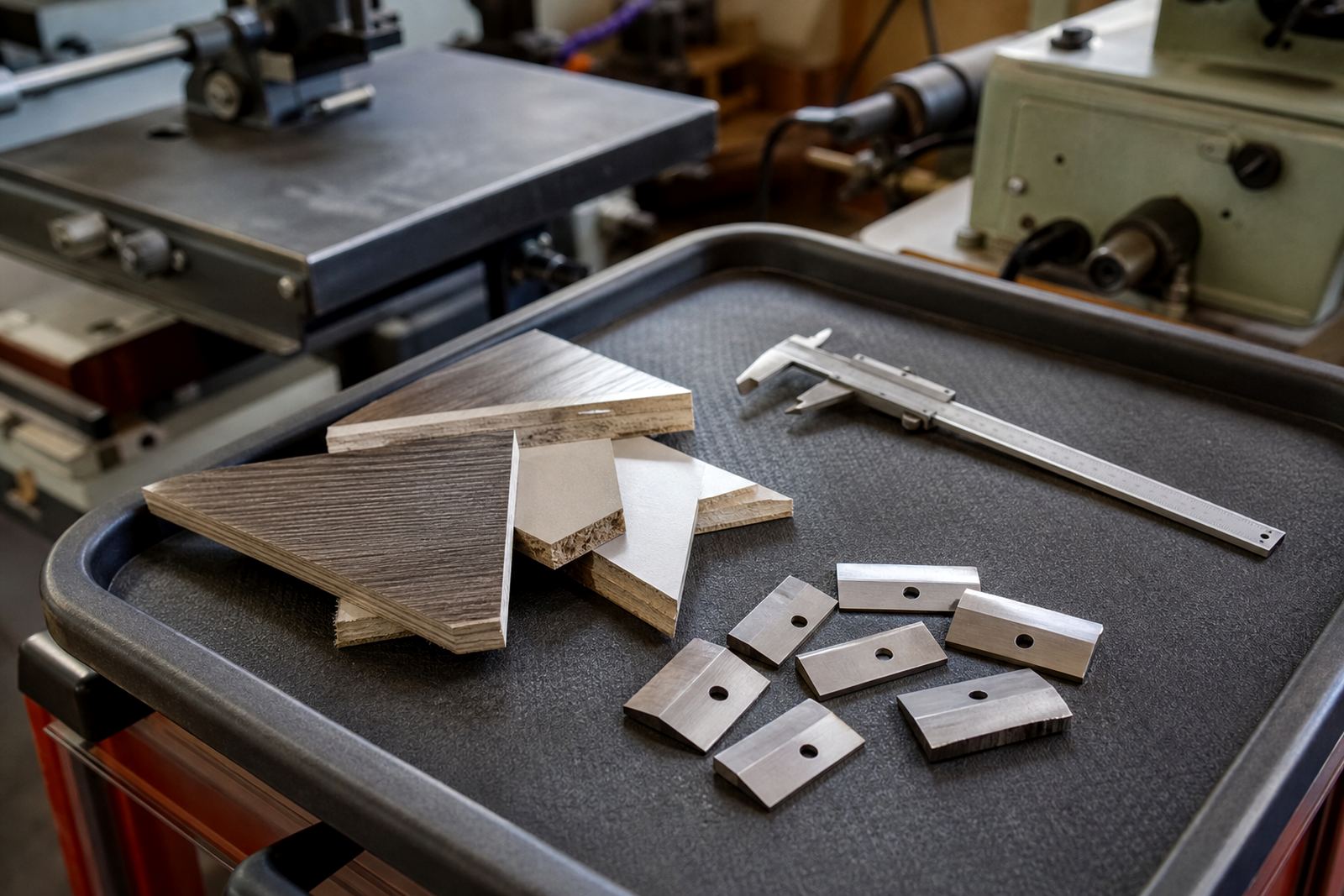
A scoring blade is the smaller blade that cuts a shallow groove before the main blade goes through a board. That first cut helps break the top layer cleanly so laminates, melamine and veneered boards do not splinter at the edge. When the scoring edge is worn, chipped or running out of line, you will see ragged tops, lift on the face veneer and more time spent trimming defects.
We sharpen scoring blades for panel saws and sizing equipment used by cabinet makers, shopfitters, joiners and production yards. The work is done for customers who run small workshops as well as busy factory lines, so we keep tolerances tight and check the cutting face, the side clearance and the overall balance before anything leaves the shop.
Sizes, Tooth Forms And Blade Builds We Handle
Scoring blades are usually small diameter blades with a thin kerf and a fine tooth profile. In practice, that means the exact size and mount can vary a lot from one machine to the next. We work on common scoring blade set-ups used in South African workshops, including two-piece adjustable scoring units and single blade scoring heads.
- Blade diameter commonly from 80 mm to 180 mm, depending on the machine
- Bore sizes matched to the spindle or scoring arbor
- Fine tooth counts for clean entry cuts on laminate and melamine
- Carbide tipped and other hardened cutting edges where suitable
- Set-up checks for left hand and right hand rotation
If you are not sure of the exact blade spec, send the blade in with the machine details or a clear note from the nameplate. We can work from the existing blade, but it helps to know the spindle size, the intended kerf width and whether the scoring unit is paired with a main blade on the same saw.
Where Scoring Blade Sharpening Suits Best
This service suits any operation that cuts faced board, especially where edge quality matters more than speed alone. If your panels are costly, your clients expect neat edges, or your edge banding step is being slowed by chip-out, a properly sharpened scoring blade saves time and material. It is useful in joinery shops in Pinetown, Durban and Westville, and just as useful for larger production work in Johannesburg, Pretoria and Cape Town where volume is higher and blade wear builds up fast.
It also helps in coastal areas where humidity can affect storage and handling, because a blade that is slightly out of true or showing minor corrosion marks can start cutting inconsistently. On inland sites, dust and dry workshop conditions can still cause wear on the cutting face and mounting surfaces. If the scoring cut is too shallow, too wide or off-centre, the top layer chips. If it is too deep, the main blade can leave a rougher bottom cut and increase strain on the saw.
For teams working around load-shedding schedules, keeping blades sharp matters even more because you want clean cuts first time when the line comes back on. No one wants to waste power and board on test cuts after an outage.
What We Check During Sharpening And Regrinding
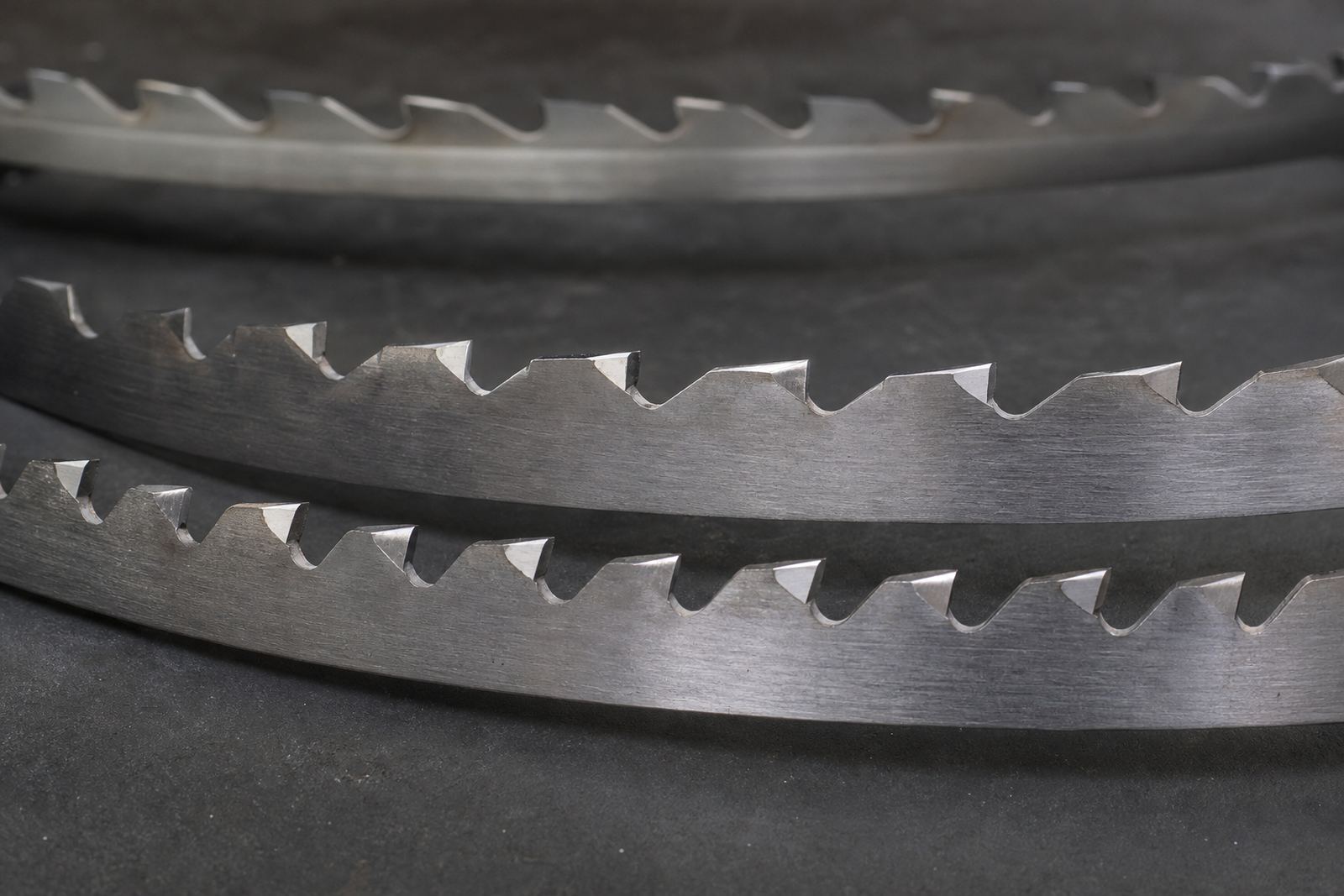
Our sharpening and regrinding process is built around accuracy. We inspect the cutting edge, tooth wear, hook shape, balance and any damage from knots, glue lines or foreign material in the board. If a blade has a chipped tooth or a knocked face, we recover what we can without taking away more material than needed. Where the blade has drifted off spec, we correct the geometry so the groove sits where it should.
- Tooth face grinding for a clean cutting edge
- Top grinding where the profile needs reset
- Diameter correction if the blade has worn unevenly
- Burn mark removal where glazing or heat marks are present
- Chipped edge recovery for damaged teeth
- Angle resetting and balance checking before return
We also do batch tool tagging for shops sending several blades at once, which helps keep sets together and avoids mix-ups. That is useful when a workshop has one scoring blade for melamine, another for fibreboard and a spare set waiting on the shelf.
Installation, Machine Fitment And Power Requirements
Scoring blades themselves do not need power, but the machine they fit into must be correctly set before you use the blade. The blade must match the spindle diameter, the arbor seating, the rotation direction and the scoring head adjustment. If the scoring blade is too loose on the arbor or fitted with the wrong spacers, you can get wobble, poor cut quality or damage to the machine.
Before re-installing a sharpened blade, check that the scoring unit is free of sawdust, resin build-up and old adhesive. Make sure the main saw blade and the scoring blade are aligned as a pair, especially on panel saws where the scoring depth needs to match the top layer thickness. If your site runs on a generator or inverter setup during power cuts, allow the saw to come up to full speed before feeding material, otherwise the blade can mark the board and you may think the sharpening is at fault when it is really a start-up issue.
We recommend using the correct guards and following the machine maker's basic safety setup. If the scoring blade is part of a production line, keep a spare sharpened set ready so you can swap during a stop rather than pushing a worn blade too far.
Care Between Services So The Edge Lasts Longer
A scoring blade works harder than many people think because it is constantly breaking the top face before the main cut. Resin, dust and moisture can build up quickly, so routine cleaning matters. Wipe the blade after use, store it dry and keep it separated from general scrap metal so the teeth do not knock against other tools. In coastal towns like Durban or Cape Town, a light protective coating helps if blades are stored for longer periods.
- Clean resin off before storage
- Keep blades dry and wrapped or in a sleeve
- Do not mix damaged blades with serviceable ones
- Check for vibration marks and dull edges regularly
- Bring blades in before the damage spreads to the full tooth line
Good care means fewer regrinds and steadier cut quality. It also means less force on the machine, which can help with motor load and belt wear over time. A blade that has been looked after usually gives a cleaner groove and lasts longer between sharpening cycles, which is useful for any shop watching costs closely.
What To Check Before You Send In A Scoring Blade
When ordering or sending in a scoring blade for sharpening, include the blade diameter, bore size, tooth count if visible, the machine type and whether the blade is used for melamine, laminate or another faced board. If the blade has a special kerf width or a matching main blade set-up, tell us that too. Those details help us return the blade ready for the right cut, not just sharp in general.
If you are arranging courier collection from Pinetown, Durban, Pietermaritzburg, Johannesburg, Pretoria, Cape Town, Westville or Hillcrest, keep the blades packed securely so the teeth cannot rub together in transit. A small note in the parcel with your workshop name and collection instructions saves time at intake. For larger orders, we can tag blades by batch so each set comes back to the right bench.
If you are unsure which scoring blade service you need, send the blade in and describe the chip-out problem, the board type and any marks you are seeing on the cut edge. That gives us a good starting point and helps us match the grind to the job.
Key facts
| Service type | Scoring blade sharpening and regrinding |
|---|---|
| Typical blade diameter | 80 mm to 180 mm |
| Typical bore sizes | Matched to machine arbor, commonly workshop specific |
| Suitable materials | Laminate, melamine, veneered board and faced panels |
| Key checks | Tooth face, top grind, balance, diameter, rotation and chip-out control |
| Collection areas | Pinetown, Durban, Pietermaritzburg, Johannesburg, Pretoria, Cape Town, Westville, Hillcrest |