What jointer knives do in the machine
Jointer knives sit in the cutter head and take the first cut on timber before the board moves on to planing, sanding or assembly. When the knives are sharp and set evenly, the machine leaves a straight surface with fewer tear-outs, less burning and better glue-up results. If one knife is higher than the others, you will feel it in the feed and see it on the board.
We sharpen jointer knives for common workshop machines used in carpentry, furniture making and site work. That includes high speed steel knives and similar workshop grades used in 150 mm, 200 mm and 250 mm cutter heads. For heavier machines and wider beds, we can handle longer knife sets by arrangement. The key is matching the whole set so the cut stays even from end to end, not just one knife at a time.
If your jointer has been used on dry hardwood, resin-heavy pine or timber with grit, the edges usually go dull faster than expected. Coastal humidity in places like Durban and Pinetown can also lead to light rust if knives are left unwrapped after service, so proper care matters once the set comes back from sharpening.
Sizes, profiles and set options we handle
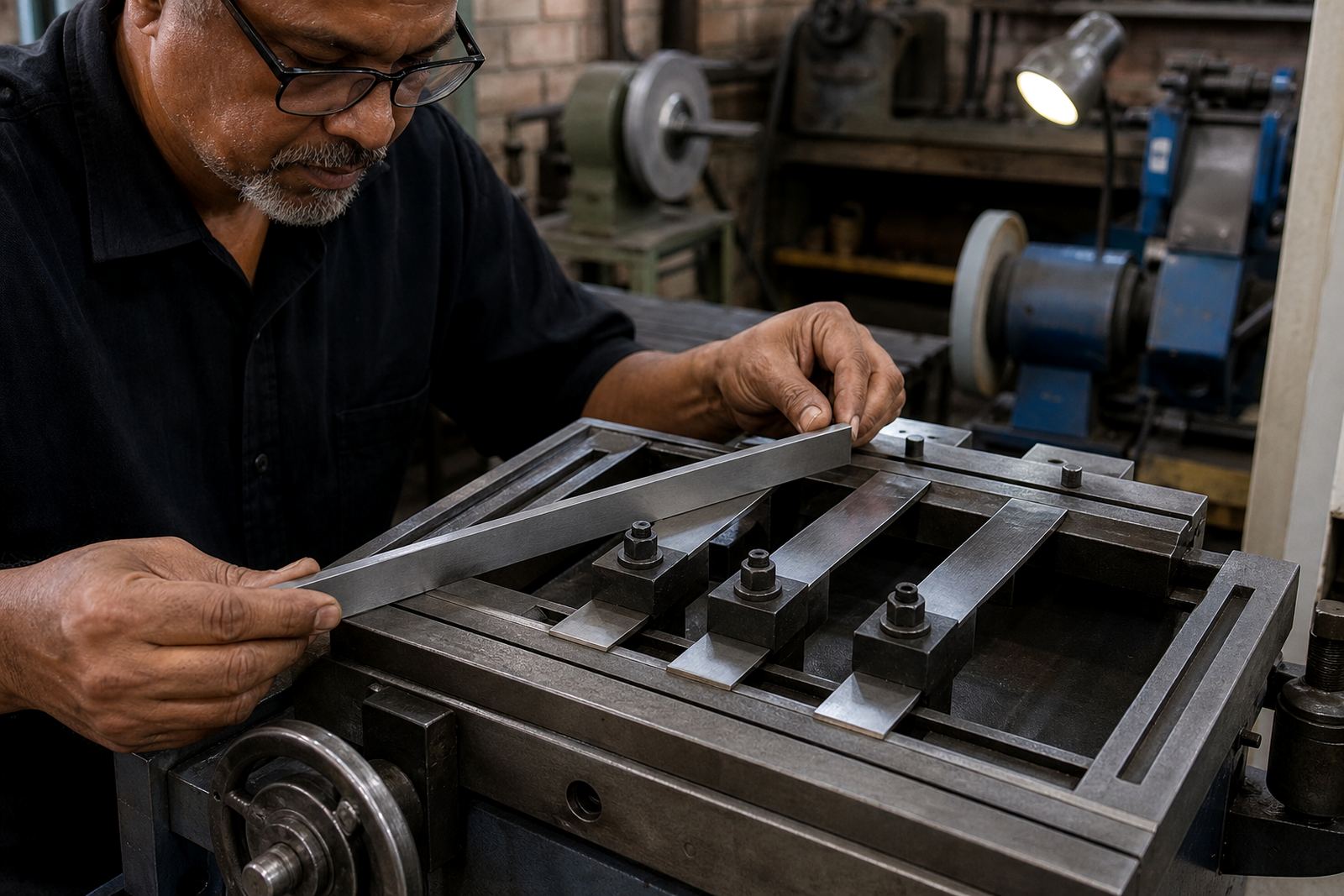
Most jointer knives are straight blades with a standard fixing hole pattern, but the length, thickness and hole position must be checked before sharpening. We work on single knives and full sets, with common workshop sizes supplied and sharpened to suit the cutter head. If you have mixed knives in a set, it is better to replace or regrind them together so the machine keeps its balance.
- Typical lengths: 150 mm, 180 mm, 200 mm, 250 mm and longer sets by request
- Common thickness: 2 mm, 3 mm and 3.2 mm depending on the machine
- Common materials: high speed steel and other workshop knife grades
- Edge condition options: light touch-up, full regrind, chip removal and edge reset
- Set matching: knives matched for equal height and consistent cutting action
Where the knives are chipped, we can assess whether a simple sharpen will do or whether the edge needs more material removed first. If there is heavy damage, it is better to take a controlled regrind than leave a weak section on the blade. That helps extend service life and keeps the machine from marking timber.
Where jointer knives are used in South African workshops
Jointer knives are used in furniture shops, cabinet making yards, school workshops, construction joinery and home sheds where timber needs flattening before final work. They suit board preparation on pine, meranti, gum, laminated stock and similar materials used in South Africa. If you are making doors, frames, skirting or shelving, the jointer is often one of the first machines to show up any knife problem.
For busy workshops in Durban, Pietermaritzburg, Johannesburg, Pretoria, Cape Town, Westville and Hillcrest, it usually makes sense to keep one set in use and another set ready for changeover. That way you are not waiting on a machine during a tight job. A backup set is also handy during load-shedding periods when work gets pushed into shorter operating windows and every hour counts.
- Cabinet and furniture workshops
- Custom timber yards and joinery shops
- Training centres and technical schools
- Home woodworkers doing regular prep work
Fitting, alignment and machine setup points
Jointer knives do not need power or gas on their own, but the machine they go into must be set correctly for safe use. Before fitting a sharpened set, check the cutter head, locking bars, screws and bed alignment. The knives must sit evenly across the head and clear the table at the same height, otherwise you get ridges, chatter or uneven feed.
When installing knives, make sure the machine is isolated from power and cannot start by accident. If your workshop runs on a generator during outages, switch off and lock out the supply before any blade work. Also check dust extraction, guards and feed tables while the machine is open. A small setup fault can undo a good sharpen very quickly, so this part is worth doing carefully.
For older machines, worn clamping bars or damaged screws can affect knife height even when the blades are perfect. If that is the case, the knives may not be the problem. We can help you check whether the issue is edge wear, seating error or a worn cutter head part.
Care and servicing to get longer knife life
Good knife care starts after the machine is switched off. Wipe the blades clean, remove sap and dry them before storage. If the workshop is near the coast, keep the set in a dry wrap or case to prevent surface rust. In humid conditions a light film of oil helps, but keep oil off the cutting edge before fitting. That little bit of care makes a real difference over time.
We also recommend checking the knives at regular intervals rather than waiting until the board finish gets rough. If the machine starts to leave washboarding, burn marks or torn grain, the set may need attention. In many cases a sharpen and regrind is cheaper than forcing a blunt set to keep going and risking extra machine wear.
- Clean sap and dust after each job run
- Store knives flat and separated so edges do not knock together
- Keep spare sets labelled for the machine they belong to
- Book sharpening before the knives become badly chipped
What to check when ordering your jointer knives
When you send us a jointer knife set, please check the length, thickness, hole spacing and quantity before collection or drop-off. The best result comes from a full set supplied together, especially where the machine depends on matched knives. If you are not sure, send photos of the blades and the machine model details through the enquiry form on our contact page and we will work through it with you.
It also helps to note whether the knives need simple sharpening, full regrinding, chip recovery or edge replacement. If you have had repeated tear-out, a poor surface finish or one knife cutting harder than the others, mention it when booking. That gives us a clearer picture and helps us return the set ready for proper fitting. We do courier collection across South Africa, including Durban, Pietermaritzburg, Johannesburg, Pretoria and Cape Town, with regular workshop handling from our Pinetown base.
- Blade length and thickness
- Number of knives in the set
- Hole pattern and fixing type
- Current condition: blunt, chipped, rusty or uneven
- Machine type and where it is used
For busy users, batch tagging helps keep each set together during transit and return. That is especially useful when you have more than one machine on the floor or several sets moving between jobs. It keeps the right knives with the right cutter head, which saves time on site.
Key facts
| Product | Jointer knives sharpened and reground to suit matched cutter head sets |
|---|---|
| Common sizes | 150 mm, 180 mm, 200 mm, 250 mm and longer by request |
| Typical thickness | 2 mm, 3 mm and 3.2 mm |
| Materials handled | High speed steel and other workshop knife grades |
| Service options | Sharpening, regrinding, chip recovery and edge reset |
| Collection | Courier collection available from Pinetown nationwide, including major cities |