What Auger Bits Do In The Workshop
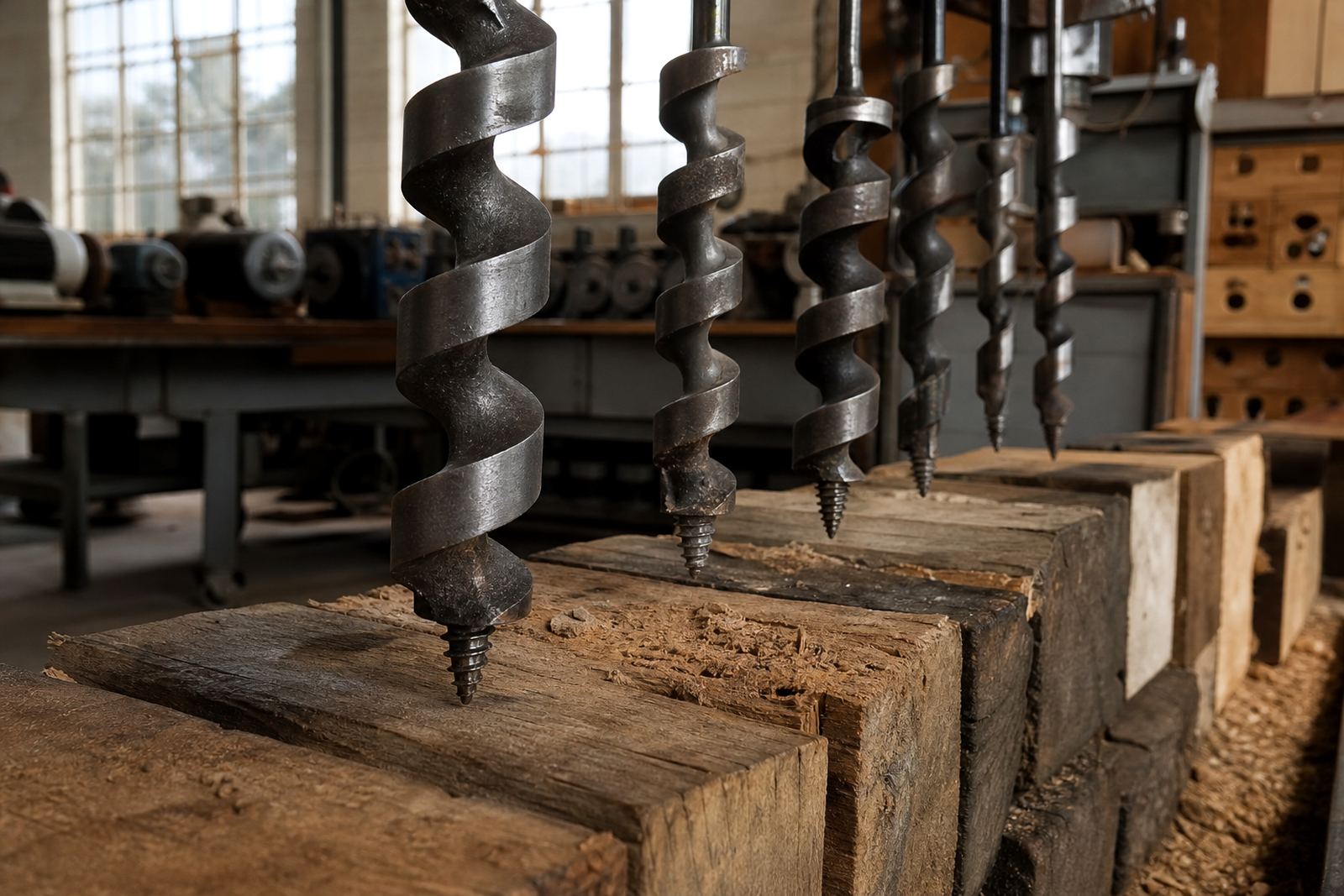
Auger bits are made for deep, controlled boring in timber, where a screw point draws the bit in and the flutes move out chips as it cuts. When the lead point is blunt, the spur edges are uneven, or the body is slightly bent, the bit starts to wander, burns the workpiece, and takes far more pressure to feed.
We sharpen auger bits for carpenters, maintenance teams, furniture shops, contractors and serious hobbyists who work with hardwood, softwood, treated pine and construction timber. A correctly sharpened auger bit should start cleanly, cut straight, and clear waste without packing the flutes. If the bit is dragging or leaving a rough hole, it is usually time for regrinding rather than trying to force another few jobs out of it.
Our workshop in Pinetown handles single bits and batch sets, with courier collection arranged across South Africa including Durban, Pietermaritzburg, Johannesburg, Pretoria and Cape Town. For sites with regular tool turnover, we can tag batches so you know which bit came from which job, van or crew set.
Sizes, Types And Regrinding Options
Auger bits come in a range of diameters and lengths, and each size needs the right handling at the cutting edge. Small bits need a light touch to keep the point centred, while larger diameters often need more attention to the lip angles, flute clearance and straightness. We work on common workshop sizes from small pilot augers through to larger hole-making bits used in heavy timber work.
Depending on condition, we may do a light sharpen, full regrind, or correction work if the bit is no longer cutting evenly. That can include point renewal, edge grinding, diameter correction where wear has taken the bite out of the cut, and chipped edge recovery where a hard knot or hidden nail has damaged the tip. If the bit has been overheated or the temper has been affected, we will advise on whether it is still practical to restore.
- Single auger bits for occasional use
- Matched sets for site crews and workshops
- Short and long-shank augers
- Bits with worn lead screws or blunt cutting lips
- Damaged tips needing edge recovery or correction
Where Auger Bits Suit Best
Auger bits suit timber drilling where you need a strong feed action and a clean chip path. They are useful for beams, posts, floor framing, carpentry joinery, fence work, and maintenance jobs where power tools need to bite quickly without wandering. In coastal areas such as Durban and Cape Town, keeping cutting edges sharp also helps reduce heat build-up, which can be a problem in humid conditions and on resinous timber.
These bits are a good fit for hand drills, corded drills and heavy-duty drill systems used on site. For repeated use in dense material, a properly sharpened auger bit is easier on the operator and on the motor because it needs less force to keep moving. That matters during load-shedding too, when crews want to finish a job quickly once power is back and avoid wasting a charging cycle or generator fuel on a blunt tool.
For trade work, we often see auger bits used where clean hole entry and controlled waste removal are more important than speed alone. If the bit is bouncing, smoking, or pulling too hard, the problem is usually edge condition, not the drill itself.
Installation, Power And Working Conditions
Auger bits are usually fitted to standard drill chucks or compatible drive systems, depending on the shaft size and tool type. Before use, check that the shank is seated properly and the chuck is tightened evenly. A loose bit can wobble, mark the hole and create unsafe side load on the drill. For larger diameters, make sure the drill has enough torque for the timber and depth you plan to cut.
These bits do not need gas, but they do need the right power source and enough torque to stay consistent under load. Corded drills are often preferred for heavier timber work in workshops, while cordless tools should have a fully charged battery and enough rated power for the diameter being drilled. If the tool is undersized, the bit will chatter and the edge will wear faster, especially in dense hardwood or old dry timber.
- Use the correct chuck size for the shank
- Keep the drill square to the workpiece
- Back the bit out regularly to clear chips
- Do not force the feed if the hole starts to smoke
- Stop if you hit embedded metal or stone in reclaimed timber
Care And Servicing Between Jobs
Good care starts the moment the job is done. Brush off sawdust, resin and moisture, then store auger bits dry so rust does not start at the cutting edge or in the flutes. In humid coastal conditions, a light protective coating helps prevent surface corrosion, especially if the bits are kept in a van or open site box. If a bit is left dirty overnight, fine grit can dull the edges quicker than normal cutting wear.
Check the screw point and the cutting lips regularly. If the lead point is dull, the bit stops feeding itself and the drill has to do all the work. If one lip is more worn than the other, the bit can drift and leave an oversized or uneven hole. That is when a regrind will save time, material and frustration.
We also offer training and starter kits for teams that want to manage basic tool care more consistently. A short routine on cleaning, storage and handling can add useful life to auger bits, drill bits and other cutting tools between full sharpenings.
What To Check When You Send In An Order
When you order auger bit sharpening, it helps to send clear details so we can match the right service to the bit’s condition. If you are booking courier collection, include the number of bits, the sizes, and whether you want sharpen only or full regrinding. For mixed batches, separate damaged bits from regular wear items so we can inspect them properly on arrival.
We recommend checking the following before you send tools in:
- Diameter and overall length of each auger bit
- Shank type and whether it fits your drill chuck
- Condition of the screw point, lips and flutes
- Any chips, bends, cracks or heat discolouration
- Whether the bits are for hand drilling or powered use
- If you need batch tagging for site or workshop tracking
If you are in Pinetown, Westville or Hillcrest, local drop-offs are straightforward. For other areas including Durban, Pietermaritzburg, Johannesburg, Pretoria and Cape Town, courier collection keeps the process simple. Once the tools are assessed, we can advise on the likely outcome, turn-round and any correction work needed before the bits go back into service.
Key facts
| Service area | Pinetown, Durban, Pietermaritzburg, Johannesburg, Pretoria and Cape Town |
|---|---|
| Bit types | Standard auger bits, long-shank augers, matched sets, damaged or worn bits |
| Work carried out | Sharpening, regrinding, point renewal, edge recovery, diameter correction |
| Typical use | Timber drilling, joinery, framing, maintenance and site work |
| Collection option | Courier collection booking available nationwide |
| Workshop base | Pinetown, KwaZulu-Natal |