What Masonry Drill Reconditioning Covers
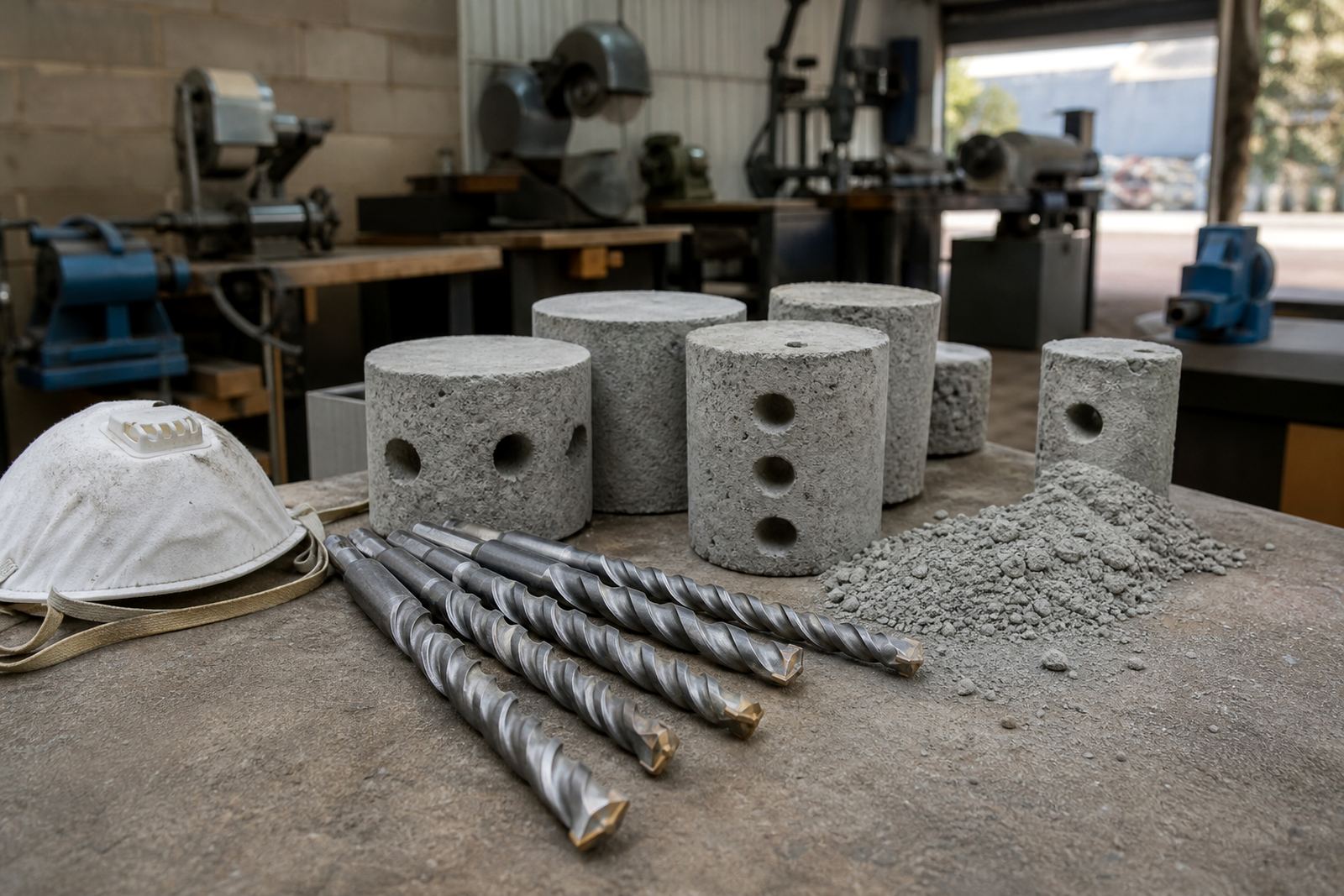
Masonry drills are made to bite into hard building materials such as brick, concrete block, cement render and similar site surfaces. Over time the carbide tip rounds off, the point goes blunt, or the cutting edges chip from drilling into aggregate and old mortar. Reconditioning restores the working end so the drill cuts cleaner and needs less pressure.
Our masonry drill service is suited to standard hammer drill bits and SDS style bits used on site and in workshop work. We assess the point, flute condition, shank wear and any heat damage before sharpening. If the bit is too short, badly bent or cracked at the tip, we will advise on replacement because a poor bit can walk off line and waste time on the job.
This service is useful for builders, electricians, plumbers, solar installers and maintenance teams who want better hole quality and fewer split anchors. It also helps hobby users who only drill a few holes at a time but want a proper result in brick or block.
Sizes, Shanks and Point Types We Work On
Masonry drills come in a wide range of diameters and lengths, so the right setup depends on the fixing size and the material you are drilling. We handle common workshop and site sizes from small pilot bits through to larger hammer drills used for anchor holes and service fixings. The key is keeping the point true and the cutting edges even, otherwise the bit wanders and drills oversize holes.
We recondition standard carbide tipped masonry drills as well as many SDS Plus and SDS Max style bits where the geometry still allows it. For drills with stepped wear, one flute damaged more than the other, or tips that have lost symmetry, we check whether a regrind will bring them back into usable shape.
- Common diameters: 4 mm to 20 mm and larger on request
- Lengths: short utility bits through to long reach site bits
- Shanks: round shank, hex shank, SDS type shanks
- Point condition: worn, chipped, uneven or heat marked tips
Where Masonry Drills Suit Best
These drills suit day to day drilling into masonry where a clean starting point and reliable bite matter more than speed alone. They are commonly used for wall plugs, sleeve anchors, trunking fixings, conduit clips, frame anchors and general building maintenance. On older structures, especially in coastal areas like Durban and the North Coast, worn masonry can crumble if the drill is blunt so keeping the tip sharp helps control breakout.
On site, the drill should match the material. Soft block needs a different touch from dense brick or cured concrete, and hard aggregate can punish a bit very quickly. A sharp masonry drill reduces load on the machine, which matters during long shifts and during load-shedding when cordless tools are carrying the day with less backup. If a drill is cutting hot, smoking or leaving ragged edges, it is normally overdue for checking.
For workshop users in Pinetown, Westville and Hillcrest, we also see masonry drills used in fabrication, maintenance and fitting work where holes have to land accurately first time. In those cases the end result is not only about speed, but about clean plugs and less rework.
Key facts
| Product | Masonry drill reconditioning and point restoration |
|---|---|
| Materials | Brick, block, render, concrete and similar masonry |
| Size range | Typically 4 mm to 20 mm, larger sizes by assessment |
| Shank types | Round shank, hex shank, SDS Plus and SDS Max |
| Service area | Pinetown, Durban, Pietermaritzburg, Johannesburg, Pretoria, Cape Town and surrounding areas |
| Turnaround | Depends on batch size, condition and courier collection booking |