What a Rip Saw Blade Does in Daily Cutting
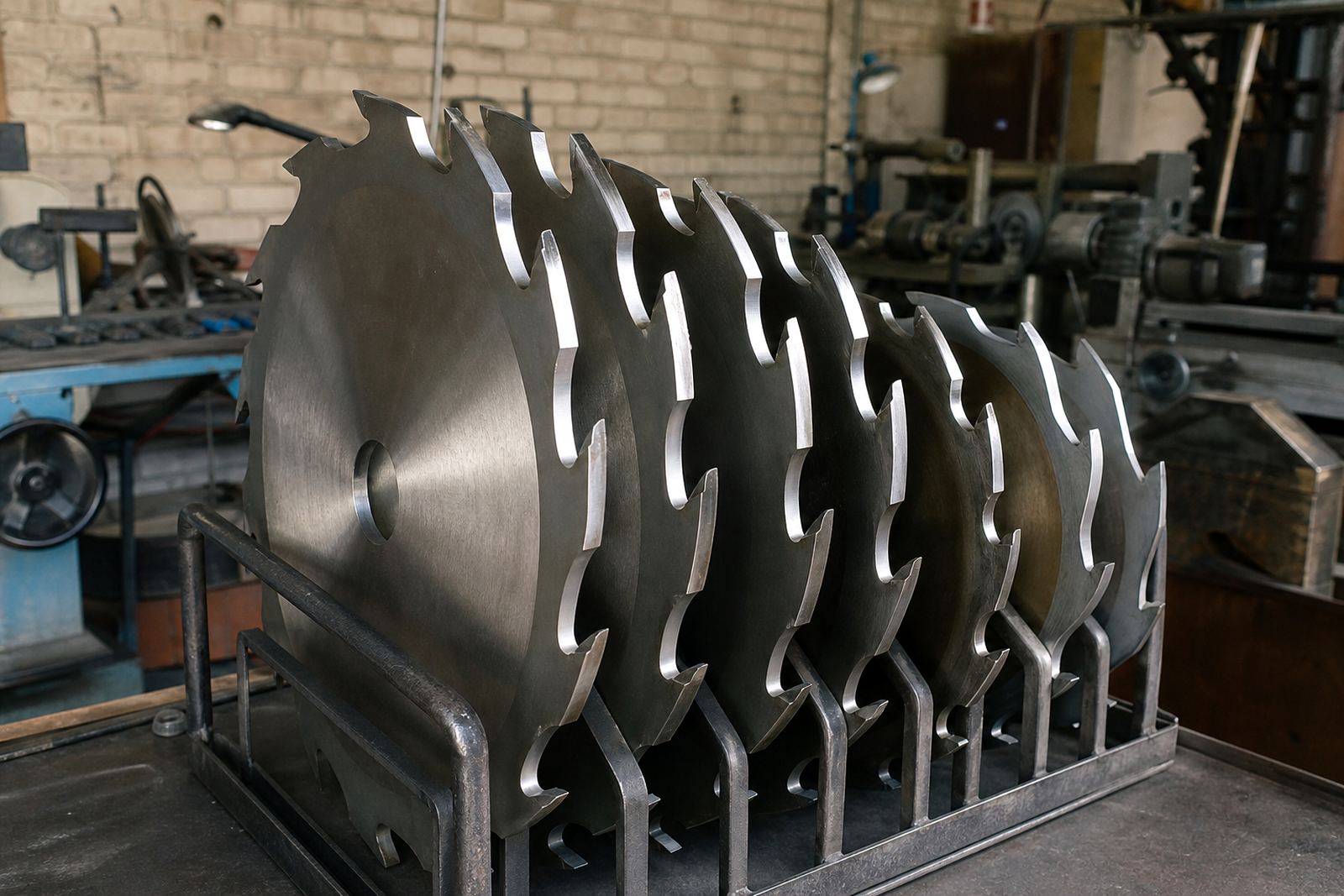
A rip saw blade is made for cutting timber along the grain, so the tooth form is more aggressive than a crosscut blade and the gullets are usually deeper to clear chips quickly. That design helps when you are milling boards, breaking down planks, or feeding timber through a saw all day in a workshop, yard or small production line.
When the teeth go blunt the blade starts to burn, wander, or leave a rough edge that slows the next operation. In humid coastal conditions around Durban and Pinetown, resin and fine sawdust can build up quickly as well, so regular sharpening and cleaning matter just as much as the cut itself. We regrind rip blades to bring back the tooth face, top rake and side clearance needed for straight, efficient cutting.
Sizes, Tooth Forms and Blade Options We Service
We work on common rip saw blade sizes used on table saws, panel saws, mitre saw set-ups and industrial cutting machines. Blades are inspected for tooth wear, plate condition and heat damage before any grinding starts. If the plate is bent, cracked or badly overheated, we will say so before proceeding because a blade that is unsafe should not go back into service.
Typical rip blade options include carbide tipped and some high-speed steel styles, depending on the machine and material. We can also handle blades with different tooth counts and set patterns, so the finish suits the job you are doing.
- Small workshop blades from about 160 mm to 300 mm diameter
- Medium blades for cabinet and site saws, often 350 mm to 500 mm
- Large industrial blades up to 700 mm and above, depending on condition
- Tooth counts from coarse rip patterns to mixed production layouts
- Special attention to gullets, side clearance and tooth height consistency
Where Rip Saw Blades Suit Best
Rip saw blades suit timber cutting where speed and feed control matter more than a polished finish. They are commonly used for ripping softwood, hardwood, construction timber, treated pine and prepared boards before planing or further machining. For furniture workshops in Westville or Hillcrest, and for larger yards in Durban or Pietermaritzburg, the right rip blade can save time on each pass and reduce rework.
They also suit batch work where the same cut is repeated many times. If you are processing timber for framing, shelving, packaging, pallet work or general joinery, a correctly sharpened rip blade keeps the cut straight and reduces strain on the saw motor. That matters when load-shedding means you need equipment to start and run cleanly every time power comes back on.
- Best for straight cuts along the grain
- Useful on rip fences, sliding tables and fixed saws
- Suited to timber yards, joiners, cabinet shops and site work
- Less ideal for fine crosscuts where tear-out control is the priority
Power, Installation and Machine Fit Checks
Rip saw blades do not need gas, but they do need the right machine fit, arbor size and safe guarding. Before fitting, check the blade diameter, bore size, spacer arrangement and the direction of rotation. A blade that is even slightly mismatched can rub, chatter or run hot, which shortens cutting life and can damage the saw spindle.
We recommend checking machine speed against the blade rating, especially on older saws and imported units where plate speed or guard clearance may vary. If the saw is used on 220 V supply or three-phase power, make sure the machine starts cleanly and reaches speed without hesitation. On sites with unstable supply, a dull blade places extra load on the motor and that can become a problem very quickly.
For safe installation, keep the flange faces clean, use the correct arbor washer and make sure the blade sits flat. If a blade has been re-tensioned or corrected after a knock, it should be checked again after a short trial run.
Care, Cleaning and Regrinding Intervals
Good care starts with keeping pitch and resin off the teeth. Timber that carries glue, dust and moisture will build up faster, especially on coastal jobs or in hot summer conditions. Wipe the blade after use, store it dry and avoid stacking it where the teeth can chip against other steel items. A small chip on one tooth can throw the whole cut off line, so it pays to catch it early.
As a general guide, a blade should be sharpened when the motor starts working harder, the cut slows, or the finish becomes rougher than normal. If you are seeing burn marks, extra vibration or a need to force the feed, the edge is already past the point where it should have been serviced. We can also check for chipped edge recovery, diameter correction and balance checking where required.
- Clean resin and dust before storage
- Keep blades dry and flat in a rack or sleeve
- Avoid contact with nails, staples and abrasive dirt
- Book regrinding before heat damage becomes permanent
What to Check When Ordering a Rip Saw Blade Service
When you send in a rip saw blade or ask for collection, the useful details are the blade diameter, bore size, tooth count, machine type and the kind of timber you cut most often. If the blade has been used for pressure-treated timber, wet stock or material with glue lines, say so upfront because that affects the cleaning and grinding approach. It also helps us assess whether the plate is worth saving or if the blade has gone beyond economical repair.
We collect and receive blades from Pinetown, Durban, Pietermaritzburg, Johannesburg, Pretoria and Cape Town through courier booking, and we also work with customers in Westville and Hillcrest. For larger batches, tagging each blade helps keep sets in order and avoids confusion when you have mixed sizes on the same job. If you are not sure about the spec, send a clear photo of the blade face and hub area with your enquiry form details.
For workshops that run on tight schedules, batch service is often the best way to keep cutting time steady. That is especially useful where saws are used every day and you cannot afford a blade that drifts off cut or burns the edge of the board.
Key facts
| Product type | Rip saw blade regrinding and edge restoration |
|---|---|
| Common diameters | 160 mm to 700 mm plus, subject to condition |
| Materials serviced | Carbide tipped and selected high-speed steel blades |
| Typical use | Straight cutting along the grain in timber and boards |
| Service options | Sharpening, top grinding, angle resetting, balance checking |
| Collection area | Pinetown with courier collection across South Africa |