What Counterbore Bits Do In The Workshop
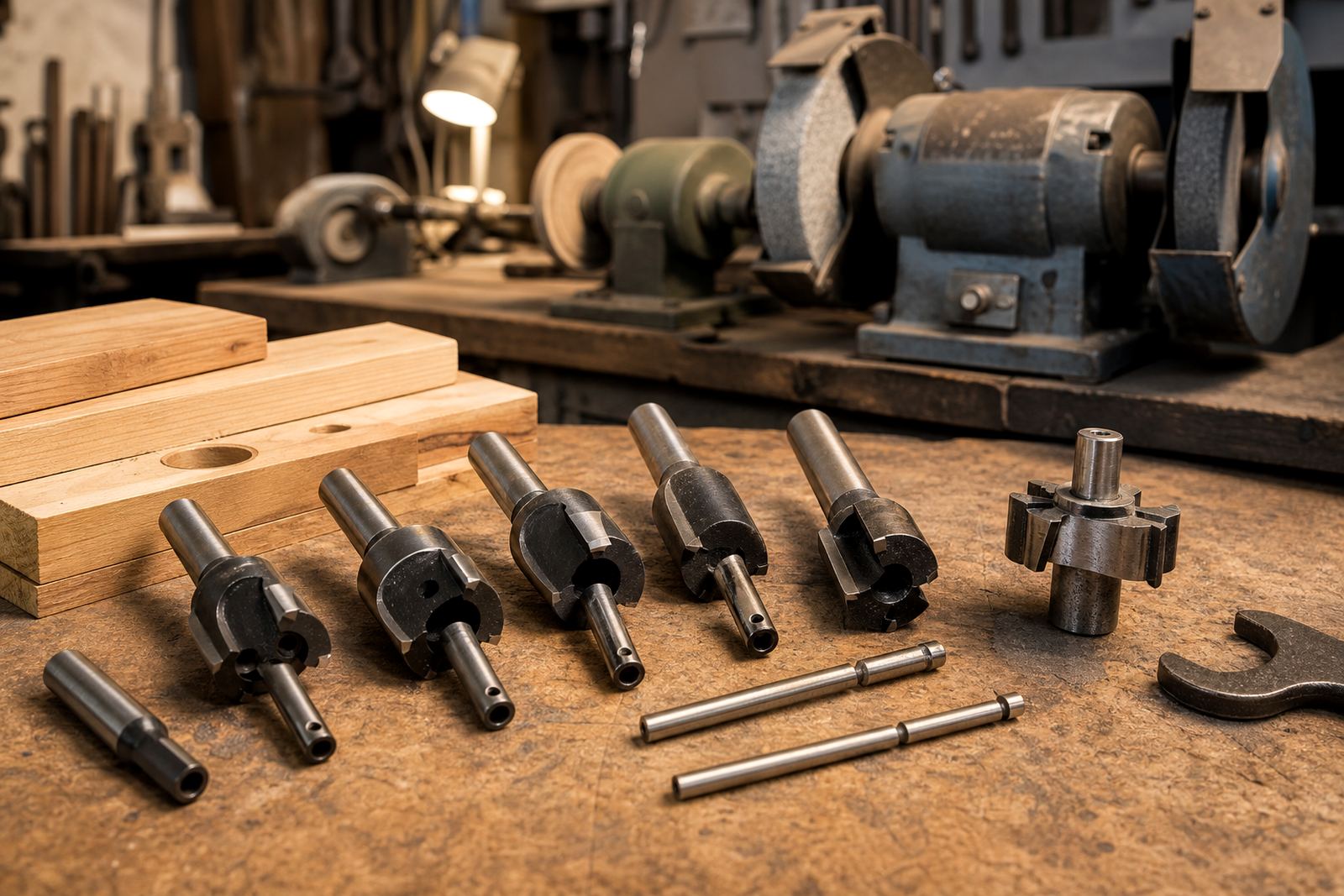
Counterbore bits are used to cut a flat-bottom recess so a fastener head sits below the surface, then a pilot hole carries the screw or bolt through the centre. In timber, laminated board and some softer plastics, that gives a neater finish and helps the plug sit properly afterward. When the cutter goes dull, the recess can wander, the finish tears and the plug may sit proud or loose.
We sharpen and regrind counterbore tools used for cabinetry, joinery, shop fitting, maintenance work and general workshop production. If you are working in humid coastal conditions in Durban or on site in Pietermaritzburg, a clean cutting edge helps reduce heat and burning on the material. It also reduces strain on the machine because the cutter does not have to fight through fibres as hard.
Typical reasons to send counterbore bits in are chipped lips, uneven recess depth, burn marks, worn pilots and a cut that no longer matches the screw head depth you need. If the body is still sound, regrinding is usually the practical option.
Sizes, Styles And Cutting Specifications We Handle
Counterbore tools come in a range of outside diameters and pilot sizes, depending on the screw or bolt being used. We work on common workshop sizes as well as mixed batches from production benches, maintenance kits and mobile crews. For best results, send the full set so the pilot, cutter and depth relationship can be matched properly.
We service counterbore bits for timber and board work, including fixed shank and adjustable types, plus tools with replaceable pilots or separate pilot drills. Where the tool allows it, we can restore the cutting face, clean up the top grind and check the geometry so the recess depth stays even across the batch.
- Common outside diameters: 10 mm to 35 mm
- Typical pilot sizes: 3 mm to 8 mm
- Shank types: round, hex and mixed pilot assemblies
- Best suited materials: softwood, hardwood, MDF, plywood and laminated board
- Common work: screw recesses, plug recesses, concealed fixings and flush finishing
For larger production runs, batch tool tagging helps keep matching pieces together after courier collection. That is useful when several operators are sharing the same kit and need the same depth and finish from one tool to the next.
Where Counterbore Bits Suit Best
These tools suit carpentry, cabinet making, built-in furniture, framing, repair work and site fitting where a neat hidden fixing is needed. They are also useful for test pieces and small-run production where the appearance of the finished joint matters. In Johannesburg and Pretoria, many workshops use them for joinery and installation jobs where time matters but the finish still has to be clean.
If you are making plug-covered holes, fitting skirting, assembling panels, or preparing timber for face fixings, a sharp counterbore tool saves time on sanding and rework. On older timber or denser hardwoods, a blunt cutter tends to chatter and leave a rough shoulder. That can affect the plug seat and leave the screw head too tight.
We also see counterbore tools used with cordless drills, drill stands and bench machines. The cutter itself does not need power or gas, but the machine used to run it must be steady enough to hold alignment. If the spindle has play, or the chuck is worn, even a sharp bit can drift and give an uneven recess.
Installation And Machine Requirements
Counterbore bits are usually fitted into a drill chuck, drill stand or dedicated boring machine. The important part is alignment. If the pilot is not centred, the recess can oval out and the plug will show. For site use, make sure the chuck grips the shank properly and that the pilot can spin without rubbing on the edge of the cutter body.
There is no gas requirement for the tool itself. Power needs depend on the drill or machine being used, but these bits are often used on standard electric drills, cordless drills and bench setups. For repetitive work, a drill stand gives better consistency, especially when you are cutting into hardwood or doing a batch of identical recesses.
- Check chuck grip before starting a run
- Keep the pilot clear of glue, resin and sawdust
- Use a stable feed rate to avoid scorching
- Do not force the cut if the tool is dragging
- Confirm the recess depth against the fastener head before production
In coastal areas such as Durban, Westville and parts of Cape Town, wipe tools dry after use and store them indoors. Humidity can lead to surface rust and make the pilot seize if the tool is left packed away with dust and moisture.
Care, Servicing And Signs It Is Time To Regrind
Good care starts with cleaning. Remove resin, glue and fine dust after each job, especially on laminated board and softwood that can leave sticky build-up on the cutting face. A light coat of protection oil on the steel parts helps during storage, but keep the cutting edges clean before use. If the bit has been dropped, inspect it before the next job because a small nick can throw off the recess.
Signs that your counterbore bit needs servicing include burning, squealing, rough shoulders, shallow recesses and a pilot that no longer centres cleanly. If you are seeing chip-out around the edge of the hole, the cutting edge may be dull or the geometry may be out. Once the lip is worn past a practical point, sharpening alone may not hold and a regrind is better.
We can assess chipped edge recovery, burn mark removal and angle resetting where needed, then balance check the tool so it runs properly again. For busy workshops in Pinetown, Hillcrest and Durban, regular servicing helps avoid stoppages when a tool suddenly starts cutting badly in the middle of a run.
What To Check Before You Send Counterbore Bits In
To make sure the right work is done, send the full tool if possible, not just a loose cutter head. If the pilot is replaceable, include it. If there is a set screw, spacer or depth stop, send those pieces too so we can check the complete setup. Mixed batches should be marked if you need certain sizes returned together.
Before ordering sharpening, please check the following:
- Outside diameter of the cutter
- Pilot diameter and length
- Shank type and size
- Material being cut most often
- Whether the tool is for plugs, hidden fixings or general recessing
- Any damage such as chips, bends or severe burning
If you are unsure of the size, measure across the cutter body and the pilot with a vernier or rule and note the screw head size you want to clear. That helps us match the recess properly. For courier collection from anywhere in South Africa, send the batch details through the enquiry form on our contact page and we will arrange collection from your location.
Key facts
| Service | Sharpening and regrinding for counterbore bits |
|---|---|
| Typical size range | 10 mm to 35 mm outside diameter |
| Pilot sizes handled | 3 mm to 8 mm, depending on tool type |
| Suitable materials | Softwood, hardwood, MDF, plywood and laminated board |
| Collection areas | Pinetown, Durban, Westville, Hillcrest, Pietermaritzburg, Johannesburg, Pretoria and Cape Town |
| Collection method | Courier collection booking across South Africa |