What a table saw blade service covers
A table saw blade is more than a round cutter with teeth. The tooth form, hook angle, plate condition and balance all affect how it cuts melamine, MDF, ply and solid timber. When a blade is dull or out of true, you see burn marks, rough edges, extra feed pressure and a louder machine, which slows the whole workshop down.
Our sharpening and regrinding work covers carbide-tipped and steel blades used on cabinet saws, rip saws and panel saw setups. We restore the cutting face, clean up the tooth profile and check the blade for damage that can cause vibration or unsafe running. If the blade has hit a nail or suffered a heavy knock, we look for chipped teeth, plate distortion and uneven wear before it goes back into service.
Sizes, tooth counts and common blade types
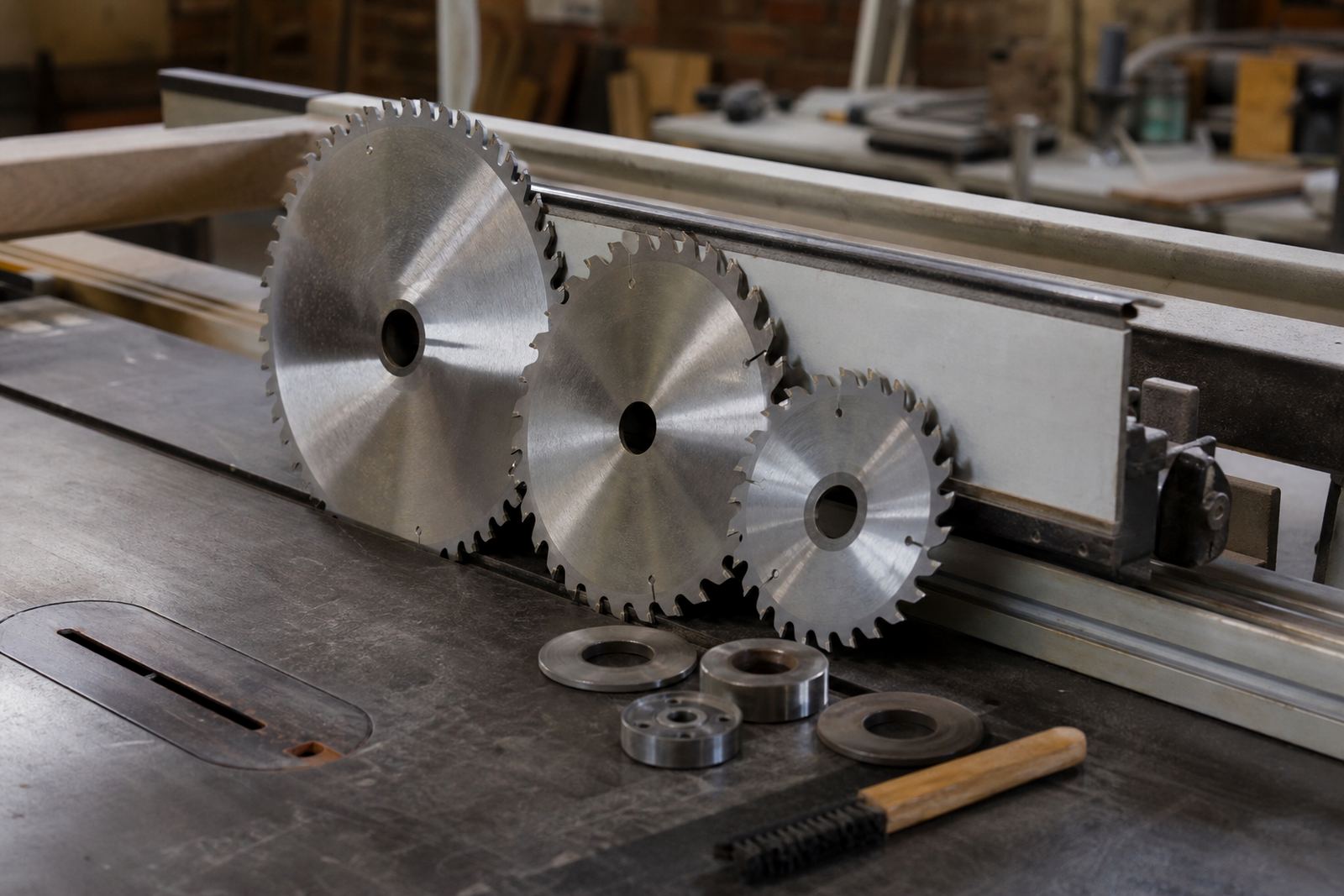
Table saw blades are not all the same, and ordering the right service starts with the correct details. We handle small workshop blades and larger production blades, including blades for fine finishing cuts and blades for fast ripping work. Most blades are supplied with outside diameters from 250 mm to 350 mm, though other sizes can be checked on request.
- Outside diameters commonly 250 mm, 300 mm and 350 mm
- Arbor holes commonly 20 mm, 30 mm and other workshop sizes
- Tooth counts from coarse rip blades to fine finish blades
- Carbide-tipped and high-speed steel blade types
- Special tooth forms for laminate, chipboard and hardwood work
We also work on blades with alternate top bevel, flat top and combination tooth patterns. If your blade has a special grind for a certain material, send the current cutting notes with it so the angle and finish can be matched properly.
Where these blades suit best in South African workshops
Table saw blades are used in cabinet shops, joinery shops, shopfitting yards and home workshops that need repeatable cuts. In Pinetown, Durban and Westville many customers run blades daily on humid coastal sites, where resin build-up and corrosion can shorten service life if blades are left dirty. Inland workshops in Johannesburg, Pretoria and nearby areas often see dust-heavy use, which can pack into the gullets and affect cut quality as well.
For cutting kitchens, built-ins, doors, skirting and shelving, the right blade saves sanding time and keeps edges cleaner. It also helps when the workshop is working under load-shedding pressure, because a well maintained blade takes less strain from the machine and reduces waste when power returns and production has to catch up.
- Cabinet making and fitted furniture work
- Joinery and trim production
- Panel cutting for MDF, melamine and ply
- Small production runs and daily workshop use
Installation checks before the blade goes back on the saw
Before refitting any blade, check the machine table, arbor and flanges for sawdust, pitch and damage. A sharp blade will still cut poorly if the saw is not set up square. Make sure the arbor hole size matches the shaft exactly, and that the blade rotates in the correct direction for the machine. If the guard, riving knife or fence is out of alignment, fix that first.
Power needs are simple for the blade itself, since it has no separate power or gas requirement. The saw machine must however be isolated before fitting or removing the blade, and the operator should use the proper spanner and safe handling steps. If the blade has a painted identification mark, keep it clean so the rotation and tooth direction are easy to confirm later.
- Confirm arbor hole and blade diameter before fitting
- Check flange faces for wear or burrs
- Verify rotation direction and tooth set-up
- Test the machine with a short trial cut after installation
Care that keeps the edge working longer
Routine care makes a real difference to blade life. Wipe off resin, dust and glue after use, and store the blade in a dry place so the plate does not corrode. In coastal areas around Durban and Pinetown, moisture can show up quickly on bare steel, so a light protective treatment helps if the blade is not going back into service the same day. Blades that sit dirty for too long often need more rework next time, and that adds cost.
Watch for signs that the blade needs attention: burning on the cut edge, rough finishes, drifting cuts, more motor load and chipped teeth. If you hear a change in sound, do not keep pushing the saw. A blade with a damaged tooth can pull the workpiece, mark the board and put extra strain on the machine bearings too.
What to check when you send a blade in
When ordering a sharpening or regrinding service, send the details that help us set up the job correctly the first time. A blade that arrives with no size notes can still be checked, but clear information speeds things up and avoids errors. If you use courier collection from anywhere in South Africa, pack the blade so the teeth are protected and the plate cannot bend in transit.
Please include any known service history, the material you cut most often, and whether you need standard sharpening or a more specific regrind. For regular workshop clients, batch tool tagging helps keep different blades separate, especially when several sizes go out together from Durban, Pietermaritzburg, Johannesburg, Pretoria or Cape Town.
- Outside diameter and arbor hole size
- Tooth count and tooth pattern if known
- Material you cut most often
- Visible damage such as chips, burn marks or bent plate
- Return details for courier booking and collection
Key facts
| Product type | Table saw blade sharpening and regrinding |
|---|---|
| Common sizes | 250 mm to 350 mm, other sizes on request |
| Typical tooth forms | ATB, FT and combination patterns |
| Materials supported | Carbide-tipped and high-speed steel blades |
| Use case | Cabinet making, joinery, panel cutting and workshop production |
| Service area | Pinetown with courier collection across South Africa |