What Countersink Bits Do In The Workshop
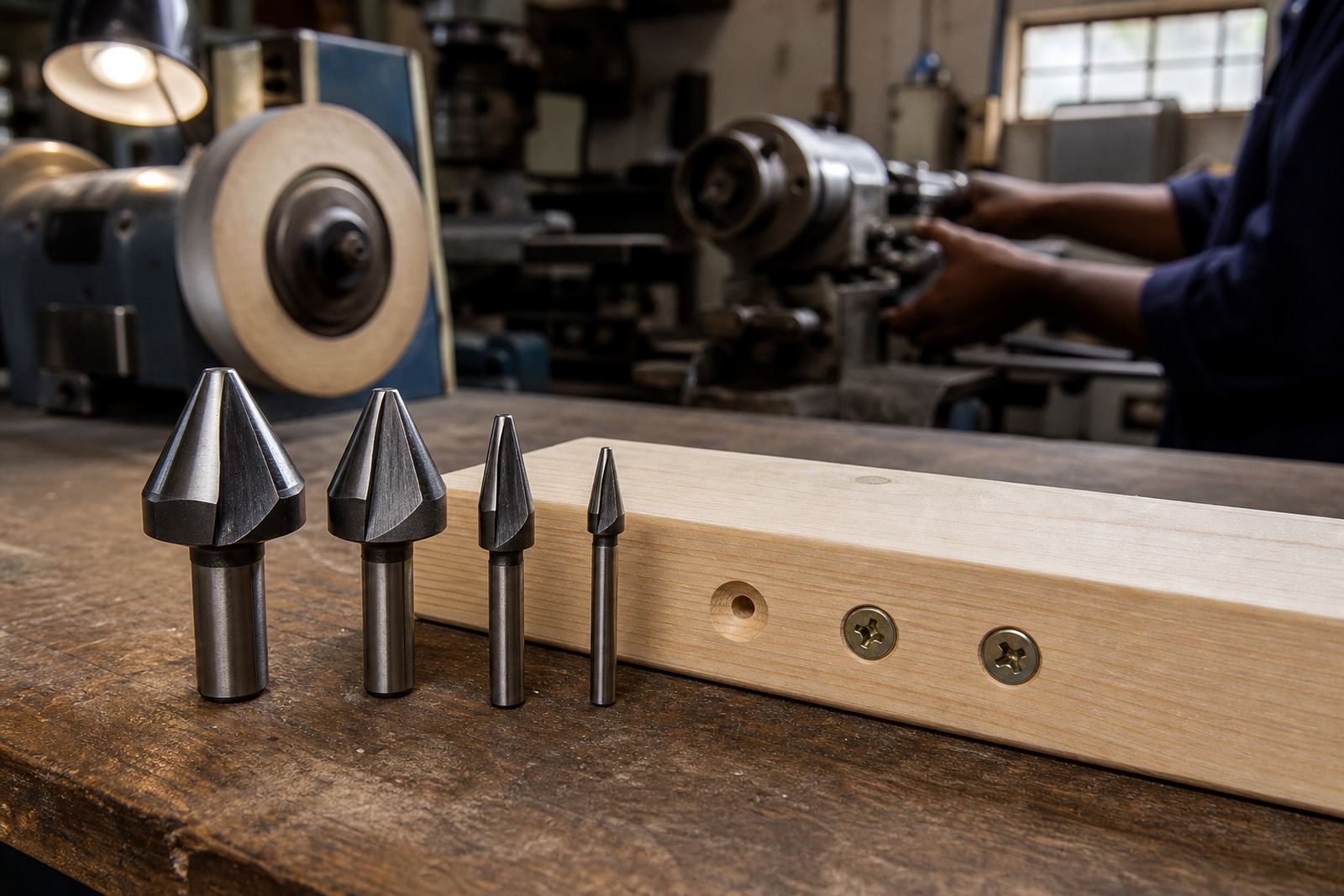
Countersink bits are used to form a conical recess so screw heads sit flush or slightly below the surface. In timber work, plastics and some softer non-ferrous materials, that small recess makes the difference between a tidy finish and a job that needs filling later. A worn bit can chatter, wander or leave a rough edge, and that usually shows up straight away on the workpiece.
We sharpen countersink bits used for cabinet work, site fixing, furniture assembly, signage, trimming and general finishing. The service suits hand drill use and drill press work, as well as batch use in small production runs. If the cutting lips are chipped, the point is blunt, or the pilot is not tracking correctly, the bit can usually be brought back into service with the correct grind and a proper check on the angles.
- For neat screw seating in timber, board and plastics
- For clean finish work where edge tear-out must be limited
- For repeated use in workshop and site conditions
- For tools that have dulled after long runs or contact with fasteners
Sizes, Flute Styles And Angle Options We Service
Countersink bits come in a range of diameters, flute counts and angles. We work on small hand-held bits and larger workshop bits, including standard single-flute and multi-flute styles. Common included angles are 60°, 82°, 90° and 100°, but the right choice depends on the screw head, the material and the finish required. If the angle is off, the screw may sit proud or the recess may be too deep.
When a bit is sharpened, the cutting faces must stay even so the bit cuts cleanly without pulling to one side. On some bits, the pilot section also needs attention if it has picked up wear or damage. We check the cutting edge, symmetry and overall balance before release. That matters when the job is being done on a drill press or at higher spindle speeds where a slight imbalance can cause a poor finish.
- Small, medium and large countersink diameters
- Single-flute and multi-flute cutting styles
- Common angles: 60°, 82°, 90° and 100°
- Hand drill, cordless drill and drill press use
Where Countersink Bits Work Best
These bits are used in joinery, carpentry, shop fitting, maintenance and light metalworking, depending on the material and bit design. In Durban and other coastal areas, humidity can affect both the workpiece and the tool, so a clean edge and proper storage become more important. In inland workshops around Johannesburg and Pretoria, bits are often used in longer production sessions where heat build-up and repeated edge wear show up quickly.
For timber and board, the bit should cut without tearing the top surface. For plastic, it must cut cleanly without grabbing or melting the edge from excess heat. For mixed jobbing work, the main thing is consistency. If you are doing batches for a fit-out, or fitting hardware one cabinet at a time, the same bit should give the same recess depth and finish from piece to piece.
We also see countersink bits used where load-shedding interrupts work and machines are started and stopped often. That stop-start pattern can leave tools in the chuck too long and sometimes with light corrosion around the shank or pilot. A service and quick inspection helps catch that early, before the edge is too far gone.
Installation, Machine Use And Power Needs
Countersink bits do not need gas. They are normally fitted to a hand drill, cordless drill or drill press. The right chuck size must match the shank and the bit should be seated firmly before work starts. For drill press use, the work should be clamped properly and the feed kept steady. A loose workpiece can throw the angle off and chip the edge on impact.
Power requirements are simple. If you are using a mains drill or drill press, stable power helps maintain a steady cutting speed, especially on harder timber and repeated runs. Cordless tools are fine for site work, but low battery voltage can reduce cutting speed and increase rubbing. That rubbing heats the edge and shortens the life of the tool. In coastal workshops, it is also worth wiping down the shank after use so moisture does not sit on the steel overnight.
- Fit the correct shank size securely in the chuck
- Clamp the workpiece before starting the cut
- Use steady feed pressure, not excessive force
- Keep the bit dry and clean after use
Sharpening, Regrinding And Care Between Services
Our countersink bit service includes sharpening and regrinding where needed. That may involve restoring the cutting lips, correcting the included angle, removing light damage and checking for even cutting action. If the bit has chipped edges, poor tracking or uneven wear, we look at whether the tool can be recovered cleanly or whether deeper repair is needed. The aim is to get the bit back to a condition where it cuts without wandering and leaves a cleaner recess.
For care between services, keep the bit free of resin, dust and moisture. A quick wipe after use helps, especially on jobs with pine, treated timber or board with glue residue. Do not use the bit if it is rubbing or squealing badly because that often means the edge is already dull. Store countersink bits separately where possible so the cutting edges do not knock against drills, screwdrivers or loose hardware in the box.
If you run a small workshop, batch tool tagging can help keep countersink bits identified by size, angle and job use. That saves time when several similar bits are in circulation and helps prevent the wrong bit being fitted to a finishing job. We can also advise on starter kits for maintenance and basic handling for new staff or trainees.
What To Check When You Send A Bit In
When ordering or sending a countersink bit in for service, it helps to note the diameter, angle and shank type. If you know the material it is used on, include that too. A bit used on hardwood needs a different level of attention than one used for light cabinet work. If there is visible damage, say whether it is chipped, blunt, bent or leaving rough edges. The more detail we have, the better we can match the service to the job.
Please also check the following before booking collection or dropping off in Pinetown, Westville or Hillcrest:
- Bit diameter and included angle
- Shank type and size
- Material it is used on
- Type of wear or damage seen
- Whether it is for hand drill or drill press use
For clients in Durban, Pietermaritzburg, Johannesburg, Pretoria and Cape Town, courier collection can be arranged through our enquiry form. We also assist trade customers who send in mixed batches with saws, drills and router bits, so the countersink bits can be tagged and processed with the rest of the tools in one run.
Local Service For Workshops Across South Africa
CutTool Sharpening is based in Pinetown, KwaZulu-Natal and has been serving South African users since 2008. Our team handles sharpening and regrinding work from small home kits to regular trade batches. If a countersink bit is still worth recovering, we work to bring back clean cutting and proper seating rather than leaving the job half done.
We collect and process tools for clients in Pinetown, Durban, Pietermaritzburg, Johannesburg, Pretoria, Cape Town, Westville and Hillcrest. Whether you are finishing cabinet doors, fitting hardware on site or keeping a maintenance set ready for the next job, a properly sharpened countersink bit saves time and reduces rework. That matters when the schedule is tight and the finish has to look right first time.
Key facts
| Service type | Sharpening and regrinding for countersink bits |
|---|---|
| Common angles | 60°, 82°, 90° and 100° |
| Typical use | Neat screw seating and finish work |
| Compatible machines | Hand drills, cordless drills and drill presses |
| Collection areas | Pinetown, Durban, Pietermaritzburg, Johannesburg, Pretoria, Cape Town |
| Workshop base | Pinetown, KwaZulu-Natal |