What sliding mitre blades are used for
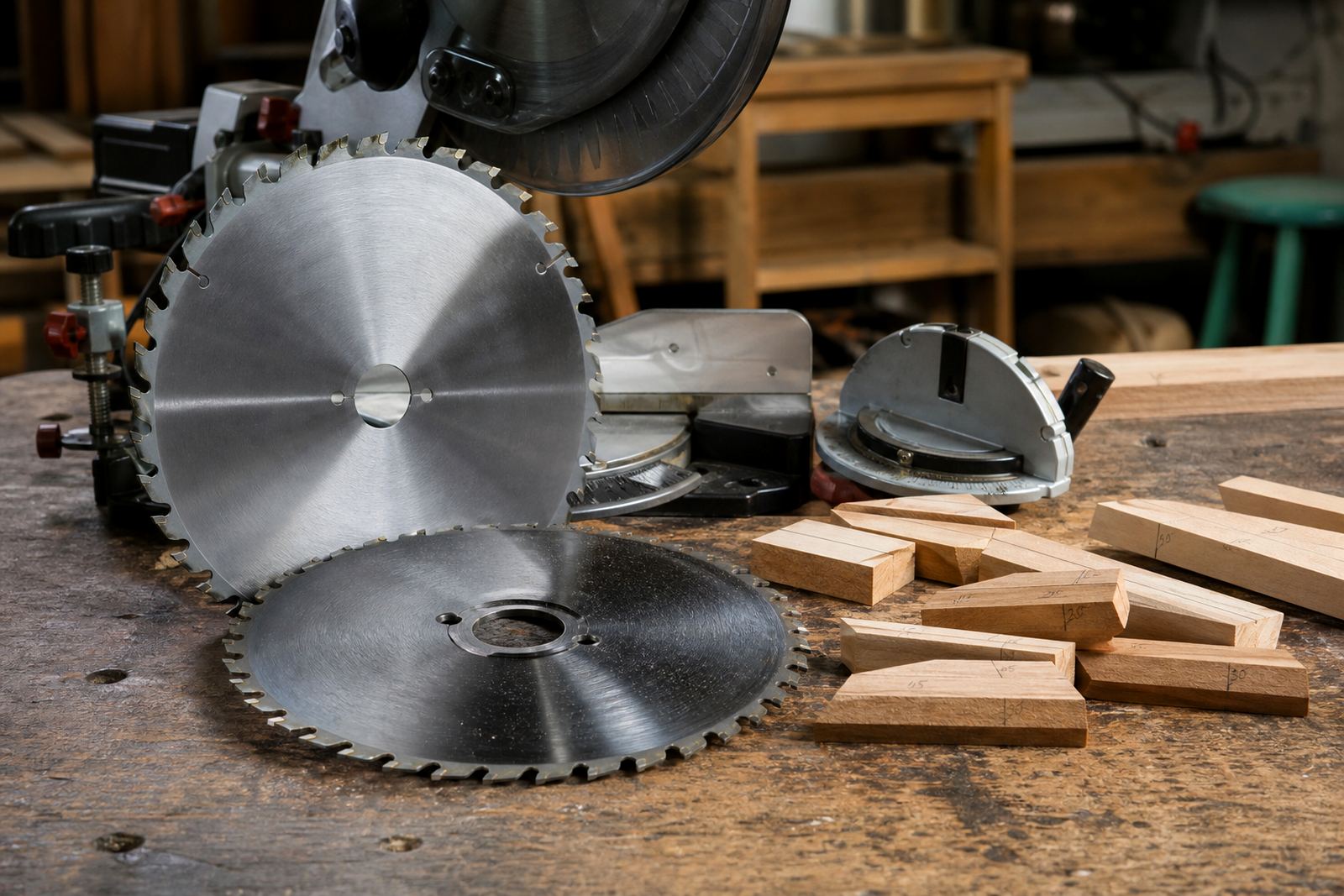
Sliding mitre saw blades are made for controlled crosscuts and angle cuts where finish matters. They are common in trim work, cabinet fitting, aluminium work, light production runs and framing jobs where a blade needs to cut straight without burning or chipping the edge. On a busy site in KwaZulu-Natal, a dull blade shows up fast as tear-out, rough shoulders and extra time spent sanding or redoing cuts.
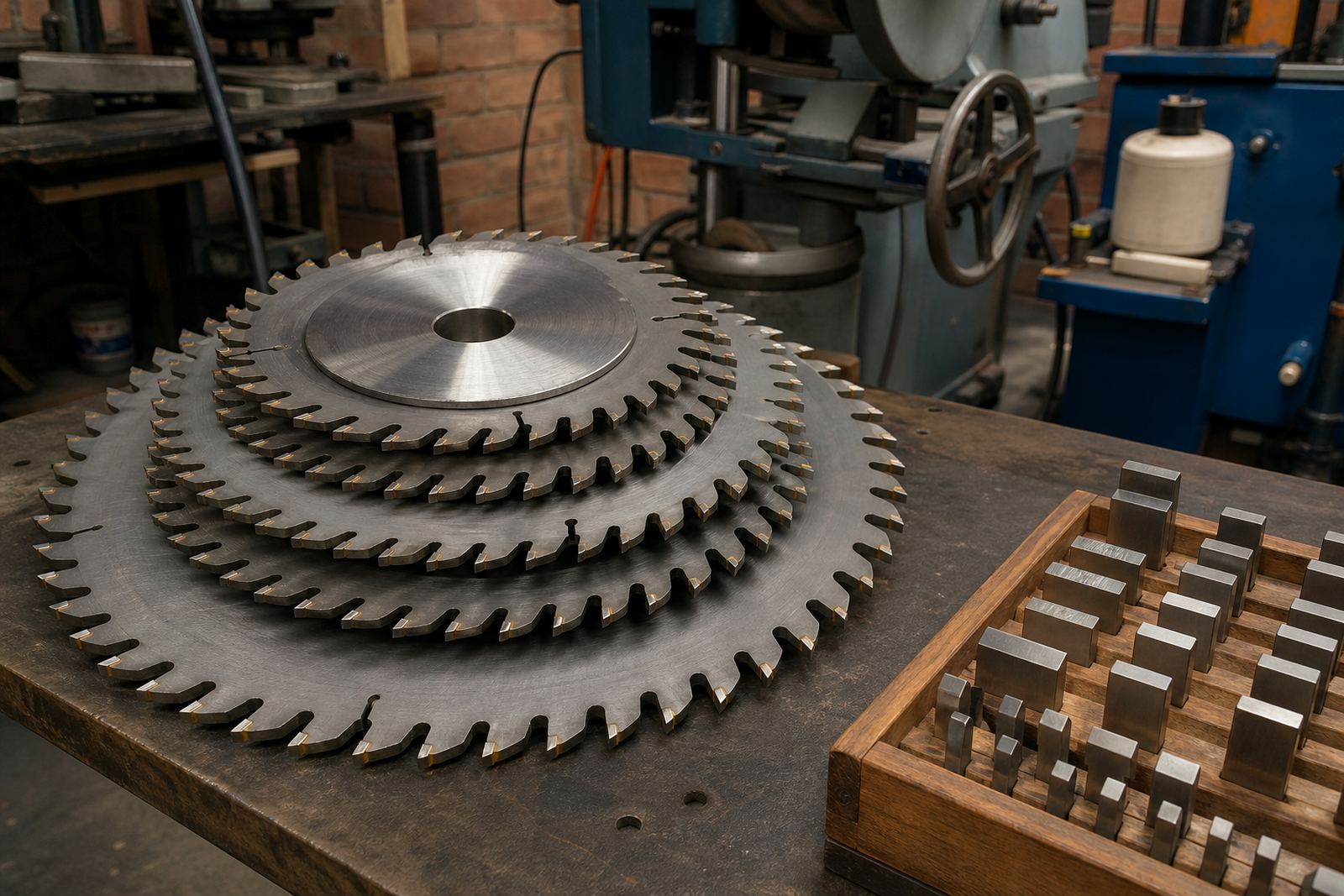
We sharpen blades used on sliding mitre saws for carpenters, fitters, joiners and hobby users. The aim is simple: restore a sharp cutting edge, keep the tooth geometry correct and make sure the blade tracks cleanly through timber or composite material. If the blade has been running hot, has minor edge damage or has started to pull to one side, we can inspect it and advise on the next step.
- Suitable for trim work and finishing cuts
- Used on softwood, hardwood, laminated board and selected composites
- Can be serviced after burn marks, chipped teeth or heavy site use
- Helpful where repeat cuts must stay consistent across a batch
Sizes, tooth counts and blade styles we service
Sliding mitre blades come in different diameters, tooth counts and tooth shapes. The right setup depends on the saw, the material, and how fine you want the finish. A 250 mm blade for general carpentry will not behave the same as a finer 300 mm blade used for clean finish work. We handle common workshop and site sizes, and check that the blade can still be corrected safely if it has wear or damage.
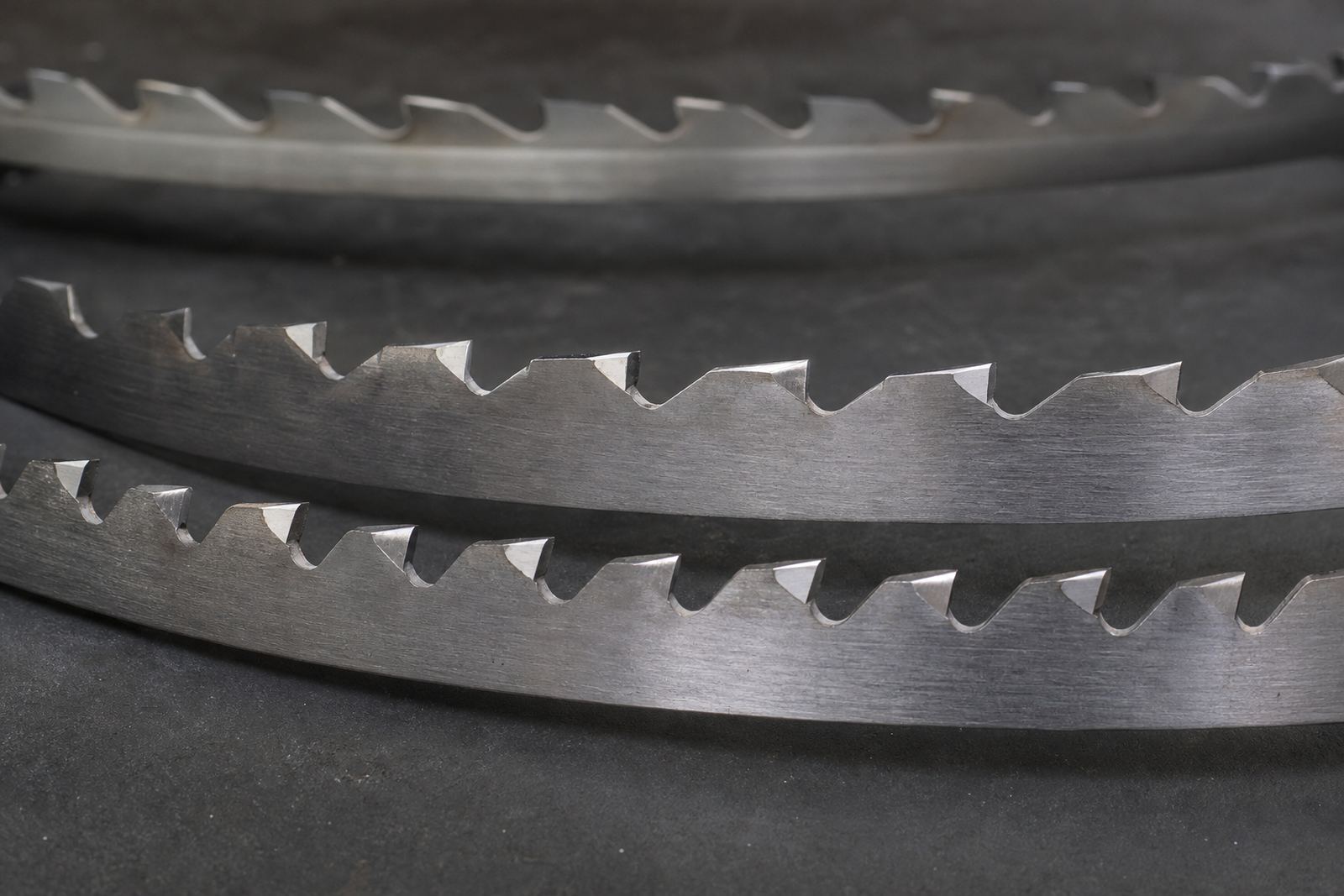
For many customers the most useful service is a sharpen plus a light regrind that restores the cutting face and side clearance. Where needed we can also correct diameter loss, reset angles and check balance. If the blade has been resharpened many times already, we will measure the remaining tooth life before proceeding.
- Common diameters: 210 mm, 216 mm, 255 mm, 300 mm and similar workshop sizes
- Tooth counts from coarse framing blades to fine finish blades
- Services include tooth face grinding, top grinding and angle resetting
- Can assist with chipped edge recovery and burn mark removal
Where these blades suit the job
These blades suit work where a sliding cut is needed for length, mitre or bevel accuracy. That includes skirtings, door casings, shelving parts, roof timber, lattice work and light batch production. In humid coastal areas like Durban and Westville, blades also need to be cleaned and stored properly because resin build-up and surface rust can become a problem if they are left in a damp workshop.
For jobbing shops and smaller production spaces, a sharp blade saves time on every cut. Less pressure on the saw means less motor strain, cleaner cuts and less chance of burning the timber. It also helps when power supply is not ideal and the machine has to work harder during load-shedding recovery or on a generator. A blade that cuts freely is easier on the operator and the saw.
- Trim installation and finishing carpentry
- Framing, light production and repeat cut work
- Workshop cutting where clean edges are important
- Sites where tool downtime needs to stay low
How we handle sharpening and regrinding
Blades are checked on arrival for tooth damage, warping, excessive resin and missing carbide tips. After inspection we clean the cutting area, set up the blade for the correct grind and measure the wear pattern. Where required, we remove burn marks, restore the tooth faces and correct the angle so the blade cuts true again. If the blade has a wobble, poor balance or unusual cutting noise, that gets looked at too.
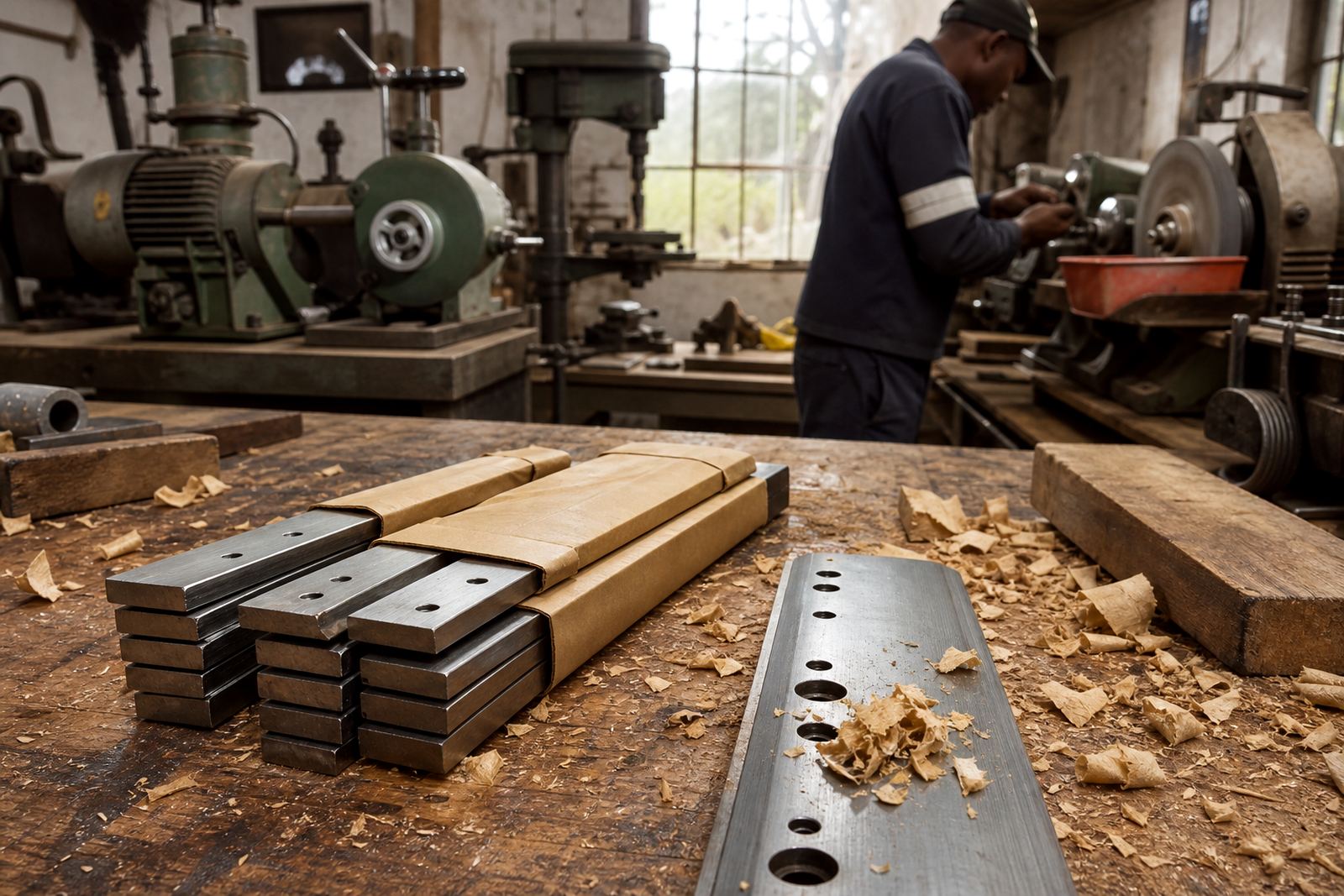
Some blades only need sharpening, while others need more correction because they have been through nails, dirty timber or repeated heavy use. We also offer batch tool tagging, which helps workshops keep different blades grouped by machine or job type. That saves confusion when several blades come in at once, especially for larger teams in Johannesburg, Pretoria or Cape Town. Careful labelling also helps when a workshop sends mixed items through courier collection. Small detail, but it keeps things moving.
- Inspection before grinding
- Sharpening for normal wear
- Correction for chips, burn marks and angle drift
- Batch handling for trade and production customers
Installation, power and machine checks
Sliding mitre blades do not need special installation beyond fitting the correct bore size and making sure the saw is isolated before changing blades. Always check that the blade direction matches the machine arrow, the flange faces are clean and the arbor is tight. A dirty flange can cause run-out and reduce cut quality even if the blade is sharp. Use the correct guard position and test the machine at idle before starting a cut.
These blades are designed for electric saws, not gas powered equipment. On sites with unstable supply, many customers run portable saws from battery or generator backup. The blade still needs to be matched to the saw speed and material, because forcing a fine blade through heavy stock can shorten life quickly. If your saw is underpowered, overloaded or has worn bearings, a sharpened blade will still struggle. The machine must be in good order too.
- Check arbor hole size before ordering
- Confirm saw rotation direction and maximum RPM
- Fit only on clean flanges and a sound arbor
- Keep guards, base and slide rails clean for accurate cuts
Care, servicing and what to check when ordering
For longer blade life, brush off dust after use, wipe resin build-up when warm and store blades dry. In coastal workshops, a light protective coating helps prevent surface corrosion. Do not throw blades loose into a toolbox where tooth edges can knock against steel parts. If a blade starts burning timber, leaving ragged edges or needing extra feed pressure, send it in before the damage gets worse.
When ordering service, the most useful details are the blade diameter, bore size, tooth count, material type and the saw it runs on. Tell us whether it is used for timber, laminated board, aluminium or mixed work, and whether you want a standard sharpen or a full regrind. If the blade has been bent, chipped or marked by a hidden nail, mention that up front. It helps us decide if the blade is a good candidate for repair or if it needs a closer inspection first. That saves time for everyone and keeps turnaround clear.
- Blade diameter and bore size
- Tooth count and material being cut
- Signs of damage such as chips, wobble or burning
- Preferred collection point for courier or drop-off
Key facts
| Service type | Sharpening and regrinding for sliding mitre saw blades |
|---|---|
| Common diameters | 210 mm to 300 mm and related workshop sizes |
| Typical uses | Trim work, framing, finish cuts and light production |
| Main checks | Tooth face, top grind, balance, diameter loss and burn marks |
| Collection | Courier collection across South Africa from Pinetown |
| Coverage | Durban, Pietermaritzburg, Johannesburg, Pretoria, Cape Town, Westville and Hillcrest |