What Grooving Saw Blades Do in the Workshop
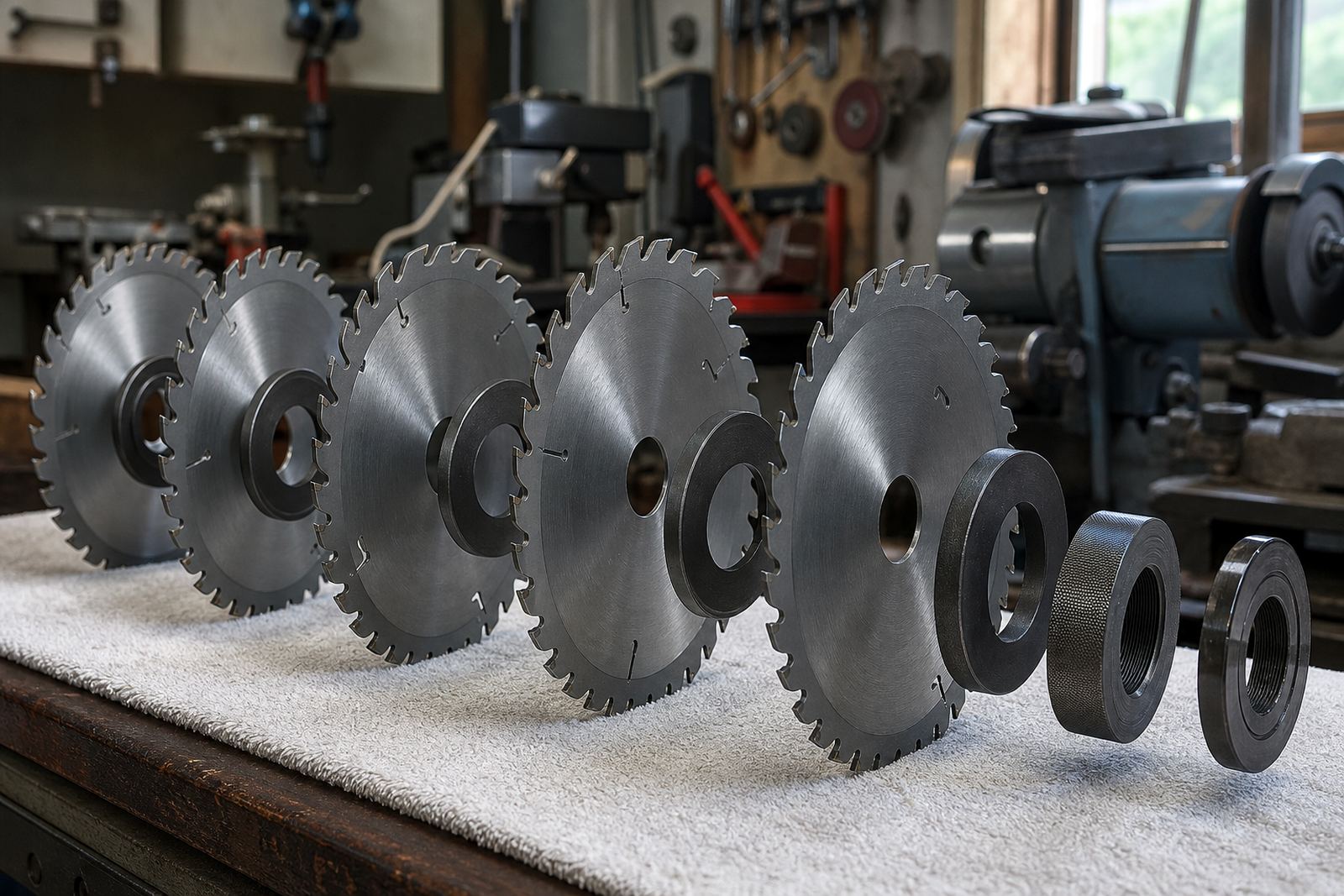
Grooving saw blades are used where a cut must be controlled to a set width or depth, such as slots for joinery, cable channels, rebates, and machining steps before final assembly. They are not the same as a general purpose circular saw blade. The tooth profile, body thickness and cutting angle all affect how cleanly the blade tracks through timber, board or some plastic materials.
When these blades get blunt, they start to burn, wander, or leave fuzzy edges that cost time on the next process. A sharp blade gives a cleaner groove, less feed pressure and a more accurate finish. That matters whether you are running one machine in a small workshop or a batch line in Pinetown, Durban or Johannesburg.
We regrind grooving blades so the blade cuts true again, and we check for tooth damage, body wear and pitch issues that can affect the final groove width. If the blade has taken a knock, it may also need diameter correction or chipped edge recovery before it goes back into service.
Blade Sizes, Bore Options and Tooth Patterns We Handle
Grooving blades come in a range of outside diameters and bore sizes, and the right match depends on your machine, arbor and the depth of groove you need. Common sizes include smaller blades for light bench machines and larger blades for panel saws, spindle units, or dedicated slotting equipment. We work on single blades and batch sets that need to stay matched.
Typical options you should check before sending a blade include the blade diameter, bore size, kerf, plate thickness and tooth count. If the blade is part of a matched pair or stacked set, the blades should be tagged so they come back in the same order. That helps keep groove widths consistent and saves adjustment time on site.
- Outside diameter and bore size
- Kerf width and plate thickness
- Tooth count and tooth form
- Carbide tip condition and chip damage
- Whether the blade is part of a matched stack
We also look at balance and runout. A blade can be sharp and still perform badly if it is out of balance, bent, or has uneven wear around the plate.
Where Grooving Blade Sharpening Suits Best
Grooving blade servicing suits timber workshops, cabinet shops, joinery firms, shopfitting crews, packaging operations and maintenance teams that rely on repeat cuts. It is also useful for hobbyists who want tidy channels for home projects and need proper edge control without burning the workpiece. In coastal areas like Durban and the wider KZN belt, blades can pick up surface corrosion faster if they are stored in humid conditions, so regular care matters.
These blades are often used on materials where consistency matters more than speed. A clean groove helps with better glue joints, neater insert fitting and less sanding later. If the blade is being used on site, it should still be checked often for pitch build-up and edge dulling, especially where board adhesive or resin is present.
- Cabinet making and joinery
- Shopfitting and display work
- Slotting for channels and rebates
- Maintenance and repair jobs
- Batch production in small factories
For workshops in Pretoria, Cape Town, Westville and Hillcrest, courier collection makes it easier to keep blade sets moving without taking staff off the floor.
How We Sharpen and Regrind Grooving Blades
Our process starts with checking the blade condition, then measuring wear, tooth damage and body straightness. We regrind the cutting faces and top edges to restore the original cutting geometry where possible. If the blade has damaged teeth, burn marks, or uneven cutting from previous use, we address those issues before the blade is returned.
Depending on the blade type, we may carry out tooth face grinding, top grinding, diameter correction, burn mark removal, chipped edge recovery and angle resetting. The aim is to get the blade back to a usable, accurate cutting condition without taking more material off than needed. It is careful work, because a grooving blade has to cut a consistent channel and not drift off line.
We also check whether the blade should be used in its current form or replaced. Sometimes a blade can be reworked many times. Other times the plate is too worn or has been overheated repeatedly, and that can affect performance more than a sharpening pass will fix.
Installation, Machine Setup and Power Needs
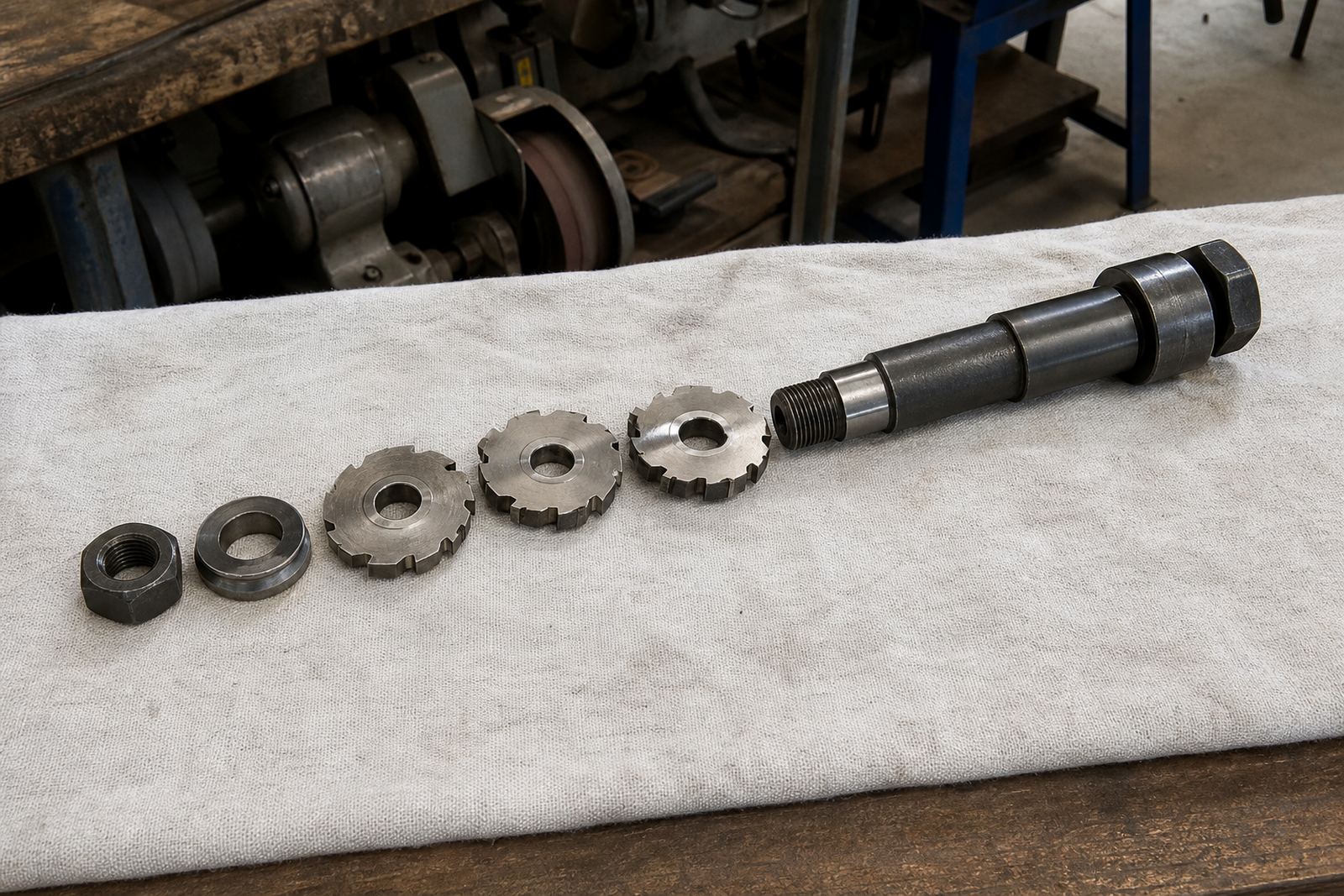
Grooving blades must be fitted squarely and clamped properly for safe running. Check the arbor is clean, the washers sit flat, and the blade spins freely without rubbing on guards or spacers. If the machine uses spacers or a stacked head, the order matters. A small setup error can change groove width and put extra load on the motor.
Most grooving blades are used on electric machines, so no gas supply is needed. What does matter is correct motor capacity, stable power and a machine that is not already struggling under load-shedding or low-voltage conditions. If a blade is too blunt, the motor works harder and the cut quality drops fast. That can lead to burning, vibration and poor depth control.
- Confirm arbor size before fitting
- Check guard clearance and spacer order
- Inspect for wobble or vibration before full use
- Do a short test cut on scrap material
- Stop if there is chatter, smoke or unusual noise
If your machine runs in a coastal workshop, keep the blade dry after use and wipe off resin or moisture straight away. That small habit can extend service life quite a bit.
Care, Servicing Intervals and What to Watch For
Routine care is simple but important. Clean the blade after use, store it in a dry place, and avoid stacking it loose where teeth can knock against each other. A grooving blade that is cleaned regularly will keep its edge longer and give more predictable results. If you process resinous timber or laminated board, cleaning intervals should be shorter.
Watch for signs that the blade needs attention: more feed pressure, burn marks, rough groove walls, chipped teeth, vibration, or a cut that starts to drift. If you notice any of these, send the blade in before it causes damage to the workpiece or the machine. It is cheaper to sharpen early than to recover a badly worn blade later.
For workshop teams that run the same size blade repeatedly, we can tag batches so the same sets come back together. That helps with traceability and makes reordering easier when you need matching replacements.
What to Check When You Place an Order
When you send a grooving blade for service, the more detail we have the better the result. Tell us what material the blade cuts, the machine type, and the cut quality problem you are seeing. If the blade is part of a stacked set or matched pair, say so at the start. That helps avoid mismatched returns and wasted setup time.
Use the enquiry form on our contact page to book collection or send the blade details. We arrange courier collection across South Africa, including Durban, Pietermaritzburg, Johannesburg, Pretoria, Cape Town, Pinetown, Westville and Hillcrest. For busy workshops, this keeps the job moving without extra trips.
- Blade diameter and bore size
- Machine make and model if available
- Material being cut
- Groove width or depth required
- Any damage, burning or chatter marks
- Whether collection is needed by courier
Clear details on the order help us return the blade ready for the next run, with less trial and error on your side.
Key facts
| Service | Grooving saw blade sharpening and regrinding |
|---|---|
| Blade types | Single blades, matched sets, stacked grooving sets |
| Typical sizes | Small bench saw sizes through larger panel and slotting blades |
| Common fixes | Tooth face grinding, top grinding, diameter correction, angle resetting |
| Collection | Courier collection across South Africa |
| Base | Pinetown, KwaZulu-Natal |